St Anthony’s Church in Brwice: A Medieval Parish Church
Site at a Glance
- Popularity
- Medium
- Country
- Poland
- Primary era
- Medieval
- Eras represented
- Medieval, Early Modern, Modern
- Civilizations
- German, Holy Roman Empire, Kingdom of Prussia, Margraviate of Brandenburg
- Site type
- Religious
- Remains
- Church
On this page5 sections
History
St Anthony’s Church in Brwice is a Roman Catholic parish church in Poland, built in the late thirteenth century. It is dedicated to Saint Anthony of Padua, a thirteenth-century Franciscan friar and preacher, and belongs to the parish of the same dedication.
The west gable was rebuilt in 1900. After the Second World War, the church was blessed for Catholic worship on 13 June 1948.
Remains
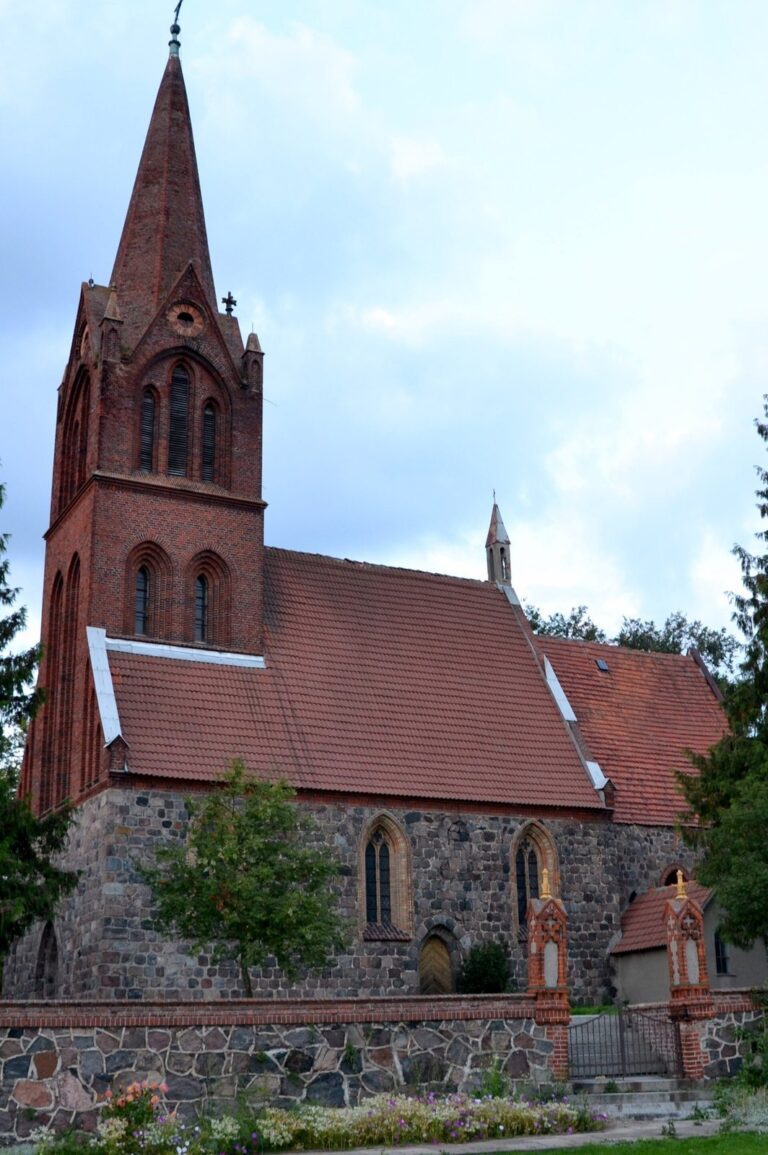
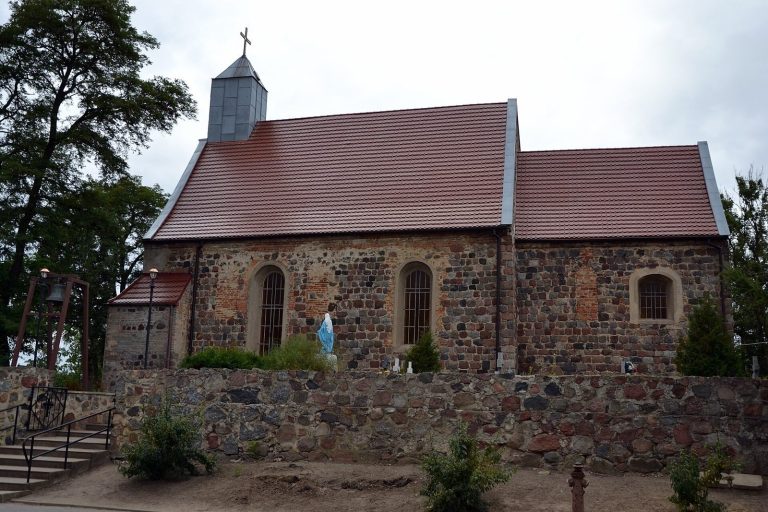
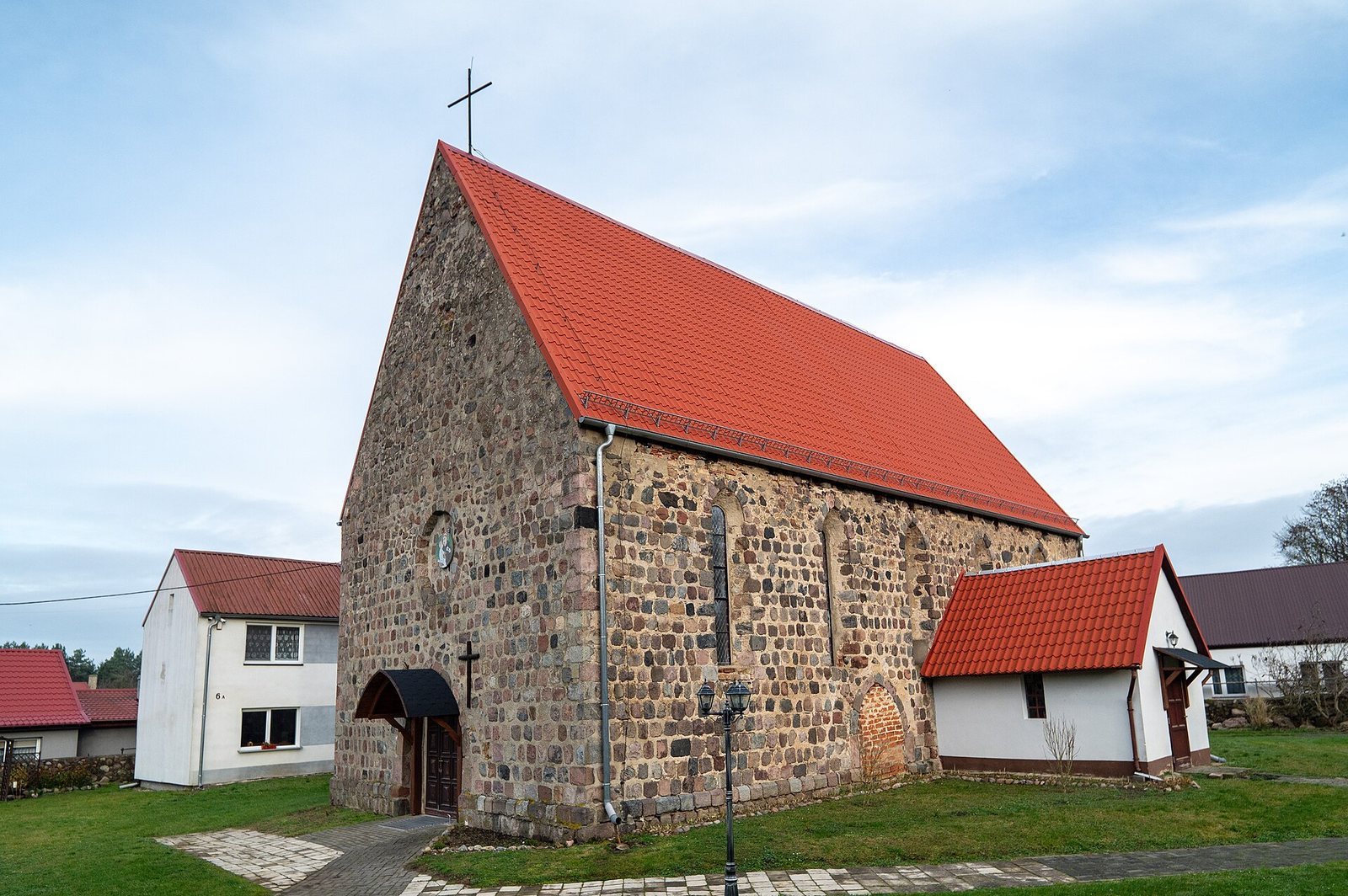
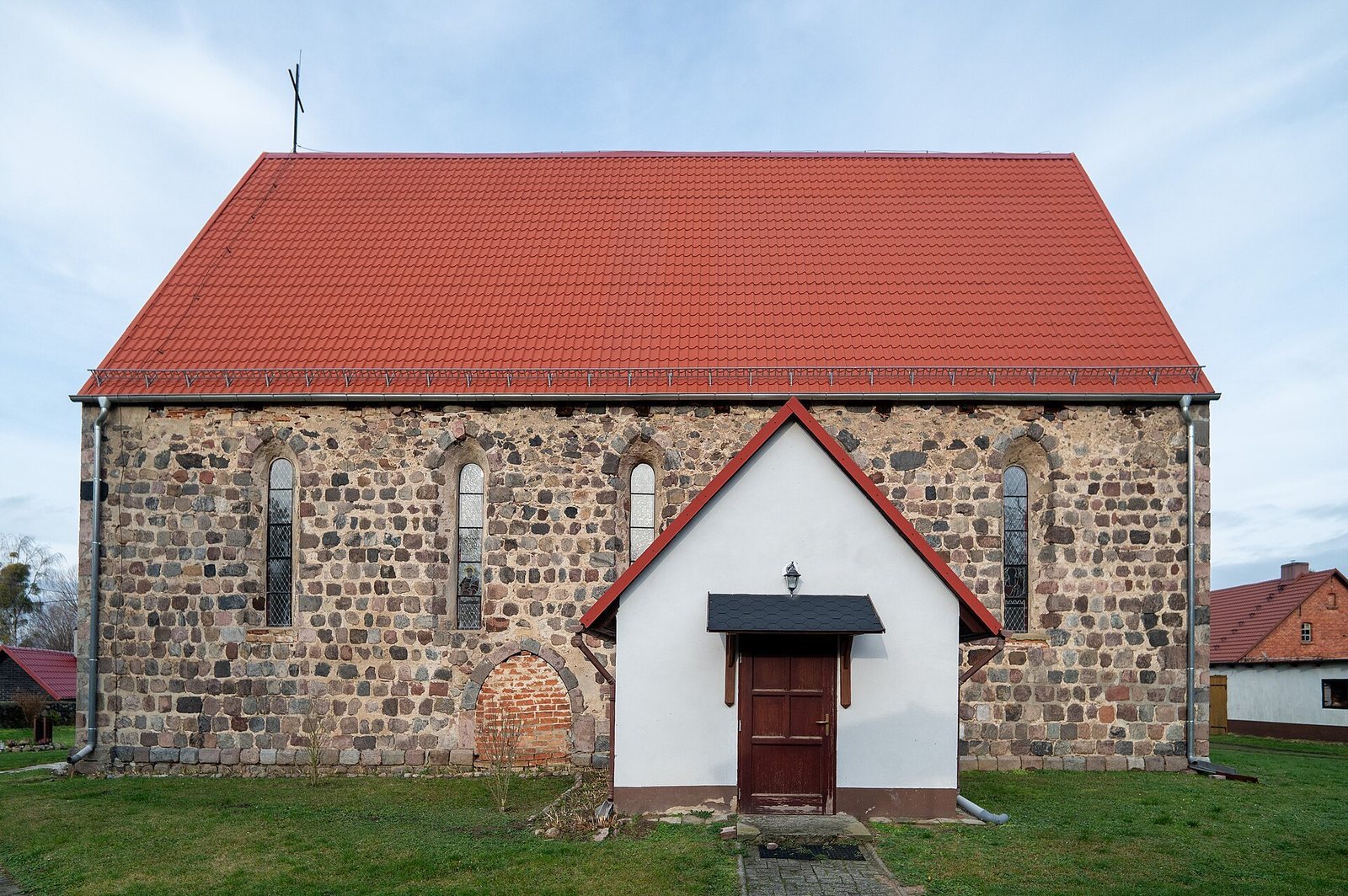
The church is a rectangular granite hall, measuring 19.7 by 10 metres and covered by a pitched roof. A hall church is a type in which the nave and any side aisles are of roughly equal height. The building stands within the area of a former cemetery enclosed by a stone wall.
Exterior walls and openings
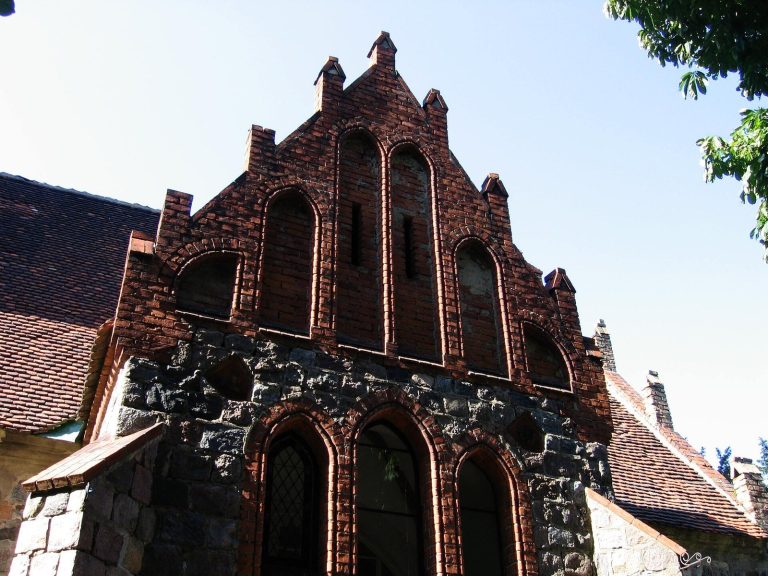
Five slender pointed-arch windows pierce each of the north and south walls. The east wall has three similar windows, with the central one blocked, while its gable is decorated with elongated blind panels, shallow recesses that do not pass through the wall. The west wall has a rebuilt entrance portal formed by two stepped layers. During the rebuilding of the west gable, its blind decoration was removed; the rose window was blocked, leaving a circular recess. A south doorway has also been bricked up, and a modern sacristy adjoins the nave on that side.
Interior and furnishings
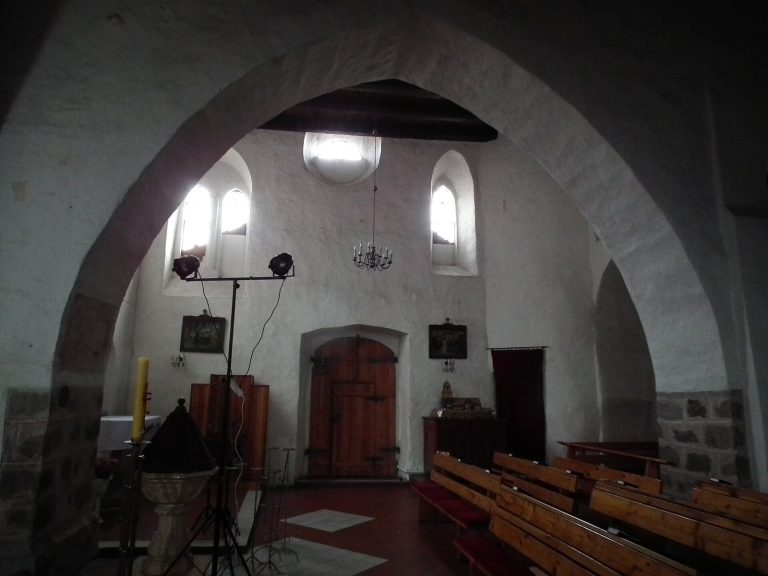
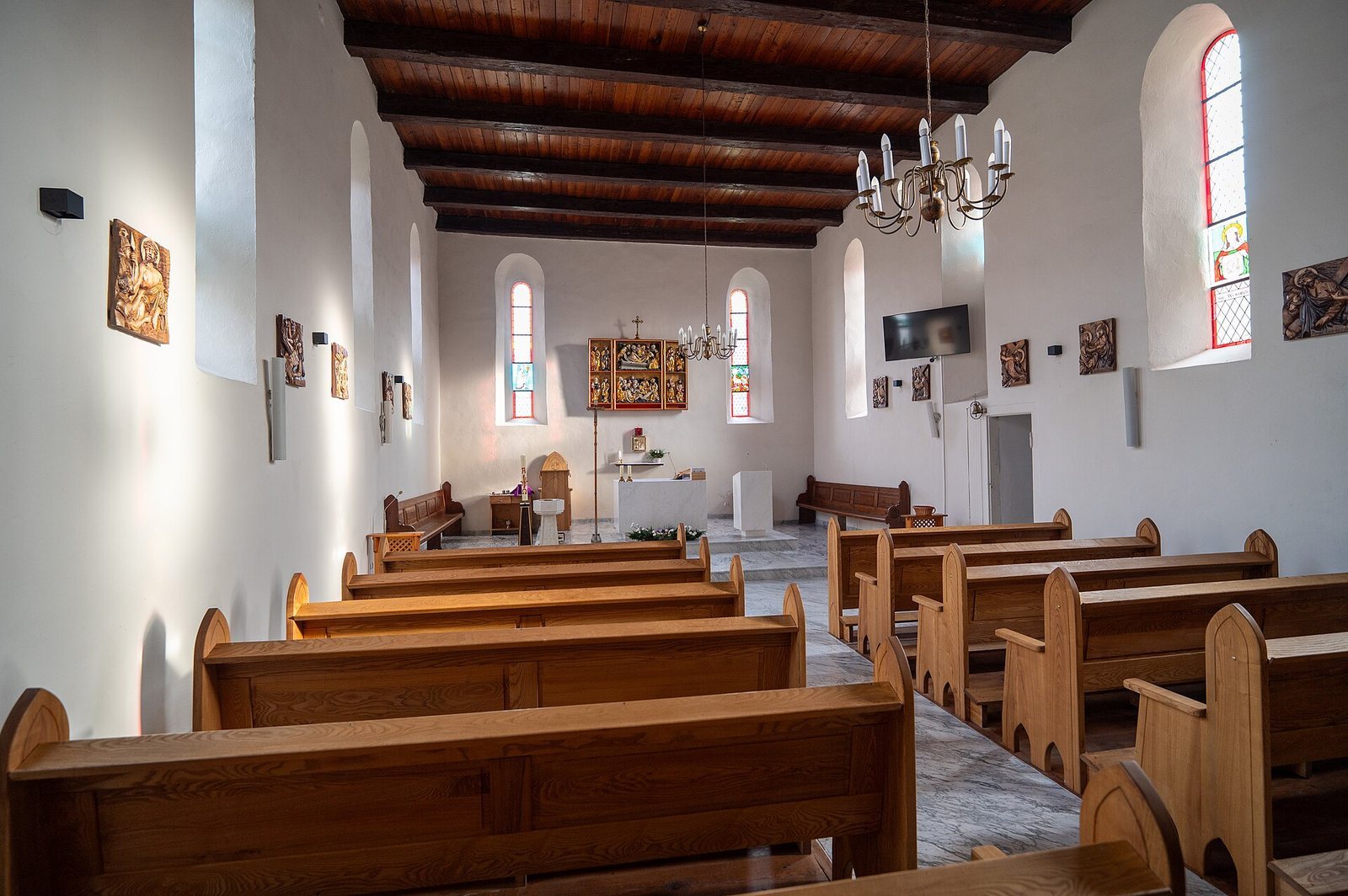
A wooden ceiling with exposed beams covers the church. Against the west wall is a Neo-Gothic organ gallery, a later revival of Gothic forms, with a carved railing. In the presbytery, the area around the altar reserved for clergy, stands a late Gothic altar from the 1520s, belonging to the later phase of Gothic art. Its central section depicts the Descent from the Cross and the Entombment, and its side wings carry eight saints. The church also retains a candleholder dating from the second half of the eighteenth century.
Belfry
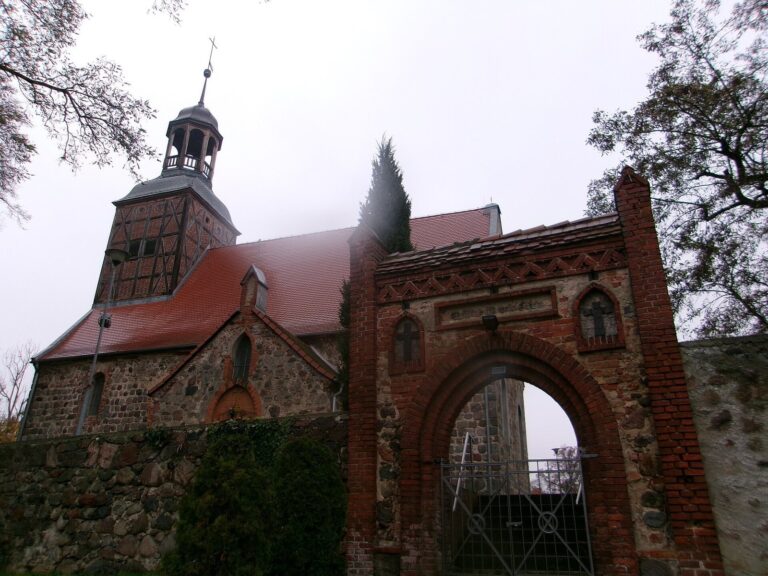
A free-standing belfry beside the church holds a bell dated 1568.