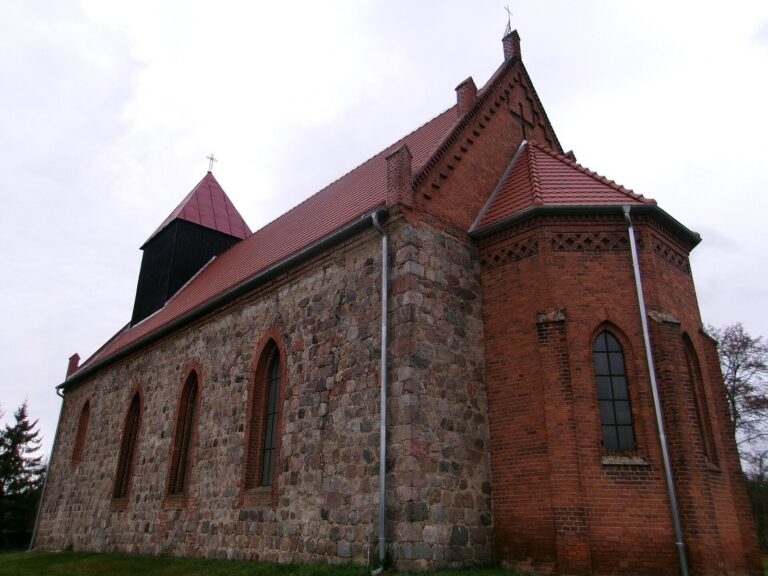
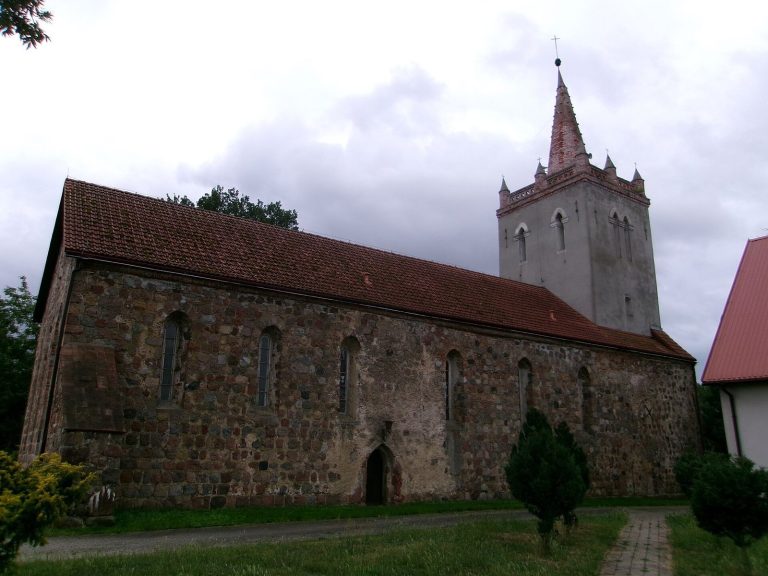
Church of the Sacred Heart of Jesus in Baniewice: A Medieval Branch Church in Poland
Site at a Glance
- Popularity
- Medium
- Country
- Poland
- Primary era
- Medieval
- Eras represented
- Medieval, Early Modern, Modern
- Civilizations
- Duchy of Pomerania, Holy Roman Empire, Kingdom of Prussia
- Site type
- Religious
- Remains
- Church
On this page6 sections
History
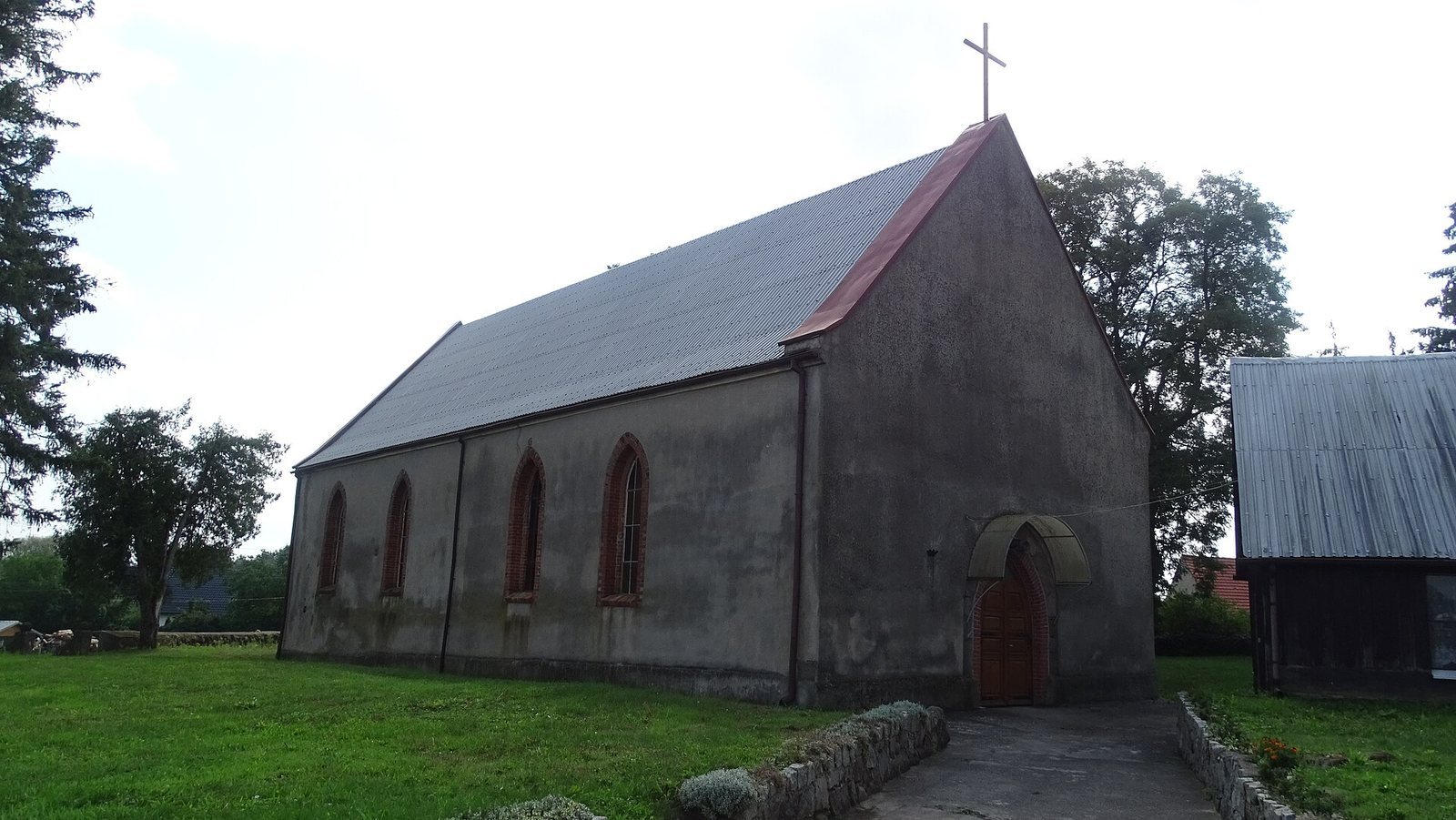
The Church of the Sacred Heart of Jesus in Baniewice is a Roman Catholic branch church in Poland, completed in the late 13th century. It belongs to the parish of Saint Casimir in Swobnica and is dedicated to the Sacred Heart of Jesus, a Catholic devotion in which Jesus’s heart represents his love.
Medieval ownership
The church initially belonged to the Templars, a medieval Catholic religious-military order that controlled Baniewice. The Council of Vienne, a church council held in 1311–1312, suppressed the Templars in 1312. Ownership then passed to the Hospitallers, another medieval Catholic religious-military order.
Alterations and postwar restoration
The building was remodeled in the 17th century and underwent a major remodeling in 1851. Damaged during the Second World War, it was abandoned after 1945. In the 1970s, it was rebuilt on the initiative of parish priest Wiesław Dąbrowski and returned to use in 1977. Bishop Jerzy Stroba reconsecrated the church on 10 December 1977.
Remains
The church
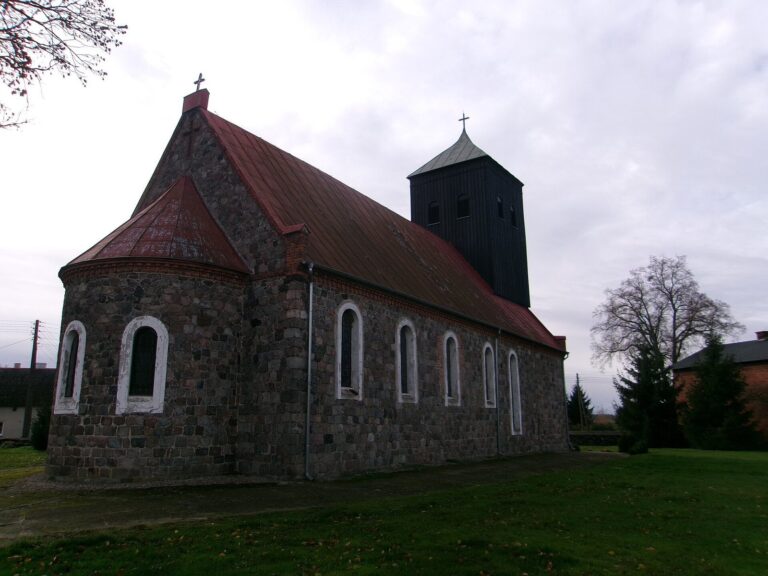
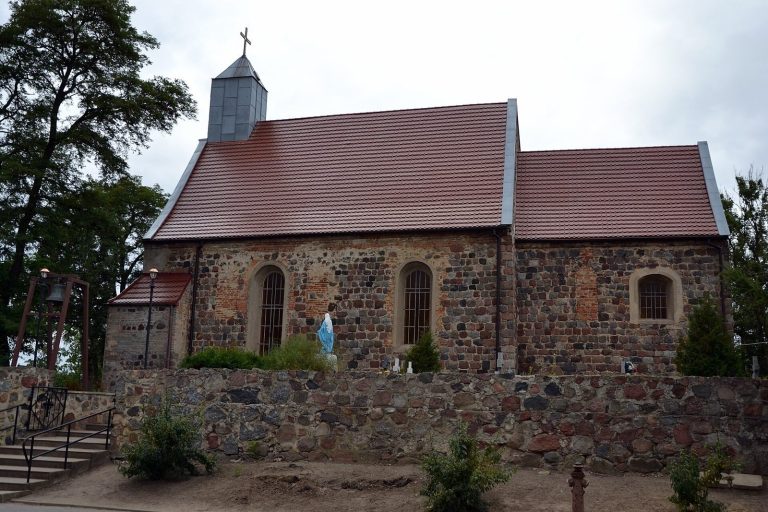
The church is a rectangular, hall-shaped building constructed of granite, with a fully plastered exterior. A doorway in the west wall has two stepped recesses, partly faced with brick. The present windows were installed in 1851 and follow Neo-Gothic forms, a revival of forms associated with medieval Gothic buildings. Inside, a timber ceiling has a broken profile, with its outline changing angle. The presbytery, the area around the altar, ends in a straight wall. A figure of Jesus Christ stands above the tabernacle, a receptacle for the consecrated Eucharist.
Cemetery enclosure and gates
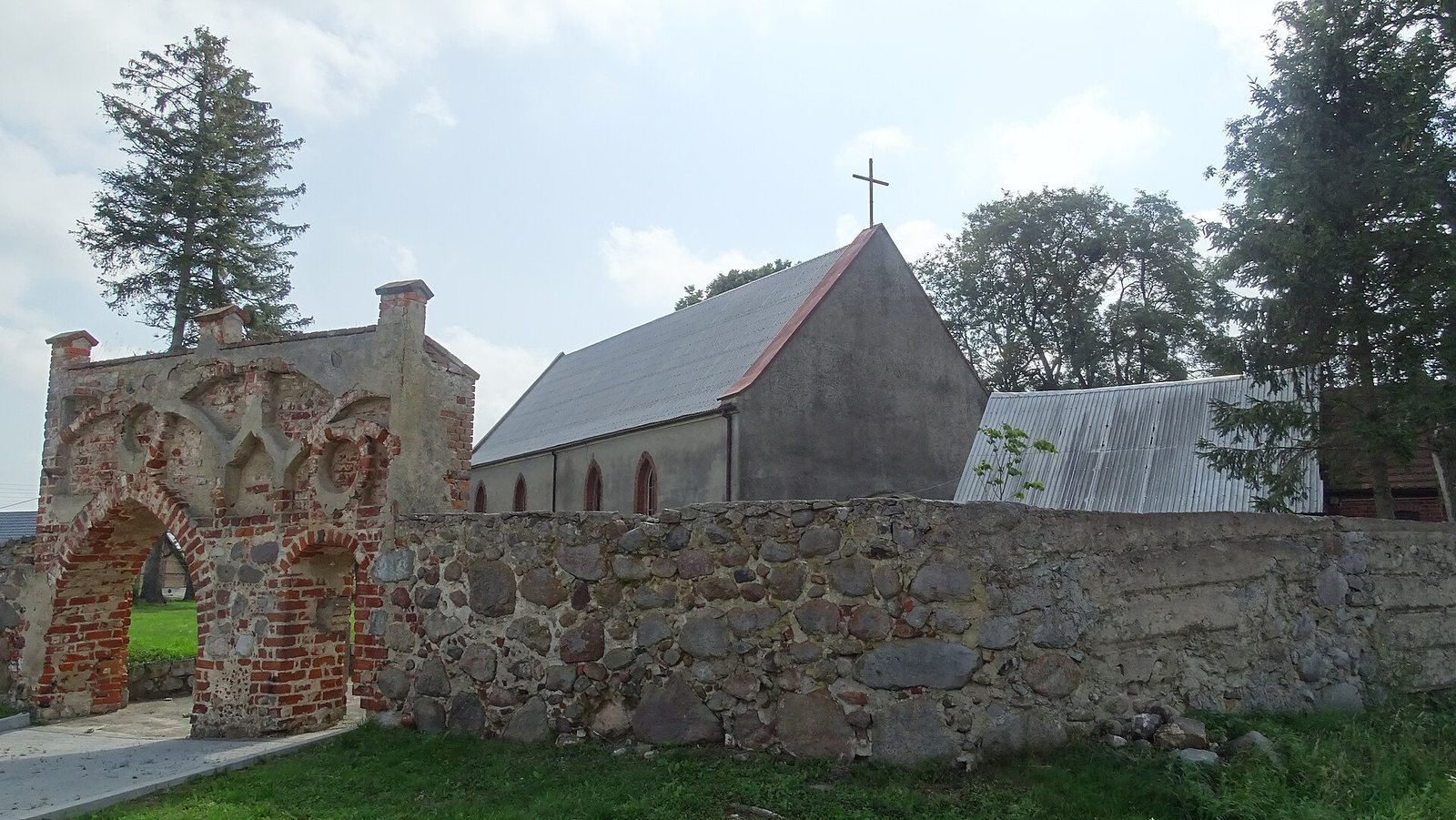
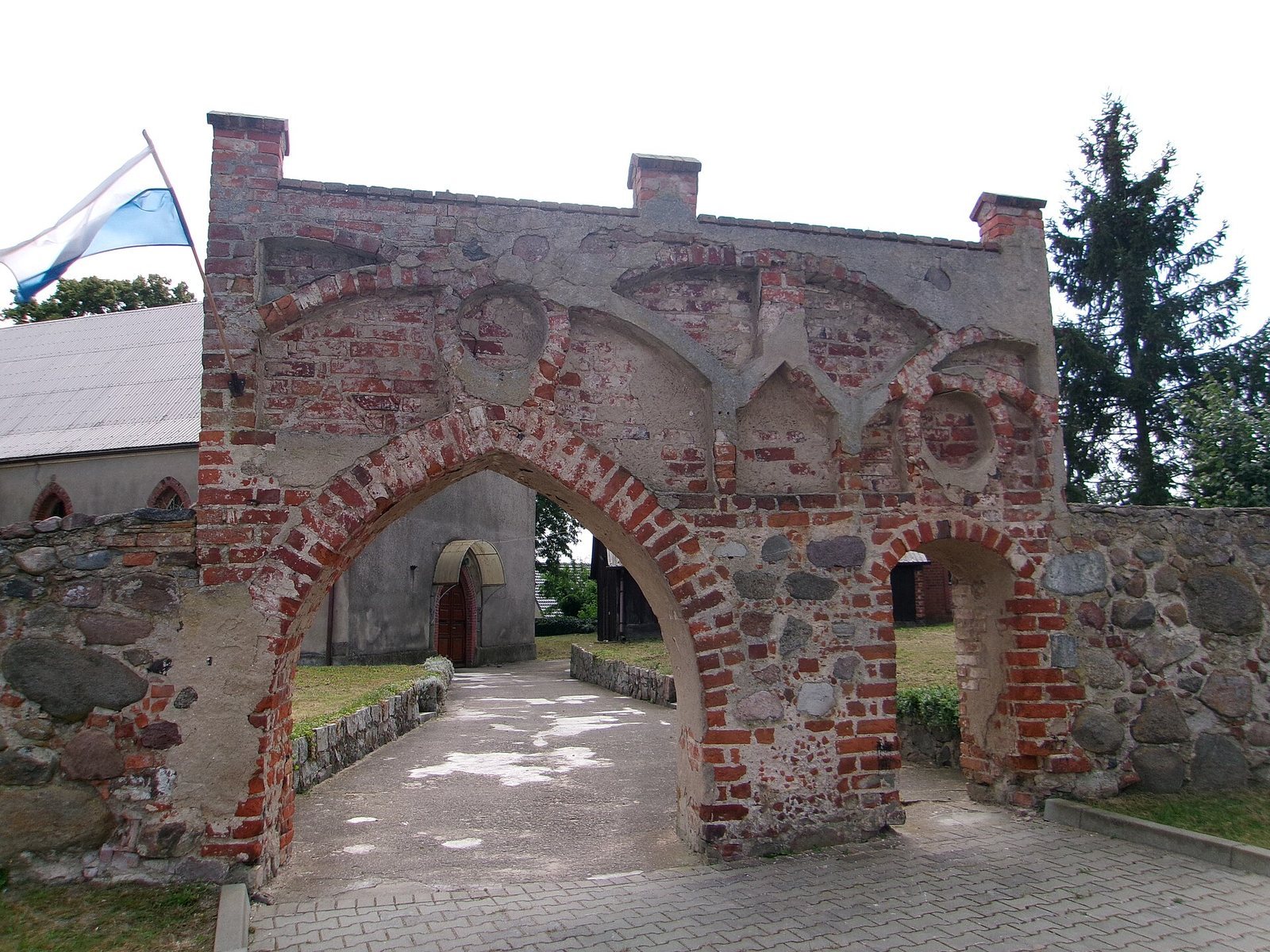
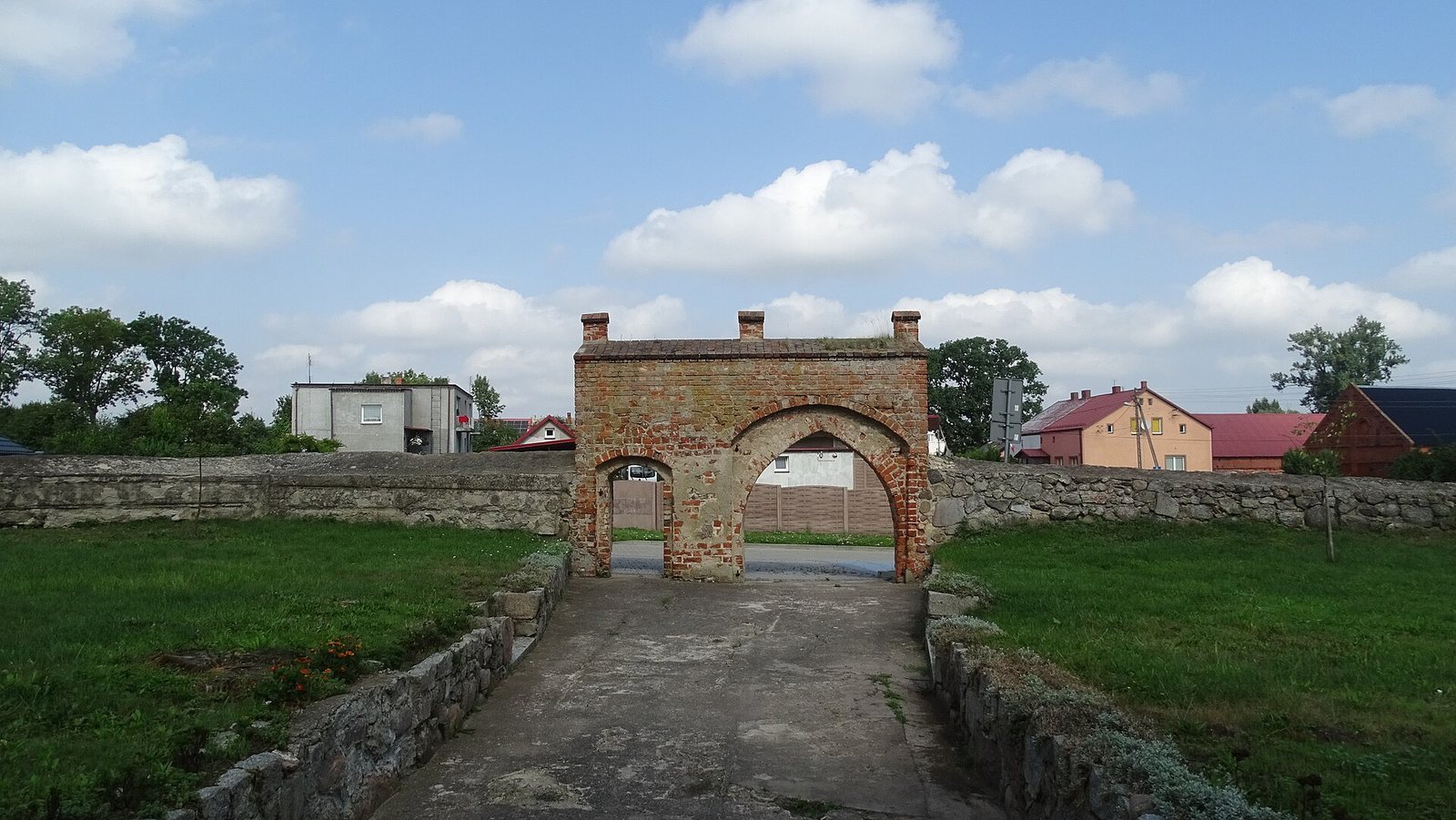
A cemetery adjoins the church and is enclosed by a stone wall with two gates. The late-Gothic gate is decorated with tracery, patterned stonework in openings, and pinnacles, small pointed ornaments. The Renaissance gate is topped by a gable, a triangular upper wall, and features moulded cornices, projecting decorative bands, and pilasters, flat vertical strips resembling columns.