Svyato-Dukhov Monastery: An Orthodox Monastic Complex in Vologda
Site at a Glance
- Popularity
- Medium
- Country
- Russia
- Primary era
- Early Modern
- Eras represented
- Early Modern, Modern
- Civilizations
- Russian
- Site type
- Religious
- Remains
- Monastery
On this page11 sections
History
Svyato-Dukhov Monastery was an Orthodox monastery for men in Vologda, Russia, founded by Saint Galaktion of Vologda in the early seventeenth century. Its name means Holy Spirit, and it belonged to the Vologda diocese, a regional church jurisdiction.
Foundation and changing names
Galaktion first established the community as Galaktion’s Hermitage. Its buildings were wooden until 1654, when a donation from Tsar Alexei Mikhailovich, ruler of Russia from 1645 to 1676, paid for a stone Cathedral of the Descent of the Holy Spirit. The monastery then adopted the Svyato-Dukhov name.
In 1775, the monastery was renamed Savior-on-Stone Monastery. It took the name from another monastery that had burned and been suppressed, whose monks had been transferred to Vologda.
The attached hermitage
A separate hermitage founded by Arseny of Komel in 1529 was closed in 1764, when reforms set staffing rules for monasteries. The hermitage was attached first to Vologda’s Resurrection Cathedral and, from 1861, to Svyato-Dukhov Monastery.
Closure and later uses
The monastery closed in 1918 and passed to the military authorities. From 1 May to 15 August that year, its grounds housed the garage of the 23rd Armored-Car Detachment. In 1924, the Vologda Provincial Executive Committee ordered the Cathedral of the Descent of the Holy Spirit and a monastery chapel closed. The Church of the Sign closed in 1928.
A cemetery was cleared hurriedly as Dynamo Stadium was built on the site, and the stadium was in place by the summer of 1925. The work took place amid preparations for the 1924 Russian Soviet Federative Socialist Republic Football Championship and a prolonged dispute with the provincial museum over the sports ground. The Church of the Sign and the chapel over the well were later demolished. The Holy Gate was taken down during the 1960s or 1970s.
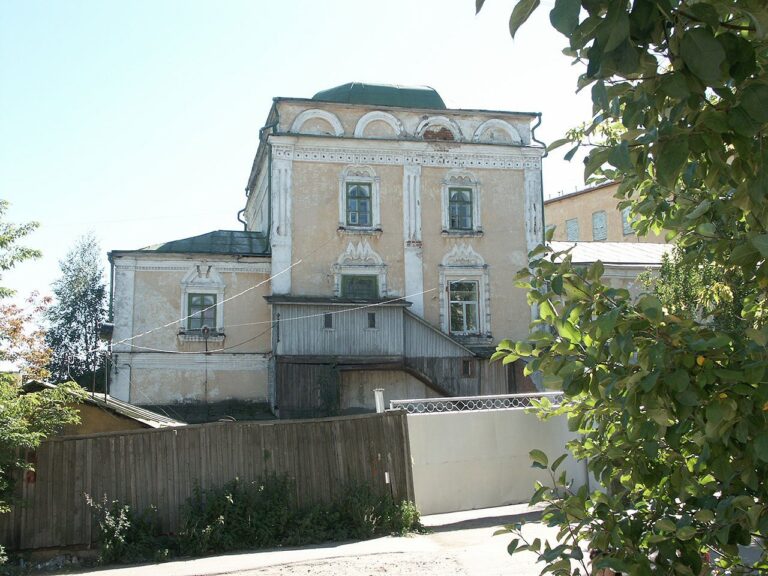
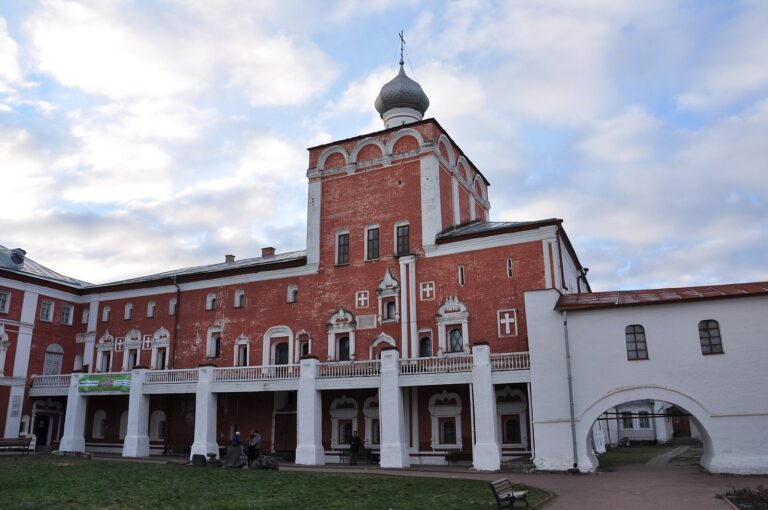
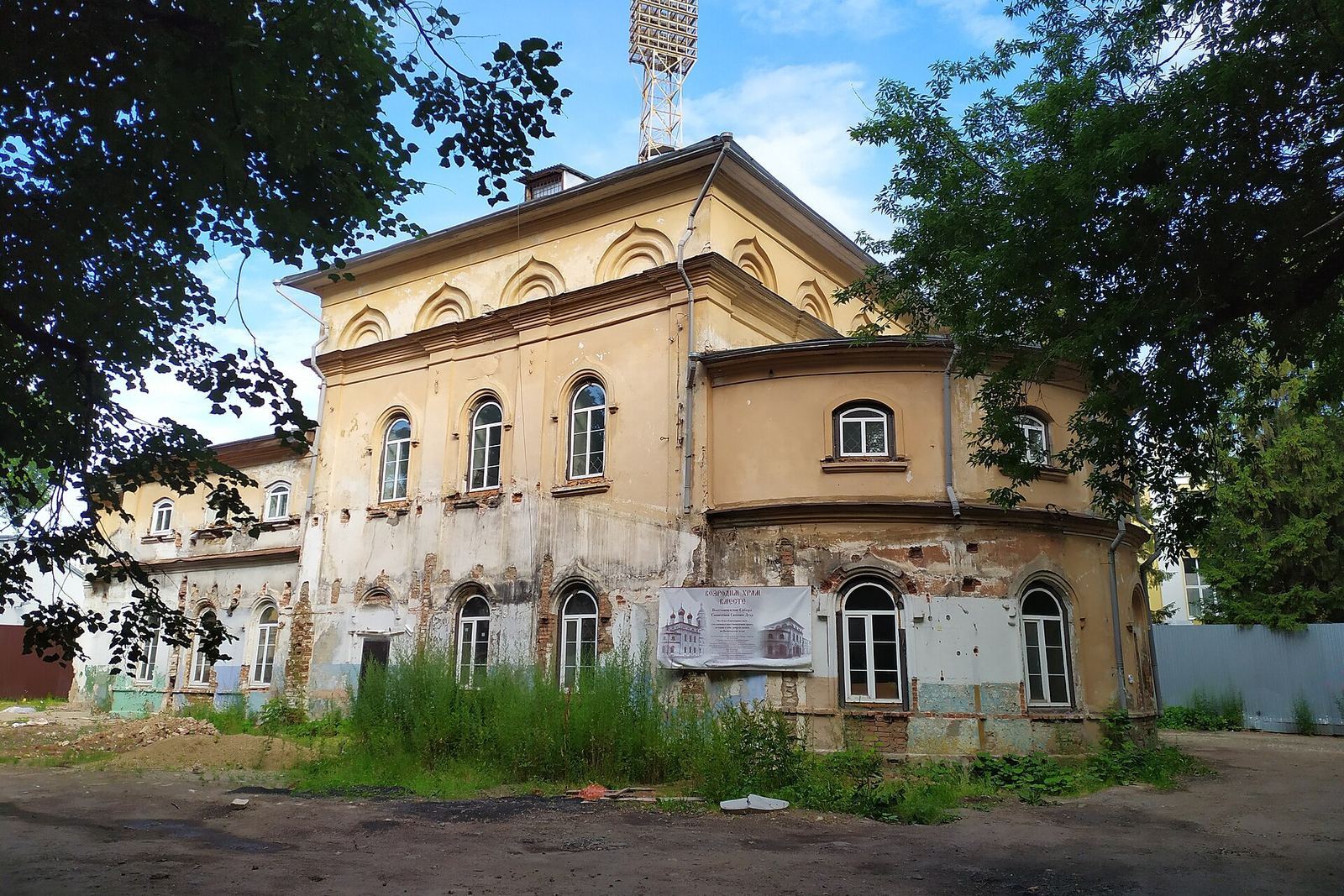
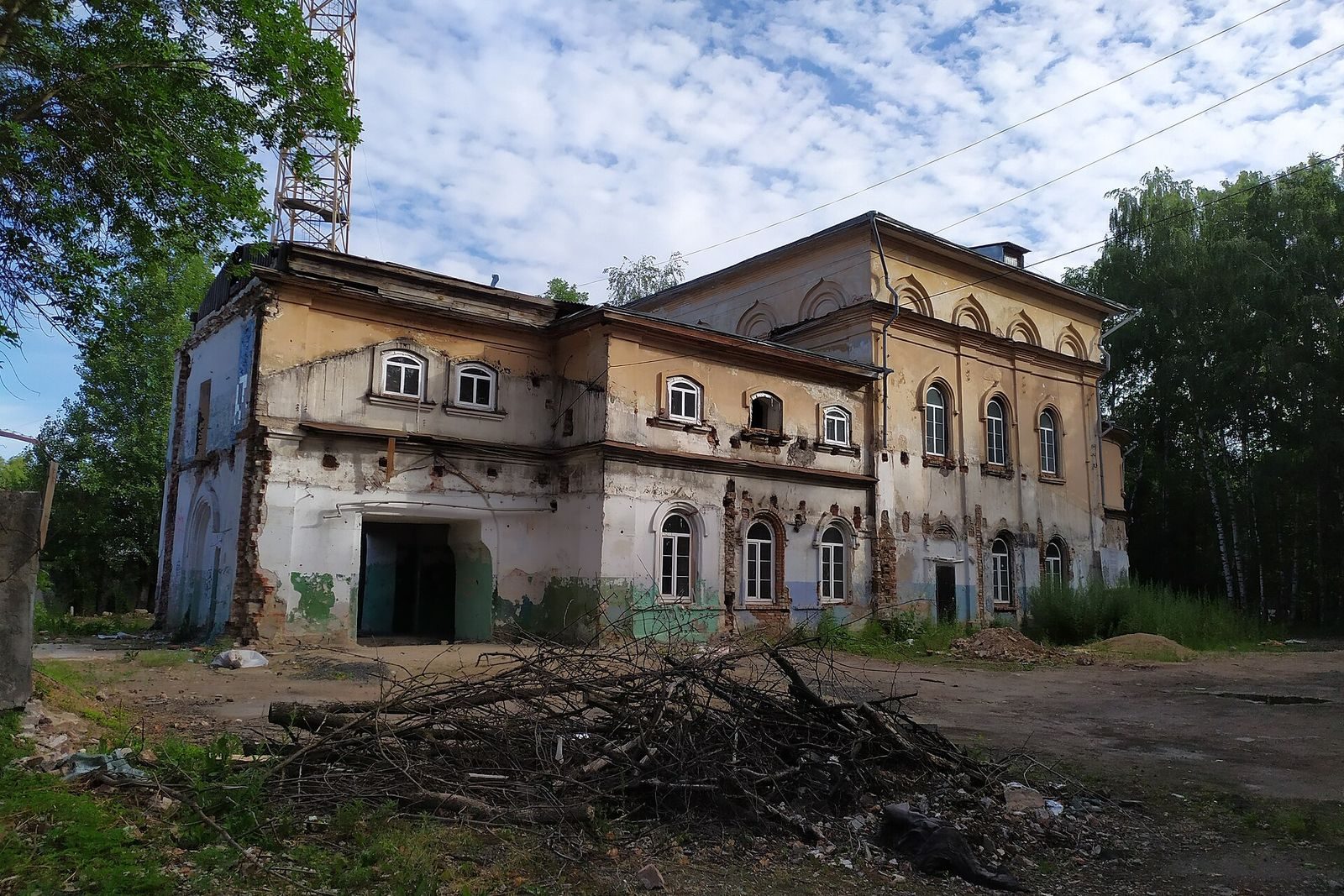
For a long period, the cathedral and the monastery’s cell building housed regional administrations of the NKVD, a Soviet internal-affairs and security agency, and the USSR KGB, the Soviet state-security service. The altered cathedral and surviving cell building belonged to the Ministry of Internal Affairs, the government body responsible for internal affairs. After Perestroika, the Soviet reform period begun in the 1980s, a memorial to victims of political repression was installed beside the former monastery grounds. The cathedral is now active and holds regular services.
Remains
The monastery stood in the southwestern part of Vologda’s historic Lower Posad, on the bank of a tributary of the Vologda River. A stone enclosure was built around the complex around 1800. Its principal churches included the cathedral and the Church of the Sign to its east; a well chapel stood in the courtyard south of that church. The Holy Gate opened onto a street.
Cathedral of the Descent of the Holy Spirit
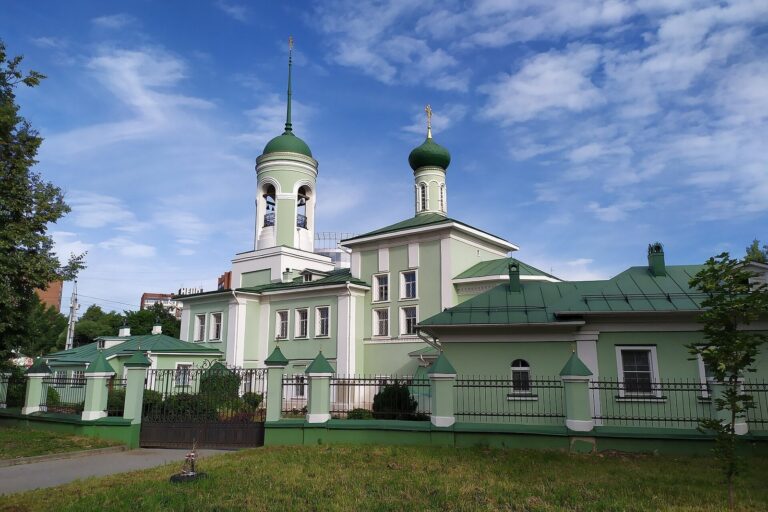
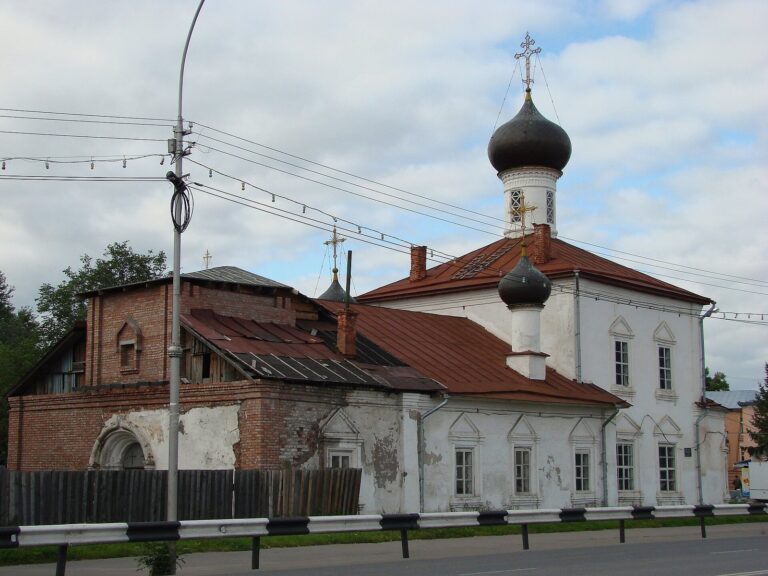
The surviving cathedral is a brick church built in the seventeenth-century style. It had five domes, windows arranged in two levels, and a refectory, or communal dining hall. Its altar end faces northeast. A three-tiered bell tower in the Classical style was added in 1810–1811, and the altar was rebuilt in the 1870s. The cathedral was altered after its closure, and its domes were removed.
Other churches and chapels
Church of the Sign of the Mother of God
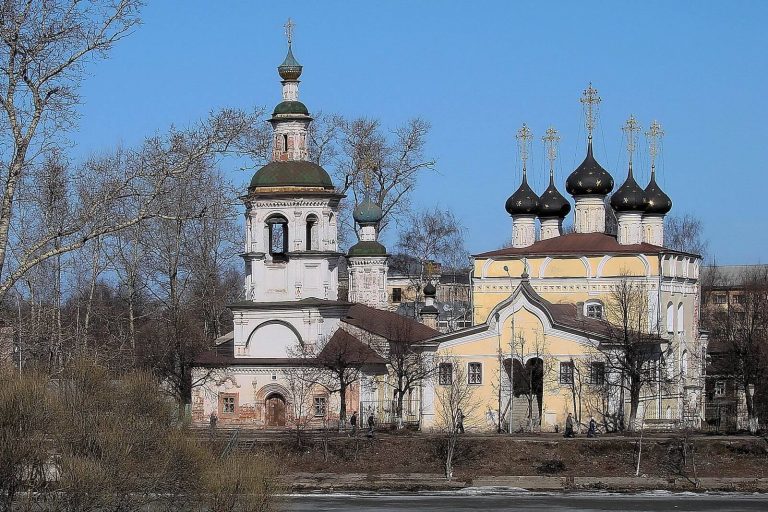
Erected east of the cathedral from 1860 to 1867, this brick church replaced an earlier church that burned in 1854. It was a large, two-storey building with five domes and an eclectic design. Its four-pillar interior was arranged around four main supports. The lower level contained a church dedicated to Saint Galaktion, with side chapels for Saints Dimitry and Jacob of Rostov and Joasaph of Kamenny. Galaktion’s relics lay beneath the floor. The church’s dedication referred to the Sign, an Orthodox icon of the Virgin Mary shown praying with Christ in a medallion.
Well chapel
An octagonal brick chapel was built in 1868 over a well dug by Galaktion. It stood in the courtyard, south of the Church of the Sign.
Holy Gate and turret chapel
A small brick chapel occupied a turret to the right of the Holy Gate. The gate opened onto a street.
Attached hermitage
The hermitage had a church dedicated to the Hodegetria, an image type of the Virgin Mary associated with her gesture toward Christ, and a side chapel for Saint Nicholas, known in Orthodox Christianity as the Wonderworker. A chapel at the hermitage gate held the revered remains of its deceased abbots, Arseny and Innocent, who were hieromonks, monks who were also priests.