Church of St. Nicholas na Glinkakh: An Orthodox Church in Vologda
Site at a Glance
- Popularity
- Low
- Country
- Russia
- Primary era
- Early Modern
- Eras represented
- Early Modern, Modern
- Civilizations
- Russian
- Site type
- Religious
- Remains
- Church
On this page9 sections
History
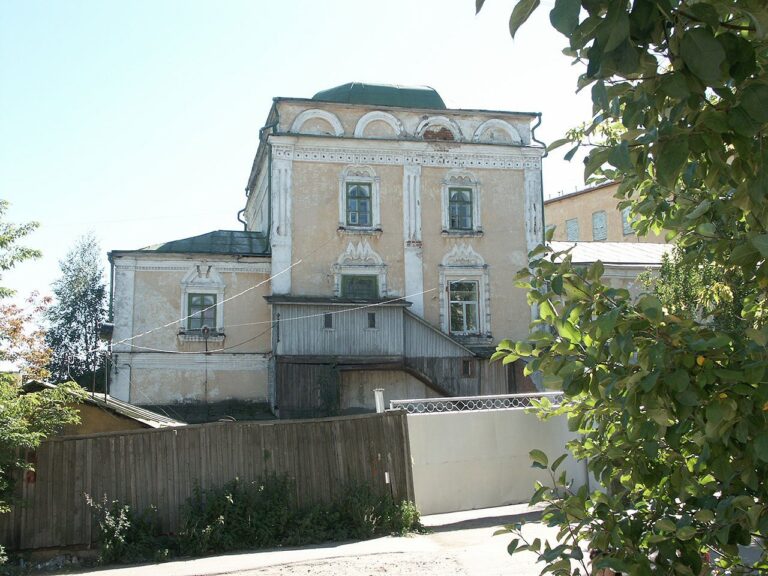
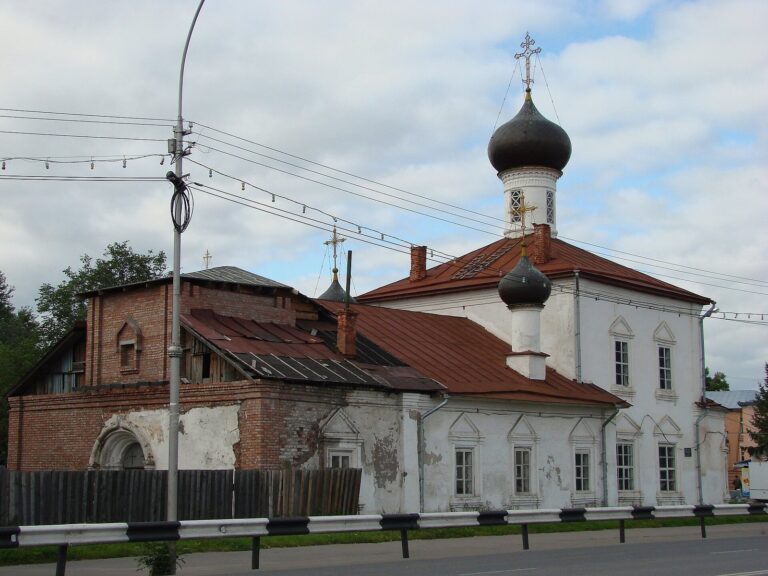
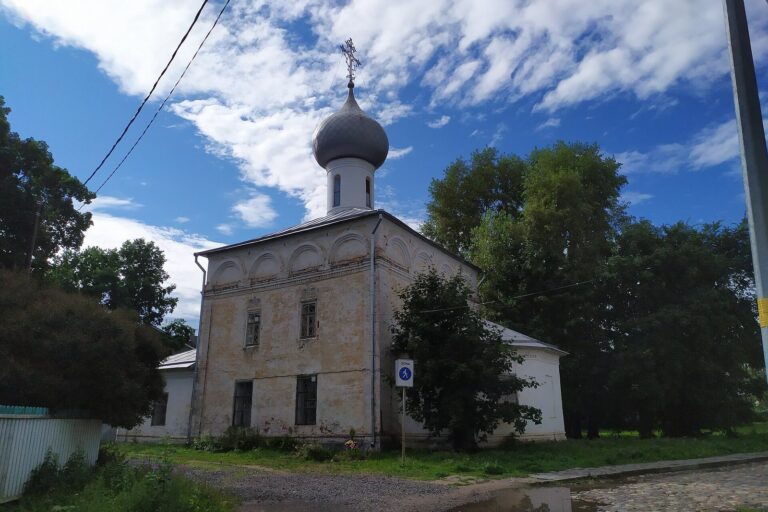
The Church of St. Nicholas na Glinkakh is an Orthodox church in central Vologda, Russia. Its stone building was completed in 1676, following earlier wooden churches on the site.
Early dedications
The date of the church’s earliest construction is uncertain, though it is thought to fall between the late fifteenth and mid-sixteenth centuries. Its first documented mention dates to 1618. Before the stone church was built, two wooden churches stood here, one dedicated to the Christian martyr saints Florus and Laurus and the other to Saint Nicholas.
Records from 1618 to 1639 usually refer to the church as dedicated to Florus and Laurus, although it already had an altar to Saint Nicholas. From 1640, records called it Saint Nicholas’s Church. The district to its north was known as Frolovka. The name na Glinkakh is linked to a thick layer of clay formed during excavation work on the Zolotukha River.
Stone church and parish
Construction of the stone church took place from 1674 to 1676. It was rebuilt several times, and its form changed over time. In the late eighteenth century, after Empress Catherine II prohibited burials in urban parish church grounds, land near the church was set aside for a cemetery. It operated only briefly; because it was close to homes, city authorities established another cemetery elsewhere. In 1862, the church’s bell tower was replaced.
Closure and return to worship
In 1922, the church’s rector, Simeon (Vidyakin), was arrested. On 14 April, the Vologda Revolutionary Tribunal, a revolutionary-era court, sentenced him to two years of forced labor and deprived him of voting rights. The church closed on 7 December 1929, officially to make way for a House of Pioneers, a Soviet center for children’s extracurricular activities, for railway workers’ children. In 1930, its bells were removed as part of a campaign affecting twelve churches in Vologda. That year, a city commission representing trade unions and the public called for the building to be demolished.
In 1937, authorities accused Simeon of organizing a monarchist conspiracy and executed him. The Orthodox Church canonized him in 2000, formally recognizing him as a saint. On 16 February 1995, the Vologda City Duma returned the church to the diocesan administration. Alexander Kutsentov, then chief physician at a psychiatric hospital, was among those who initiated its return to worshippers. After its reconsecration, the church was attached to the Cathedral of the Nativity of the Mother of God and later became an independent parish. Parishioners began repairs in 1996 with charitable support. The church belongs to the Diocese of Vologda, a bishop’s territorial jurisdiction, and serves as a bishop’s metochion, a church under direct episcopal or diocesan administration.
Remains
Church architecture
Main church
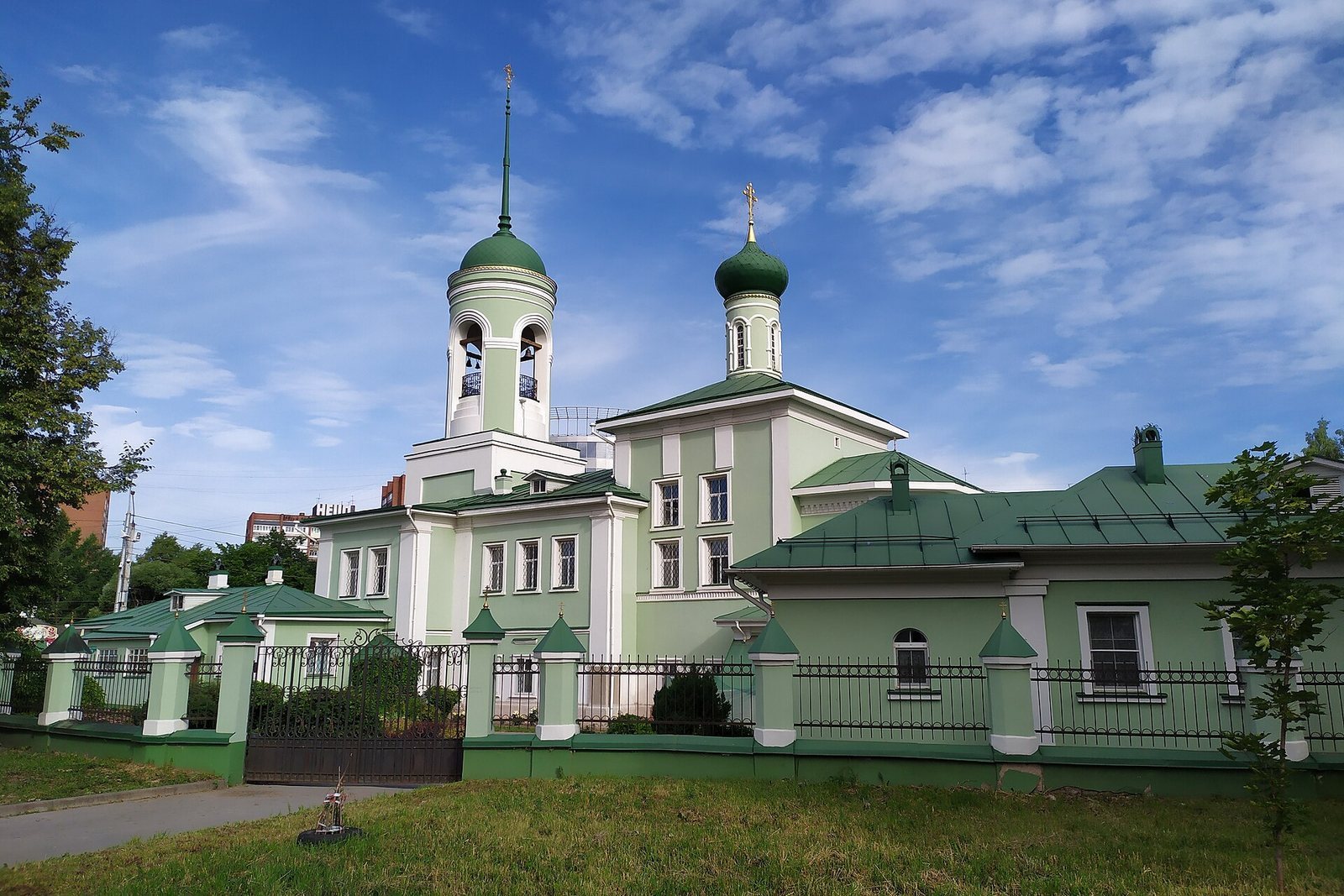
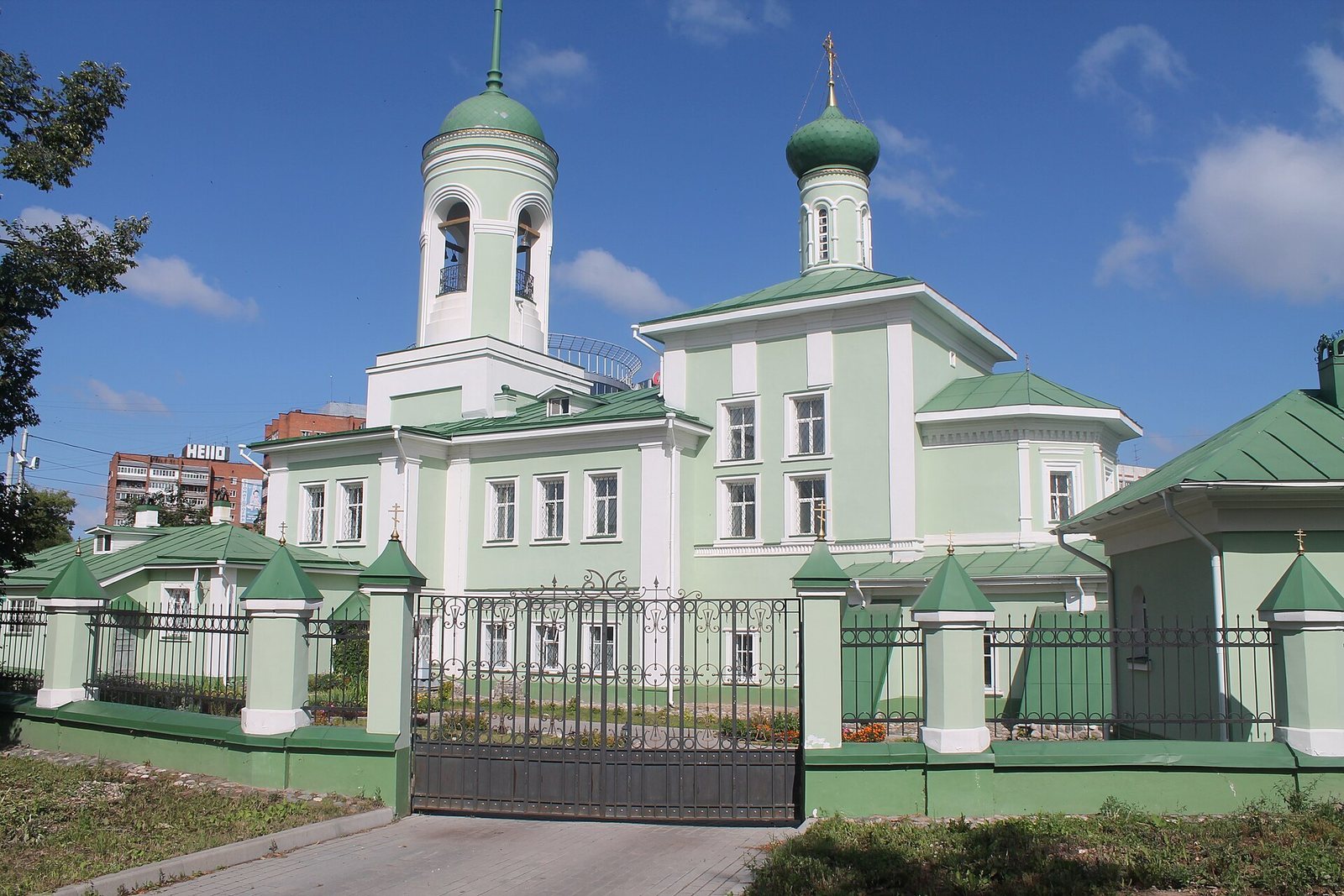
The stone church includes a main square block, and repeated rebuilding altered its form and window sizes. It had three altars: an upper altar dedicated to All Saints, meaning all recognized saints, and two lower altars dedicated to Florus and Laurus and to Saint Nicholas of Myra, a Christian saint especially venerated in the Orthodox tradition. The church once had five cupolas, but only one remained by 1770. The cupola on the main square block was restored in 1997.
Bell tower
The bell tower’s earlier tent-shaped roof was replaced by a pointed tower in 1862. In 2011, a spire bearing a small cross was added to the bell tower.
Icon of Saint Nicholas
The church housed a very ancient, round icon of Saint Nicholas of Myra, adorned with a silver-gilt metal cover. An inscription along its lower edge recounts a miracle dated to 1113. According to the inscription, Saint Nicholas appeared in Great Novgorod to the paralyzed ruler George, also called Mstislav, a Rus’ grand prince, a high-ranking title among East Slavic rulers. Nicholas directed him to obtain a round icon of the saint in Kyiv for healing. The inscription says that a child who had drowned was found alive before the icon in Kyiv. The prince’s envoys later found the icon floating on a river and brought it to him. After making the sign of the cross with it, the prince recovered immediately.