Madonna del Morbo: A Votive Church in Poppi, Italy
Site at a Glance
- Popularity
- Low
- Country
- Italy
- Primary era
- Early Modern
- Eras represented
- Early Modern
- Civilizations
- Grand Duchy of Tuscany
- Site type
- Religious
- Remains
- Chapel
On this page8 sections
History
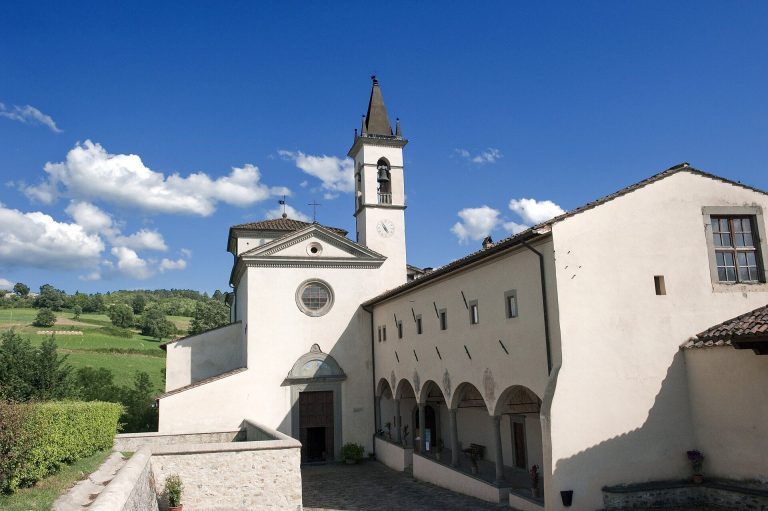
Madonna del Morbo is a Roman Catholic church in Piazza Amerighi, Poppi, Italy. Built from 1657 to 1659, it was dedicated to the Virgin Mary in gratitude after plague outbreaks spared the town. Its exterior follows Renaissance-classical forms, while a later redesign brought theatrical effects associated with Baroque art and architecture.
Plague devotion and disputed ownership
Residents prayed to and invoked the Virgin during outbreaks in 1530 and 1631, after which the community dedicated the church to her in thanks. Before the church was built, a small Marian shrine stood at the crossroads on the site.
In 1542, Poppi’s community claimed ownership of the shrine and proposed building a small place of worship. A neighbouring property-owning family contested the claim, and disputes continued for about a century. The community eventually established its right to the site, clearing the way for construction.
Construction and community stewardship
The people of Poppi paid for the oratory, and its statute describes it as belonging to the community. The designer is uncertain. The exterior loggia was finished by 1681, and the dome was completed in 1705, the year the church was deconsecrated. Between 1707 and 1720, the interior was redesigned in a theatrical Baroque manner, with a tribune, or elevated gallery, and two side chapels.
A confraternity, a religious association whose members organize devotional or charitable activities, manages the oratory through a governing council whose members serve five-year terms.
Remains
Plan and exterior
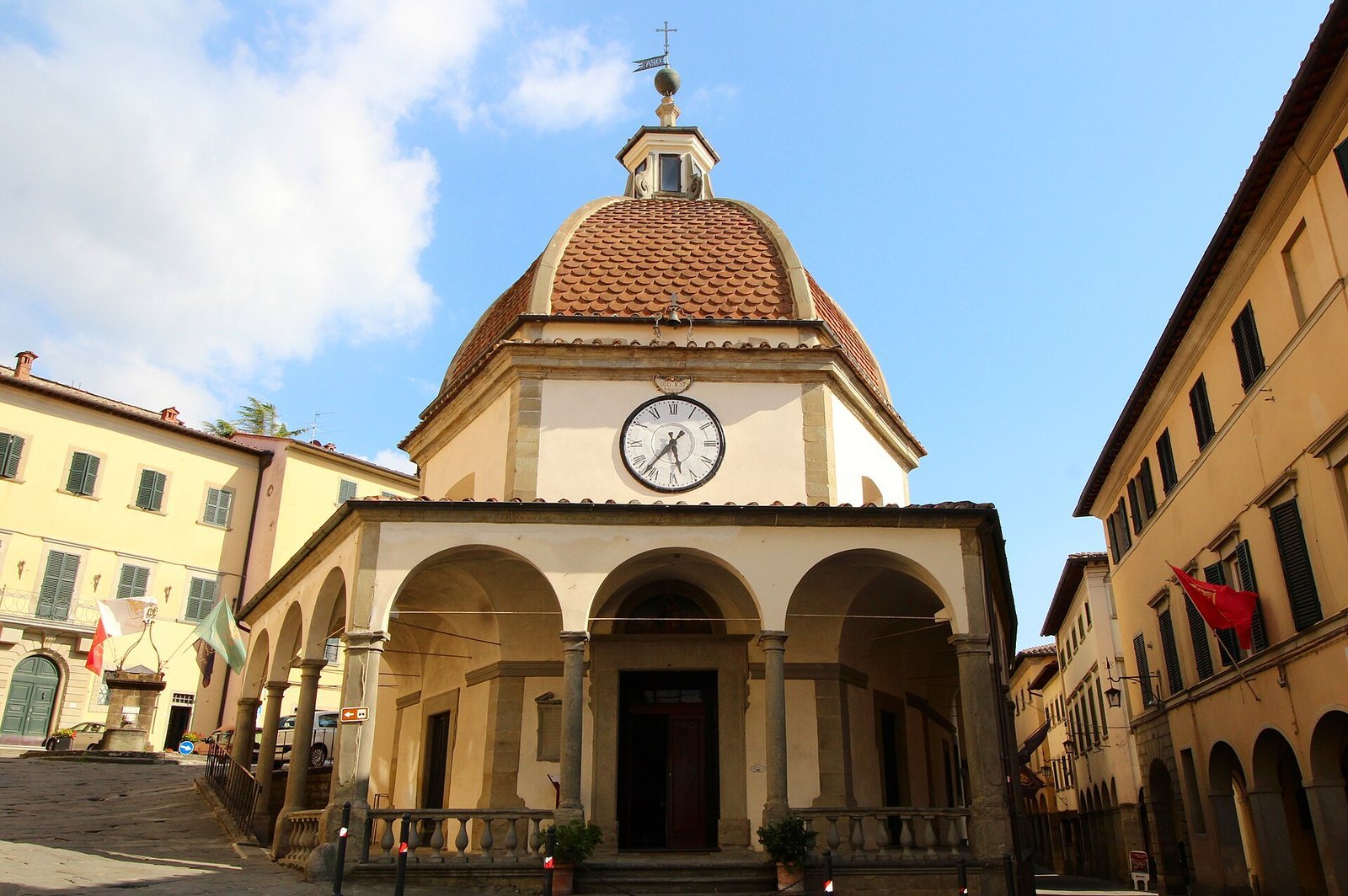
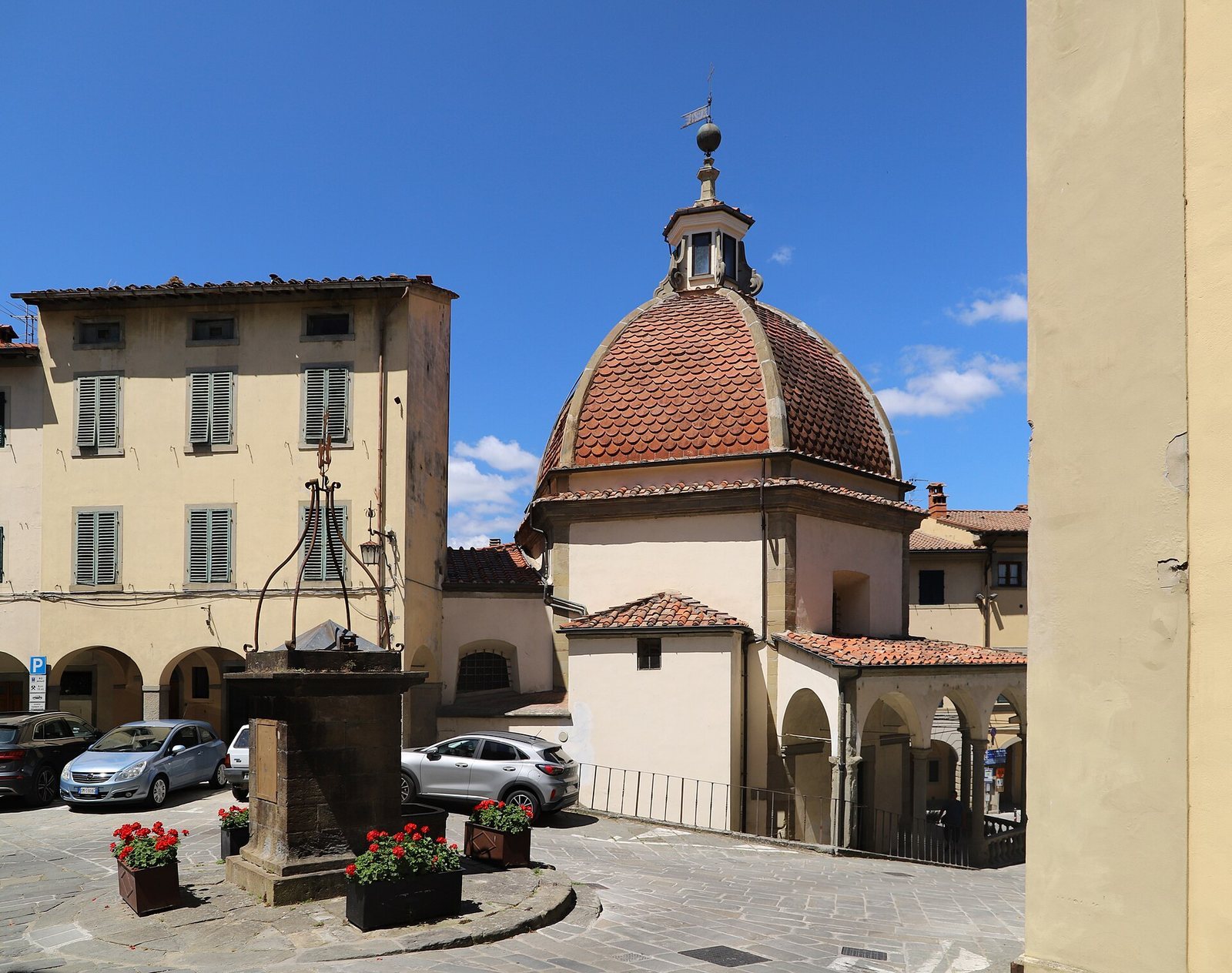
The church is arranged around a hexagonal central body, an unusual plan for a votive church that recalls Renaissance models. Renaissance architecture revived classical forms and proportions. A rounded dome rises over the central space and is topped by a lantern, a small structure crowning a dome or roof. A classical-style loggia, a roofed, open-sided gallery, runs along three sides of the building. A clock is set above the loggia on the main facade.
Interior and altars
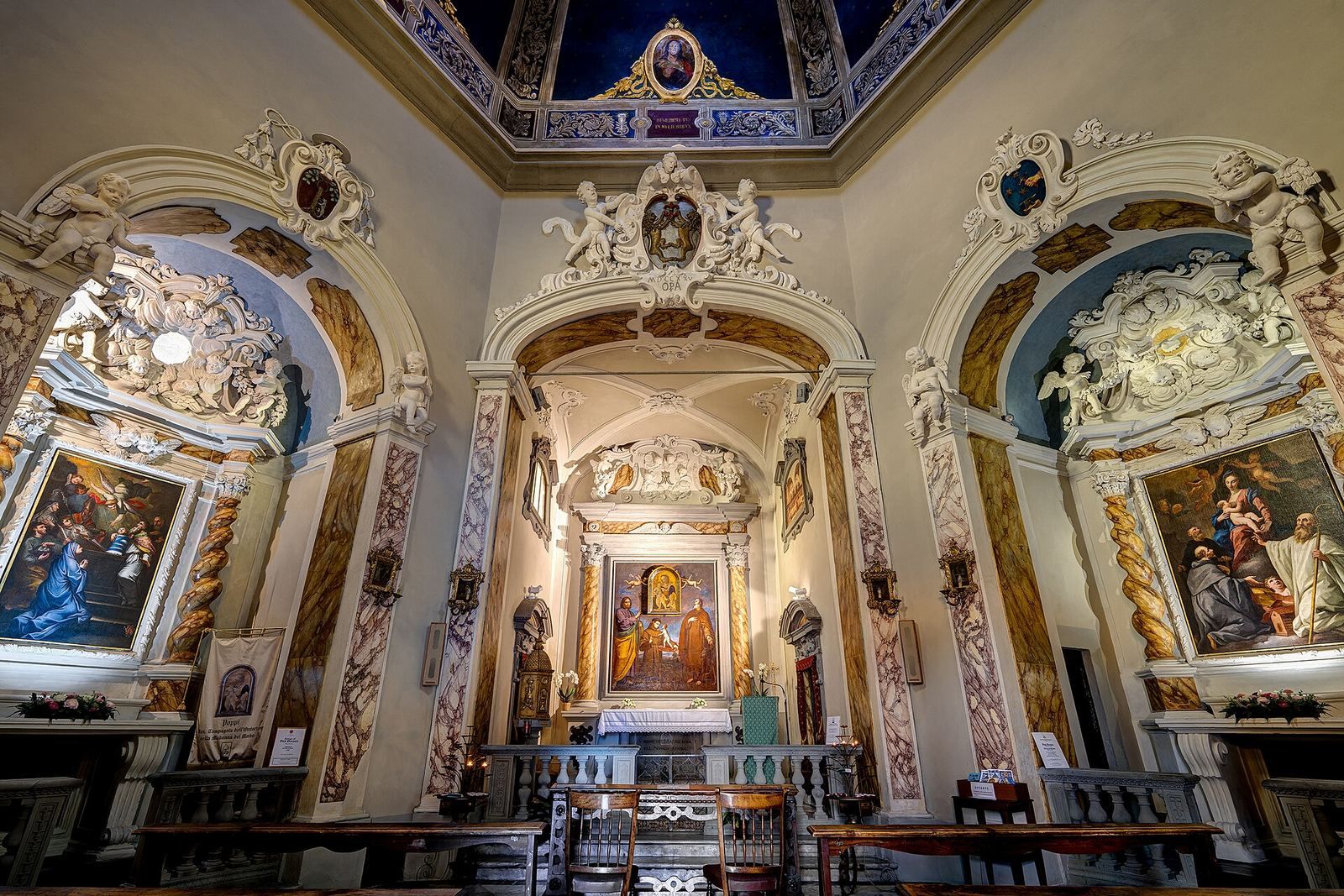
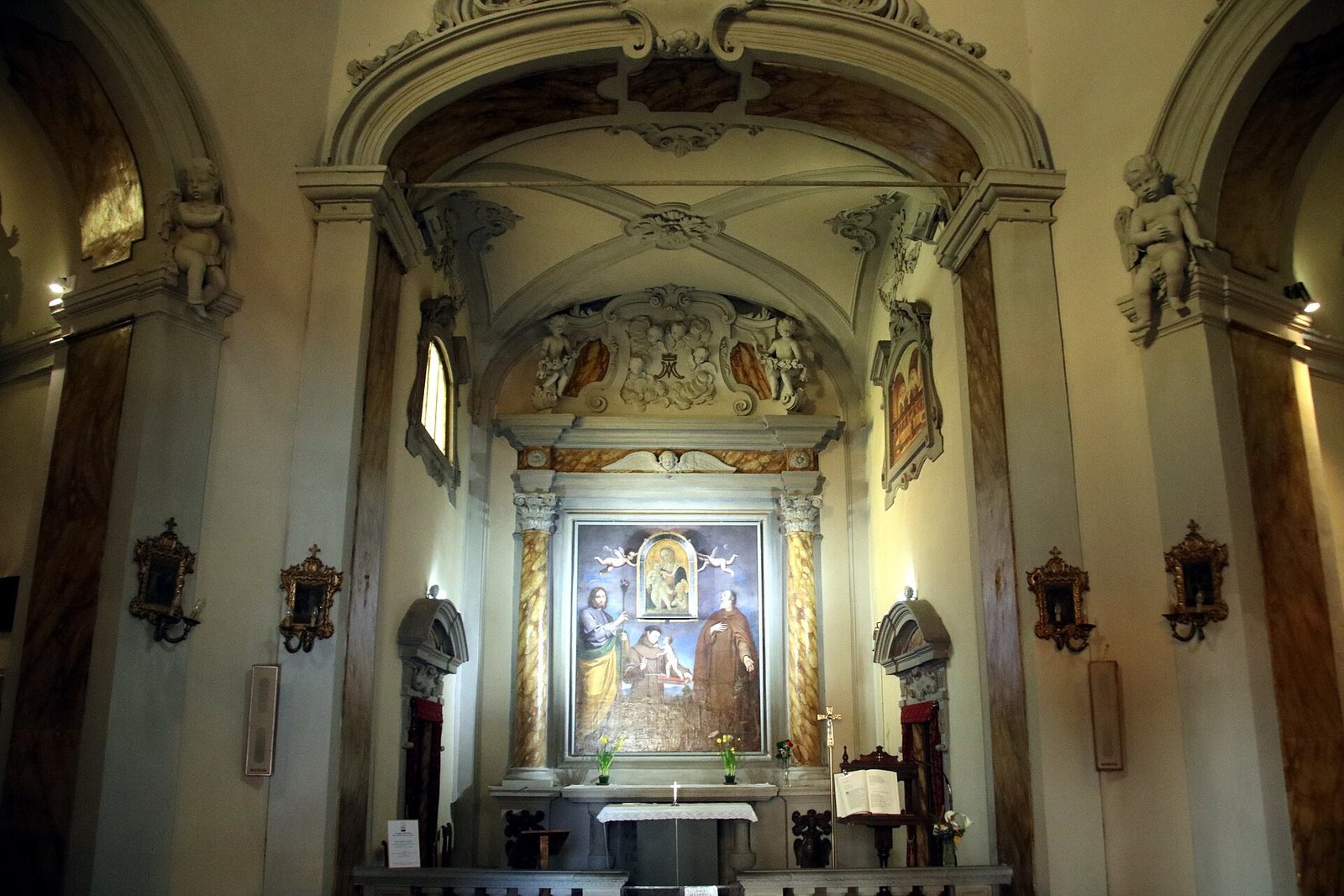
Central space and high altar
Three arches open from the hexagonal interior. The central arch leads into a recess containing the high altar. Its panel shows the Madonna and Child with the young Saint John the Baptist and is attributed to the school of Filippino Lippi; it is also known as the Madonna del Canto. A separate canvas by Lorenzo Lippi, dated 1664, depicts Saints Joseph and Anthony of Padua with the Child, alongside Blessed Torello of Poppi with a wolf. The canvas was rediscovered and restored in the early 2010s, then returned to its original position in December 2016.
Side chapels
The two side chapels date to the early eighteenth century. Their Baroque altars feature twisted columns, shaped pediments and groups of stucco figures, with workmanship associated with artisans close to Foggini and Giovan Battista Ciceri. On the right, an altar painting beneath a Glory of Cherubs shows the Coronation of the Virgin with the Child Jesus, attended by Saints Francis and Romuald and Blessed Torello. Pier Dandini signed and dated the work 1707 and made it with his son Ottaviano. The left altar has a theatrical oculus, a circular opening that admits light, and a more modest painting from Dandini’s workshop depicting the Imposition of the Name of Mary and Saints.