Tomb of the Palmettes: A Hellenistic Macedonian Tomb
Site at a Glance
- Popularity
- Medium
- Country
- Greece
- Primary era
- Classical
- Eras represented
- Classical
- Civilizations
- Kingdom of Macedon
- Site type
- Burial
- Remains
- Tomb
On this page9 sections
History
Construction and ancient use
The Tomb of the Palmettes is a Macedonian funerary monument at Lefkadia, near Naousa in Greece. It belongs to the Hellenistic period, the era after Alexander the Great’s conquests when Greek culture spread across the eastern Mediterranean and Near East. Its construction is dated either to the late fourth century BCE or the first half of the third century BCE. The tomb stood beside the road between Mieza and Pella, cities of the ancient Kingdom of Macedon.
In antiquity, robbers entered the tomb and took the funerary chest that held the ashes of one or more people. The burial was therefore disturbed long before the monument’s modern discovery.
Discovery and protection
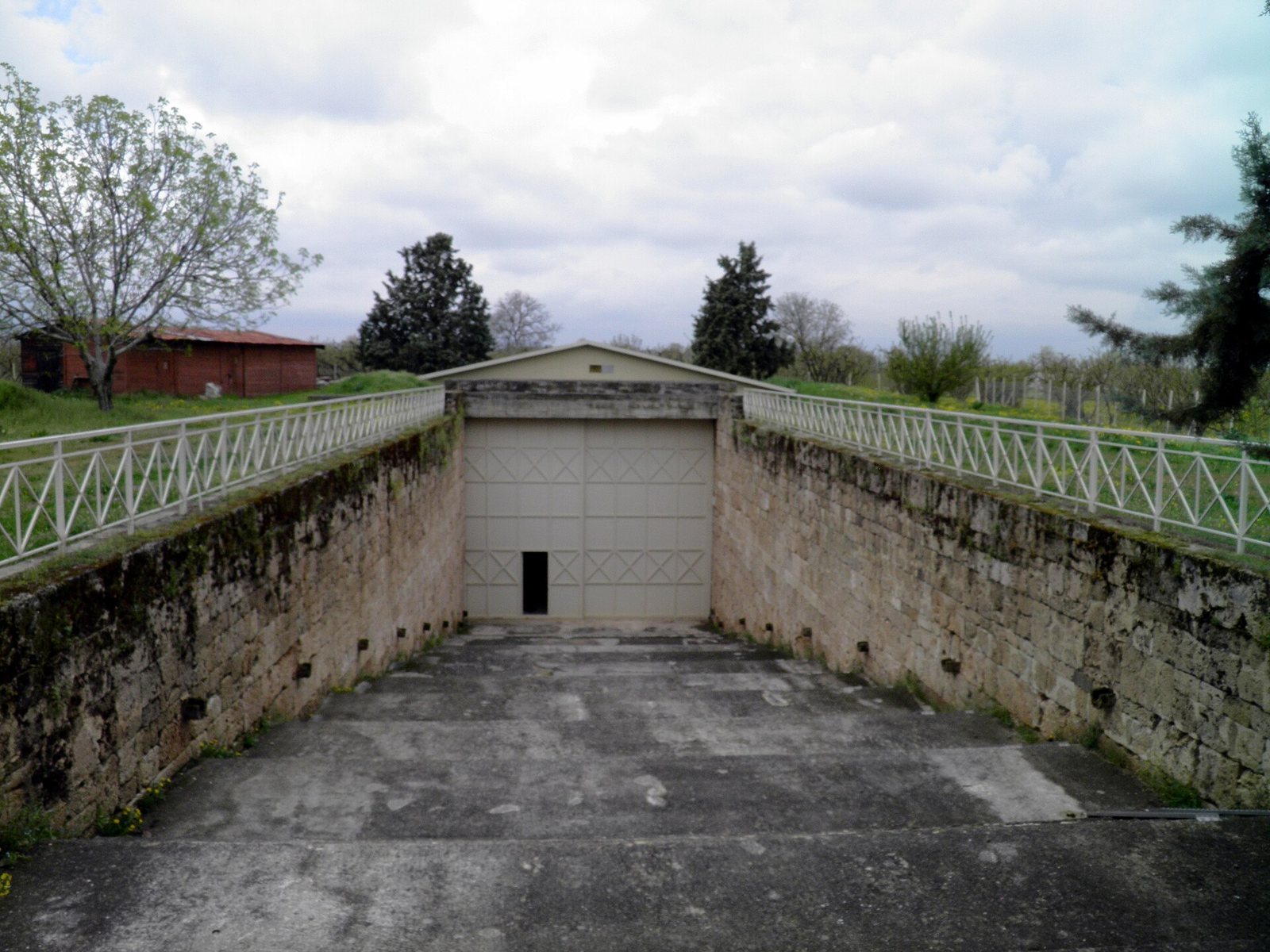
Illegal digging led to the tomb’s discovery in 1971. Archaeologist Katerína Rhomiopoúlou excavated it between 1971 and 1973. A metal shelter was erected over the monument in 1988 to shield it from the weather.
Remains
Mound and painted façade
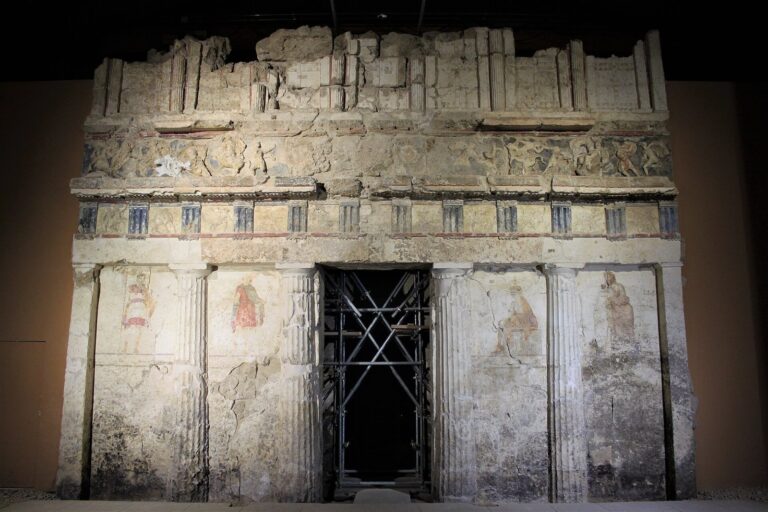
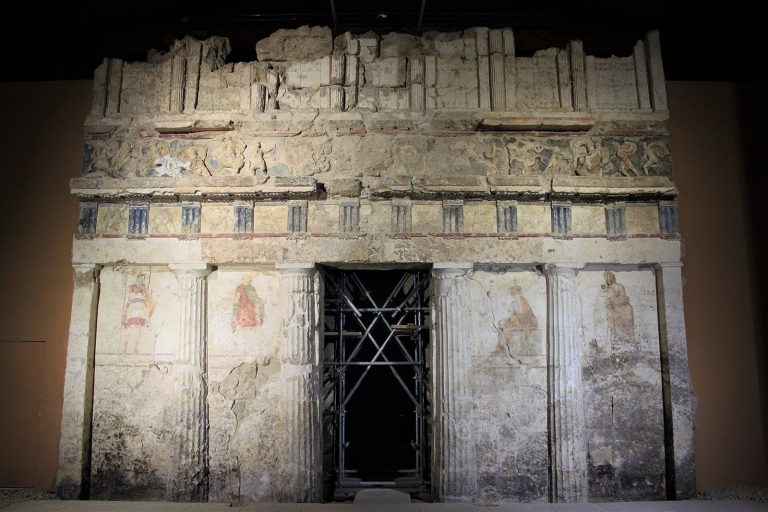
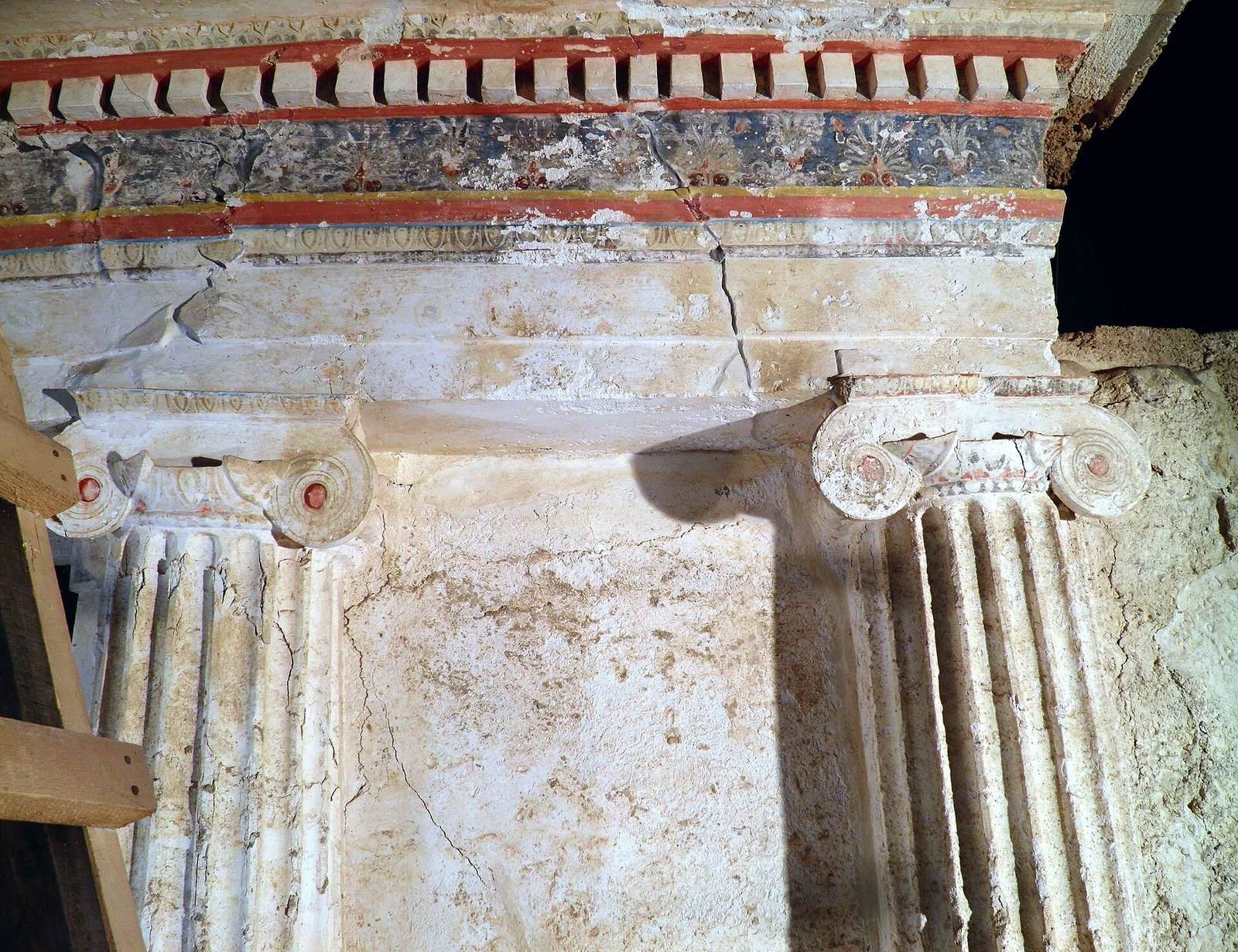
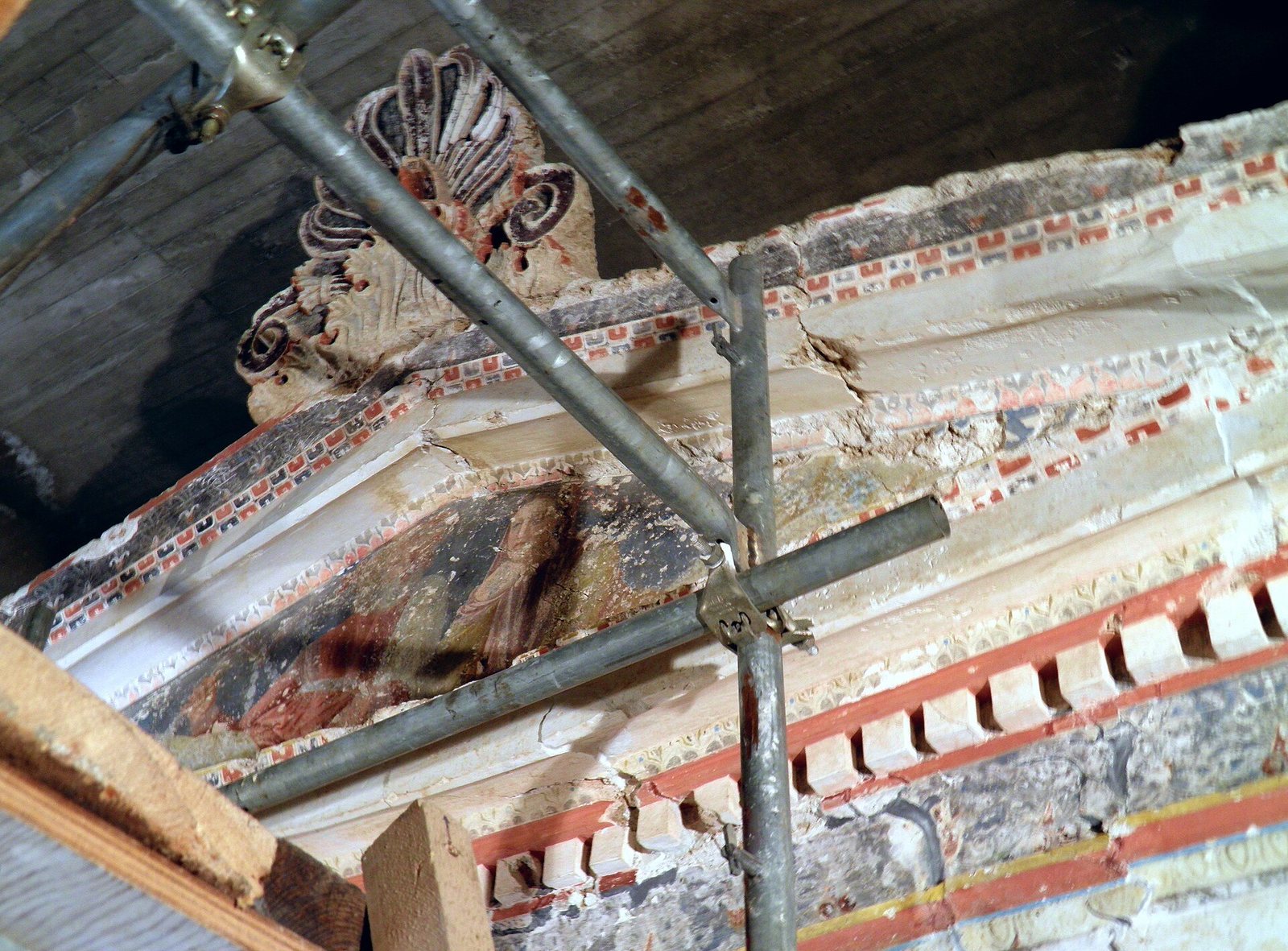
An earthen mound, 15–17 metres in diameter and 2.5 metres high, covers the monumental façade and two vaulted chambers. At Lefkadia, the tomb lies about 230 metres from the Tomb of Judgment and 990 metres from the Tomb of Lyson and Callicles. The façade measures 6.25 metres high and 5.25 metres wide. Four Ionic columns, with scroll-shaped capitals, are attached to its wall and support a horizontal structure topped by a triangular pediment. Palmette-shaped ornaments stand at the pediment’s corners, while six blocks of poros, a porous limestone, sealed the entrance.
The pediment’s dark-blue central panel shows an elderly man and a woman reclining at a symposium, a formal gathering for drinking and conversation. Both face left in three-quarter view. The grey-bearded man wears a red tunic edged in purple and a grey-yellow cloak; he holds a key in his right hand and turns toward the woman. She rests her head on her right arm and wears a yellow tunic with a purple cloak. The pair have been interpreted either as the tomb’s occupants, perhaps a religious official and his wife, or as Hades, ruler of the Underworld, with Persephone, its queen.
Interior chambers and finds
Antechamber
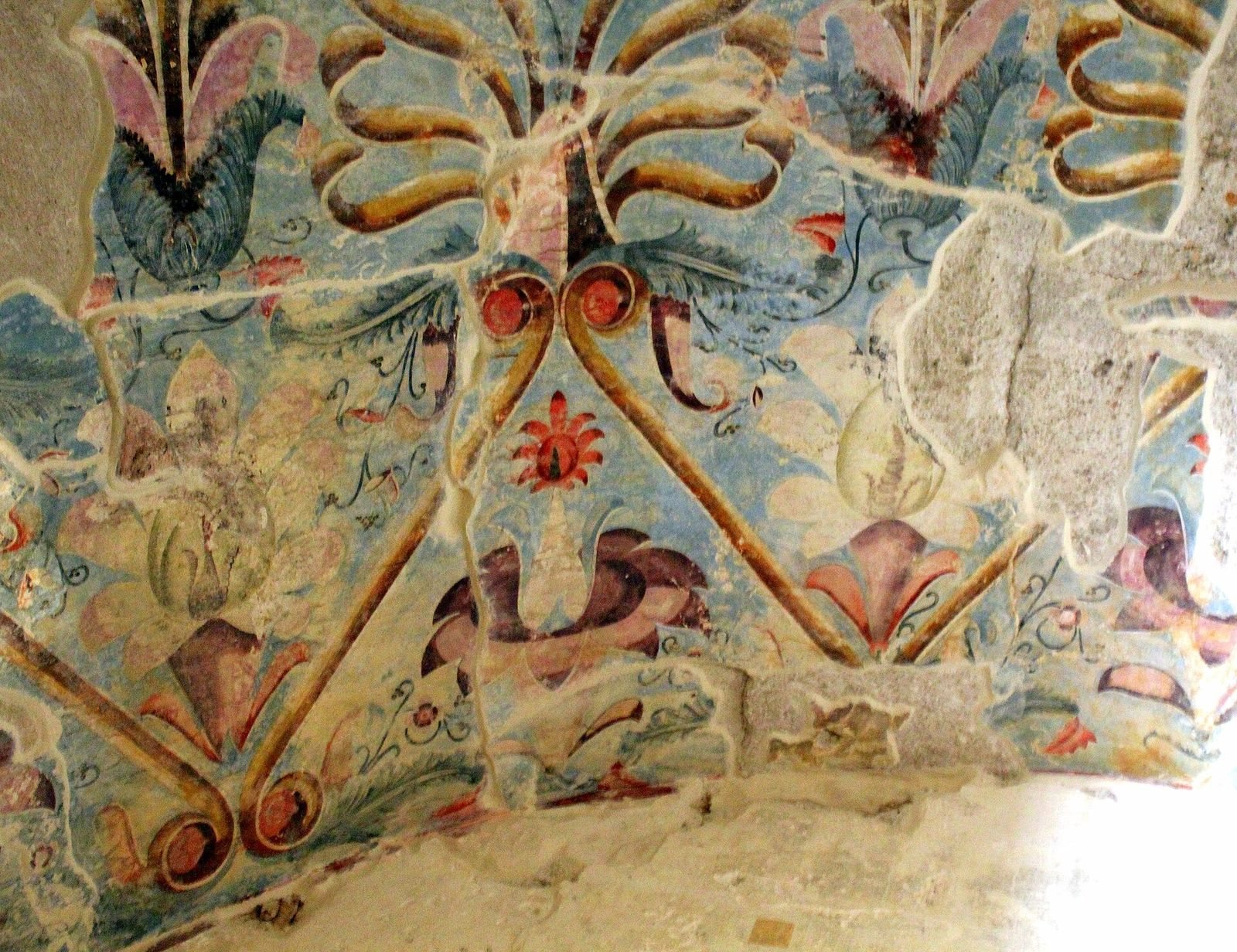
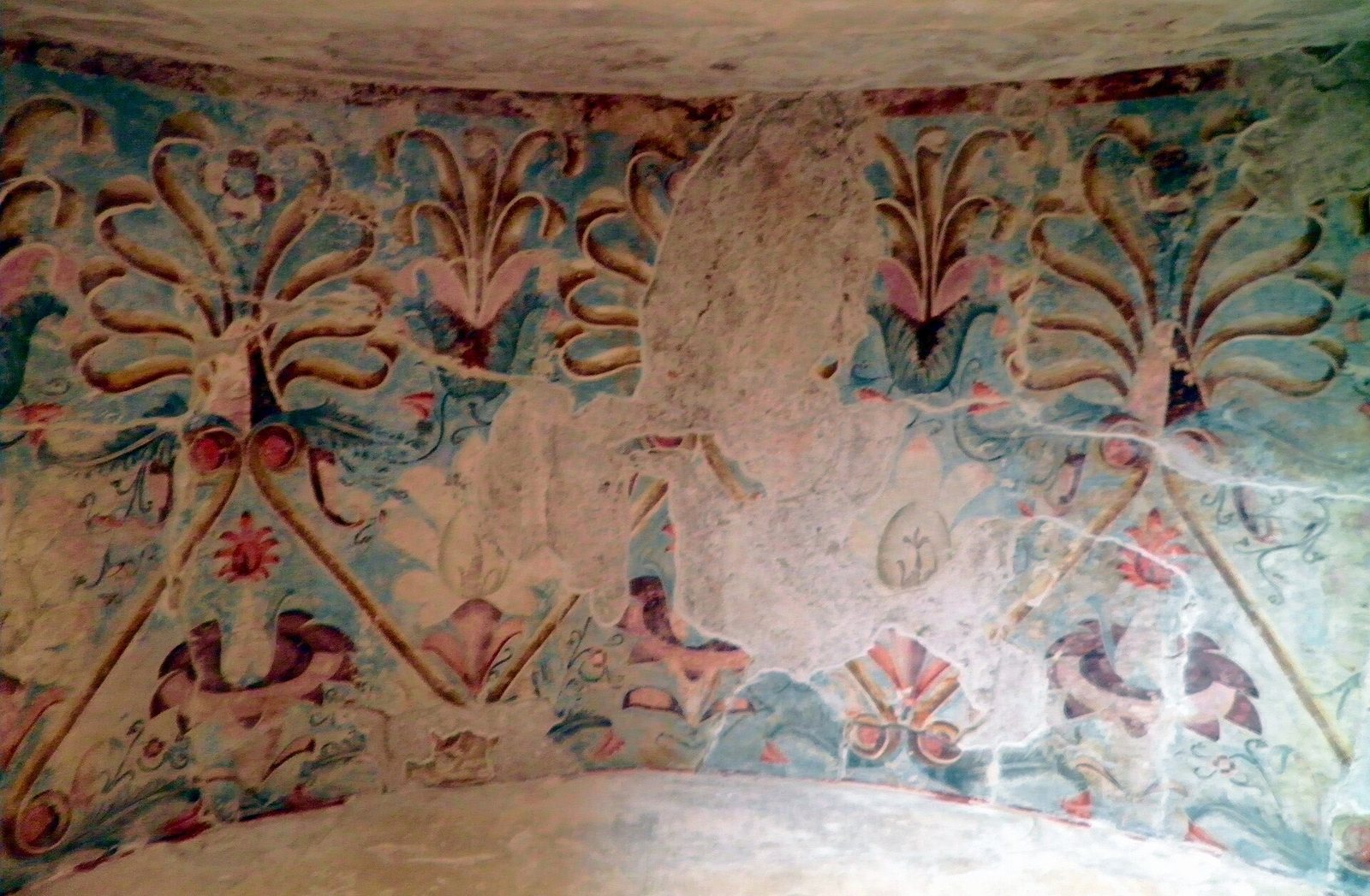
The antechamber measures 4.08 metres wide, 2 metres long and 5.14 metres high. Its walls are painted with three black and two yellow horizontal bands beneath a white upper section. Six palmettes and water lilies decorate the ceiling against a light-blue ground. A marble double door, 3.5 metres high and 0.9 metres wide, once connected this room to the burial chamber; it was found in pieces.
Burial chamber
The burial chamber measures 4.07 metres wide and 5.1 metres long. Its wall paintings imitate marble paneling, with black below and red above, divided by a raised white band. Yellowish plaster coats the ceiling. A poros-stone bench runs along the chamber’s left side. At the rear on the right, a poros-stone base bears a painted olive branch. It once supported a larnax, or funerary chest, containing the ashes of one or more deceased people.
Ivory fragments
Excavations recovered fragments of ivory sculpture, probably showing battle scenes and scenes associated with Dionysus, the Greek god of wine and ecstatic ritual. The pieces are thought to have decorated a wooden couch.