Church of the Sacred Heart in Bukowo Morskie: A Cistercian Gothic Church
Site at a Glance
- Popularity
- Low
- Country
- Poland
- Primary era
- Medieval
- Eras represented
- Medieval, Modern
- Civilizations
- Holy Roman Empire, Kingdom of Prussia
- Site type
- Religious
- Remains
- Church
On this page5 sections
History
Cistercian foundation
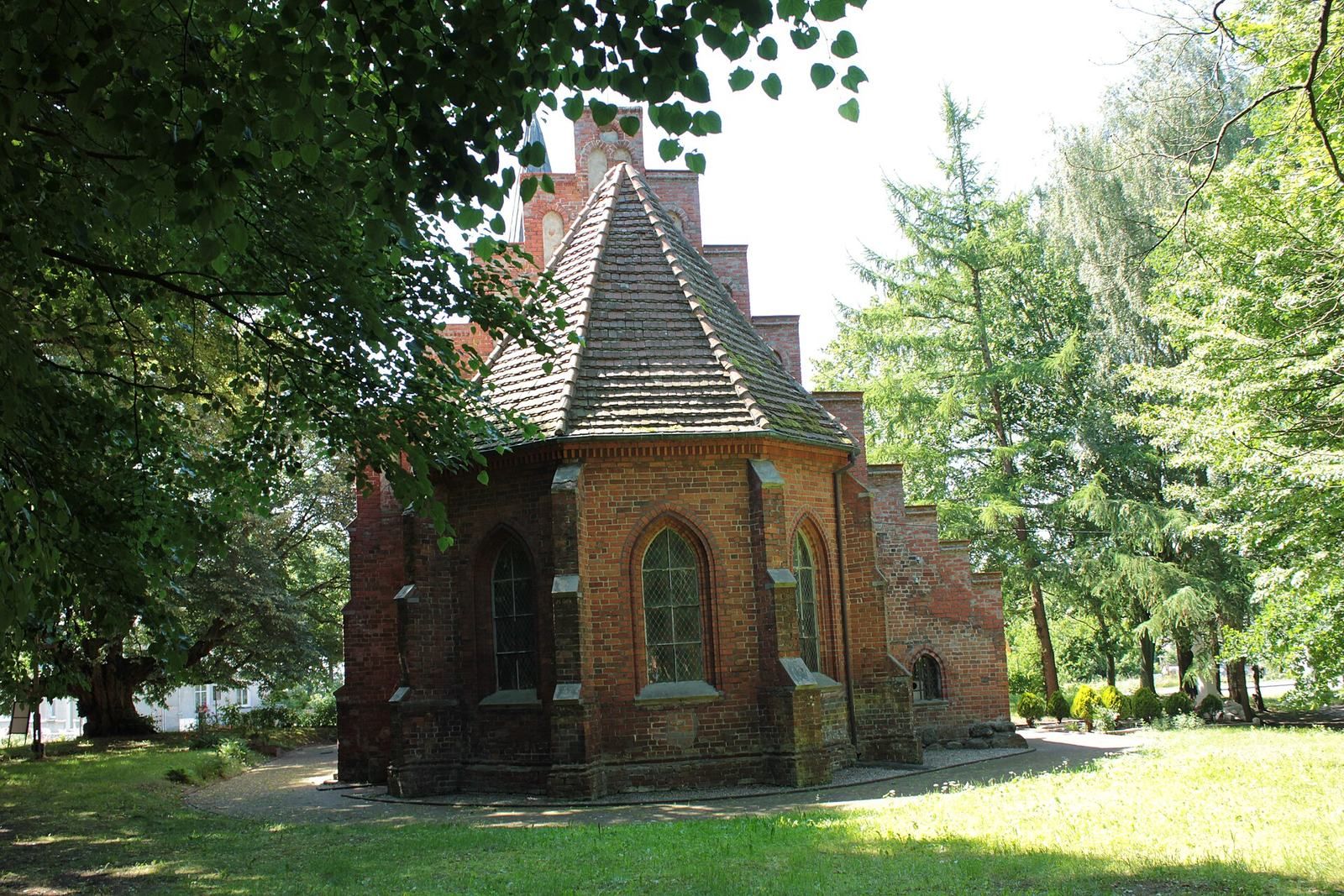
The Church of the Sacred Heart in Bukowo Morskie is a Gothic church in Poland, built by Cistercian monks at the turn of the thirteenth and fourteenth centuries. The Cistercians, members of a Catholic monastic order, arrived in the village in 1252 from their monastery at Dargun in Mecklenburg, at the invitation of Duke Świętopełk II, the medieval ruler of Pomerania. They established an abbey and a large landed estate, which contributed to the economic development of the Duchy of Słupsk, a Pomeranian principality centered on Słupsk. The church was enlarged in the fifteenth century, and the convent remained responsible for it until the sixteenth century.
Protestant use
In 1535, following Pomerania’s adoption of Protestantism at the Diet of Treptow, an assembly of the region’s political estates, the Cistercians were required to surrender the church to the newly established Pomeranian Evangelical Church, a regional Protestant body. A local Lutheran congregation used the church from 1535 until 1945.
Renovation and present use
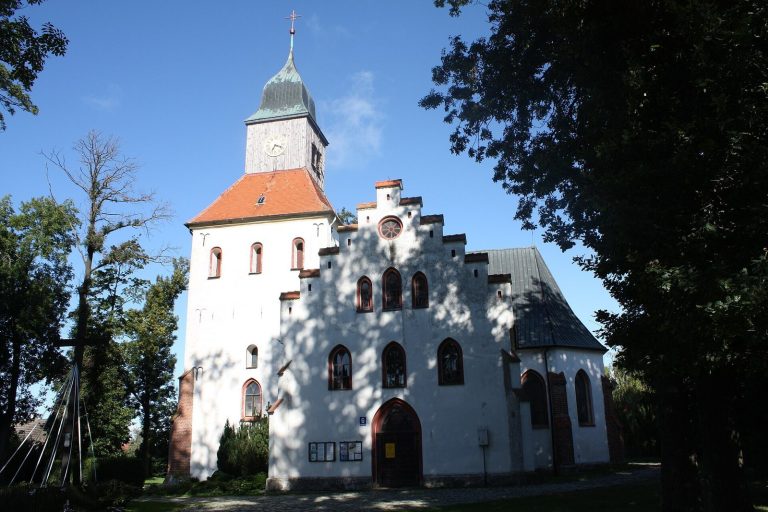
During the nineteenth century, the church was renovated and restored or altered with Gothic forms as part of the Gothic Revival. It was entered in Poland’s register of historic monuments on 11 November 1959. Consecrated in 1964, it has since belonged to the Polish Catholic Church, an Old Catholic denomination, and remains an active parish church in the Diocese of Wrocław. Its dedication is to the Sacred Heart of Jesus, a Christian devotion associated with his love. The liturgical commemoration falls on the Friday after the octave, or eight-day period, of Corpus Christi, the Christian feast honoring the Eucharist.
Remains
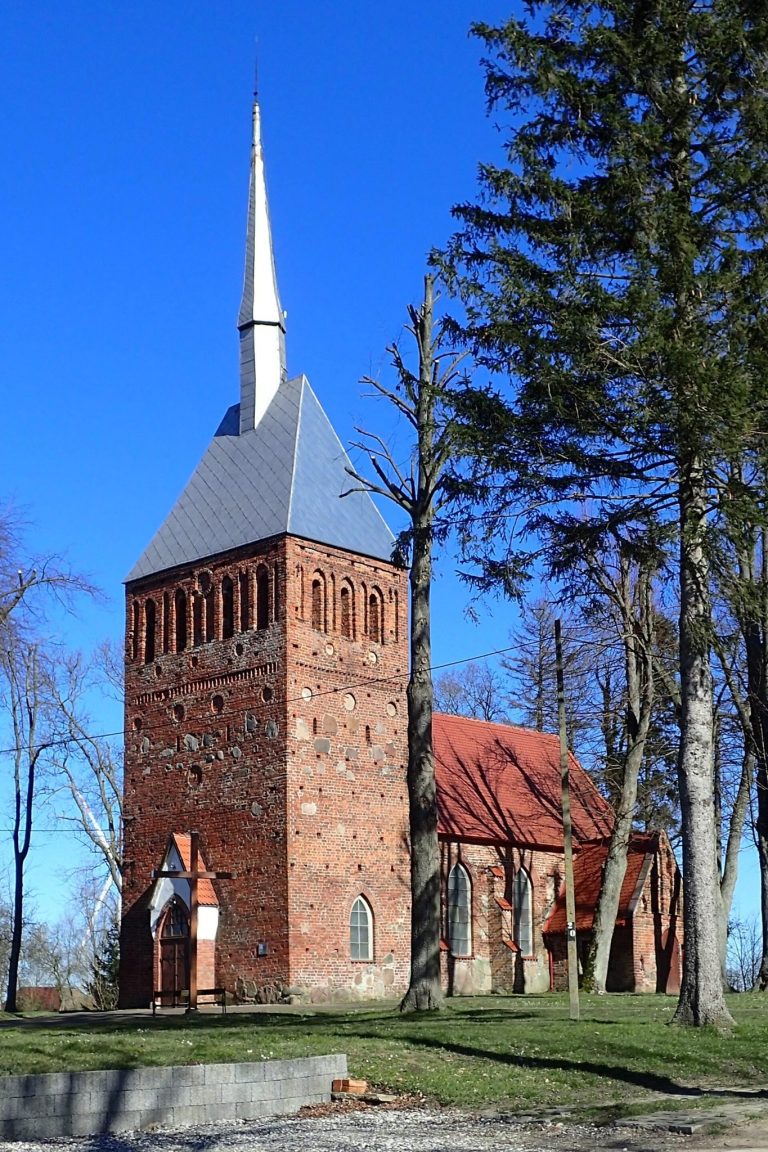
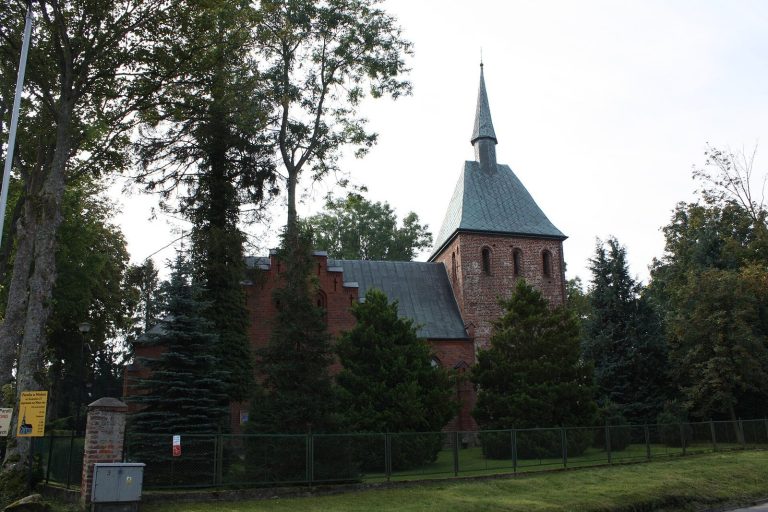
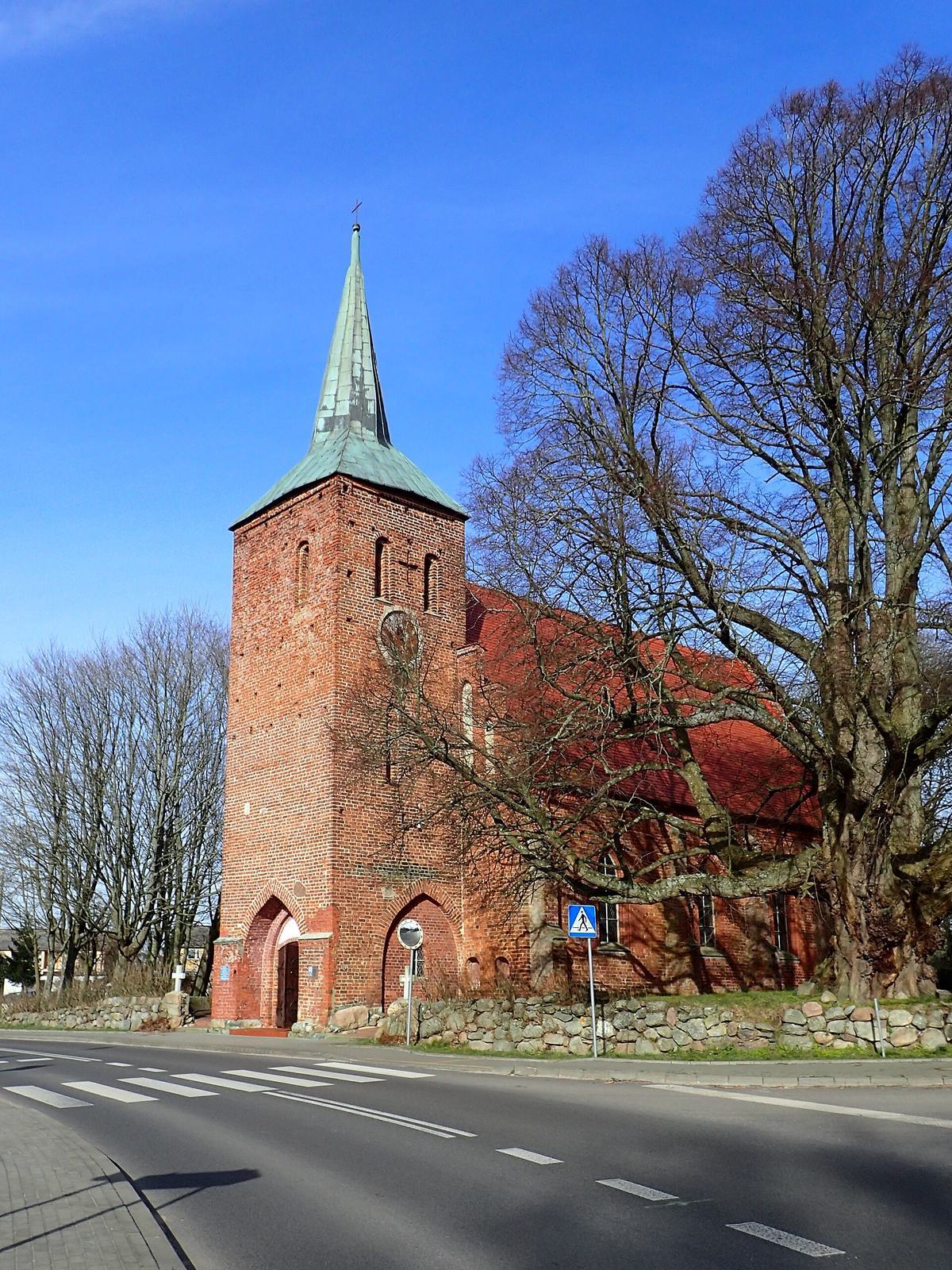
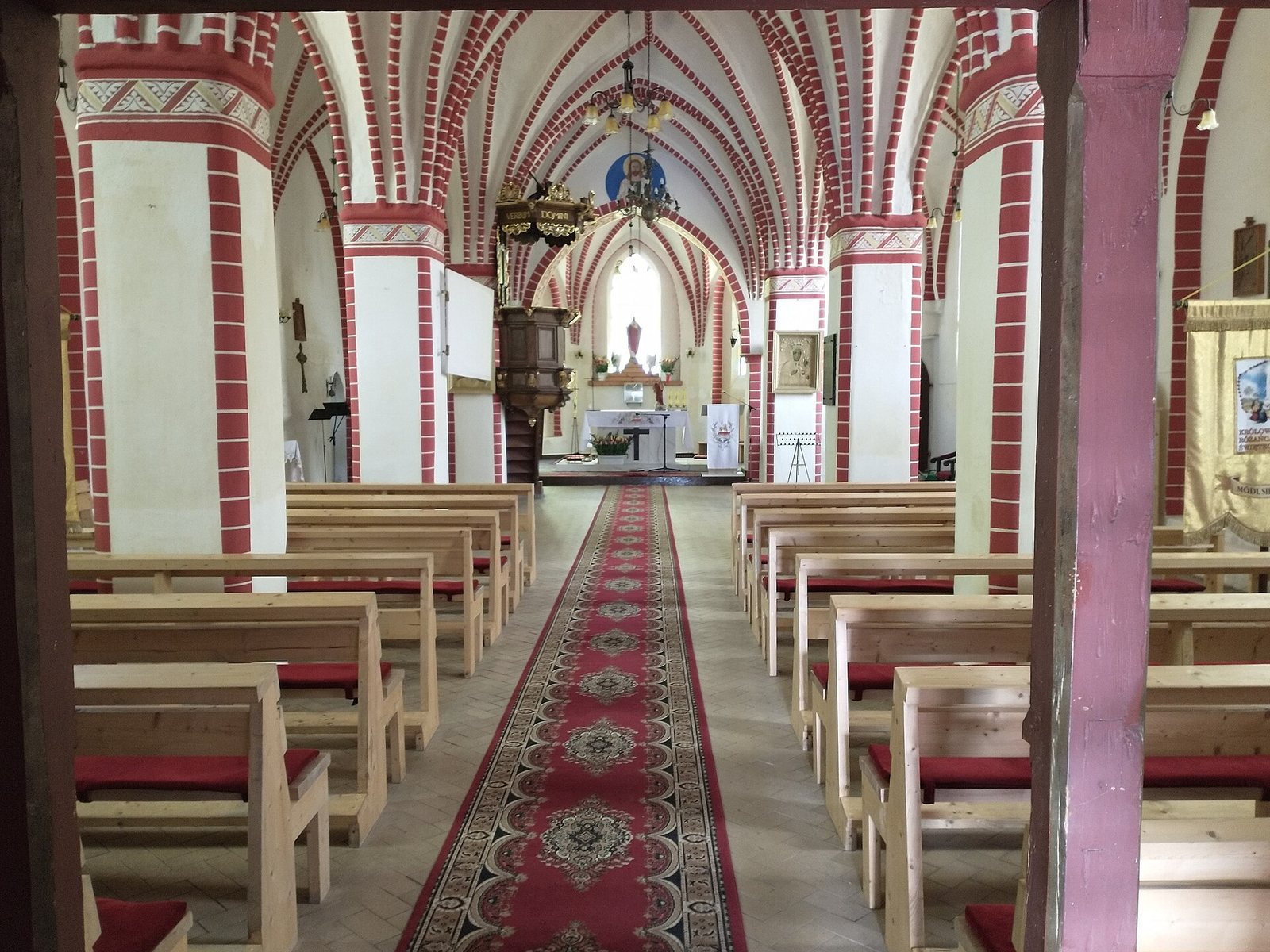
The brick church has a three-aisled hall plan, with the aisles approximately as high as the central nave. Its main body is divided into four structural bays and connects to a single-aisled, five-sided chancel, the area around the altar. A bell tower adjoins the west end of the body and incorporates the belfry. On the north side, a small sacristy, a room for preparing worship and keeping liturgical items, adjoins the church.
An alabaster sculpture of the “Beautiful Madonna” type dates to about 1440. This late-medieval style depicts the Virgin Mary, typically with the Christ Child, in an idealized manner. The sculpture came from the church and is now exhibited at the National Museum in Szczecin.