Maroulas: A Mesolithic Hunter-Gatherer Settlement on Kythnos
Site at a Glance
- Popularity
- Very Low
- Country
- Greece
- Primary era
- Stone Age
- Eras represented
- Stone Age
- Civilizations
- Unclassified
- Site type
- Domestic
- Remains
- House
On this page9 sections
History
Mesolithic occupation
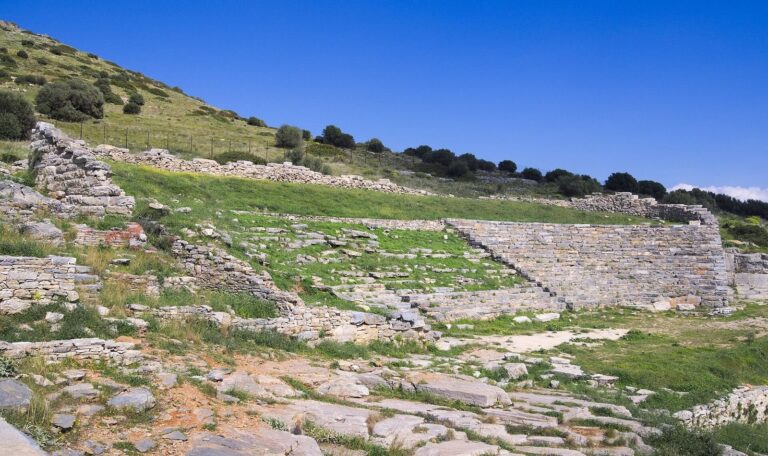
The Maroulas Mesolithic settlement lies near Loutra on Kythnos, Greece. It was occupied around 8800–8600 BC, during the Mesolithic, the Stone Age period between the Palaeolithic and Neolithic. Hunter-gatherer groups lived there, and Maroulas has been proposed as a contender for the earliest settlement in the Aegean islands.
Rebuilding at the settlement suggests that people returned over an extended period, although whether they lived there permanently remains uncertain. Animal remains indicate occupation at least from midwinter to late spring. Obsidian, a volcanic glass used to make sharp tools, came from Milos, suggesting that people crossed the sea to obtain the material or finished implements. Pig remains have not settled whether the animals were domesticated: the sample is small and variable. Since pigs may not have been native to Kythnos, they could have been brought there for hunting.
Identification and excavation
Maroulas was identified as a pre-Neolithic site in 1975, but that interpretation faced strong challenges before an initial investigation in 1995. Excavations by the University of the Aegean and the 21st Ephorate of the Cyclades, a regional Greek archaeological authority, continued from 2001 to 2005 and covered about 2,500 square metres.
Remains
Settlement layout and dwellings
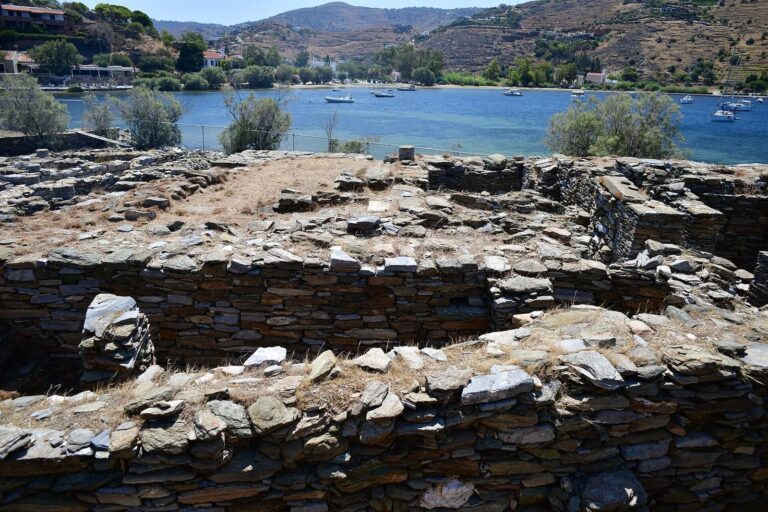
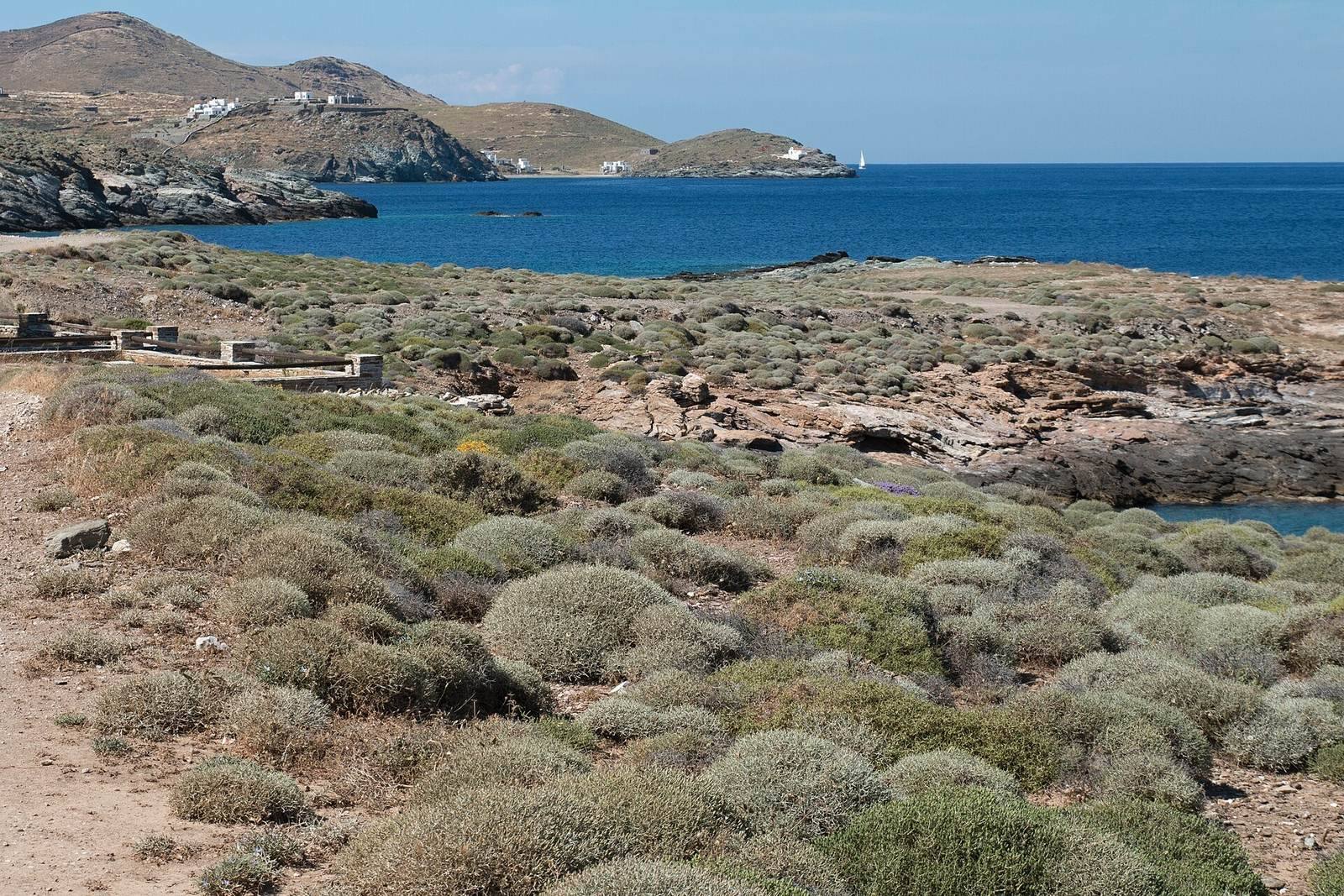
Maroulas is described as the only open-air Mesolithic settlement in the Aegean with preserved architectural remains. Its structures were clustered in the settlement’s central area and more scattered elsewhere. Estimates put their number at 15 to 31, with most, including the most damaged, on the eastern side beside the sea. In the Mesolithic, sea level was about 40–60 metres lower than today, so the settlement was not then on the coast. It now lies at sea level, and a substantial part has been destroyed.
The dwellings were circular, about 3–4 metres across, with stone-paved floors. Some were used more than once, and rebuilding has been interpreted as evidence of prolonged occupation. Comparable dwellings are not known from the Mesolithic of southeastern Europe.
Burial features
Burial structures included two graves cut into soft schist, two shallow elliptical pits edged with small stones, and a shallow pit ringed with stones that supported a large slab. The dead were placed with their bodies flexed. Twenty-six burials are recorded; age assessments identify six children and 19 adults, while sex was identified for eight men and two women. Long bones and a jaw lay beneath the floors of two dwellings, bones were concentrated on the floor of another structure, and some skeletons were found without skulls. These features have been interpreted as evidence of secondary burial. The practices have been compared with those of the Natufian, an archaeological culture of the Levant, while slab-covered burials have been compared with examples at Ain Mallaha and El Wad, also in the Levant.
Stone tools
Most recovered stone tools were made from local quartz, which accounts for about 80 percent of the assemblage. Obsidian from Milos makes up 16.8 percent, and flint is also present. The tools include small flakes, toothed-edge implements, side scrapers, piercing tools, microburins (small pieces produced by a technique for making small stone tools), and notched tools. Flakes are prominent, while small stone tools known as microliths are relatively uncommon, a pattern compared with assemblages at other Greek Mesolithic sites, including Franchthi.
Animal remains
Animal remains include pigs, hares, foxes, polecats, and birds. People also ate tuna-like fish, marine shells, and land molluscs. Pig bones bear burning and cut marks, indicating that they were used as food.
Plant remains and grinding stones
Seeds from plants of open-steppe environments were recovered. Millstones and mortars have been interpreted as pointing to the use of morphologically wild cereals.