Sanctuary of Saint Mary of Graces: A Roman Catholic Complex in Italy
Site at a Glance
- Popularity
- High
- Country
- Italy
- Primary era
- Modern
- Eras represented
- Early Modern, Modern
- Civilizations
- Italian, Kingdom of Naples, Spanish
- Site type
- Religious
- Remains
- Sanctuary
On this page11 sections
History
The Sanctuary of Saint Mary of Graces is a Roman Catholic complex in Italy, dedicated to Mary under the title Our Lady of Grace and comprising a church and an attached Capuchin friary, a house of a Franciscan branch. Residents of San Giovanni Rotondo initiated the first church and convent project in 1538; construction began in 1540 and was completed on 5 July 1676. The old church is Baroque.
First Church and Early Use
The project received approval from the Bishop of Siponto, Cardinal Giovanni Maria di Monte San Savino, who later became Pope Julius III. On 1 February 1575, the church hosted Saint Camillus de Lellis, a sixteenth-century Italian Catholic saint and religious founder.
Padre Pio
Padre Pio, an Italian Capuchin friar and Catholic priest later canonized as a saint, lived and worked at the sanctuary from 28 July 1916 until his death there. He received the stigmata, wounds resembling those associated with Christ’s crucifixion, in the choir of the old church. After his death, his body was kept in the convent crypt before being transferred to the nearby Padre Pio sanctuary, designed by Renzo Piano.
New Church and Later Burials
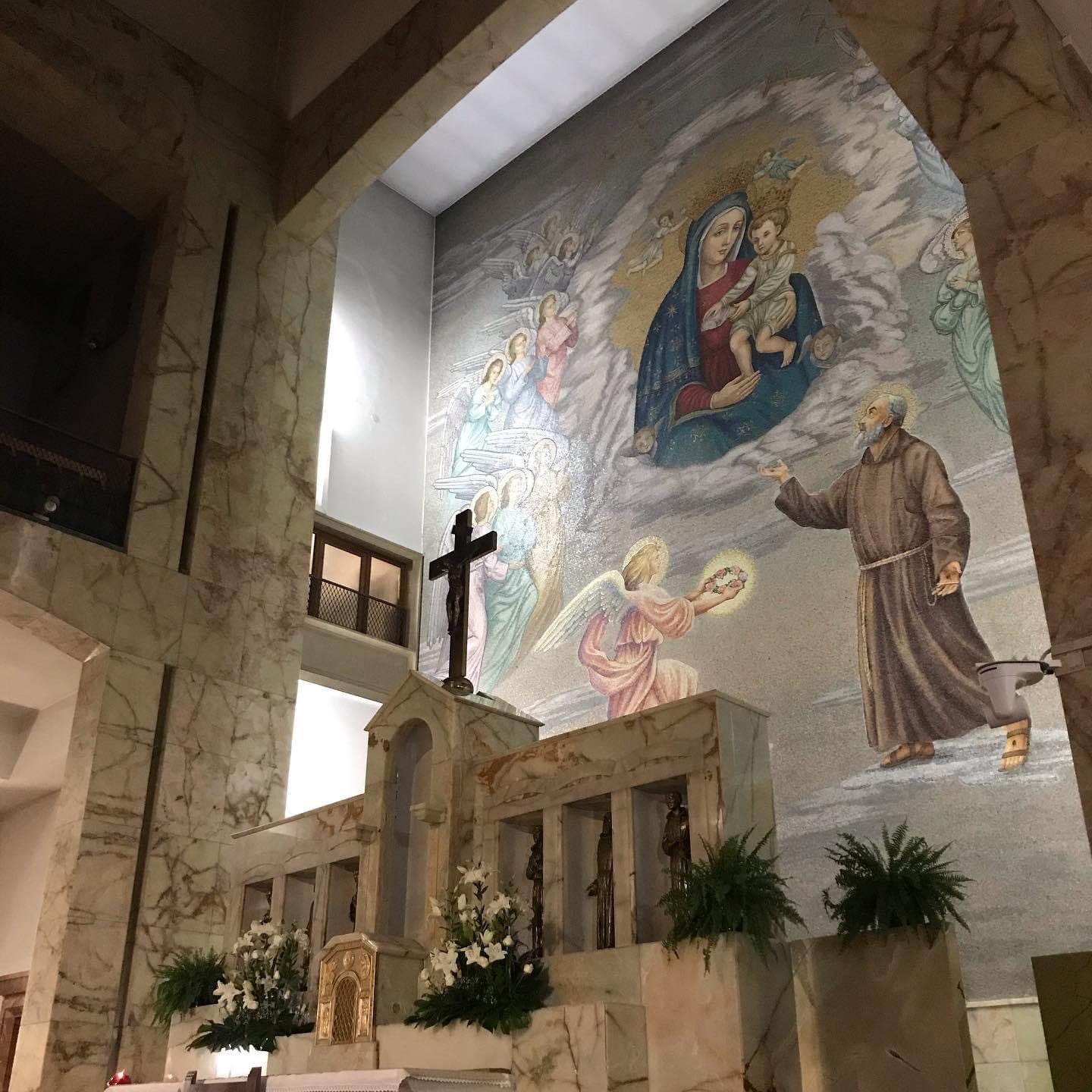
Work on a new church began on 2 July 1956, following a design by Giuseppe Gentile of Boiano intended to accommodate growing numbers of worshippers. The church was consecrated on 1 July 1959. The next day, Cardinal Federico Tedeschini crowned the mosaic of the Madonna delle Grazie. On 10 October 2015, Daniele Natale, an Italian Catholic layman, was transferred from a family chapel in the cemetery of San Giovanni Rotondo and buried in the church’s former baptistery area.
Remains
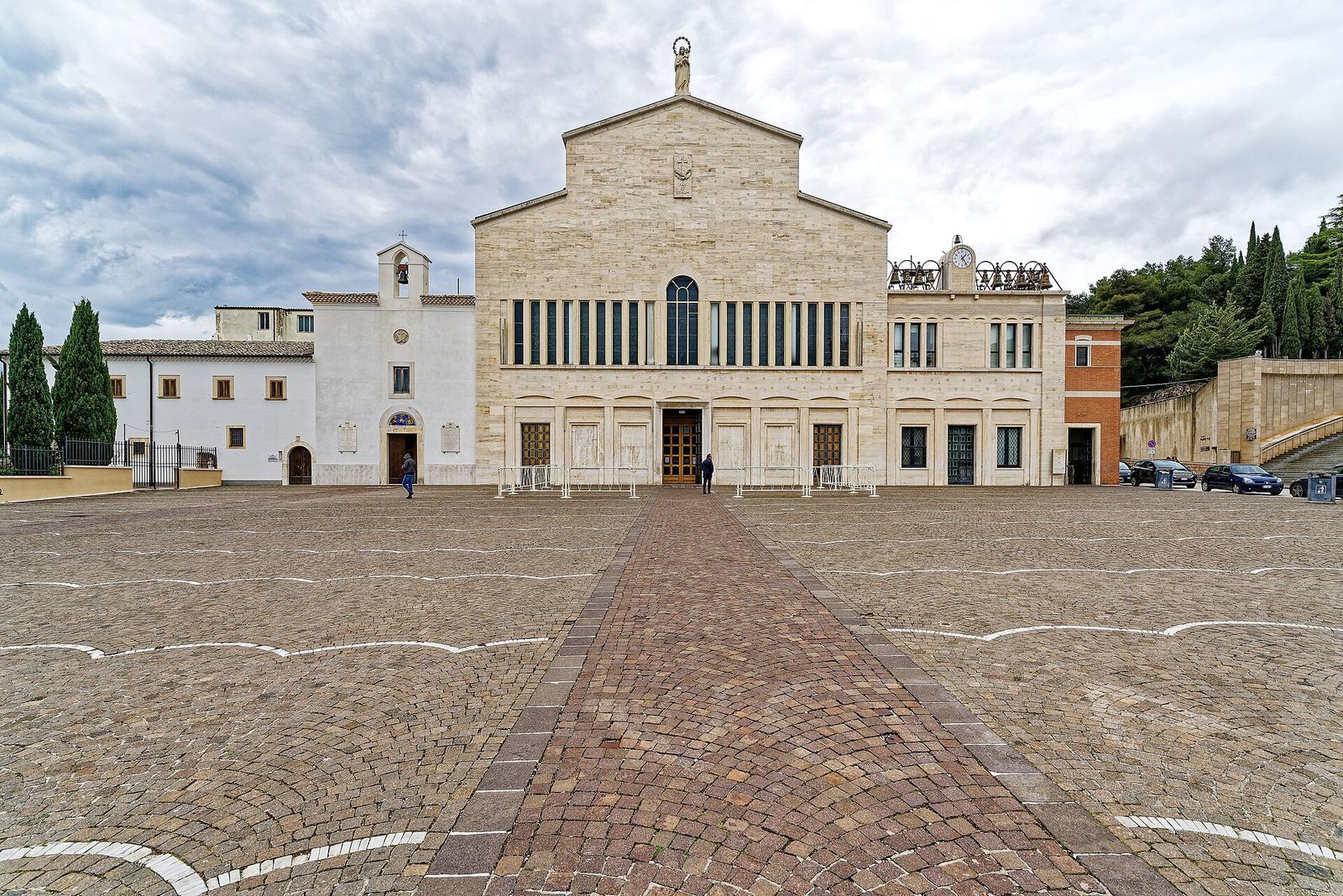
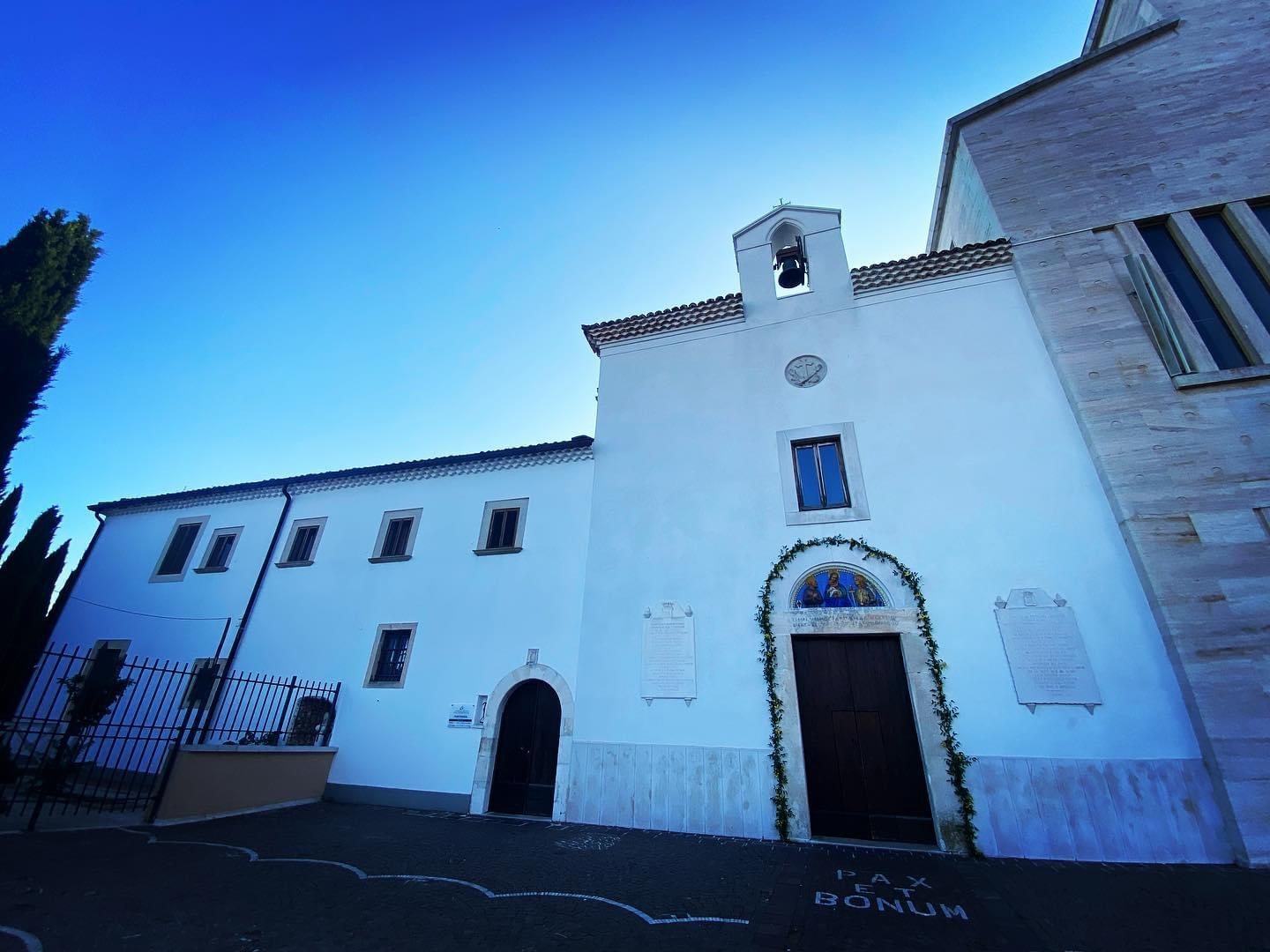
The complex includes the old church, a later church, and the attached convent. Both churches have rectangular plans, but the older building has a single nave while the newer one is arranged in three aisles.
Old Church
The old church has a simple facade with a portal topped by a frescoed lunette, a curved area above a doorway, and a small circular rose window. A central bell gable, a wall structure with openings for bells, completes the facade. Inside, the single Baroque nave, the main worship space, has four side chapels, each adorned with its patron saint. The main altar features a painting of the Madonna and Child, flanked by images of Saint John the Baptist and Saint John the Evangelist. The remains of Saint Massimiana, a martyr, lie beneath a smaller altar; they were brought to the church in ancient times.
New Church
Facade and Interior
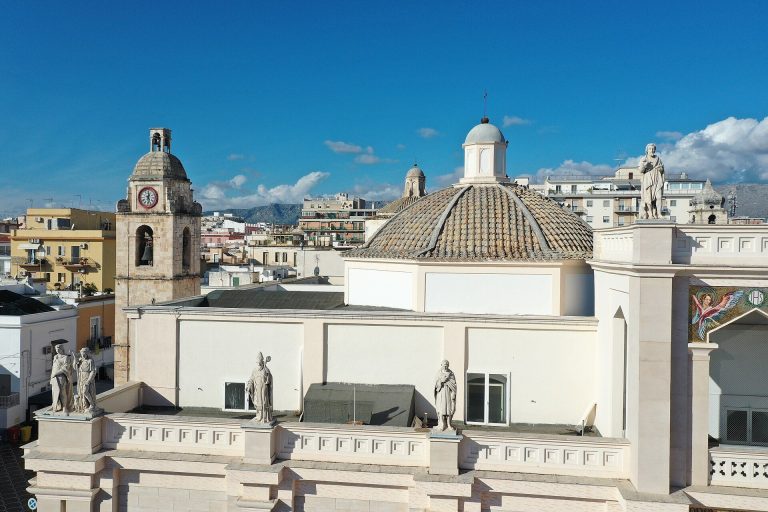
The new church has a gabled facade with seven ground-level loggias, or open-sided galleries, three of which serve as entrances. A large central window is flanked by two tiers of tall, narrow rectangular windows. The sacristy, a room used to prepare for services, stands on the church’s right side, with bells sounded by hammers above it. Marble finishes and green-marble columns feature inside, beneath cross-vaulted ceilings formed from intersecting curved sections.
Altar and Mosaic
The altar is made of red marble and bears a mosaic of the Madonna delle Grazie with the Child. Figures of Saint Pio and an angel were added to the mosaic later, with Padre Pio shown ascending below the Madonna.
Organ
The pipe organ, built by the Bevilacqua firm in 1966, stands in the choir loft to the right of the sanctuary area. It is connected to a second, mechanically operated organ dating from the 2000s. The instrument has 73 stops, which select ranks of pipes, three hand keyboards, and a pedal keyboard played with the feet. Electric action transmits the keys’ operation electrically.
Convent and Burial Features
The convent retains a cloister, Padre Pio’s cell near a second entrance facing toward the cloister, and the crypt. A doorway opposite the crypt stairs leads into a route through the convent that includes the cell and the old church choir. In the church’s former baptistery area, Natale’s burial niche is cut into the floor.