Sanctuary of Santa Rosalia: Palermo’s Pilgrimage Shrine
Site at a Glance
- Popularity
- High
- Country
- Italy
- Primary era
- Early Modern
- Eras represented
- Medieval, Early Modern, Modern
- Civilizations
- Byzantine, Italian, Kingdom of Sicily, Spanish
- Site type
- Religious
- Remains
- Sanctuary
On this page10 sections
History
The Sanctuary of Santa Rosalia is a Roman Catholic shrine on Monte Pellegrino in Palermo, Italy. Palermo’s Senate and Cardinal-Archbishop Giannettino Doria sponsored its construction in 1624, and work began in 1625 after the discovery of remains attributed to Rosalia helped establish her as the city’s patron saint.
Early sacred traditions and local devotion
Monte Pellegrino was regarded as sacred in antiquity. A small pagan shrine among its rocks is associated with the Phoenician period, when seafaring people of the ancient eastern Mediterranean were active. Tradition says that Rosalia, a noblewoman who became a hermit, lived and died in a mountain cave in 1166.
In 1180, Palermo’s Senate built a temple dedicated to Rosalia beside the cave. A nearby church of the Byzantine tradition, linked to the medieval Eastern Roman Empire, was served by Benedictine monks, members of a Catholic religious order. Rosalia’s following was then local. Archbishop Gualtiero Offamilio approved her veneration within his jurisdiction, a local recognition distinct from formal recognition across the Catholic Church. The earliest written evidence of her cult comes from notarial records dated 18 April 1257, preserved at the Benedictine monastery of Santa Maria dell’Ammiraglio, also called the Martorana.
The hermitage and Rosalia’s relics
A community of hermits was established near the grotto by 1474. During a plague that year, its hermitage was restored; it was then the only surviving temple commemorating Rosalia. By 1574 the community was affiliated with the Franciscans, another Catholic religious order. The monastery was suppressed in 1626.
Traditions surrounding the discovery of Rosalia’s remains recount events in 1624. On 13 February, Vincenzo Bonelli, grieving his wife’s death and intending to kill himself, was stopped by a vision of Rosalia and instructed to arrange a procession. On 26 May, Girolama La Gattuta climbed the mountain after dreaming that Rosalia would restore her health. She drank water from the cave and felt cured; later visions of Mary and Rosalia led her to bones. The discovery of Rosalia’s remains is dated to 15 July that year.
Construction and recognition
Doria recognized the remains as authentic, and Palermo’s Senate dedicated the new sanctuary in thanksgiving for the end of the plague. On 9 June 1625, a procession carrying Rosalia’s relics was followed by the epidemic’s cessation and the city’s deliverance. Doria declared the end of the outbreak miraculous. On 26 January 1630, Pope Urban VIII entered Rosalia in the Roman Martyrology, the Catholic Church’s official catalogue of saints and feast days.
Pilgrimage and later custodianship
Rosalia became Palermo’s patron saint, and the sanctuary developed into a longstanding pilgrimage destination. The city’s annual July Festino, a festival held from the 10th to the 15th, commemorates its deliverance from plague with a procession through Palermo. On her liturgical feast day, 4 September, a traditional procession ends with the Acchianata, or ascent, on foot to the sanctuary. Some people climb on their knees to give thanks for a favor, and pilgrims leave offerings. Local tradition also attributes healing power to the cave water.
Johann Wolfgang von Goethe visited the sanctuary in 1787 and wrote about the sacred site and its image of Rosalia, while praising Monte Pellegrino as an exceptionally beautiful promontory. Since 1946, the sanctuary’s custodians have been Orionine brothers, members of the Catholic congregation Sons of Divine Providence. It is a Roman Catholic sanctuary under the jurisdiction of Palermo’s archbishop and follows the Roman Rite, the principal liturgical tradition of the Latin Church.
Remains
Setting and entrance
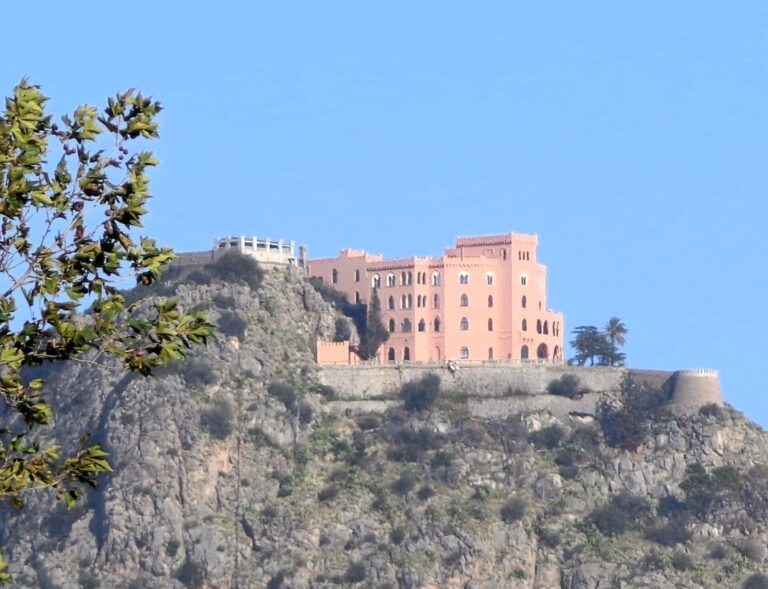
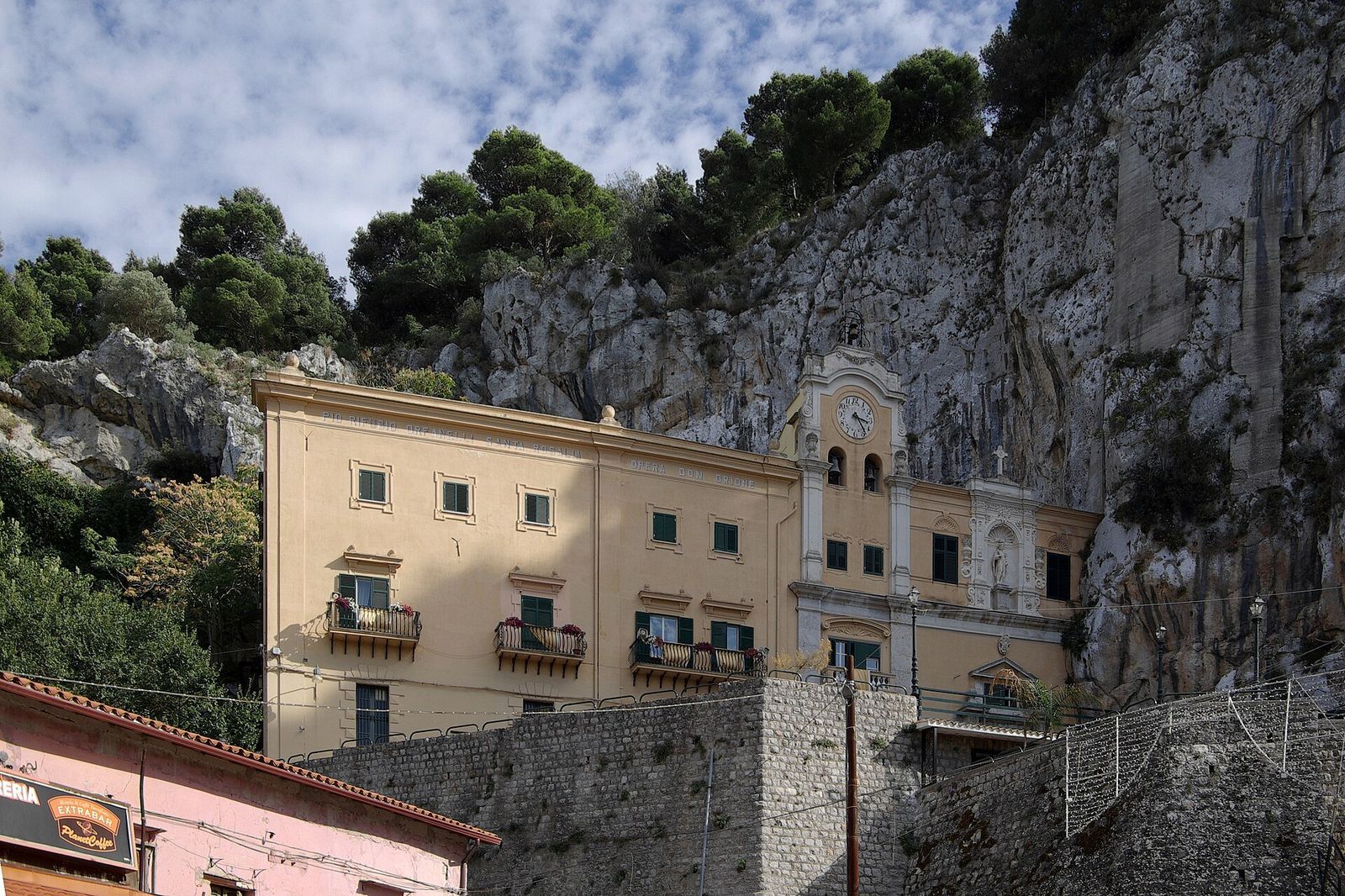
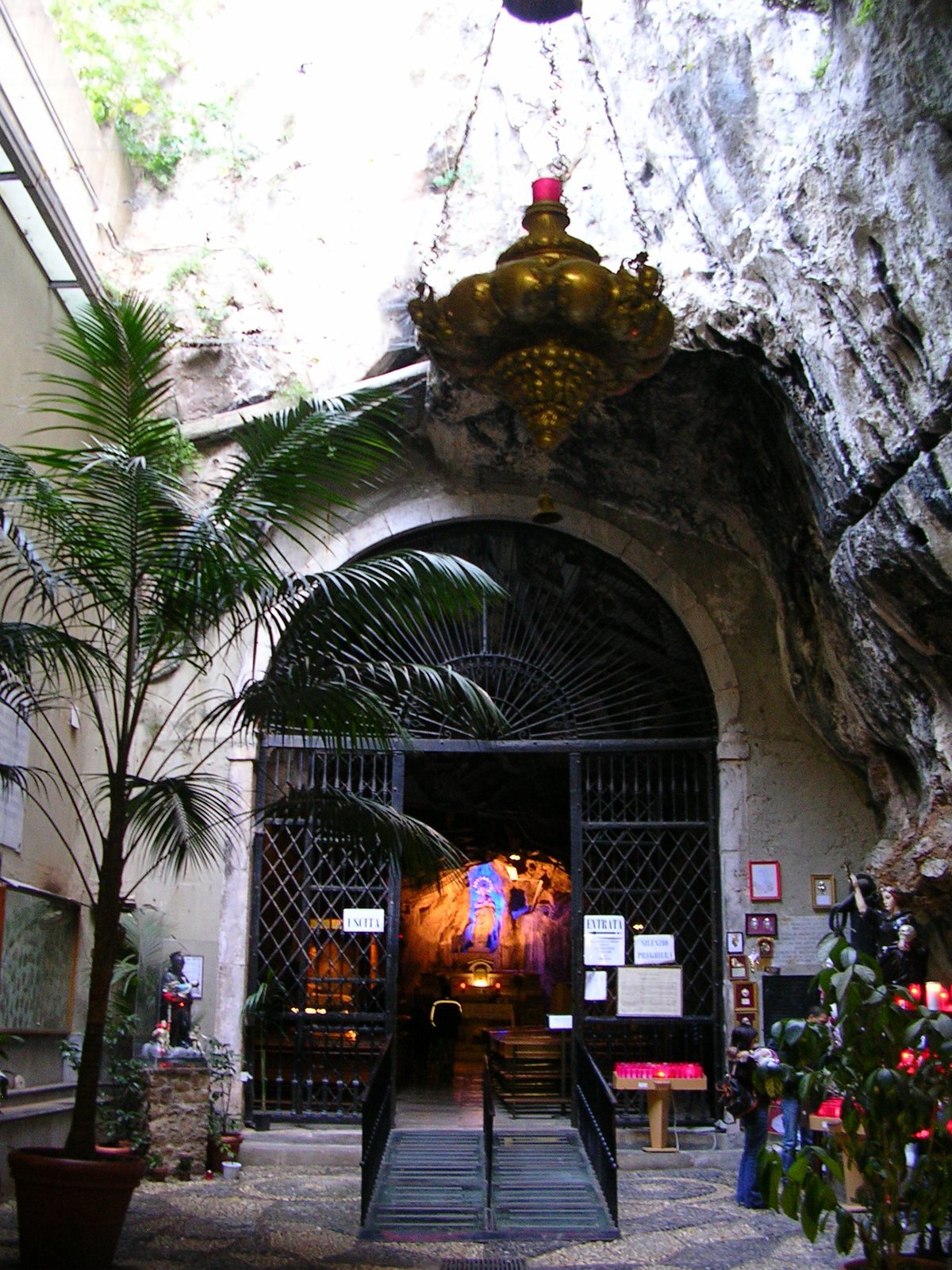
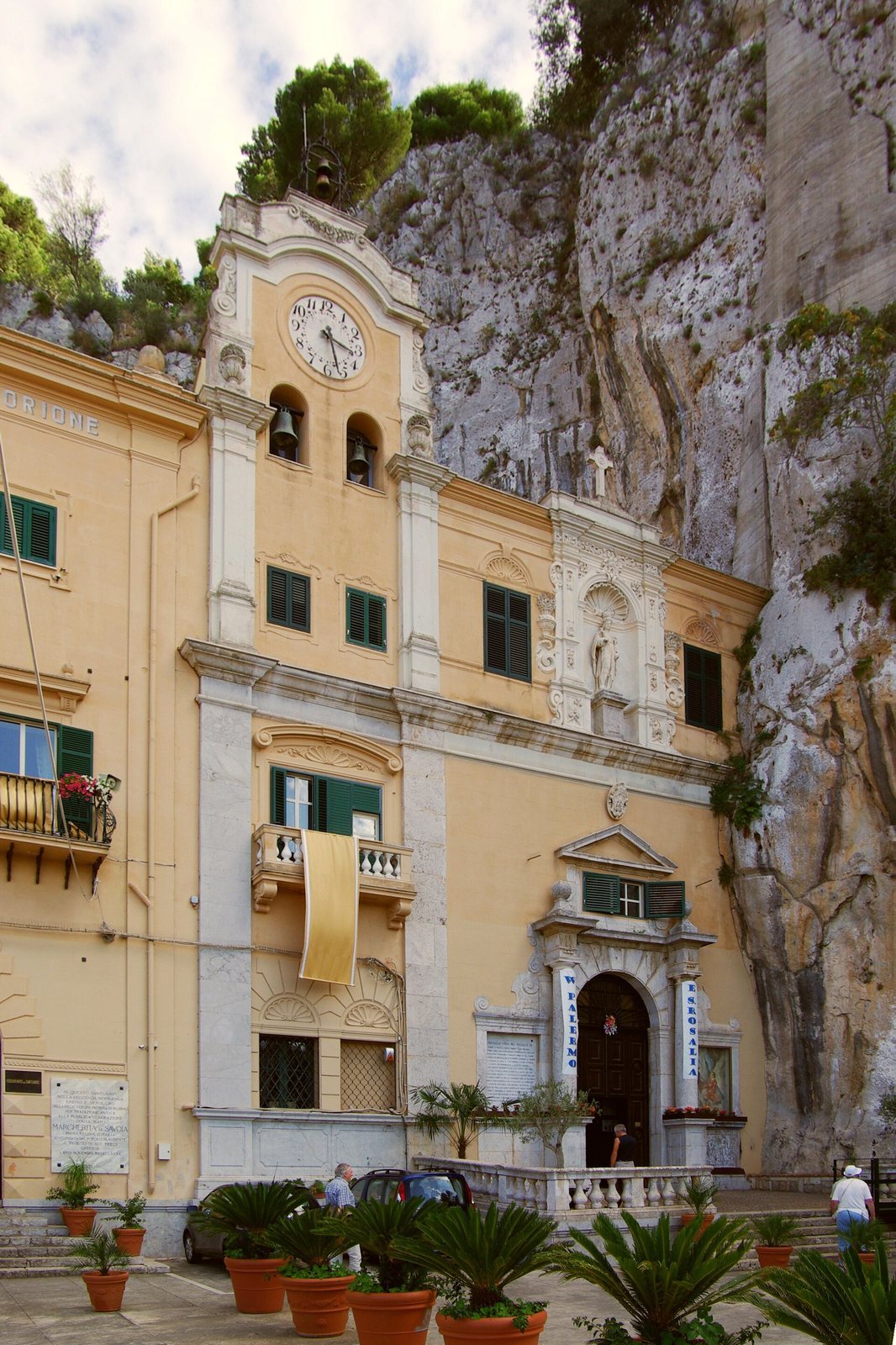
The sanctuary occupies a rocky recess near the summit of Monte Pellegrino, at about 429 metres above sea level. A staircase of more than 70 steps leads to a yellow, three-storey complex built against the cliff. The church façade is on the right; the structure on the left carries a frieze referring to a refuge for orphan girls and the work of Don Orione, the priest who founded the Orionine congregation. An open-air atrium leads into the grotto, with plaques recalling the veneration of Rosalia by various kings.
The grotto and its furnishings
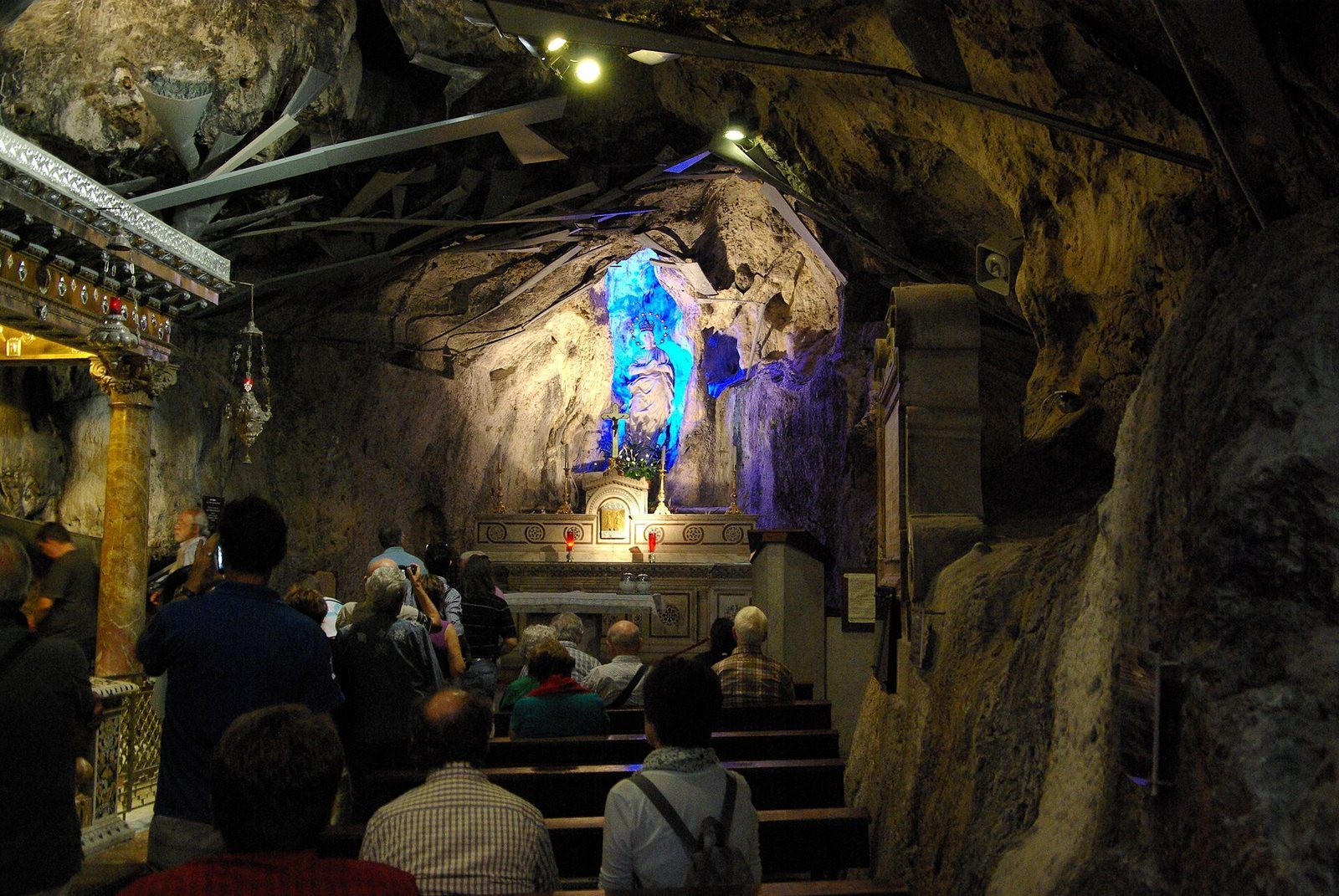
The grotto extends about 25 metres into the rock and is no more than 10 metres wide. Water runs from the ceiling and is channelled outward through metal fittings along the rock overhead. On the left, beneath an ornate Baroque canopy, is a marble sculpture by Florentine artist Gregorio Tedeschi, made in the 1620s. It portrays Rosalia in religious ecstasy at death, wears a gold garment, and is displayed in a glass case; a standing statue of the saint is also in the grotto. Behind the main altar, a rocky niche holds Giuseppe Albino’s marble sculpture of the Immaculate Conception, the Catholic belief that Mary was conceived without original sin, made in 1656. A relief by Nunzio La Mattina, dated 1636, is on the right wall, opposite a marble bust of Rosalia. The grotto also contains devotional offerings, a fifteenth-century wooden crucifix, and historic religious and artistic objects.
Treasury and collections
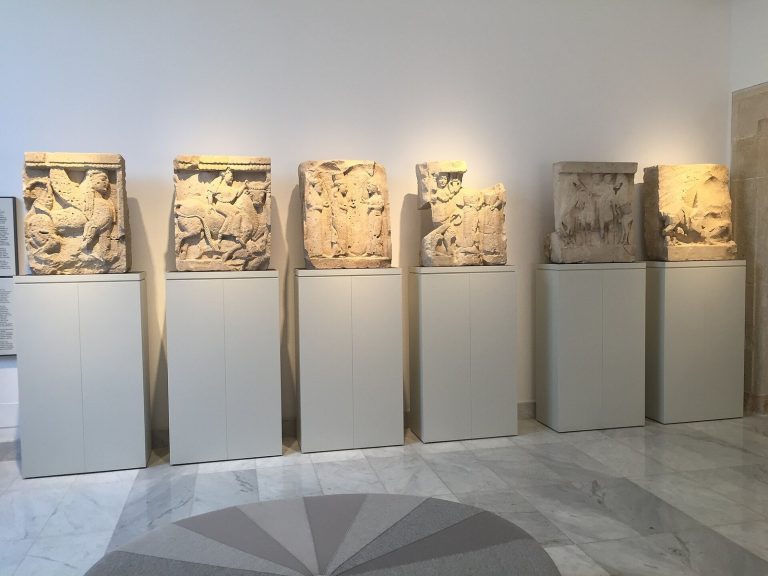
Restoration work uncovered a concealed treasury room behind a reinforced door dating to the seventeenth century. Its recovered contents include silver and gold objects, chests, furnishings, and items used in worship; nearly all are unique and well preserved. The restored objects were brought together in a museum inaugurated in 2018.
Features around the sanctuary
A ground labyrinth made of stones lies northwest of the sanctuary. At a viewpoint north of the building, overlooking the sea, stands a graffiti-marked statue of Rosalia dating to 1963. The pole she holds functions as a lightning rod. Earlier statues installed in 1663, 1750, and 1880 were damaged by lightning.