Church of San Giovanni Battista: Mother Church of Vittoria
Site at a Glance
- Popularity
- Medium
- Country
- Italy
- Primary era
- Early Modern
- Eras represented
- Early Modern, Modern
- Civilizations
- Kingdom of Sicily, Kingdom of the Two Sicilies, Spanish
- Site type
- Religious
- Remains
- Church
On this page11 sections
History
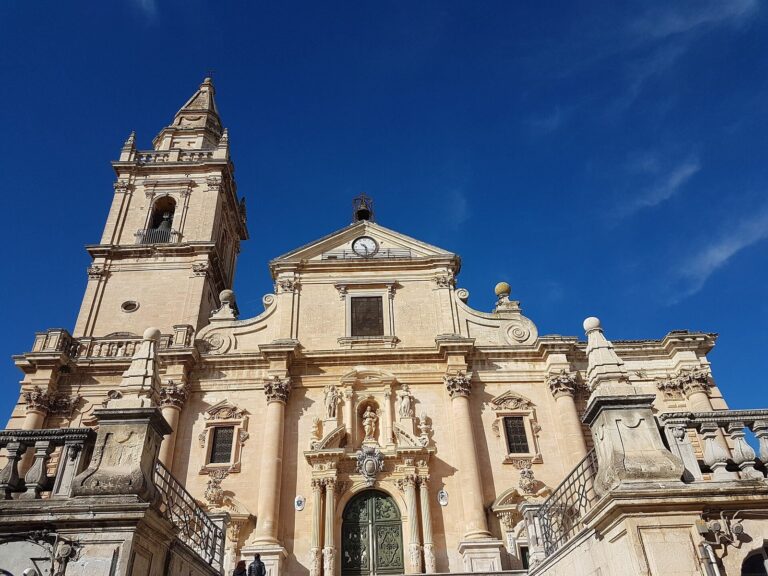
The Church of San Giovanni Battista is an active Roman Catholic church in Vittoria, Italy, and serves as the city’s mother church. It belongs to the Diocese of Ragusa, a territorial church district overseen by a bishop. The present building was begun in 1695 and completed in 1706, after an earthquake prompted the replacement of its predecessor. Its Baroque character took shape through the façade and decoration developed in the following decades.
The predecessor and the 1693 earthquake
The earlier church, also dedicated to John the Baptist, stood in the Piazza Trinità area and was known by the early seventeenth century. Its route to the convent of the Grazie followed the way now called Via Principe Umberto. Although chaplains served it, the church performed parish duties, including baptisms and marriages. In 1640, Vincenzo Sesti became its first parish priest and remained in the office until 1647.
In 1693, an earthquake struck while children were attending catechism in the church, killing forty of them. They were said to have been the only people killed in Vittoria. A tradition connected the tragedy with the choice of the church’s patron: residents placed the names of saints venerated there in an urn and drew a name three times, each time drawing John the Baptist.
Rebuilding and the Ricca period
Parish priest Mario La Lisa laid the new church’s cornerstone on 10 August 1695. Construction was completed in 1706. Desiderio Ricca, Vittoria’s first archpriest, a senior priestly officeholder, led the parish from 1715 to 1730. A member of a prominent family of Neapolitan origin, he oversaw the late-Baroque façade and added new altars as the church’s decoration continued.
In 1730, Desiderio was succeeded by his relative Enrico Ricca, who carried on the embellishment. Bishop Matteo Trigona of Syracuse consecrated the church on 16 May 1734. On 5 April 1750, it received the honorific title of minor basilica, a distinction for a Catholic church that does not make it a cathedral. It was affiliated with Santa Maria Maggiore in Rome, a major basilica also traditionally known as the Liberian Basilica. From 1730 to 1785, the church’s development was associated with the Ricca family.
Parish leadership in the nineteenth century
The period from 1847 to 1909 is associated with Giuseppe Scrofani and Federico La China. Scrofani led the parish until 1880, when La China succeeded him; the period ended with La China’s death in 1909. San Giovanni Battista remains an active Catholic church and retains its title of minor basilica.
Remains
Plan and exterior
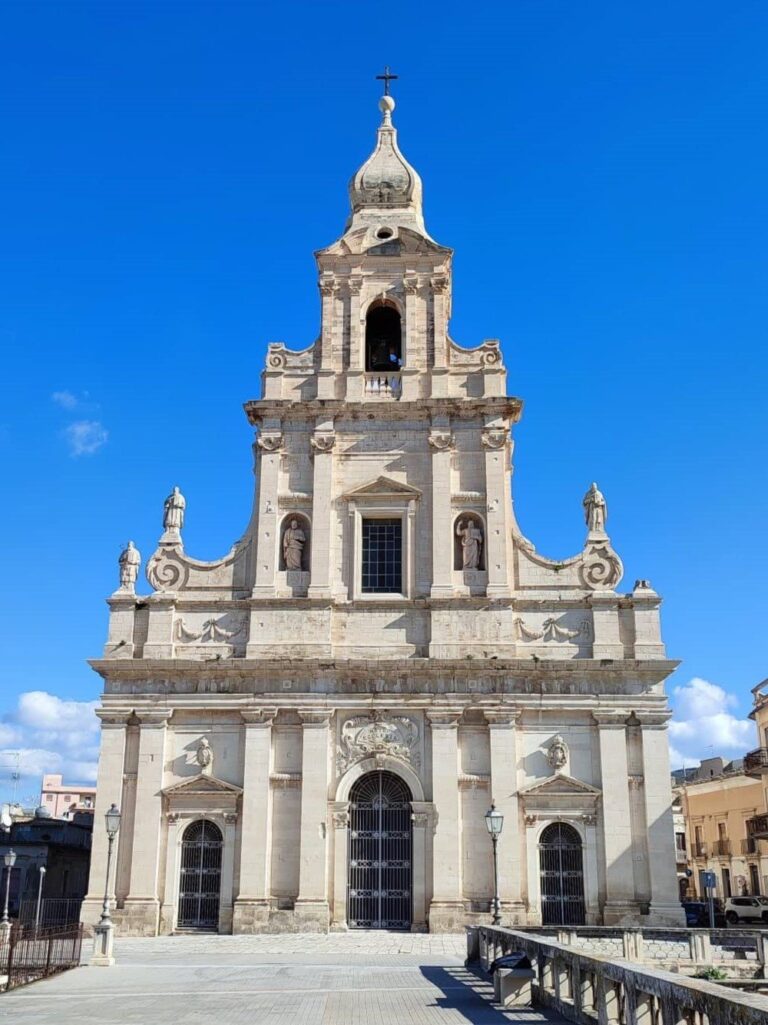
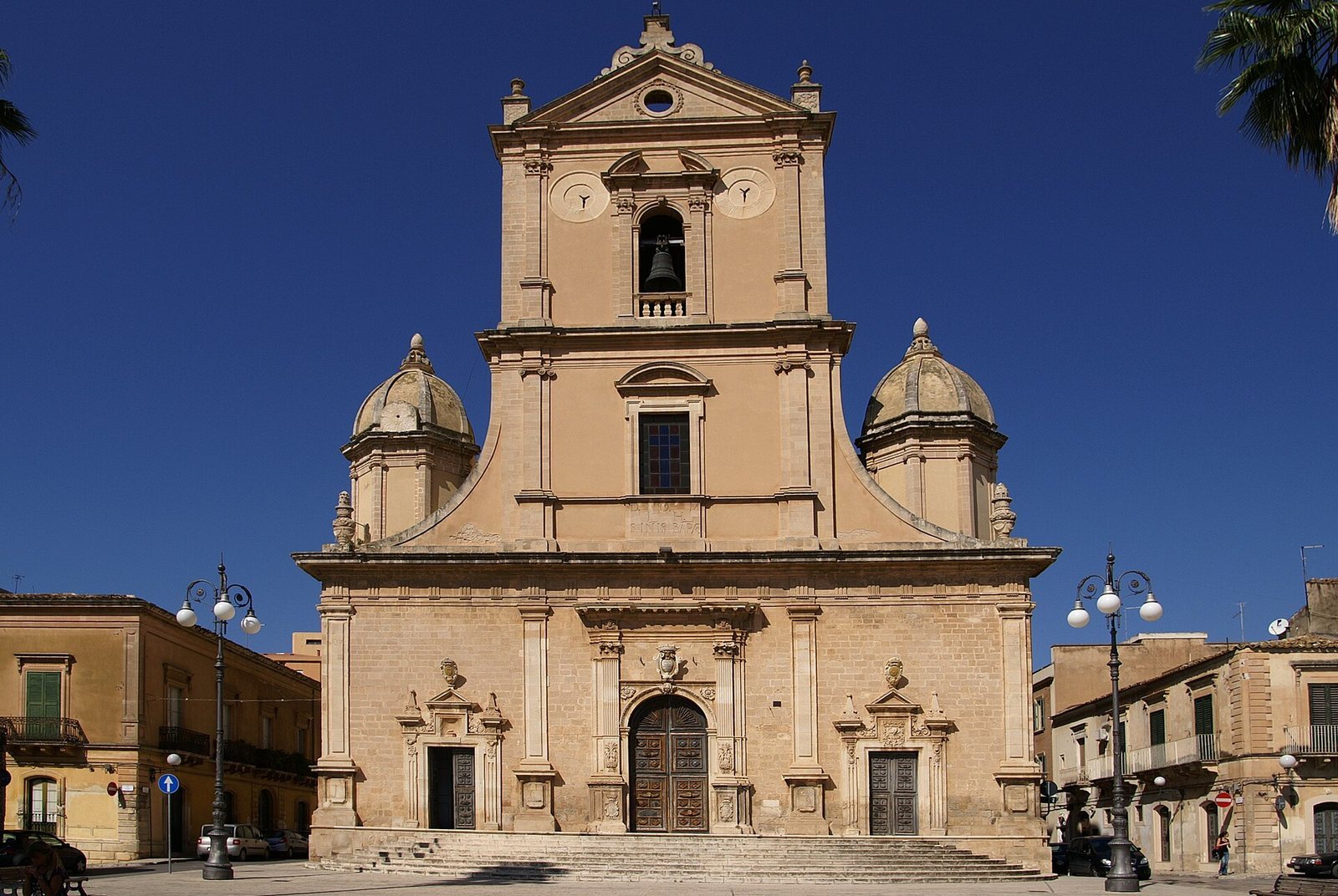
Standing in Piazza Ferdinando Ricca in Vittoria’s historic center, the church has a Latin-cross plan, with its main body and cross arms arranged in that shape, and three aisles. Corinthian columns support the central nave, or main aisle, beneath a barrel vault, a continuous arch-shaped ceiling pierced by lunette windows set into its curved sides. The sanctuary ends in a rounded apse, or curved recess. The simple Baroque façade is arranged in three horizontal levels. Pilasters, flat strips resembling columns, frame its central section, with Ionic- and Corinthian-style capitals; two small cupolas crown the front.
A dome rises over the crossing, where the main aisle meets the cross arms. Its windowed drum, the structure supporting the dome, was designed by Giuseppe Di Bartolo Morselli in 1850. Completed in 1854, the dome is in the Moorish style.
Interior, memorials, and furnishings
The richly decorated interior includes stucco work, statues, marble, numerous paintings, and a wooden altar. Works by Sicilian artists include paintings by Giuseppe Mazzone, among them the well-known Taledda. Mazzone was commissioned in 1880 to paint the four Evangelists.
Tomb and baptismal font
The church contains the tomb of Vittoria Colonna, Countess of Modica and founder of Vittoria. A painting above the baptismal font, dating to around 1700 and attributed to the Caravaggio school, depicts the Baptism of Christ. The Caravaggio school refers to artists influenced by the Italian painter’s style.
Altar of Our Lady of Sorrows
The church’s altar of Our Lady of Sorrows, a Catholic title for Mary that recalls her sorrow at Christ’s suffering and death, received numerous relics of saints and martyrs.
Floor and pulpit
A marble floor composed of multiple colors dates to 1801. The wooden pulpit was made in the nineteenth century by the master craftsman Carmelo D’Asta.
Pipe organ
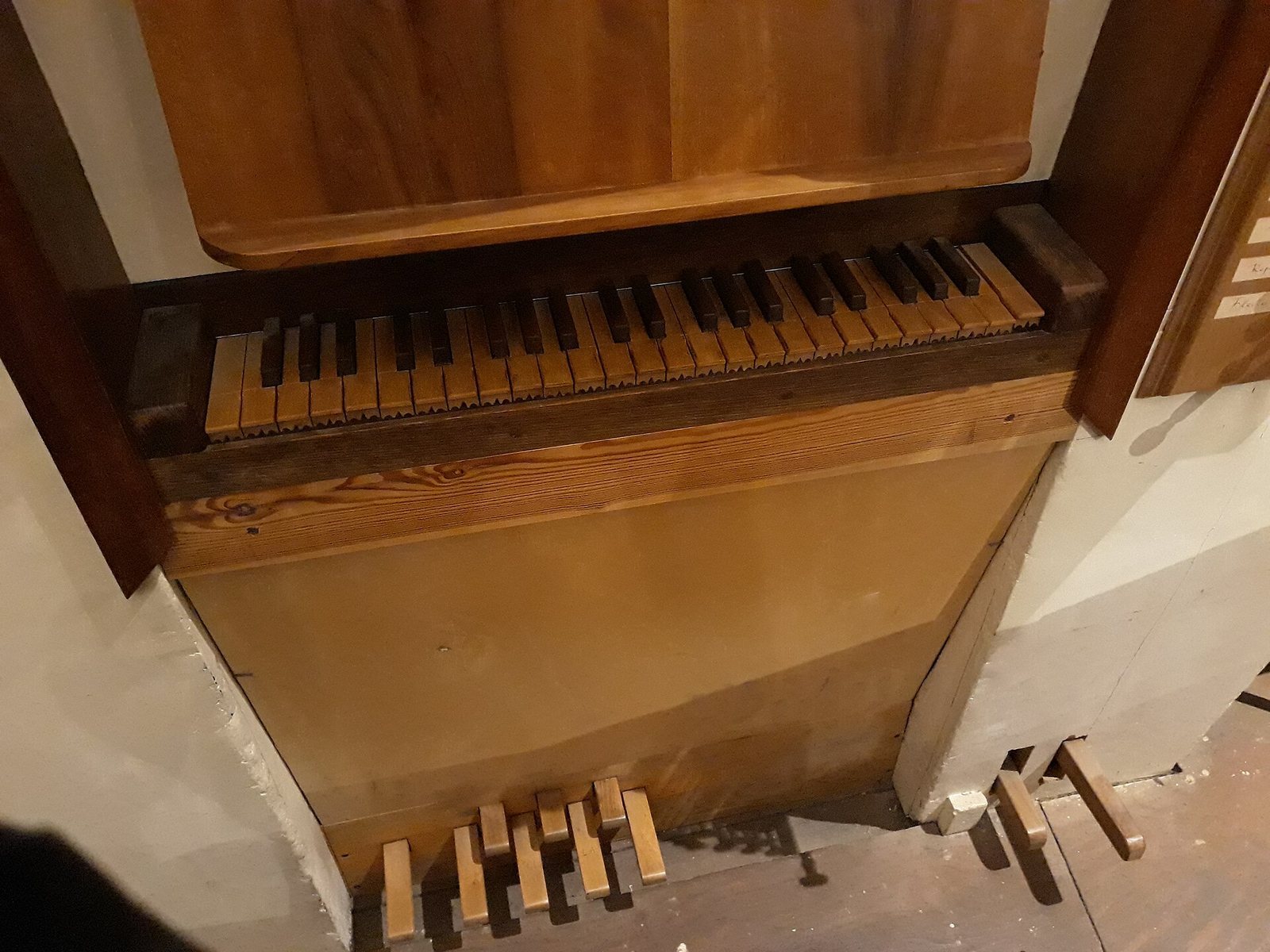
Donato Del Piano installed the Baroque pipe organ in 1748. It stands on the left choir platform in the final bay, or structural section, of the central aisle. The instrument has one 45-key manual keyboard, ranging from C1 to C5 and using a short first octave, in which the lowest notes are omitted or rearranged. Its foot-operated pedalboard is permanently coupled to the manual, has a short octave, and operates eight bass pipes.
The organ has fourteen stops, or sound registers: Principal 16′, Human Voice, Concert Flute, Principal 8′, Octave, Eighth Flute, Twelfth, Fifteenth, Nineteenth, Twenty-second, Twenty-sixth, Twenty-ninth, Repetition (Fifteenth), and Twelfth Flute. Its only accessory is a Ripieno drawstop, a control for the fuller chorus of stops. A pull knob and two pedals engage or disengage it; when engaged, it activates the Fifteenth repetition and the Nineteenth, Twenty-second, Twenty-sixth, and Twenty-ninth stops. The organ was gilded in 1882.