Santa Maria della Campana: A Catholic Sanctuary in Italy
Site at a Glance
- Popularity
- Low
- Country
- Italy
- Primary era
- Early Modern
- Eras represented
- Early Modern
- Civilizations
- Kingdom of Naples, Spanish
- Site type
- Religious
- Remains
- Sanctuary
On this page8 sections
History
Santa Maria della Campana is a Catholic sanctuary in Italy dedicated to the Madonna della Campana, the Virgin Mary in Catholic devotion. The present church was erected in the mid-17th century, probably in 1656, after a deteriorated predecessor was demolished; its consecration is dated to 1639. The sanctuary belongs to the Diocese of Nardò-Gallipoli.
Origins and traditions
The church’s beginnings are uncertain. Some traditions attribute its foundation to the Greeks, while others name the Normans, a medieval people of Scandinavian origin who established rule in southern Italy.
A local legend tells of a herdsman who found an ox kneeling on the hill. As the animal struck the ground with its horns, it traced a cross and a bell rang with each blow. The next day, a feudal lord ordered the spot dug up, revealing a stone catafalque, a raised structure associated with funerary display, bearing an image of the Virgin and Child. He placed the image in a niche and arranged for an oil lamp to burn there each evening. In another part of the legend, a ship’s captain caught in a storm in the Ionian Sea prayed to the Virgin. Following a distant light, he reached shore and found the niche at dawn, then resolved to build a church at the site.
Historical references
The papal bulls dated 1301 and 1308 mention only Sancta Maria de Casarano, a name later identified with the early Christian church of Santa Maria della Croce at Casaranello, not this sanctuary. The earliest reference to a church dedicated to the Madonna della Campana is a 1452 pastoral visit by Ludovico de Pennis, bishop of Nardò.
Devotion and annual observances
The Madonna is a co-patron of Casarano alongside Saint John the Almsgiver, a seventh-century patriarch of Alexandria remembered for charitable works. She is also regarded as the protector of quarrymen and former miners who extracted local carparo, a building stone quarried in the area.
The annual festival is held on Sunday in Albis, the first Sunday after Easter in the Western Christian calendar, and the following Monday, known locally as Campaneddha. After Sunday morning Mass, statues of the Virgin and Child and the town’s patron saint are carried from the main church to the hilltop sanctuary. Girls in white with flower crowns, children dressed as angels, and girls in blue and pink mantles representing the Virgin take part. After one Mystery of the Rosary, a Catholic devotion involving prayers and reflections on Jesus and Mary, children sing a hymn to the Madonna with band accompaniment. On Monday, a countryside ritual takes place on the hill. It is said to resemble Pasquetta, the Italian Easter Monday traditionally associated with outings and festivities.
Remains
Setting and exterior
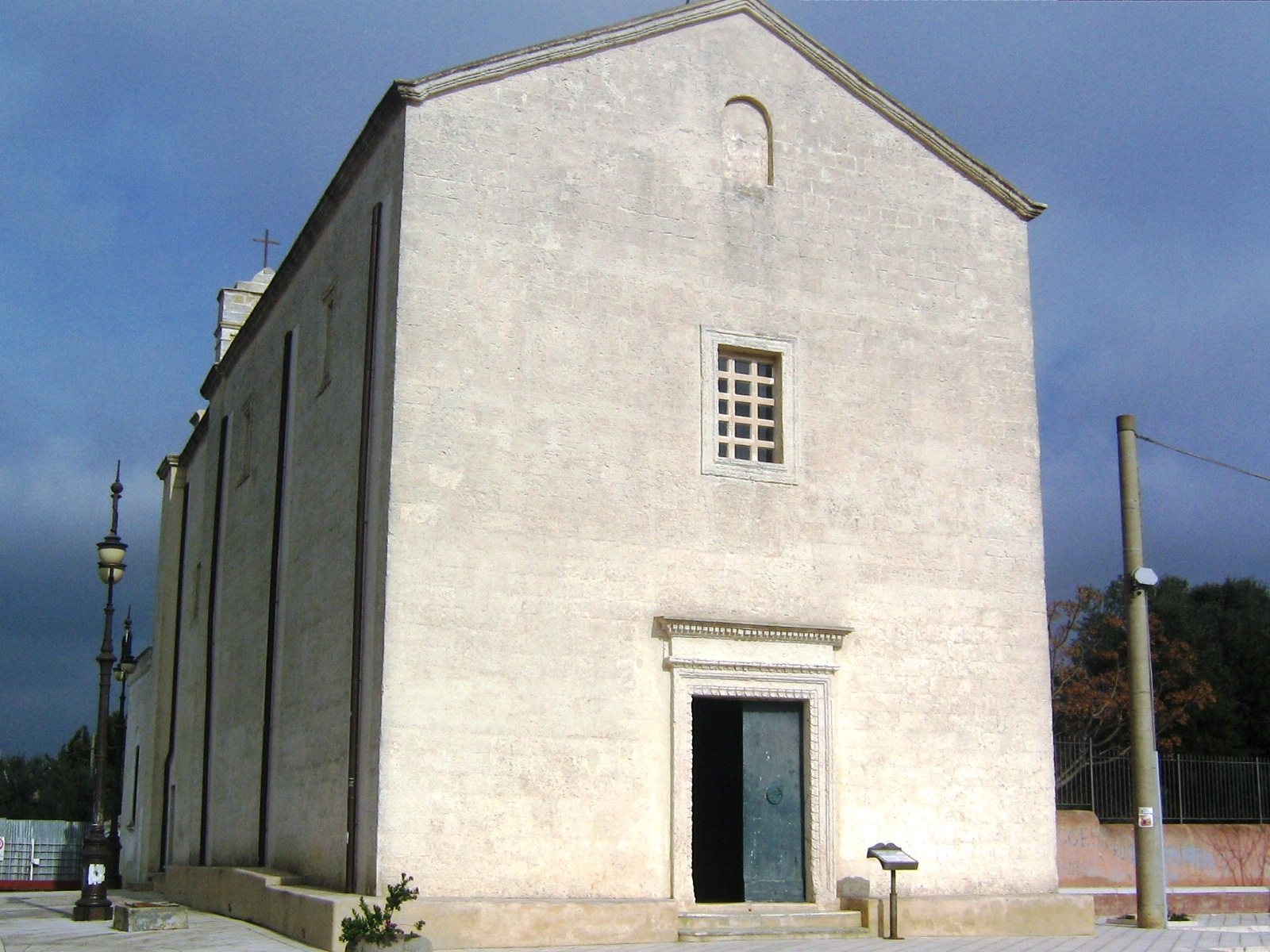
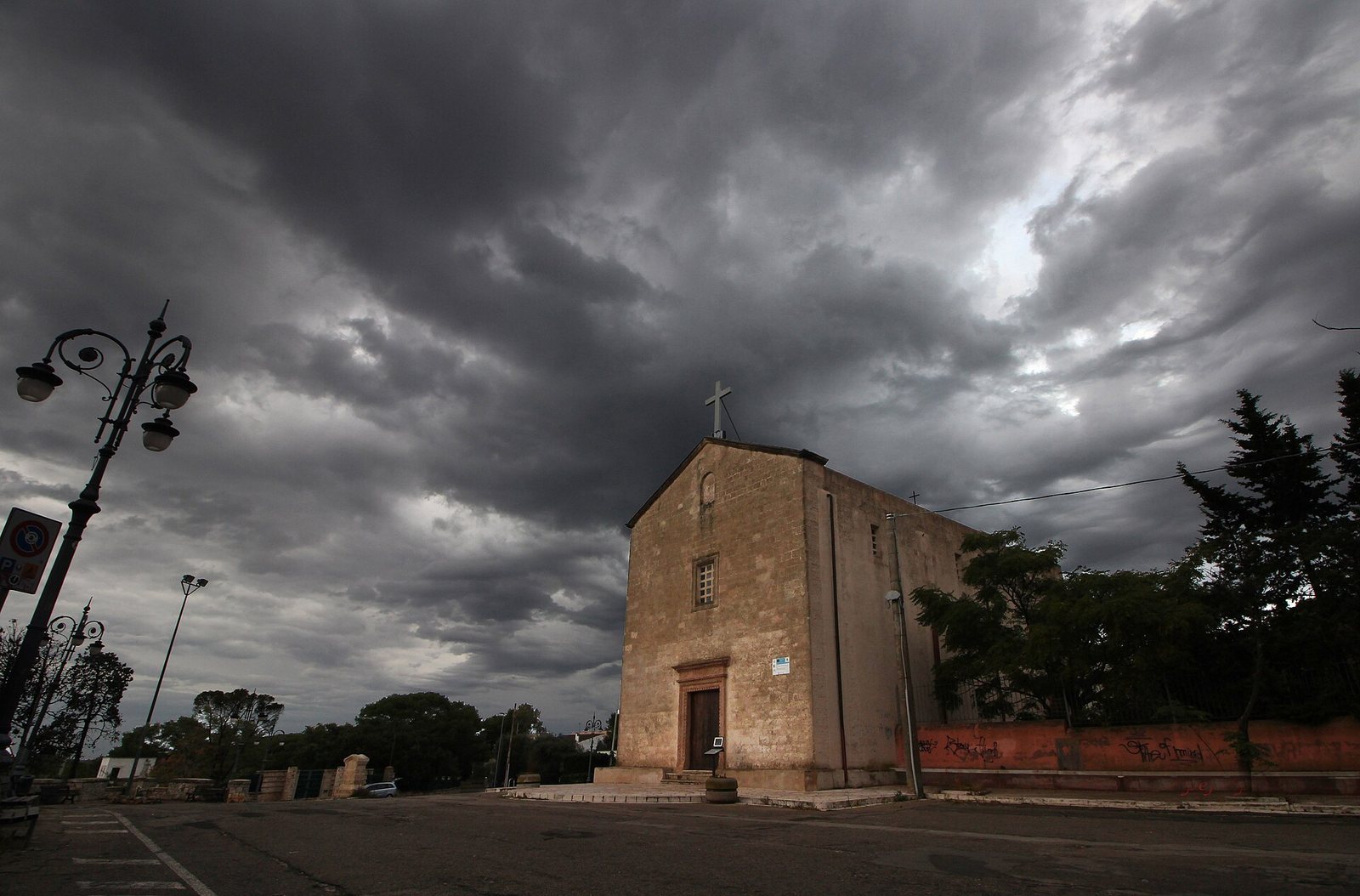
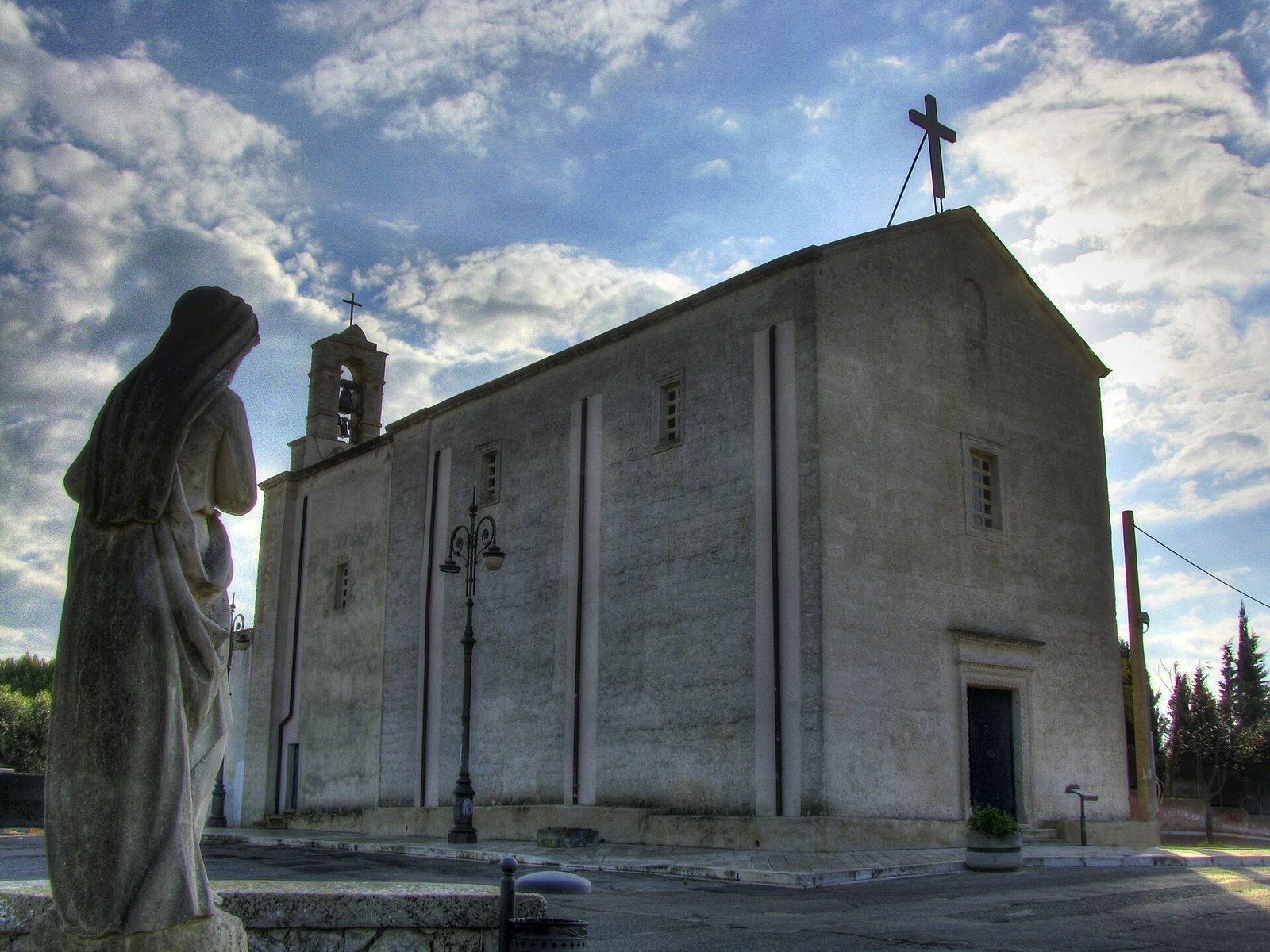
The sanctuary stands on a hill rising to about 160 metres, from which Casarano and the surrounding countryside can be seen. The church measures about 22 metres long by 10 metres wide and is aligned east to west. Its walls are built entirely of dressed blocks of local carparo. The exterior is plain and linear, with a gabled facade, where the roof edges rise to a central peak. The main doorway faces west, with a window and an empty niche above it.
Altars and image
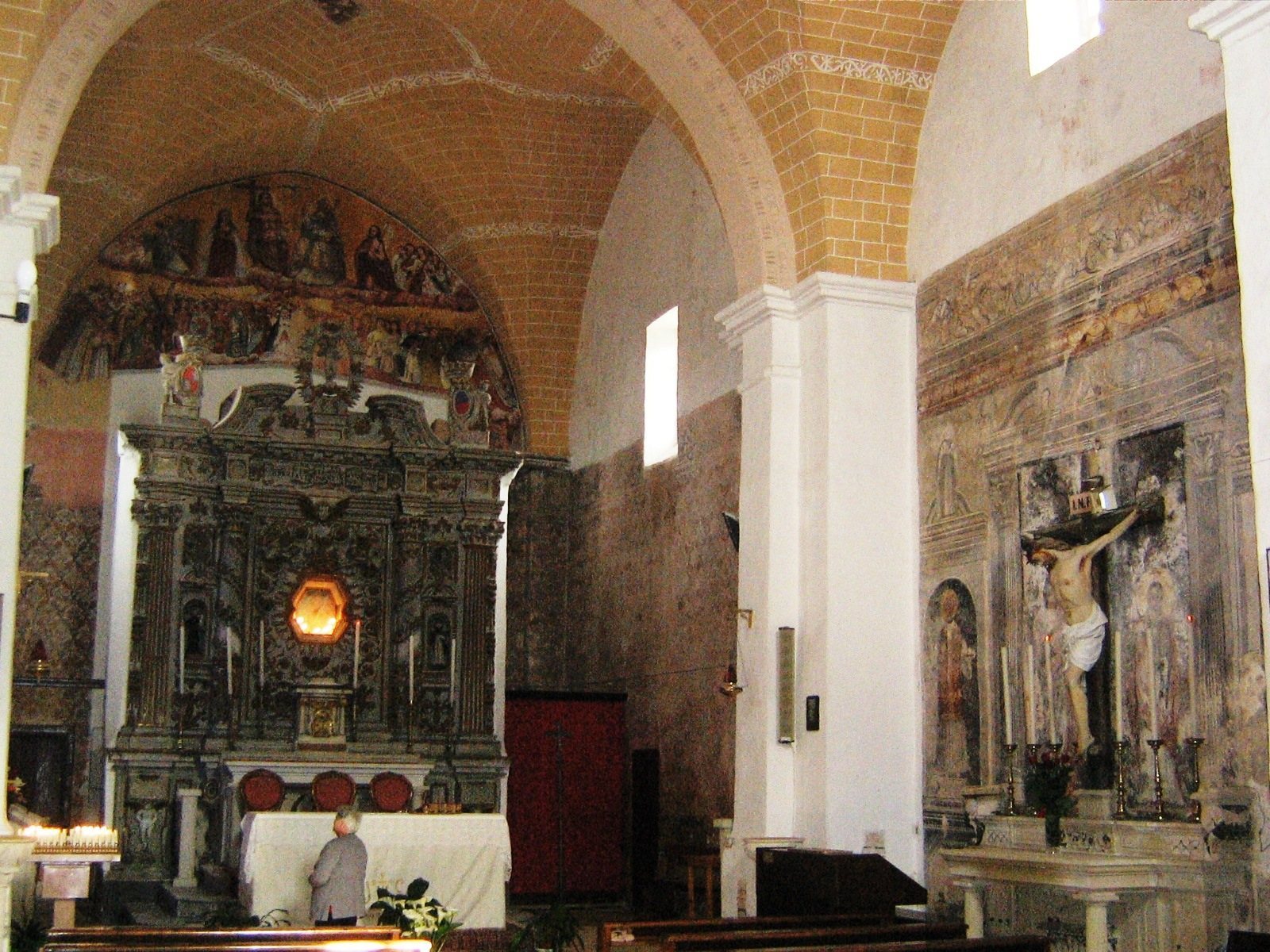
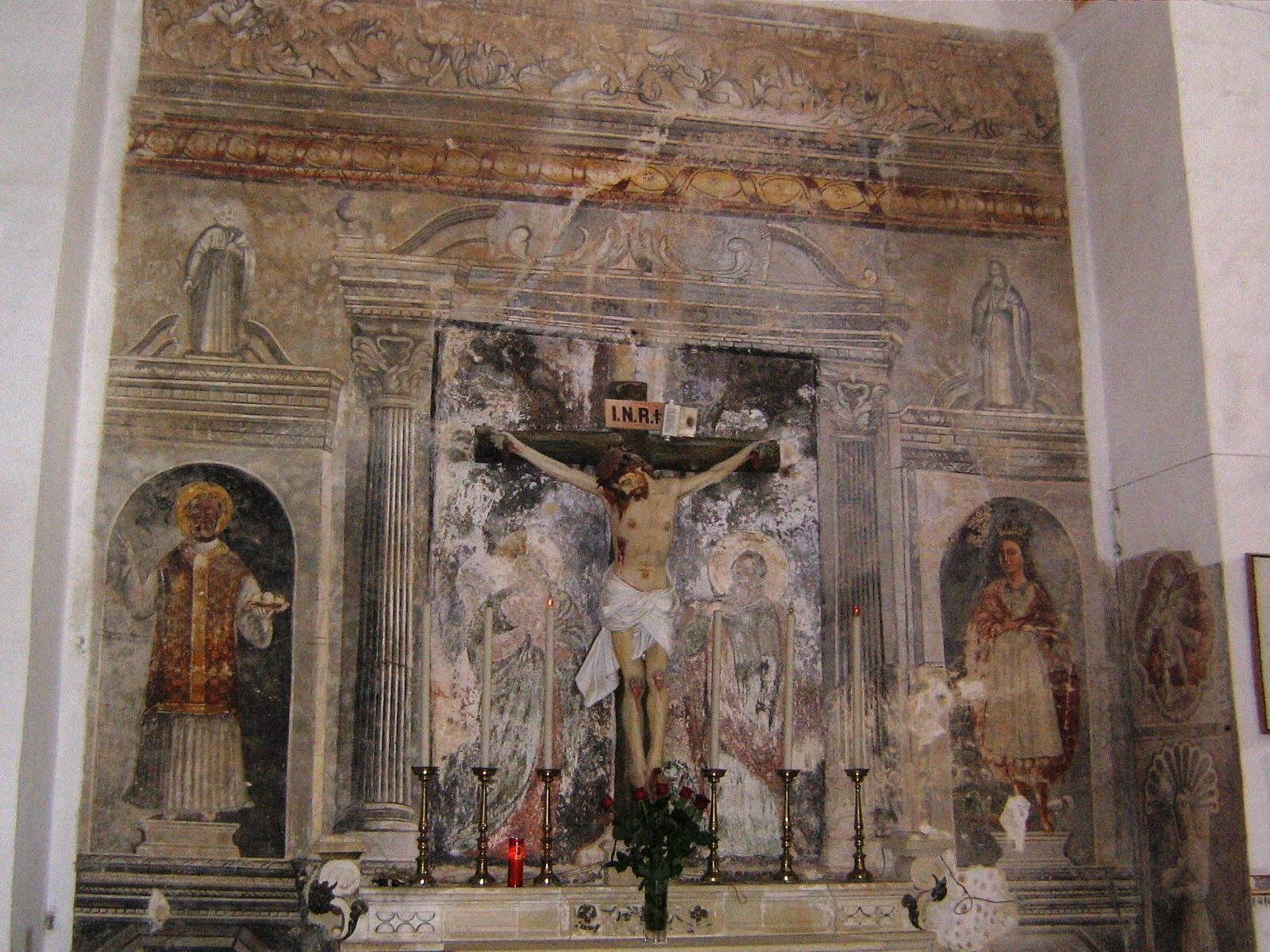
The interior has a main altar and four side altars. Master craftsman Donato Giovanni Chiarello made the main altar, whose central image shows the Virgin and Child painted on smoothed stone. The image is older than the altar.
Wall paintings
In 1679, Brother Onofrio painted a scene of the Glory of Paradise on the wall behind the main altar. The paintings on the other walls, in the spaces between the four side altars, are probably also his work.