San Paolo Maggiore, Bologna: A Baroque Basilica
Site at a Glance
- Popularity
- Medium
- Country
- Italy
- Primary era
- Early Modern
- Eras represented
- Early Modern
- Civilizations
- Papal States
- Site type
- Religious
- Remains
- Basilica
On this page14 sections
History
San Paolo Maggiore is an active Roman Catholic basilica dedicated to Saint Paul in Bologna, Italy. The Barnabites, a Catholic religious congregation also known as the Clerics Regular of Saint Paul, commissioned the Baroque church between 1606 and 1611. The name “Maggiore” distinguished it from two other Bolognese churches dedicated to Saint Paul. It is also known as San Paolo Decollato, or Saint Paul Beheaded.
Foundation and construction
The Barnabites commissioned architect Ambrogio Magenta to design the church. Its principal financial patron was Prince Virgilio Spada, whose brother Bernardino was a cardinal. The façade followed a design by Ercole Fichi and was built between 1634 and 1636. Spada also commissioned Alessandro Algardi’s work for the main altar.
Closure and renewed use
During the Napoleonic period, the era of Napoleon Bonaparte’s rule and French expansion in Europe, the Barnabites were suppressed and the church closed. It became a parish church in 1819, but later closed again. The church was reconsecrated, or dedicated again for religious use, in 1878.
San Paolo Maggiore returned to the Barnabites in 1959. In 1961, Pope John XXIII granted it the title of minor basilica, a papal honor that does not create a separate diocese.
Remains
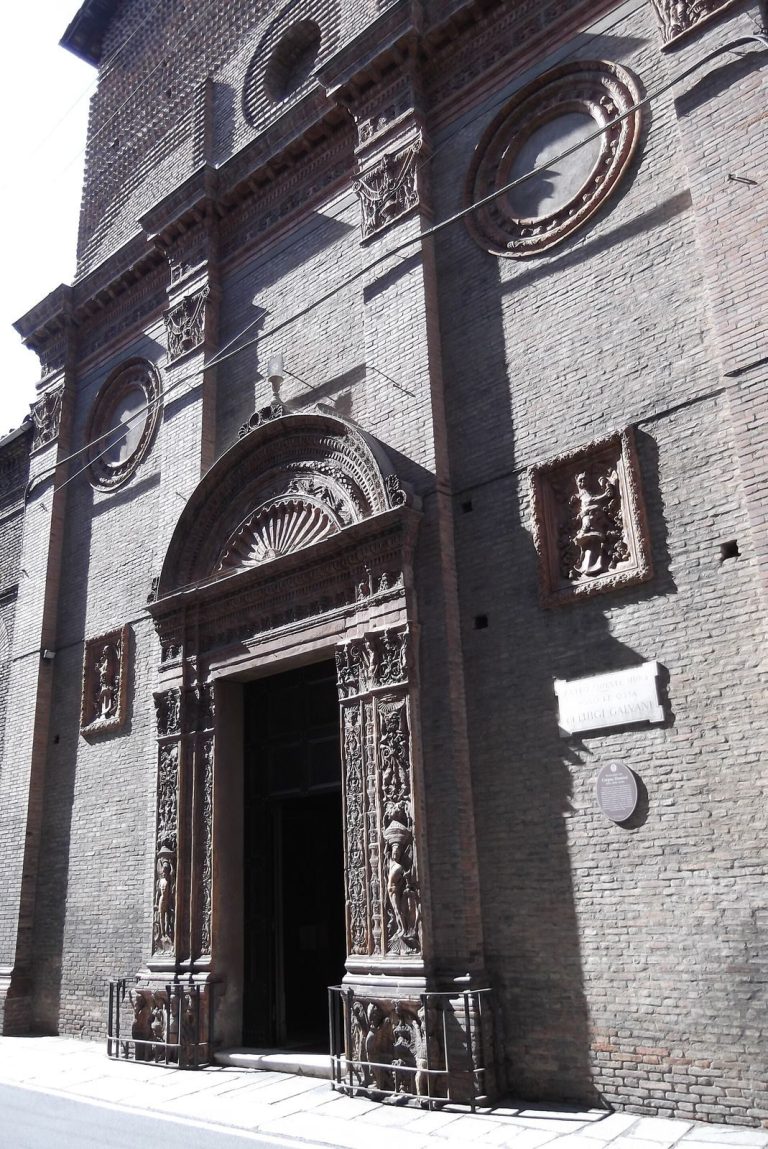
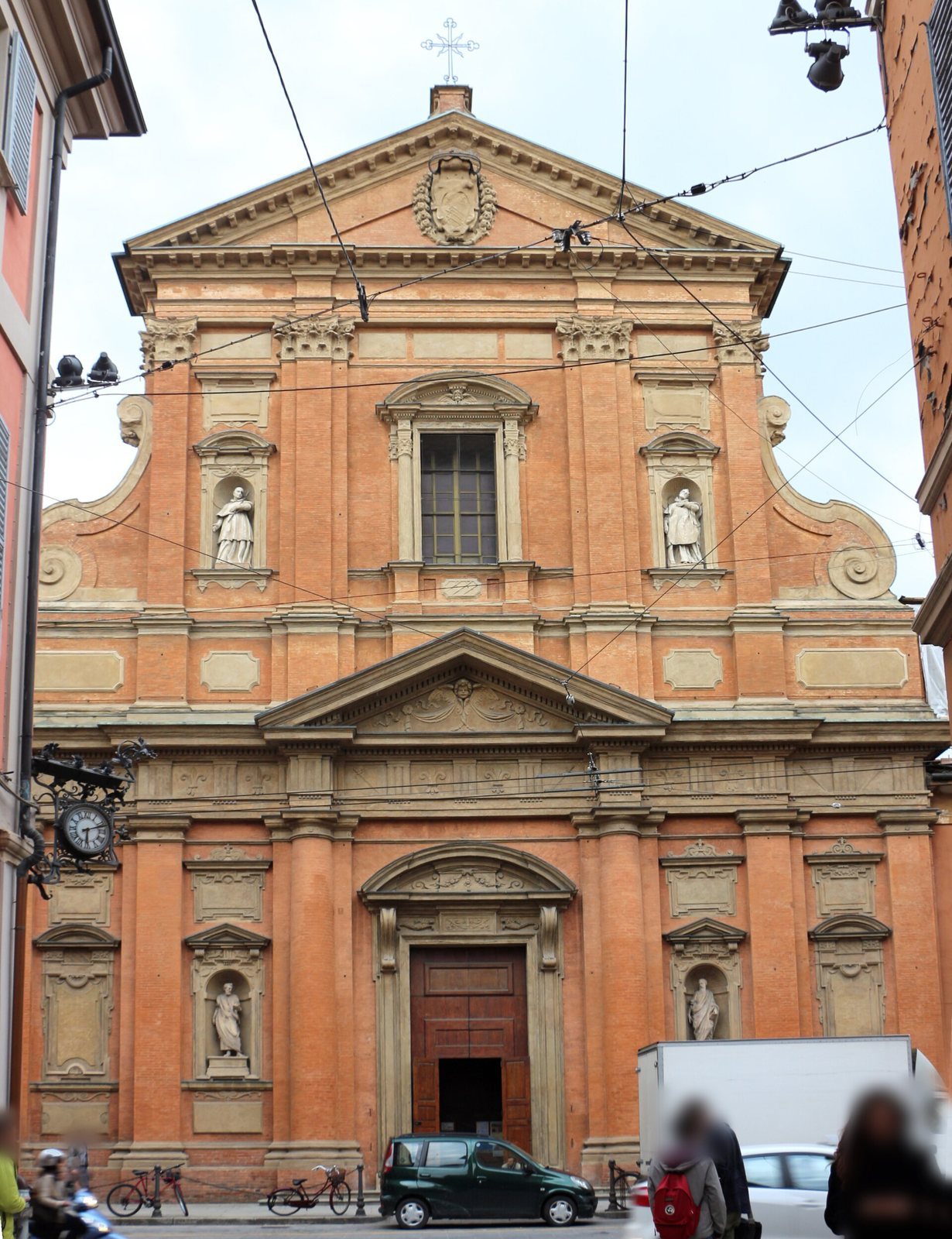
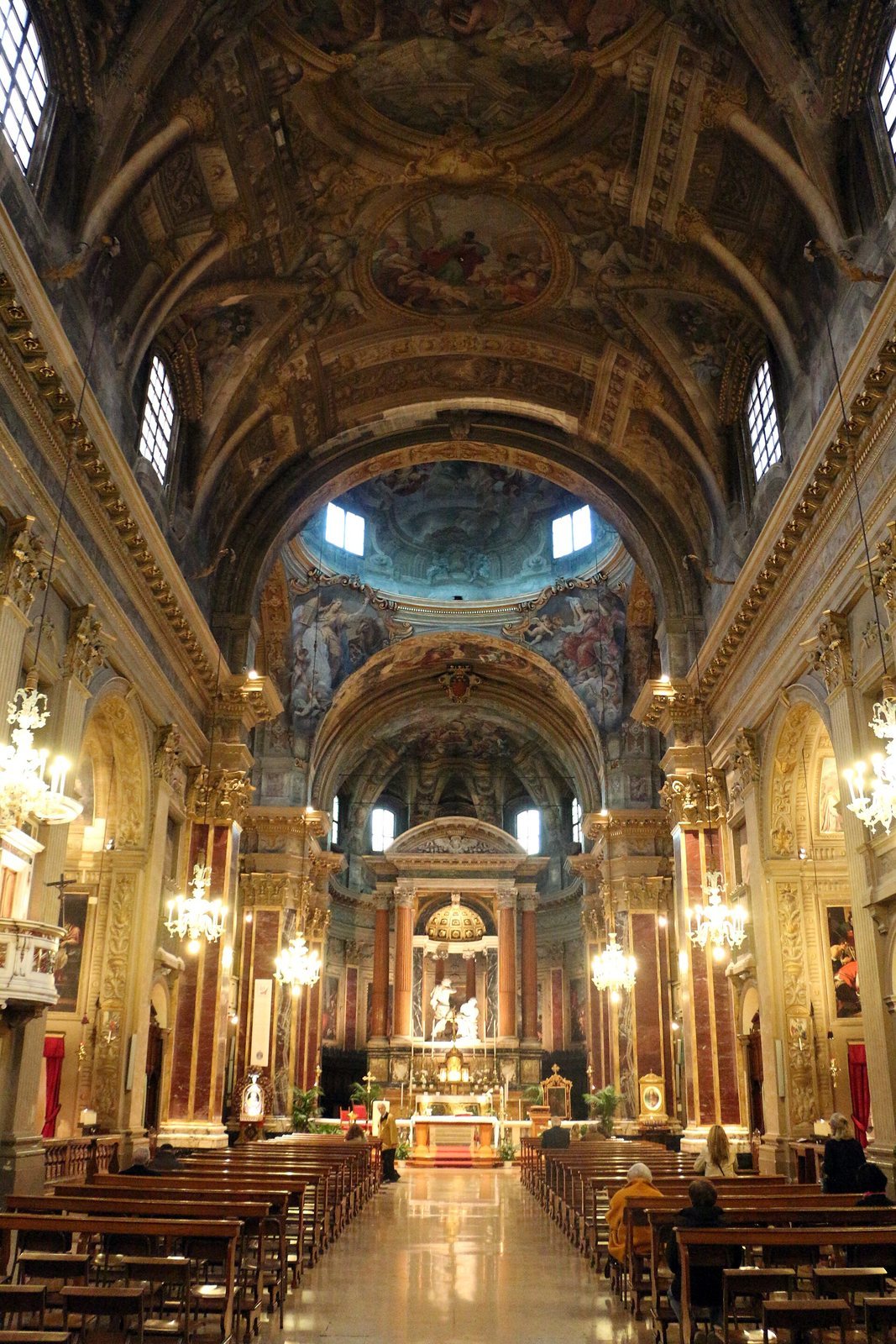
The Baroque church combines a brick-and-stone façade with a decorated interior of vaulted spaces, a dome, chapels, and altars. Its main arm is crossed by a transept, the crosswise part of a church, and the bell tower occupies the angle where they meet.
Façade and painted decoration
Façade
The brick-and-stone façade carries statues of Saint Peter by Domenico Maria Mirandola and Saint Paul by G. Cruventi.
Vaults and painted architecture
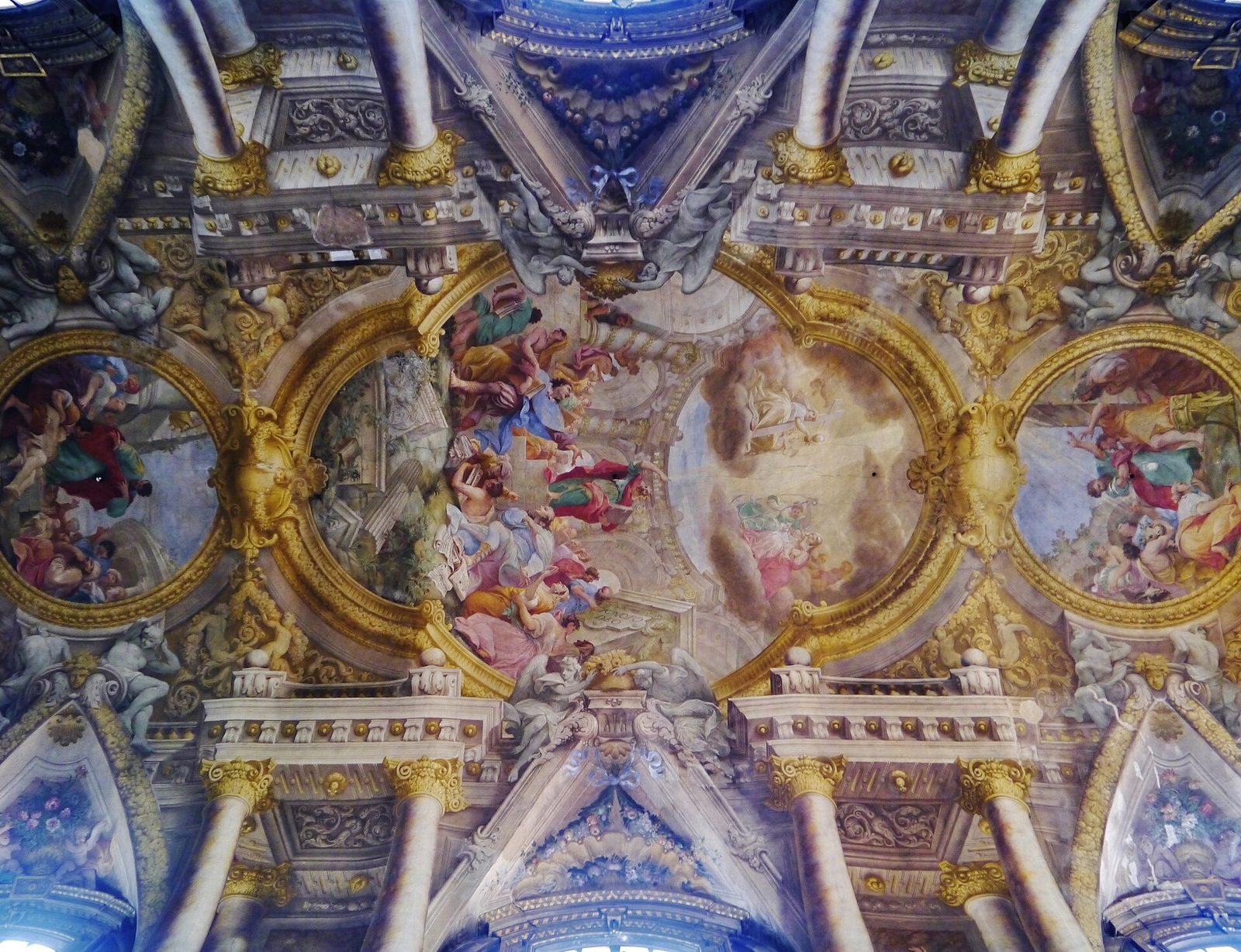
Antonio and Giuseppe Rolli painted the vaults with scenes of Saint Paul at the Areopagus, a prominent civic and judicial body in ancient Athens. Antonio died after falling from a scaffold while working on the vaults, and Giuseppe completed the paintings. Pietro Farina created quadratura, painted perspective architecture, for the dome, apse, sacristy, and two transept chapels; Giuseppe Antonio Caccioli painted the figures. The apse is the rounded end of the sanctuary.
Altars, chapels, and furnishings
Main altar
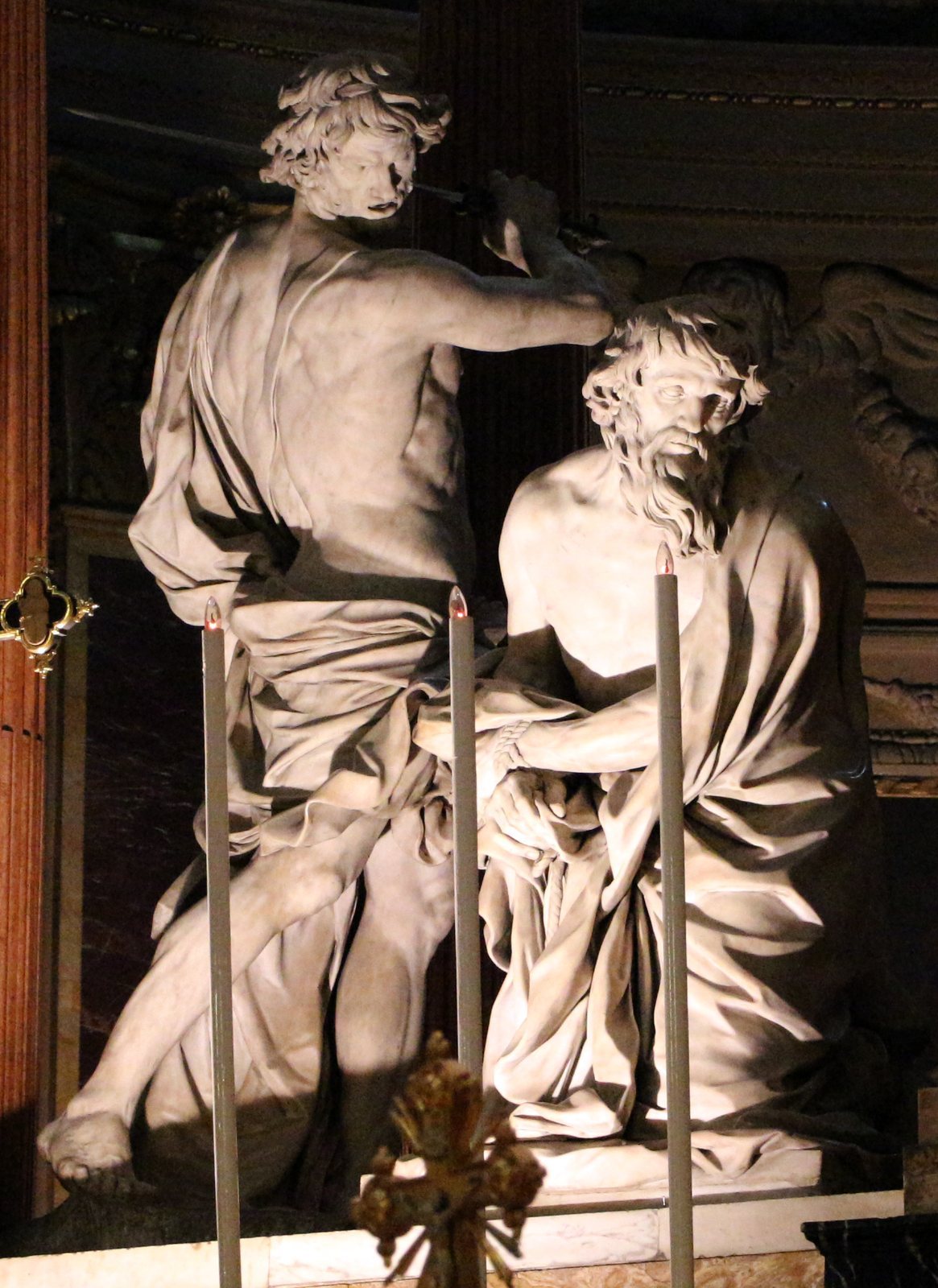
The main altar, dated 1643–1650, features Algardi’s marble group depicting the beheading of Saint Paul. Algardi sculpted the group in Rome in 1634, and it was installed in the church in 1644. He also made the altar’s bronze plaques. Its architectural setting includes columns and a projecting portico, follows a design attributed to Francesco Borromini, and has been described as a canopy-like structure.
Chapels and paintings
The second chapel contains Lodovico Carracci’s Paradise. In the third chapel are Giacomo Cavedoni’s Nativity and Adoration of the Magi, while its ceiling depicts the Flight into Egypt, the Circumcision, and Jesus among the Doctors. Guercino’s painting of Saint Gregory showing God the Father to the Souls in Purgatory is in the fourth chapel. The eighth chapel holds Lucio Massari’s Communion of Saint Jerome; the ninth contains Cavedoni’s Baptism of Jesus, Birth of Saint John the Baptist, and Death of Saint John the Baptist. Other altars include works by Guercino and Giuseppe Maria Crespi. Nicolo Tornioli painted Cain Killing Abel and Jacob Wrestling with the Angel for the church.
Choir stalls
The wooden choir stalls are decorated with engravings.
Bell tower and relics
Bell tower
Set into the angle between the main arm and transept on the Via Tagliapietre side, the bell tower shares two of its walls with the church. Its bell chamber holds five bells cast by Cesare Brighenti and described as being in A3 major. They are fully electrified and are not equipped for traditional local manual bell-ringing.
Relics
The church preserves relics of numerous saints, including Charles Borromeo, Philip Neri, Caesarius of Terracina, and Miltiades.