Trezzo Sanctuary: A Marian Pilgrimage Church in Italy
Site at a Glance
- Popularity
- Very Low
- Country
- Italy
- Primary era
- Early Modern
- Eras represented
- Early Modern, Modern
- Civilizations
- Duchy of Milan, Holy Roman Empire, Italian, Spanish
- Site type
- Religious
- Remains
- Sanctuary
On this page12 sections
History
Foundation legend and consecration
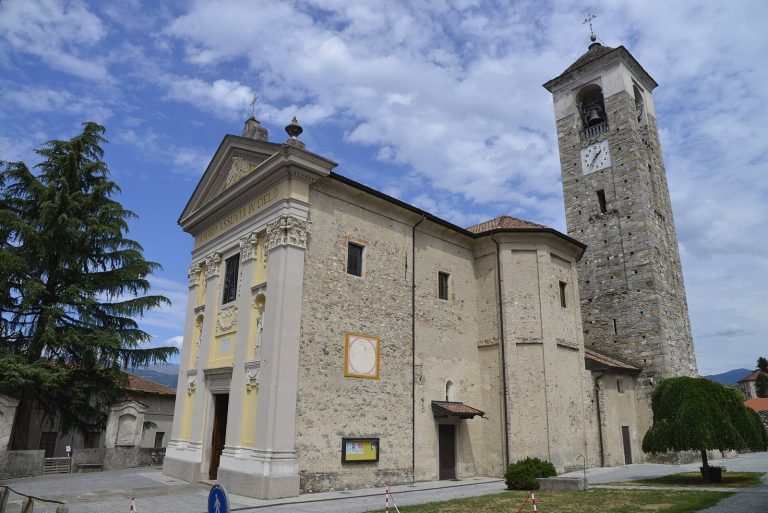
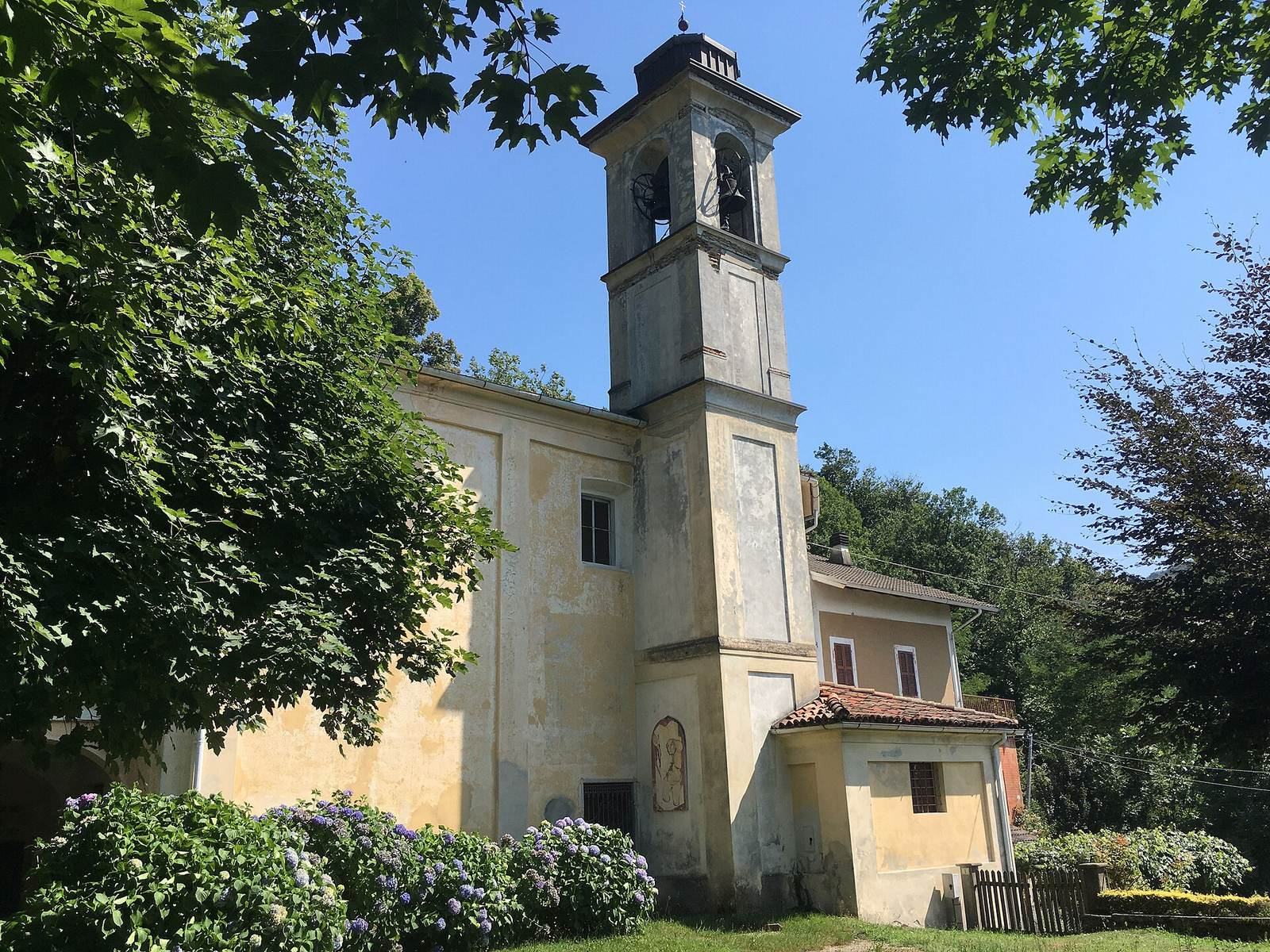
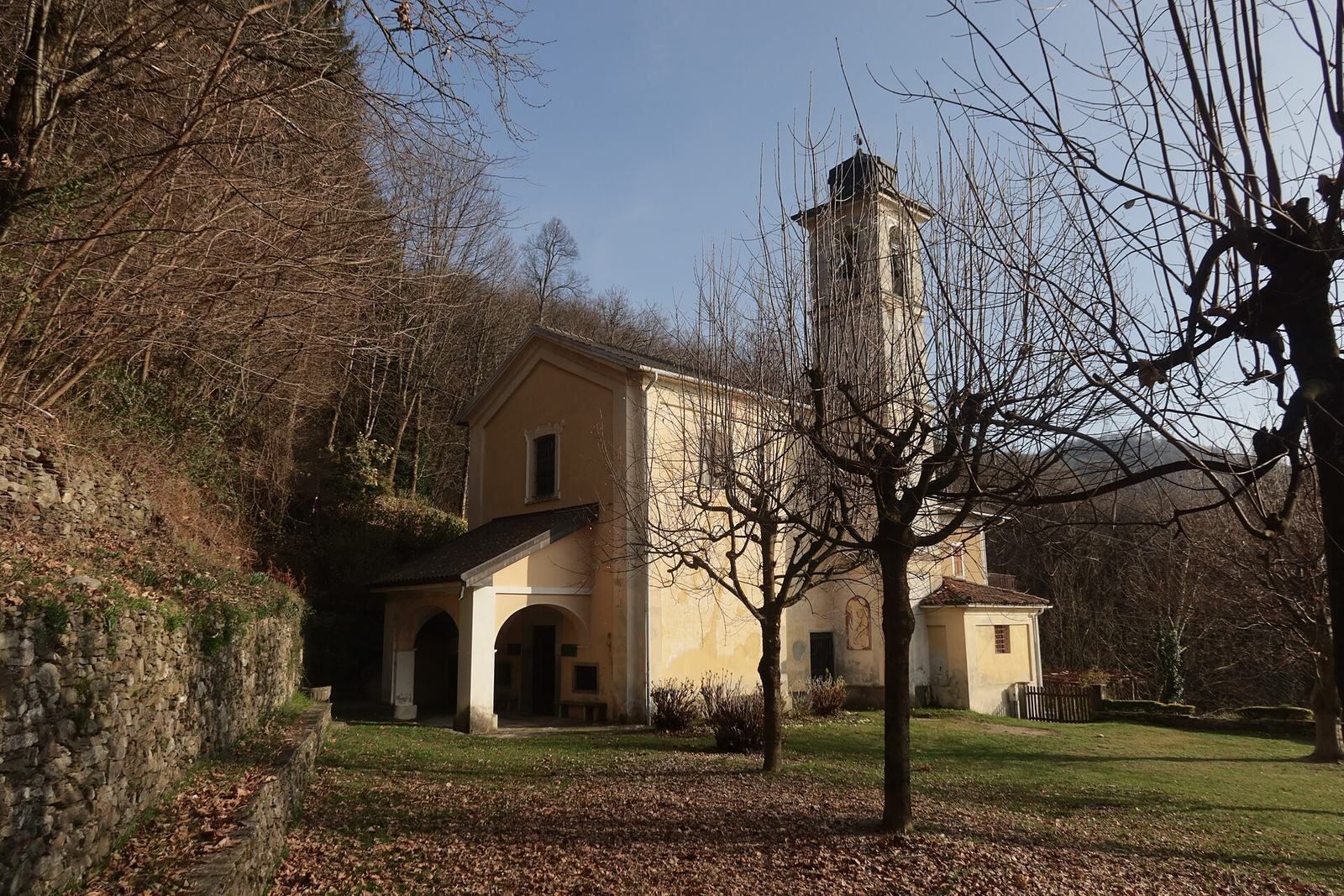
The Trezzo Sanctuary is a Roman Catholic pilgrimage church dedicated to the Virgin Mary in Italy, consecrated in 1526 and later reshaped in the Baroque style. It belongs to the parish of San Giorgio in Dumenza, within the Archdiocese of Milan, and is described as a cultural asset of cross-border significance.
A foundation legend links the church to the plague of 1348. A 16-year-old girl from Dumenza, deaf and unable to speak since birth, was tending goats at the site when she prayed for the plague to end. Mary was said to have appeared and told her to urge the people to pray, do penance, and build a church there. After the girl was miraculously healed, she relayed the message. Villagers and people from nearby communities processed to the site, and the plague reportedly ended after they promised to build the church.
The church is dated to 1526 and was consecrated on 29 April that year by Francesco Landino, a bishop holding the historic title of Laodicea and serving under Ippolito II d’Este, then Archbishop of Milan.
The convent and diocesan reform
A convent for Benedictine nuns, who followed the monastic tradition of Saint Benedict, stood behind the sanctuary by 1528. It was not enclosed, meaning the nuns were not strictly separated from the outside world. In 1567, Bishop Gerolamo Politi visited as a delegate of Archbishop Carlo Borromeo, a cardinal and influential Catholic reformer. Amid internal disputes, the abbess, Anna de Daverio, had fled to Luino, where Countess Rusca protected her.
Borromeo visited Trezzino in 1574 because serious abuses continued at the convent and closed it. The nuns were transferred to Milan, and private owners acquired the convent’s property. The Marian sanctuary, however, remained part of the parish. In 1578, Bernardino Taruggi, acting as Borromeo’s delegate, ordered a Baroque remodeling of the church. A new vault was added later, during a period of substantial alteration.
Later devotional traditions
On 19 February 1656, Paolo Bacchetta, parish priest of Astano, was said to have escaped three bandits during a robbery after invoking the Madonna of Trezzo. A contemporary triptych depicts the episode and is now in the Rosary Confraternity chapel of the parish church of San Pietro in Astano.
Another miracle tradition concerns 15 August 1798. Francesco Zanetti, a tailor from Astano who was seriously ill with tuberculosis and walked on crutches, was said to have been healed while visiting the sanctuary.
Remains
Setting and devotional route
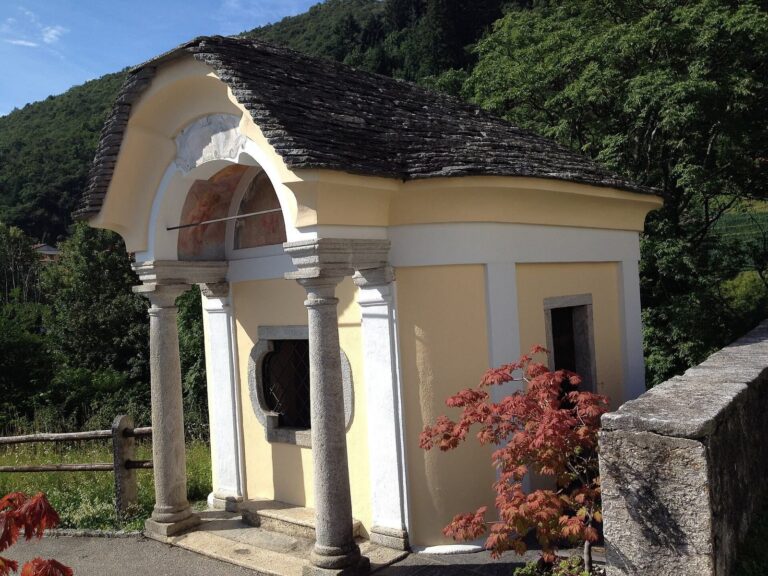
The sanctuary stands at 568 metres above sea level on a wooded slope east and above Trezzino. The Italian-Swiss border lies about 700 metres to the southeast, and the forecourt looks across Val Dumentina and Lake Maggiore. A 17th-century devotional route commemorating Christ’s Passion, known as the Via Crucis, climbs from Dumenza by 432 steps. Its 13 station chapels lead to the sanctuary, which serves as the 14th station.
Church interior
The interior centers on a Marian altar and fresco at the apse, the sanctuary end of the church. The nave extends before it, while a funerary chapel lies to the left of the choir, the area associated with clergy or singers. The church’s decoration brings together fresco, stucco, marble, and carved wood.
Marian altar and apse
A large 16th-century fresco shows Mary sheltering people beneath her mantle, held open by two angels. This image of the Virgin of Mercy includes nuns below on the right and a chaplain with parishioners on the left. Eighteenth-century Baroque stucco frames the painting, with gilded spiral ornament and eleven angels. Below it, an altar supports an eternal light. A glass coffin beneath the altar contains a painted 17th-century figure of the dead Christ, carved from fig wood. Wooden statues in wall niches show Catherine of Siena on the left and Rose of Lima on the right, both Catholic saints. A 17th-century wooden cross hangs at the center of the apse’s vaulted ceiling.
Funerary chapel
The side funerary chapel has an altar with an elaborately decorated marble tabernacle, a container used to reserve the Eucharist. Above it is a fresco by C. Radice dated to 1872.
Nave frescoes
Two further 18th-century frescoes occupy the nave. One shows Mary and the Christ Child between Saint Gratus of Aosta, a Christian bishop and saint, and Anthony the Great, an early Christian monastic leader. This painting is badly deteriorated. The other depicts the marriage of Mary and has undergone extensive repainting.
Entrance and bells
The original main entrance was in the west side wall, near the bell tower. The present north portal was made by Pietro Luvini in 1950. The tower first held a single bell; three bells made by Bianchi of Bizzozero replaced it and were consecrated on 1 August 1914.
Station chapels
Carlo Moroni restored the chapels’ frescoes in 1903. In 1988, most of these paintings were replaced with high-relief sculptures, whose figures project strongly from their background.