Tamassos: An Ancient Cypriot City-Kingdom and Archaeological Site
Site at a Glance
- Rating
- 4.2
- Popularity
- Medium
- Country
- Cyprus
- Primary era
- Classical
- External website
- Open
- Eras represented
- Bronze Age, Iron Age, Classical
- Civilizations
- Unclassified
- Site type
- City
On this page18 sections
History
Tamassos is the remains of an ancient Cypriot city-kingdom near Politiko in central Cyprus, whose growth was closely tied to copper mining. A Cypriot city-kingdom was an independent or partly independent urban state. Settlement in the area began in prehistoric times, but no precise foundation date or reliable foundation tradition is known.
Prehistoric settlement and the copper kingdom
Small farming settlements came before the city. As nearby copper mines were developed, the population grew and Tamassos became an urban and industrial center. Tombs and copper-processing activity in the area date to the Late Bronze Age. Fertile land supported farming and livestock alongside mining.
An inscription from about 673 BCE names Tamesi as a city-state with its own king, paying tribute to the Neo-Assyrian Empire, a powerful Mesopotamian empire that collected payments from subject states. Copper became central to Tamassos’s wealth and to Cyprus’s exports. The sixth-century geographer Stephanus of Byzantium praised the quality of its copper. The inland city had no port, however, which limited its development as a major trading center compared with coastal cities such as Salamis and Paphos. Its mines continued to support the city after deposits were depleted, but their eventual abandonment contributed to economic decline.
Tamassos has been proposed as the Temese in The Odyssey, the ancient Greek poem traditionally attributed to Homer, where the place is associated with copper. The identification remains uncertain. The city’s written name also varied: coins used the double-s form, while literary and church texts included a single-s form. The Cypriot Department of Antiquities uses both Tamassos and Tamasos.
Hellenistic and Roman periods
In the fourth century BCE, Pasikypros, king of Tamassos, is said to have sold his kingdom to the Phoenicians of Kition for 50 talents, ancient units of weight and value whose measure varied. He spent the remainder of his life in Amathus. Alexander the Great later gave Tamassos to Pnytagoras, king of Salamis, in return for help in capturing Tyre. During the Hellenistic period, the era following Alexander’s conquests, Greeks from other parts of his former empire also settled in the city. Tamassos subsequently became part of Rome’s possessions in Cyprus.
Both temples at Tamassos appear to have been destroyed during the Cypriot revolt against Persian rule in 499–498 BCE. At the start of the Hellenistic period, the city’s political organization and character seem to have changed. The temple of Aphrodite and perhaps other public buildings were rebuilt in a new form.
Christianity, decline, and later settlement
As Christianity spread, Tamassos became one of Cyprus’s earliest Greek Orthodox dioceses. A diocese is a district overseen by a bishop; Greek Orthodoxy is a tradition within Eastern Orthodox Christianity. Saint Herakleidios and Saint Mnason are named as its first bishops. The Acts of Barnabas, a text attributed to Barnabas but not written by him, describes the early Christian missionary meeting Heraclide at Tamassos and appointing him bishop.
Tamassos was still called a city in the tenth century CE, but its mines had been exhausted and abandoned, and the settlement had declined. Politiko and Episkopeio later occupied parts of the area. Their names are associated respectively with the ancient city and its former diocese, while Ergates is linked to the place where mine workers lived. Continuous settlement from prehistoric times to the present is considered possible, but is not established.
Modern investigation and names
Nineteenth-century investigations exposed burial grounds attributed to the Assyrian period, with chambers interpreted as graves for kings and nobles. The ancient urban center is thought to lie beneath Politiko and the nearby Monastery of Saint Herakleidios. Modern settlements cover parts of the remains, preventing large-scale excavation. Sporadic excavations between 1970 and 1990 uncovered objects and parts of the city from the Archaic, Classical, and Hellenistic periods, successive phases of ancient Greek history. A 1964 Cypriot postage stamp used Tamasos in Greek and Tamasus in English.
Remains
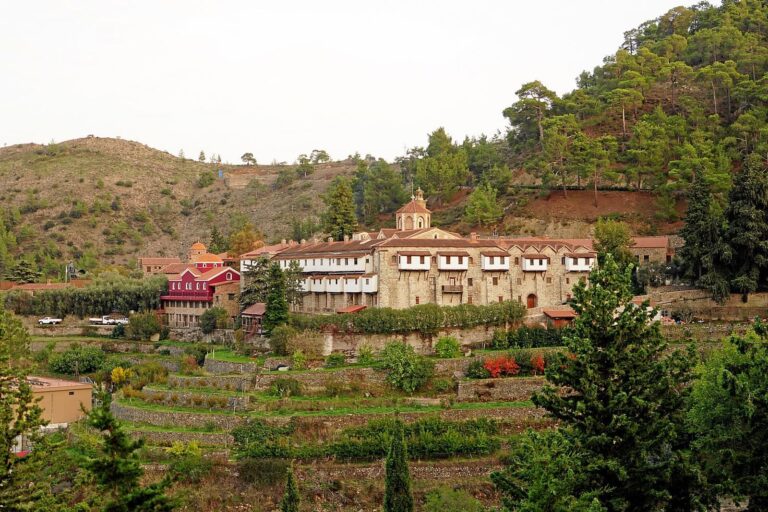
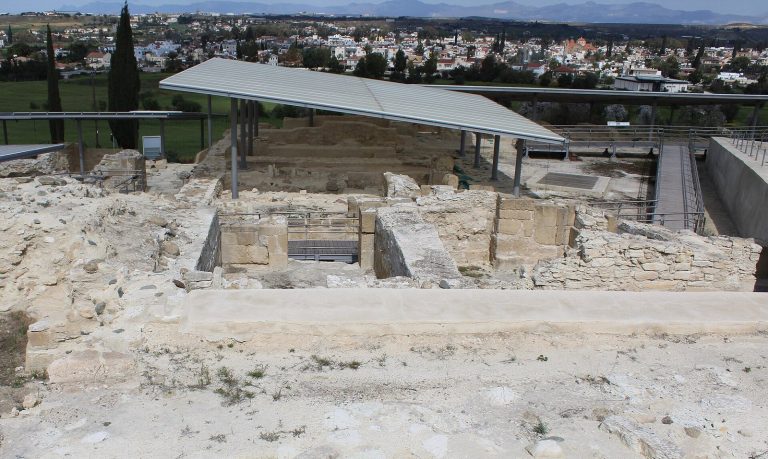
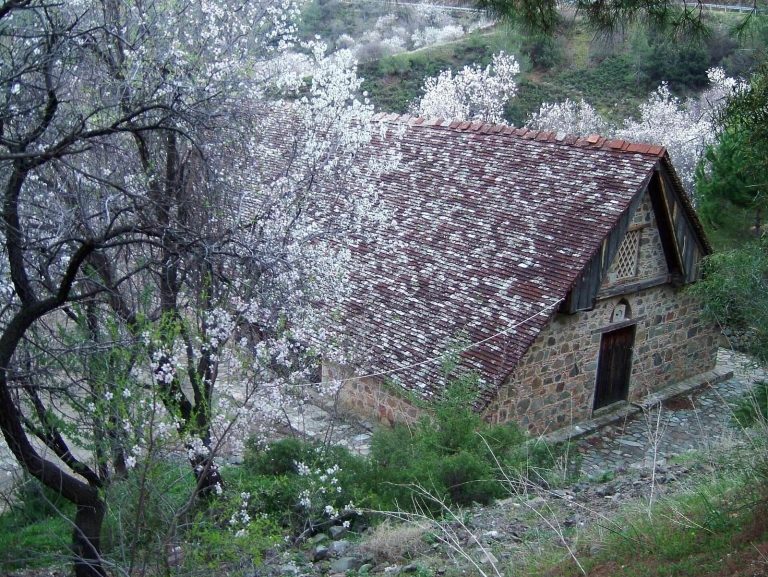
The archaeological area lies in Cyprus’s central plain, southeast of Soli and about 21 kilometres southwest of Nicosia. Fertile land around the Pediaios River and its tributaries shaped the setting; the river runs near the northern part of the site. The presumed city center, including public buildings and shrines, lies beneath Politiko and the nearby Monastery of Saint Herakleidios. Remains across the wider area include temples, tombs, cemeteries, fortifications, and copper-processing installations.
Urban remains and later church
The urban center
Parts of the ancient settlement are thought to survive beneath modern Politiko and the monastery. Excavated remains in the wider area include fortifications from the Archaic period, an early phase of ancient Greek history, as well as graves and installations used to process copper.
Early Christian basilica
Traces of an early Christian basilica, a church based on a long rectangular hall, and tombs from the same period have been found within the site.
Temples and sanctuaries
Temple of Aphrodite
The temple of Aphrodite, the Greek goddess associated with love and fertility, dates to 600–475 BCE. It was associated with a large altar, and a limestone altar was found nearby.
Temple of Cybele
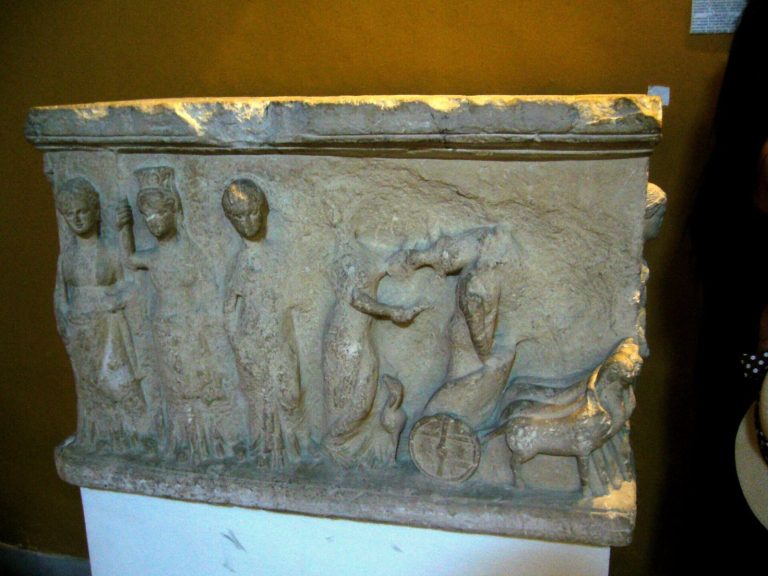
A temple dedicated to Cybele, a mother goddess worshipped in parts of the ancient Mediterranean, was also discovered at Tamassos. An inscription found with it attests to her worship.
Burial grounds
Royal tombs
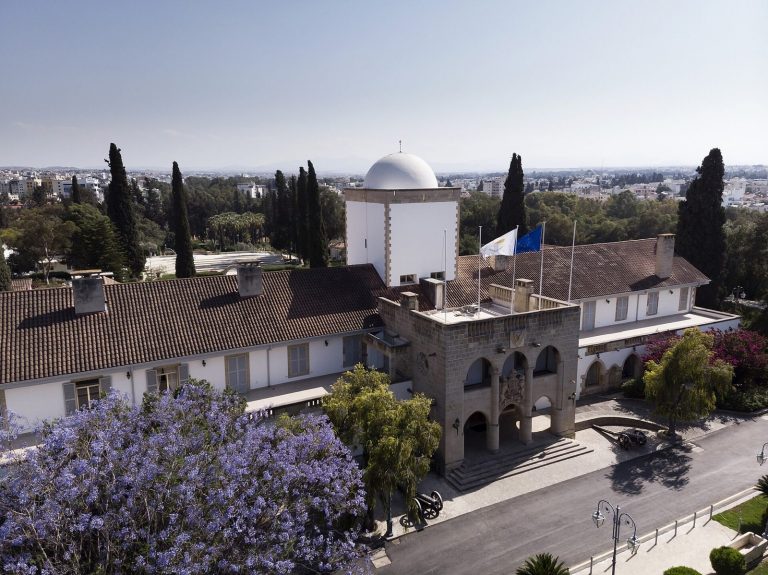
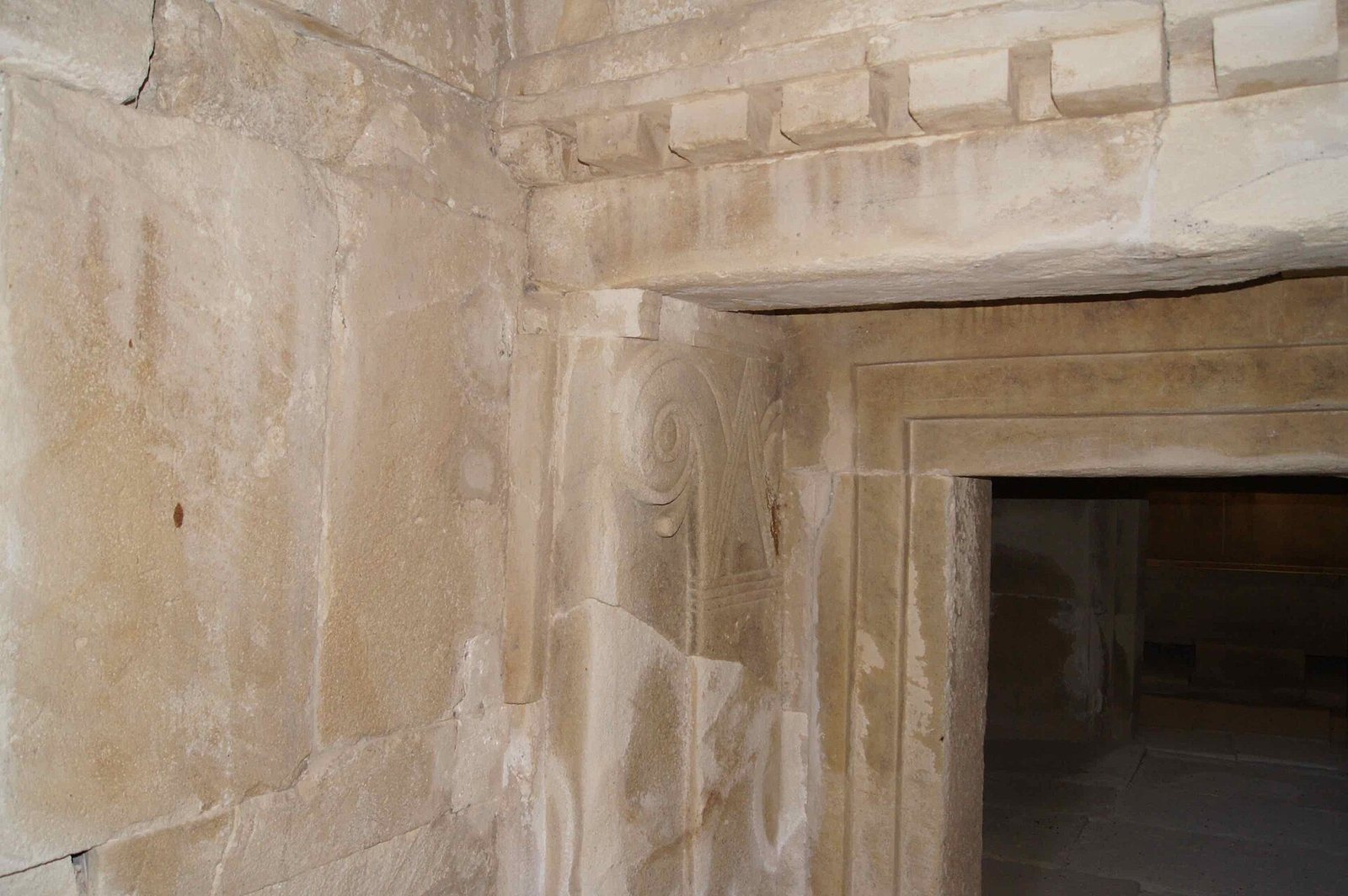
Two royal tombs are attributed to the Archaic period. Tomb 5 has a stone entrance with a recessed doorway and lintel. Its carved stone details include a column top with early scroll-shaped ornament and rectangular forms that imitate wooden roof beams. The two tombs belong to a royal necropolis, or cemetery, that also yielded six intact, life-size limestone sculptures from the sixth century BCE: two sphinxes, mythical figures often shown with a human head and a lion’s body, and four crouching lions. The group has been interpreted as evidence of Egyptian artistic influence in Cyprus. The sculptures are now kept at the Cyprus Archaeological Museum in Nicosia.
Cemetery areas
The cemetery area northeast of the temple of Aphrodite includes prehistoric, Archaic, and Hellenistic-Roman burial grounds. A Bronze Age cemetery is thought to have been near the Lambertes burial mound, southeast of Politiko. A Middle Bronze Age tomb was excavated southwest of the Monastery of Saint Herakleidios in 1963; a Late Bronze Age tomb was excavated southeast of the monastery, between the present-day nunnery and the burial mound. The Archaic cemetery lies southwest of the village, between two rivers. The Hellenistic-Roman cemetery is associated with a slope northwest of Politiko, at the former location of the Monastery of Saint Mnason.
Sculpture, industry, and other finds
The Apollo statue and sanctuary
The bronze Chatsworth Head, from a statue of Apollo, a god associated with prophecy and the arts, was found near the Pediaios in 1836. When the complete statue was discovered, its head and hands became detached; the statue was later sold in pieces by the weight of its metal. The Duke of Devonshire bought the head in 1838 or 1839 and placed it at his Chatsworth estate, which gave the sculpture its name. In 1888–1889, archaeologist Max Ohnefalsch-Richter identified the statue’s sanctuary and found other bronze fragments. Literary references also attest to worship of Asclepius, a god of healing, and Dionysus, associated with wine and religious celebration.
Copper-working and smaller finds
Copper-processing installations form part of the excavated remains. Other finds include clay and stone statuettes, votive vessels dedicated as religious offerings, censers used to burn incense, and oil lamps. An Archaic terracotta statue, made of fired clay, was also found in the area.