Church of Stavros (Holy Cross) Ayiasmati: A Fifteenth-Century Painted Church in Cyprus


Site at a Glance
- Rating
- 4.8
- Popularity
- Very Low
- Country
- Cyprus
- Primary era
- Medieval
- External website
- Open
- Eras represented
- Medieval
- Civilizations
- Byzantine, Venetian
- Site type
- Religious
- Remains
- Church
On this page6 sections
History
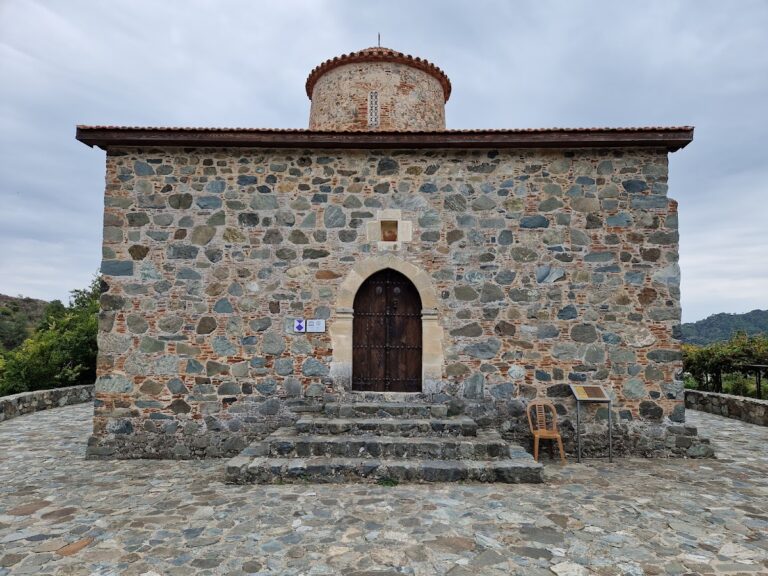
Church of Stavros (Holy Cross) Ayiasmati is a fifteenth-century Byzantine-era church of the Cypriot Orthodox Church in Cyprus, near Platanistasa in the Troodos Mountains. Dedicated to the Holy Cross, it originally served a monastery established at the site. Byzantine art and architecture developed from the Christian traditions of the Eastern Roman Empire and continued in the Orthodox world after the empire’s political decline.
Monastery and Name
The name Ayiasmati probably refers to a sacred spring near the church. Another interpretation links it to a place of the same name in Asia Minor. According to this explanation, settlers or refugees may have reached the monastery’s surroundings after the Ottoman conquest of Constantinople in 1453. The church stands approximately four to five kilometres north of Platanistasa.
Heritage Recognition
The church forms part of the Painted Churches in the Troodos Region, a UNESCO World Heritage property that includes it from 1985. Its historical importance lies especially in the survival of its fifteenth-century painted decoration, which preserves an extensive cycle of Christian scenes within a mountain church built for monastic use.
Remains
Church Structure
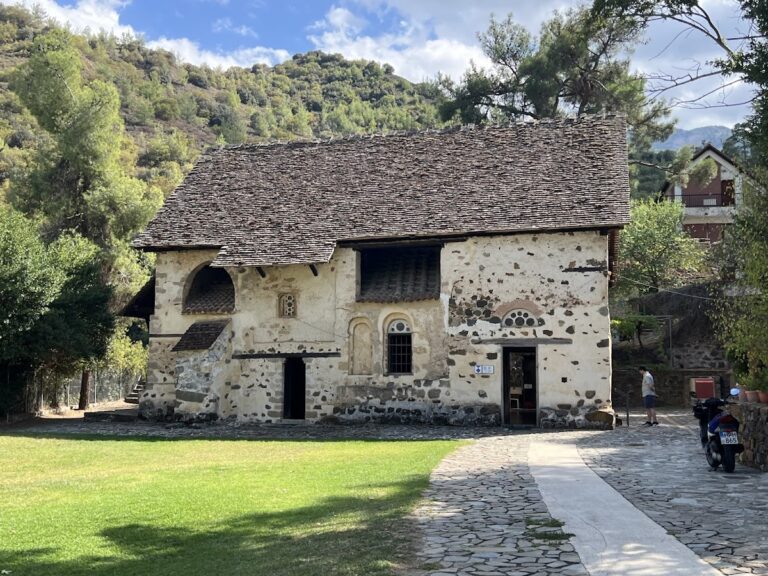
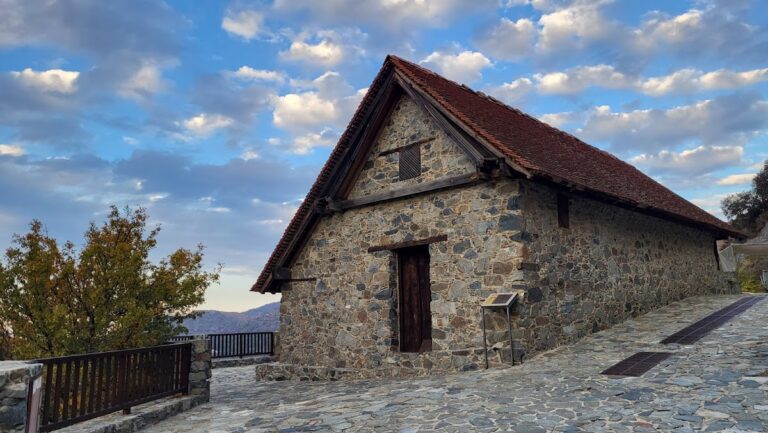
The building has a single nave and a steep wooden gabled roof. This characteristic form of Troodos church helped protect the structure from the weight of snow. The roof rests on a wall surrounding the church, producing a covered ambulatory around the nave. A similar arrangement appears at Panagia tis Podithou in Galata, another Byzantine church in the Troodos region.
Wall-Painting Cycle
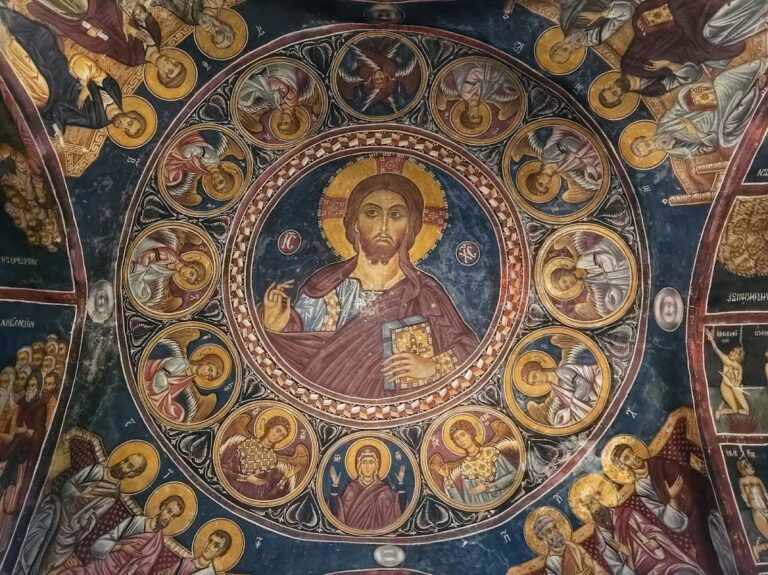
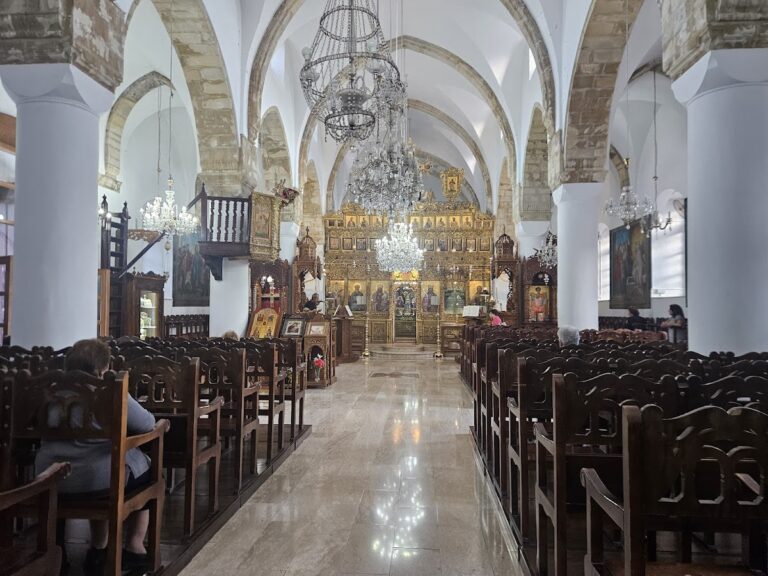
The wall paintings were completed in 1494 and are regarded as among the most representative Cypriot paintings of the fifteenth century. They include numerous events from the New Testament and episodes associated with the Holy Cross, including scenes representing the Way of the Cross, the devotional sequence that follows Jesus from his arrest to his crucifixion.
The cycle contains two scenes of the conversion of Emperor Constantine to Christianity and ten miniatures showing the discovery of Christ’s True Cross by his mother, Helena. Constantine is traditionally associated with the legalization and imperial patronage of Christianity, while Helena is traditionally associated with finding the True Cross in Jerusalem.
In the Arrest of Jesus, Judas approaches from the left and Peter cuts off Malchus’s ear on the right. A haloed young man, shown partly naked and without a right forearm, looks anxiously toward the viewer. Andreas and Judith Stylianou identify him as Mark, the Gospel evangelist, understood here as the eyewitness who describes his own flight in the Gospel of Mark.
The Mocking of Jesus includes several mockers carrying musical instruments, adding an unusual detail to the painted narrative.