Palazzo del Trianon: A Commercial Palace in Florence
Site at a Glance
- Popularity
- Very Low
- Country
- Italy
- Primary era
- Modern
- Eras represented
- Modern
- Civilizations
- Italian
- Site type
- Economic
On this page10 sections
History
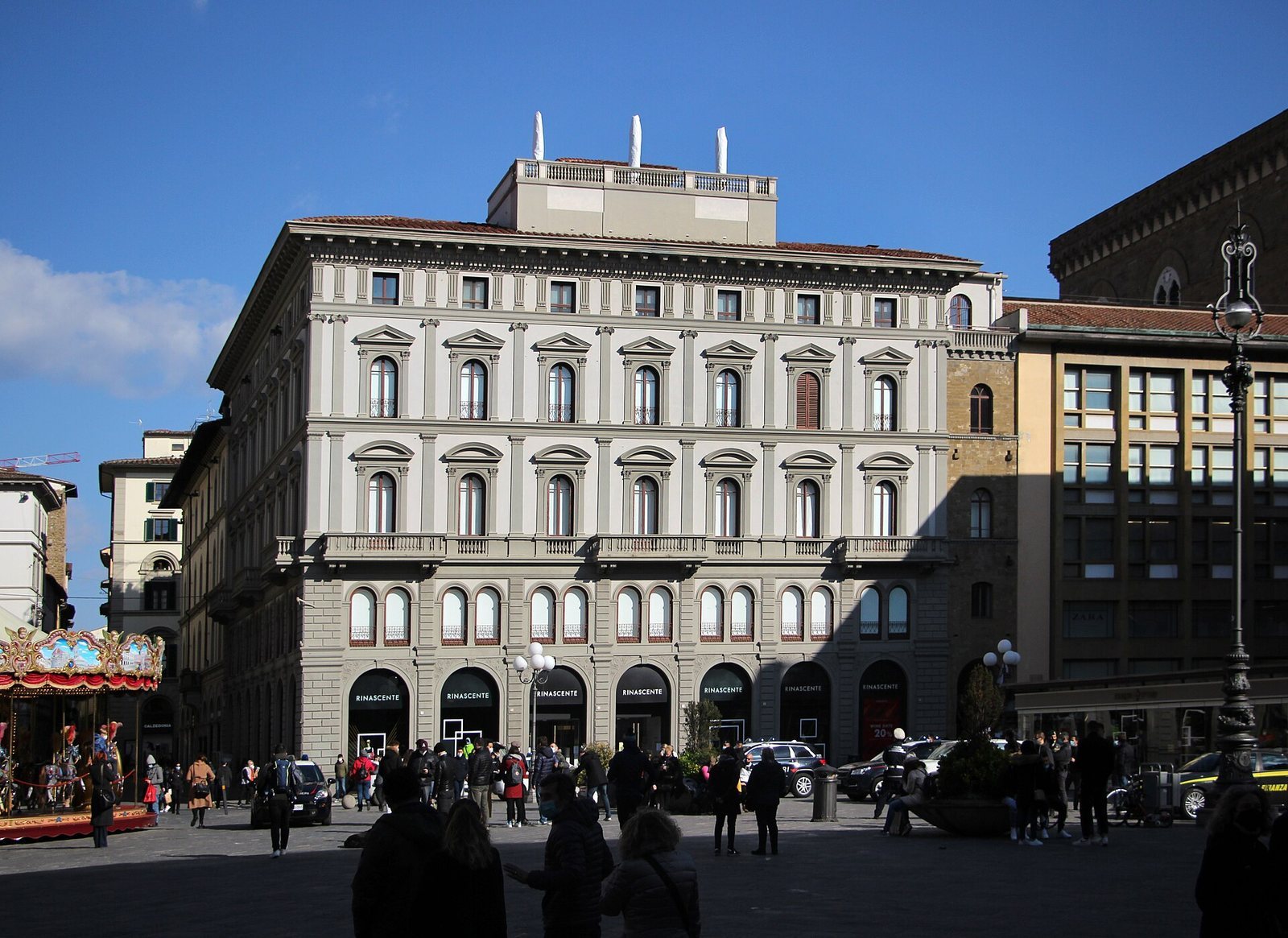
Palazzo del Trianon is a commercial palace in Florence, Italy, whose design was prepared in 1888 in a richly ornamented Neo-Renaissance style, a later revival of Renaissance forms. It was among the first buildings reconstructed during the redevelopment of central Florence. The palace quickly became a major attraction on the new square named for Vittorio Emanuele II, Italy’s first king, who reigned from 1861 to 1878.
Early commercial life
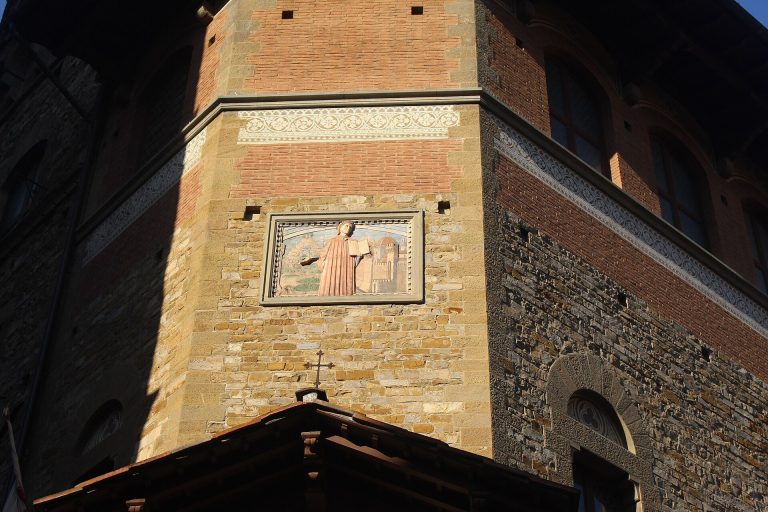
The Trianon café-concert opened in 1893 and included a popular skating rink on its lower floor. It closed in 1896, after which retail shops took over its premises. A plaque commemorating the Barberi, a historic Florentine horse race, had first been installed at the site in 1865 and was returned after the palace was built.
Department stores and restoration
The building later housed the Bocconi department store, subsequently renamed La Rinascente in a naming style associated with poet Gabriele D’Annunzio. UPIM followed, and the palace has since returned to use as a La Rinascente department store. In 1970, the interiors were refurbished and the exterior restored. The façades were restored and repainted again in 2008.
Commemoration
On 12 April 2023, a memorial plaque was installed to honor three police officers killed in the line of duty. Giuseppe Cangiano, a public security commissioner awarded the Silver Medal for Civil Valor, died on 29 August 1920 during clashes between police and demonstrators at a socialist rally supporting the Russian Revolution. That 1917 upheaval overthrew Russia’s monarchy and brought the Bolsheviks to power; two demonstrators also died in the clashes.
Public Security Marshal Luciano Luciani and Deputy Brigadier Luigi Spina were executed by partisans, members of the resistance, on 18 August 1944, shortly after Florence’s liberation. They were killed as representatives of the Italian Social Republic, a German-backed state in northern Italy from 1943 to 1945.
Remains
The palace occupies a square plan and presents two matching street façades, with a classical, ornamented treatment. Its layout and decoration combine references to Florentine Renaissance palaces with features associated with late-19th-century commercial buildings.
Exterior
Plan and street fronts
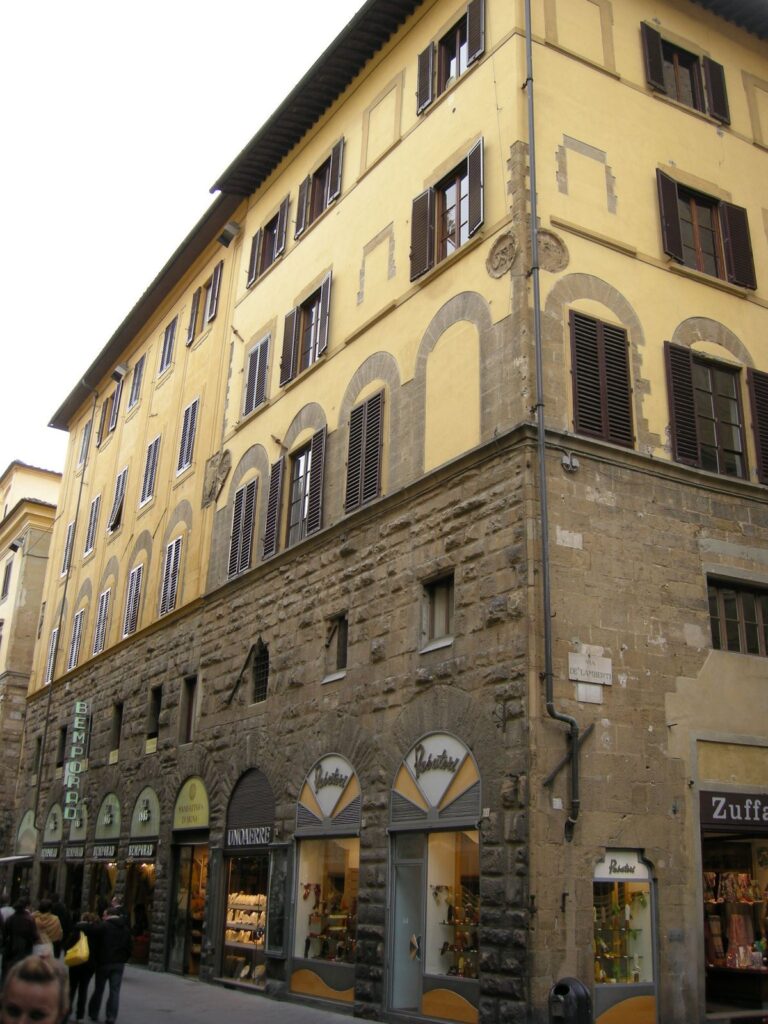
The fronts on Via degli Speziali and Piazza della Repubblica match in design and width. Each is divided into seven vertical sections across four floors and a mezzanine, an intermediate level. A corner of the building also faces Piazza dei Tre Re and provides access to storage rooms. The ground floor has arched shop windows; paired, smaller windows beneath arches mark the mezzanine. This arrangement recalls buildings influenced by American architect Henry Hobson Richardson.
Upper façades
Above the mezzanine are two broad office levels and an attic. The upper windows are framed by pilasters, shallow columns attached to a wall, and horizontal bands. Their arrangement recalls Palazzo Rucellai, a Florentine Renaissance palace associated with Leon Battista Alberti. The lower upper level uses Doric details, one classical column style, and small rosettes; Ionic forms, another classical column style, appear on the level above. A broad cornice recalls Palazzo Strozzi, a major Renaissance palace in Florence. The band joining the upper façade to the cornice combines references to Giorgio Vasari and Louis Sullivan.
Commercial decoration
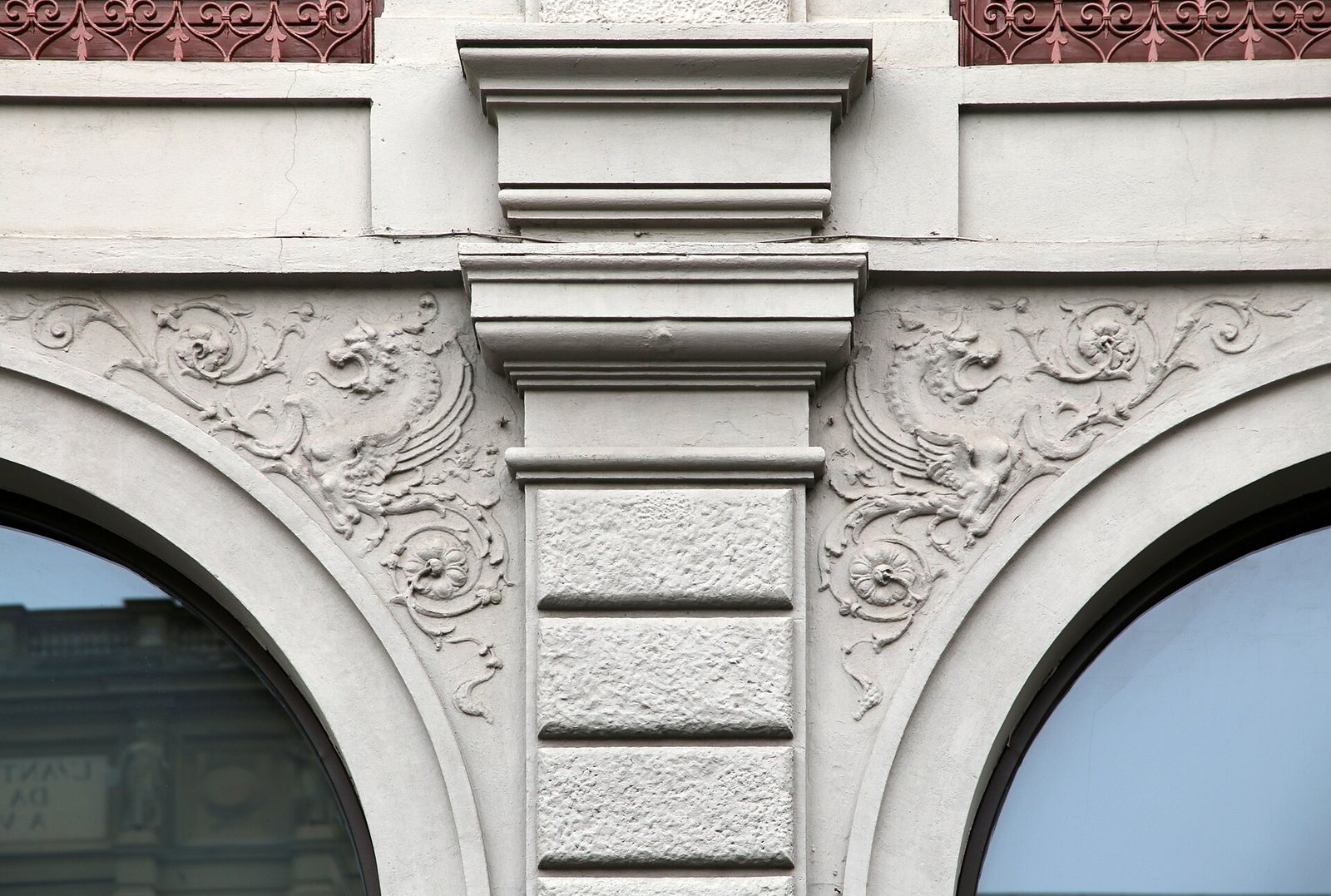
The façades function as independent screens for a building designed for commercial use. Their eclectic historical references also echo the Chicago School, a late-19th-century movement associated with new commercial building forms. A possible influence is a square-plan Rinascente building in Rome, constructed around the same period. Interwoven patterns and fiery dragons decorate panels beneath the ground-floor shop windows; this ornament has been interpreted as an early, tentative expression of Art Nouveau, an international art and design movement known for flowing, organic forms. The Barberi-race plaque is at Via degli Speziali 3, while the memorial plaque honoring the three officers is at the corner with Via degli Speziali.
Ground-floor interiors
The ground-floor interiors were originally richly decorated, matching the elaborate exterior. Sculptor Vincenzo Rosignoli created some of the interior ornament.