Palazzo dei Cavalcanti: A Fourteenth-Century Palace in Florence
Site at a Glance
- Popularity
- Low
- Country
- Italy
- Primary era
- Medieval
- Eras represented
- Medieval, Modern
- Civilizations
- Italian, Republic of Florence
- Site type
- Domestic
- Remains
- Elite Residence
On this page12 sections
History
Palazzo dei Cavalcanti is a fourteenth-century palace in Florence, Italy, that belonged to the Cavalcanti family.
The Cavalcanti family
The street was once called Via de’ Cavalcanti after the family. During the Middle Ages, the palace’s large arches served commercial premises, and they continued to be used for commerce.
Nineteenth-century change
In his 1843 description, Federico Fantozzi called the building Casa Conti and identified it as the birthplace and residence of Guido Cavalcanti and Bartolomeo Cavalcanti. He described Guido, who died in 1300, as a philosopher, a friend of Dante, and a pupil of Brunetto Latini, a thirteenth-century Florentine writer and civic figure. Bartolomeo was a sixteenth-century writer who died in Padua in 1562.
The palace was among the few buildings to survive the widening of Via de’ Calzaiuoli between 1841 and 1844. This stretch of the street was already considerably wide.
Restoration and commemoration
A restoration campaign took place in 1887, followed by a later intervention that recovered and supplemented parts of the stonework. Between 1900 and 1907, the municipality arranged for a commemorative plaque to be installed through a commission that included Guido Carocci.
Remains
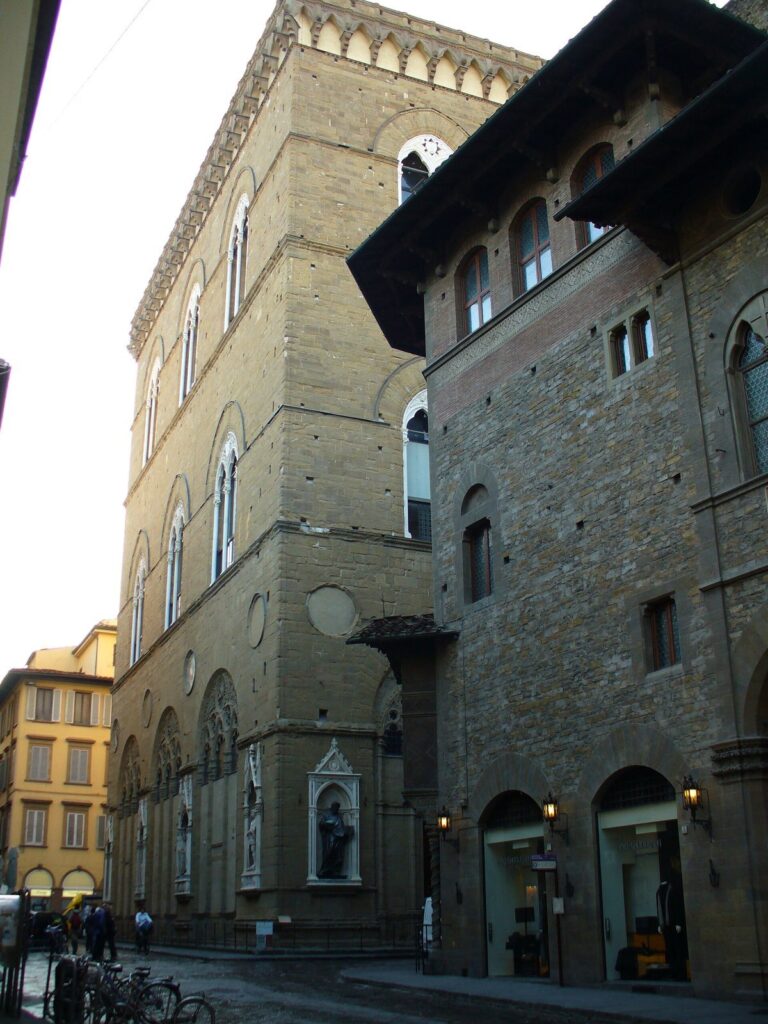
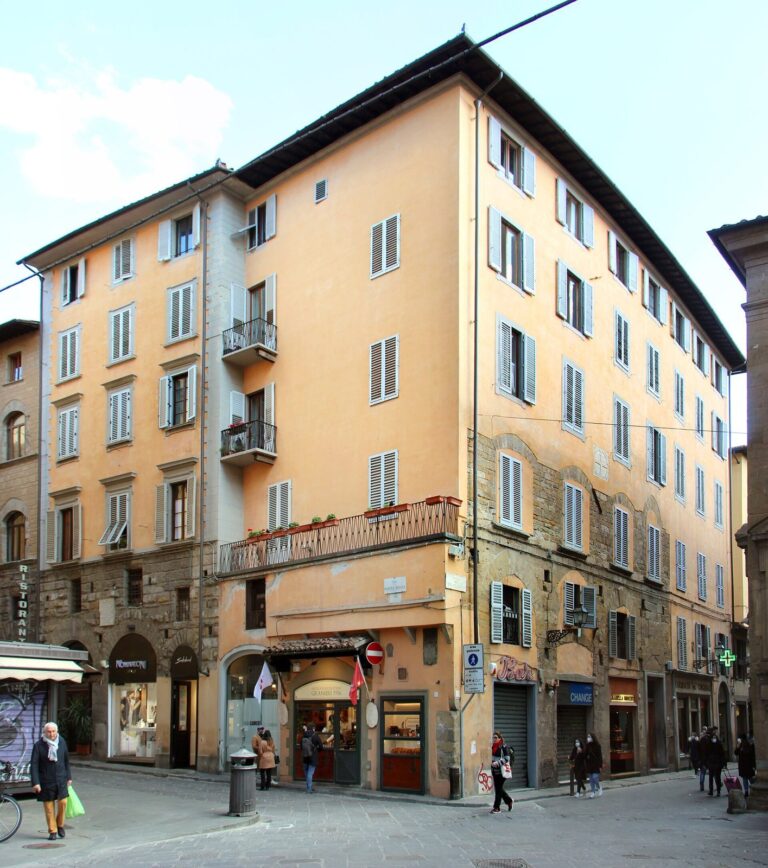
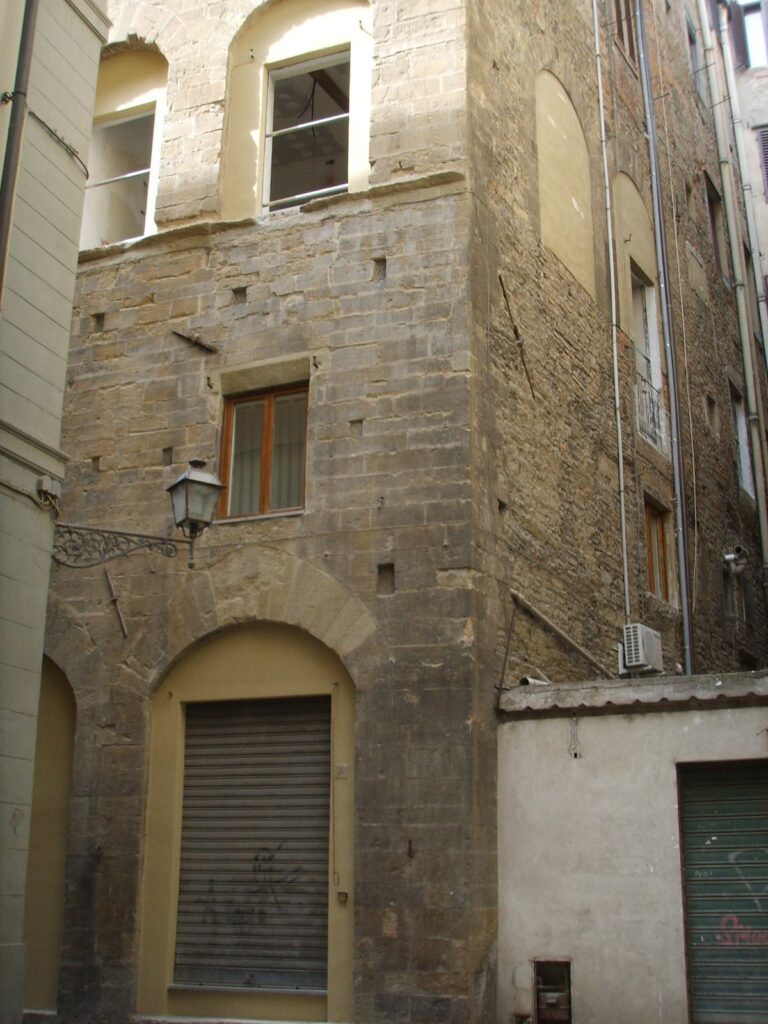
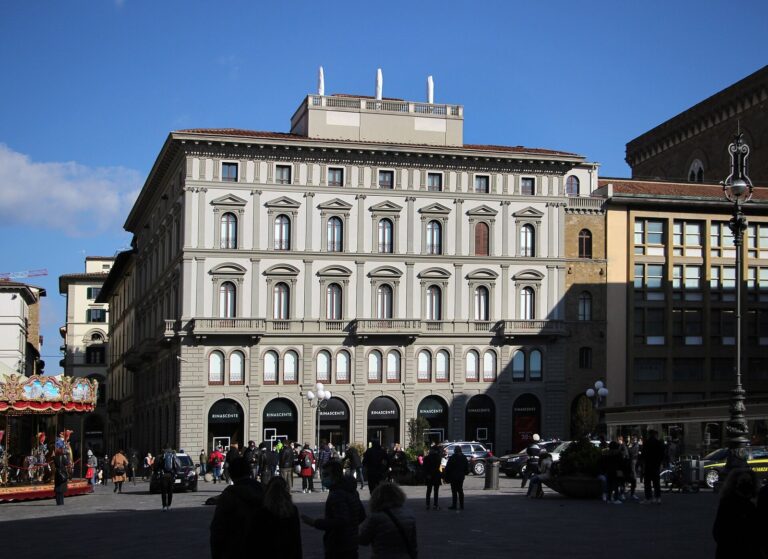
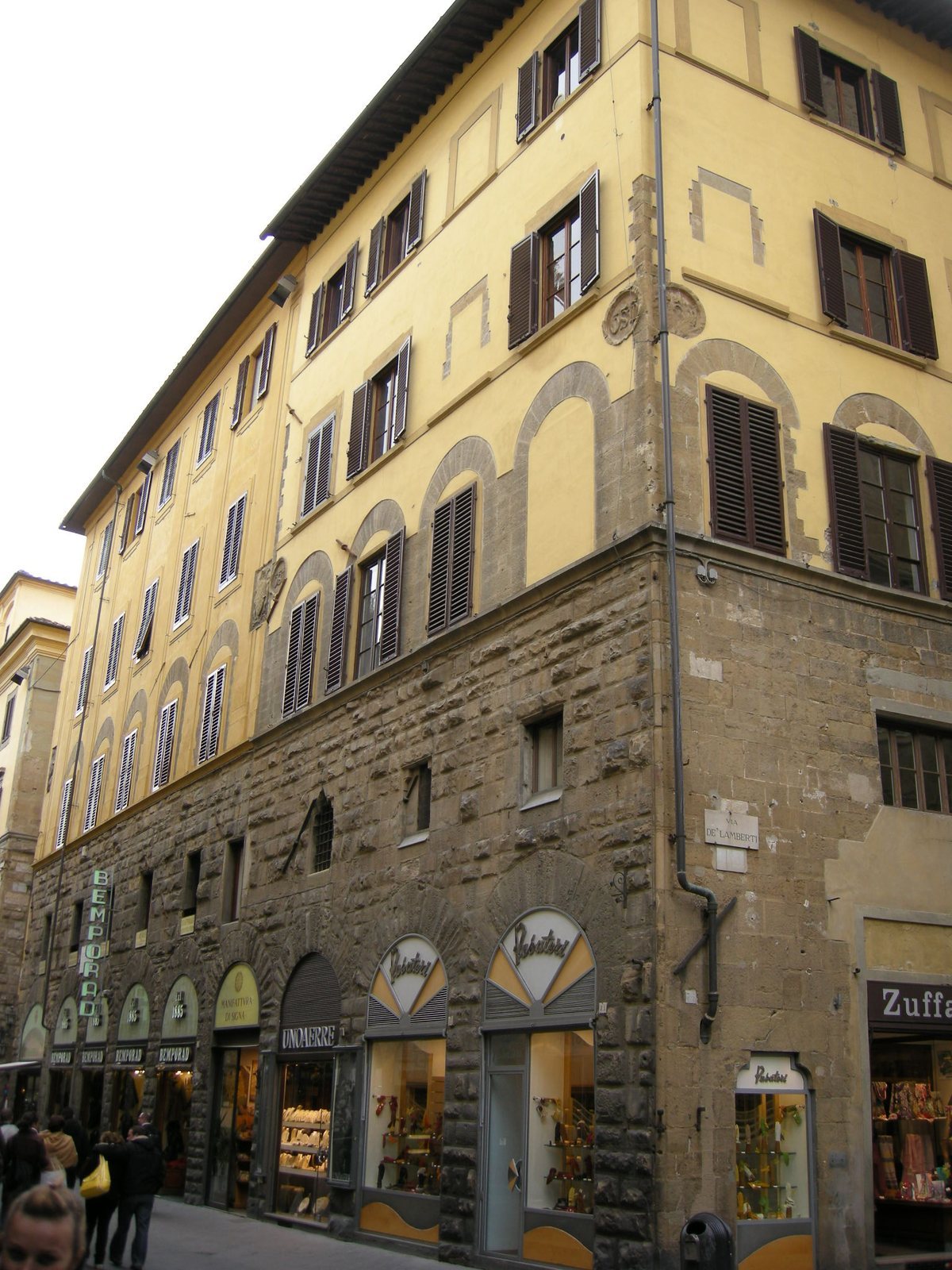
The palace occupies the corner of Via de’ Calzaiuoli and Via Porta Rossa, adjoining the Palazzo dei Capitani di Orsanmichele almost continuously. Despite substantial additions in artificial stone, its original fourteenth-century design remains legible.
Façade and windows
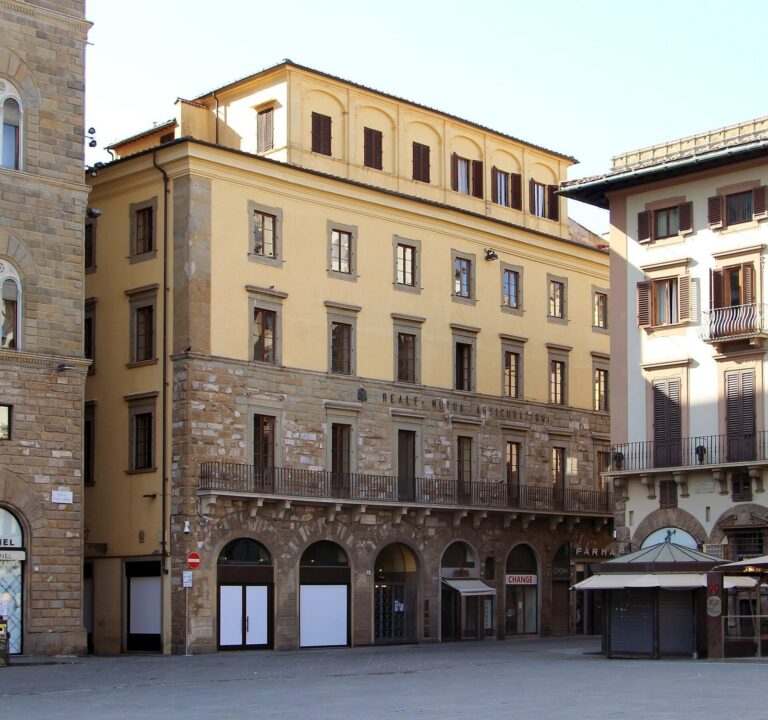
The main façade is organized into five bays, or vertical sections separated by structural divisions, and rises through five storeys. The ground and first floors have uneven stonework with rough, raised faces. A row of rectangular windows runs across the first floor. The upper storeys are plastered, and their former arched windows have been blocked and replaced with rectangular ones.
Street arches and adjoining building
Large round arches open onto the street and continue across the adjoining building, once the seat of the Orsanmichele Company, a religious confraternity associated with Orsanmichele.
Façade details
Heraldic shields
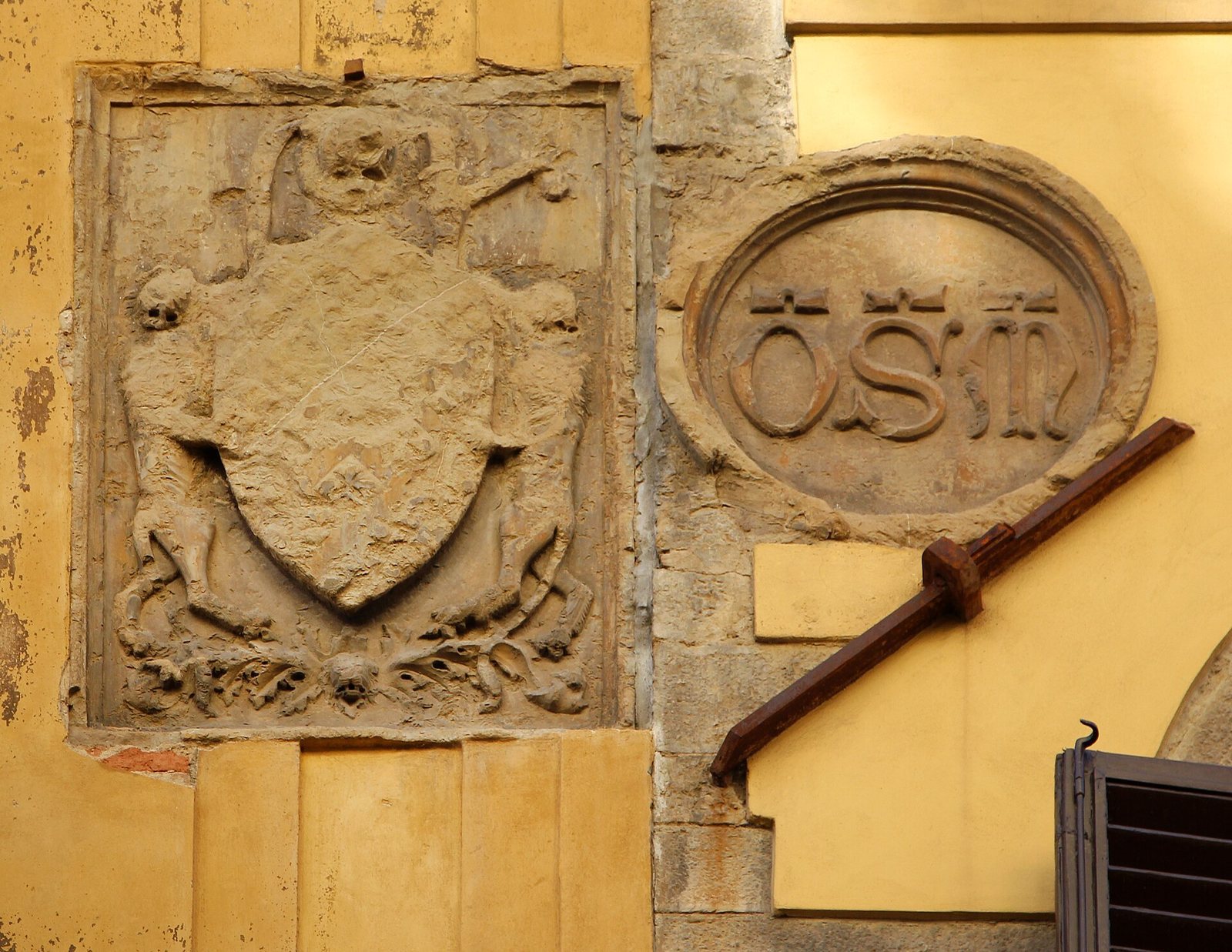
A shield at the corner displays the Cavalcanti arms, a silver background scattered with small red crosses whose arms widen outward and end bluntly. A second shield at the right edge of the façade is now illegible; its presence was noted by architectural historian Walther Limburger.
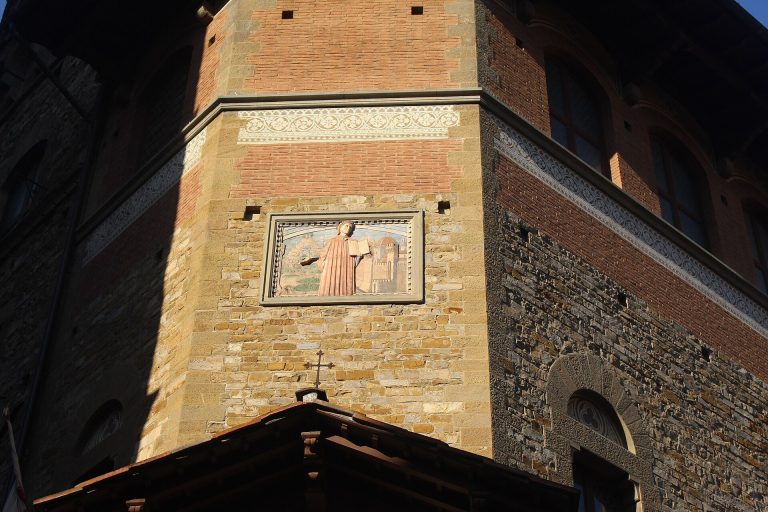
Dante plaque
At the centre of the façade, beneath a small modern shield, a plaque quotes Dante’s Inferno, canto 10, lines 58-63, the first part of the Divine Comedy. The verses recount Cavalcante, Guido Cavalcanti’s father, asking about his son. Dante replies that a guide is leading Guido, someone Guido may have held in disdain.
Former alley
Projecting traces on the right side recall a narrow alley that once divided the palace from the adjoining residence of the captains of Orsanmichele.
Florentine Chapter markers
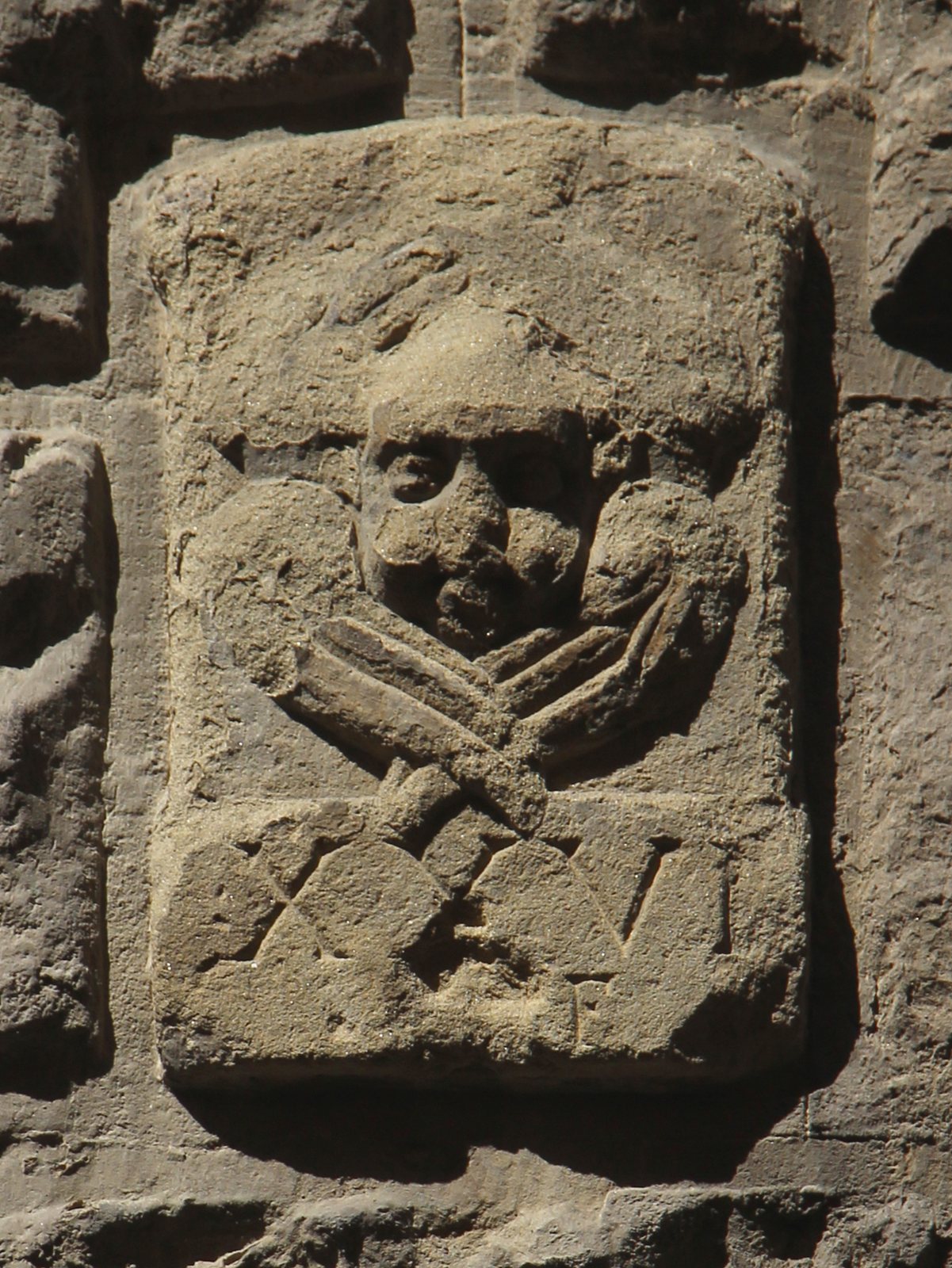
Between the red street numbers 15 and 17, two small stone markers bear the Roman numerals 26 and 27. They are probably displaced memorial markers that once stood above two properties owned by the Florentine Chapter, the body of canons attached to Florence Cathedral.