Santa Venera: A Catholic Church in Palermo, Italy
Site at a Glance
- Popularity
- Low
- Country
- Italy
- Primary era
- Early Modern
- Eras represented
- Medieval, Early Modern
- Civilizations
- Kingdom of Sicily, Spanish
- Site type
- Religious
- Remains
- Church
On this page9 sections
History
Santa Venera is a Catholic church in Palermo, Italy. Its origins lie in the city’s response to the plague of 1493, when residents sought the intercession of Venera, a virgin and martyr in Christian tradition. The church’s later form reflects a Neoclassical remodeling in the late eighteenth century, while its history is closely linked to Palermo’s civic devotion and the nearby Termini Gate.
Church and civic devotion
After the plague ended, the Palermo Senate ordered a church in Venera’s honor and proclaimed her the city’s patron saint. The Senate also gave the church property, including land in the Conciaria district. During a further outbreak in 1529–1530, Palermo again sought Venera’s intercession. On 26 July 1530, a painting commemorating the earlier deliverance was carried in procession from the cathedral to the church.
When Emperor Charles V ordered fortification work, Giovanni de Vega, Sicily’s viceroy, directed the construction of the Termini Gate. The church was put to secular use during the work and served as a quarantine hospital. Its painting was transferred to a nearby Carmelite convent. The church was restored under viceroy Marcantonio Colonna, and on 25 July 1580 the painting returned and religious services resumed. The building was remodeled in the Neoclassical style in the late eighteenth century.
The Confraternity of Peace
In 1576, the Sicilian nobleman Vincenzo Tagliavia d’Aragona founded a religious association called the Confraternity of the Name of Jesus Christ. Its members were known as the Greens because they wore a green sash, insignia, and cloak over their robes. Disagreements led a faction to separate in 1579 and form the Confraternity of Peace, whose purpose was to settle disputes and reconcile enemies. Founded at Santa Margherita on 22 May 1580, it later moved to Sant’Angelo alla Conciaria. By 1584 it had been entrusted with Santa Venera, and in 1587 the Senate granted it the church.
The confraternity affiliated with similar associations in Messina and Catania in 1612. On 9 June 1616, Pedro Téllez-Girón, Sicily’s viceroy and Duke of Osuna, issued a decree giving legal force to its aims; later viceroys extended the measure across the kingdom. Around 1635, viceroy Luigi Guglielmo I Moncada obtained part of the Termini Gate’s projecting fortification for the confraternity’s relocation. In 1641–1643, viceroy Giovanni Alfonso Enriquez de Cabrera obtained the entire fortification to transfer the Santa Venera pawn bank, which lent money against pledged goods. The confraternity built an oratory alongside the gate. Its first stone was laid on 4 September 1657, and it was blessed on 4 September 1660.
Demolition and later use
In 1852, the Bourbon government ordered the Termini Gate demolished, claiming it could shelter revolutionaries after the uprising of 1820 and the Sicilian Revolution of 1848. The oratory above the gate was also torn down. The confraternity lost much of its property but remained in the area, using surviving rooms, including a communal dining room on the city wall, and the nearby walk along the Walls of Peace. After the Second World War, Santa Venera suffered vandalism and looting, then underwent restoration. It remains a Catholic church in the Archdiocese of Palermo.
Remains
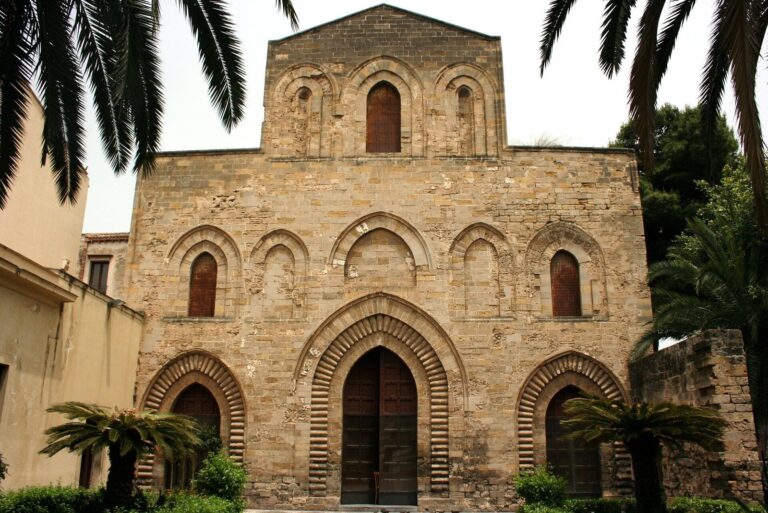
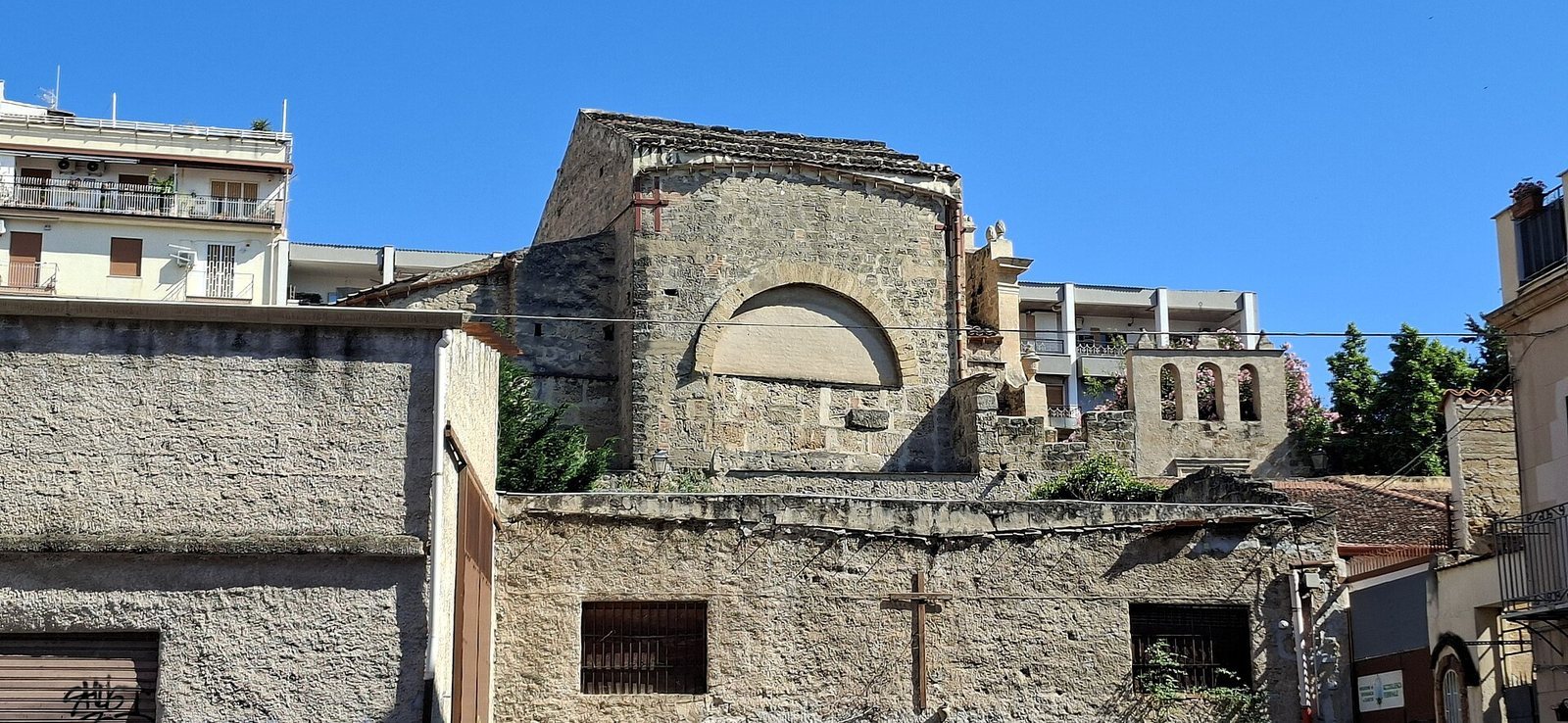
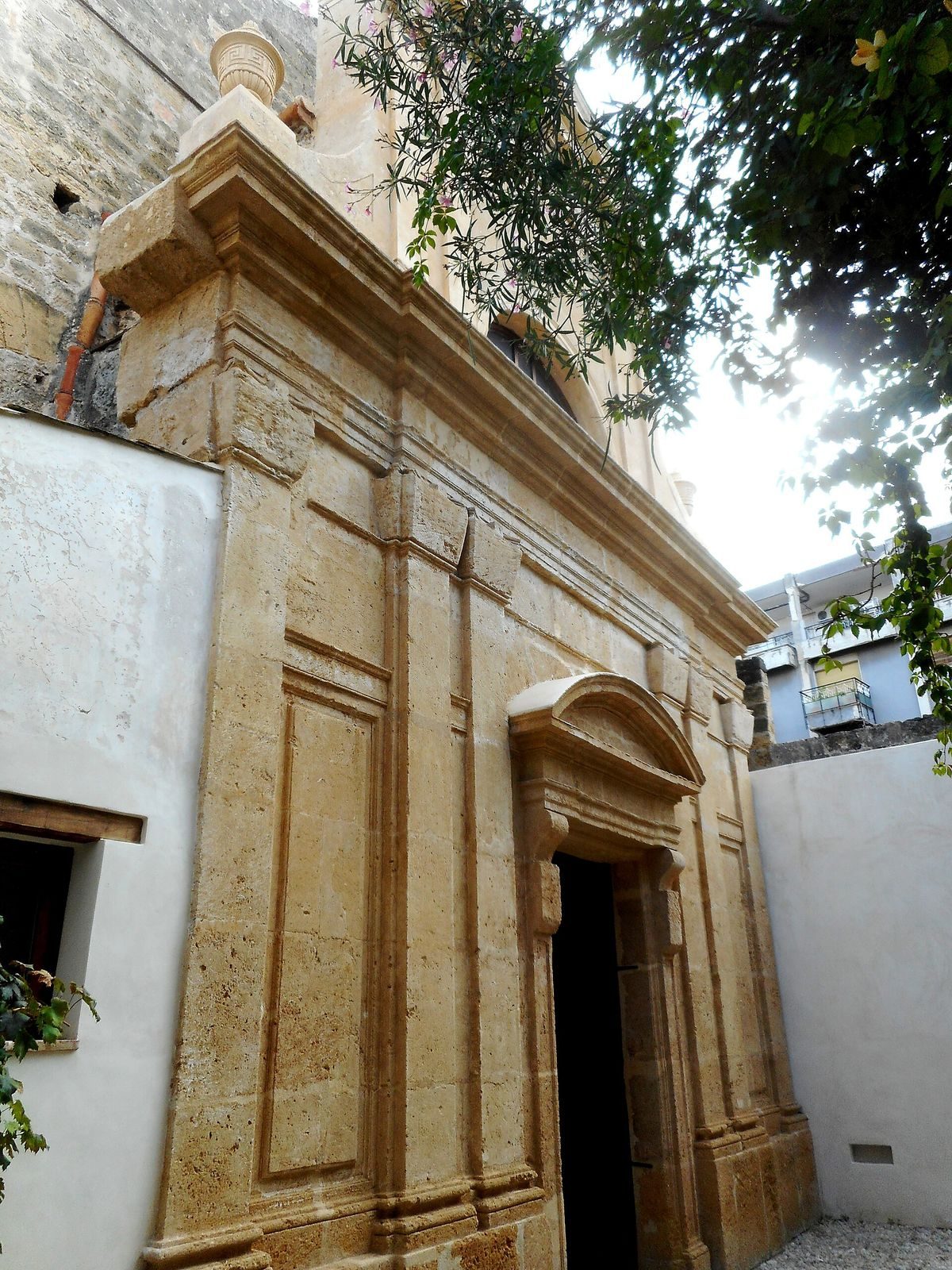
Santa Venera stands beside the bastions of the former Termini Gate in Palermo’s historic center. Its church is arranged around a square main body, with a gabled roof and a rounded apse, the curved end of the sanctuary, to the east. The Neoclassical façade faces west from a projecting section. Paired flat, column-like features frame a large semicircular panel in the upper tier, which is crowned by a gable-shaped pediment; vases stand on the exterior supports. A large semicircular window opens on the church’s right side.
The church interior and painting
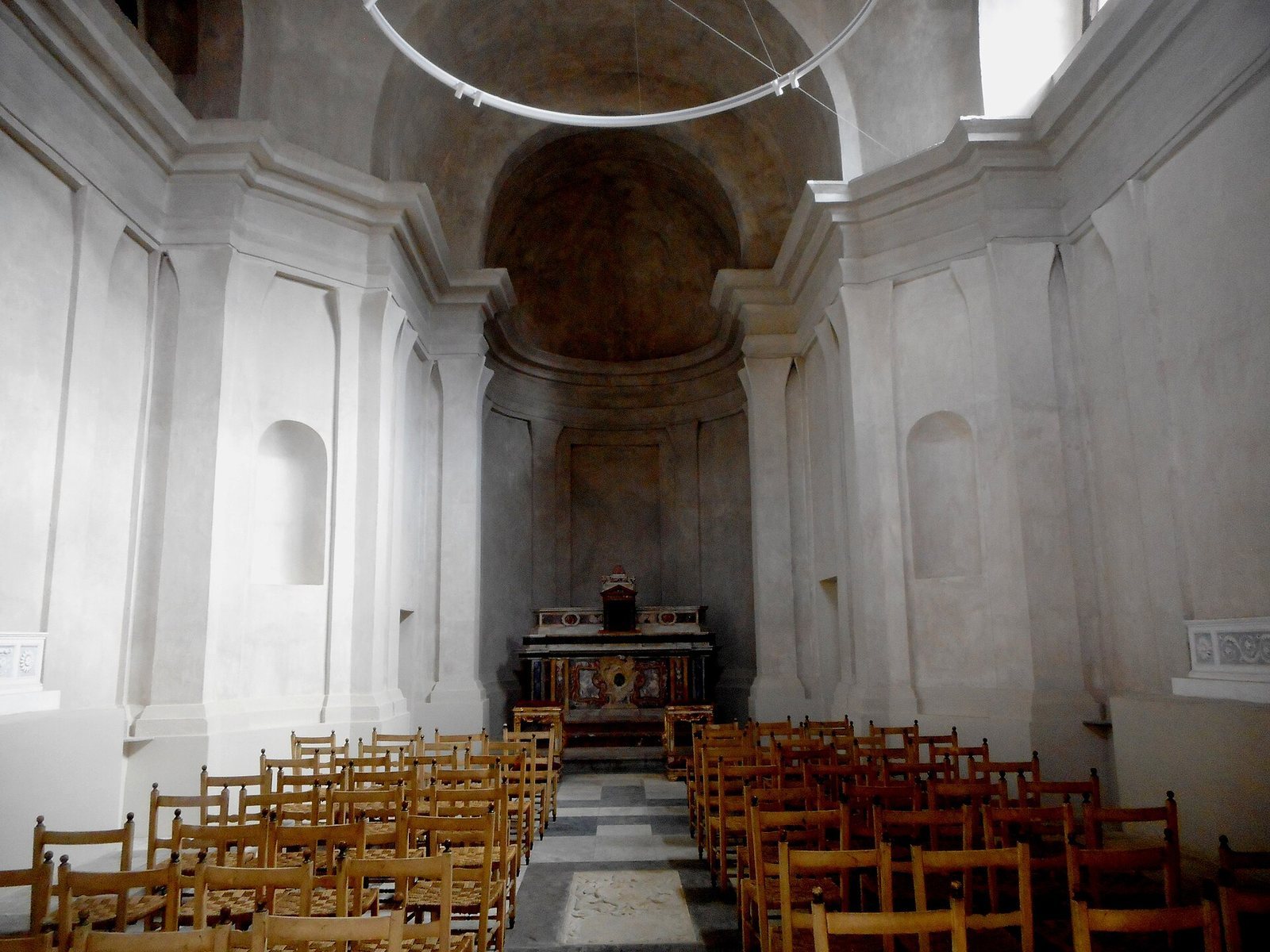
The church has three altars. The altar on the side associated with the Epistle reading at Mass formerly held a painting by the sixteenth-century artist Mario di Laurito. It shows the Virgin and Child within an almond-shaped halo formed by adoring children, surrounded by angels. At their feet, Venera, Sebastiano, Rocco, and Rosalia kneel on one side, while Cristina, Ninfa, Agata, and Oliva appear on the other. A view of Palermo fills the lower part of the painting, which is now held in the Diocesan Museum.
The former oratory and its grounds
Oratory of Peace
The former oratory had a carved-stone façade with white-marble frames and niches for statues of the Immaculate Conception, Rosalia, and Venera. An exterior staircase with a balustrade led to the entrance. A doorway and an interior staircase connected several rooms. Inside, stucco ornament decorated the walls, and the main altar was made of marble in several colors.
Walls of Peace
The area known as the Walls of Peace included an enclosed garden planted with rare species. A four-sided marble fountain stood in a gazebo behind a long, dense pergola, with the sixteenth-century church beyond it. A communal dining room occupied part of the city wall.