Lefkadia Judgment Tomb: A Hellenistic Macedonian Burial Monument
Site at a Glance
- Popularity
- Medium
- Country
- Greece
- Primary era
- Classical
- Eras represented
- Classical, Modern
- Civilizations
- Kingdom of Macedon
- Site type
- Burial
- Remains
- Tomb
On this page11 sections
History
Hellenistic burial
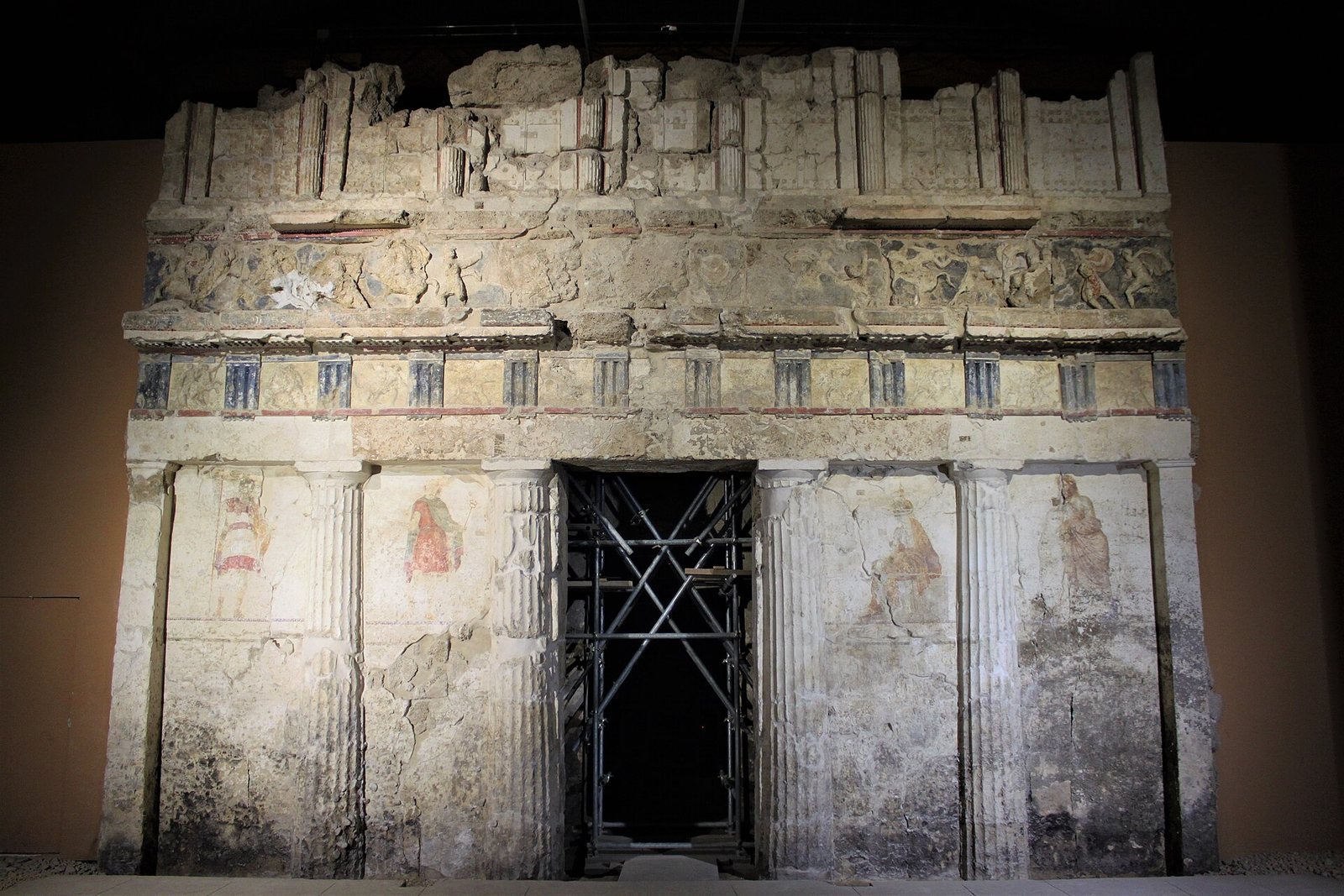
The Lefkadia Judgment Tomb is a monumental Macedonian burial structure at ancient Mieza, near Naousa in Greece. It was probably built in the late fourth or early third century BC, during the Hellenistic period, an era when Greek culture spread and successor kingdoms emerged. Macedonian tombs were monumental graves associated with ancient Macedonia, often built with vaulted chambers and elaborate fronts.
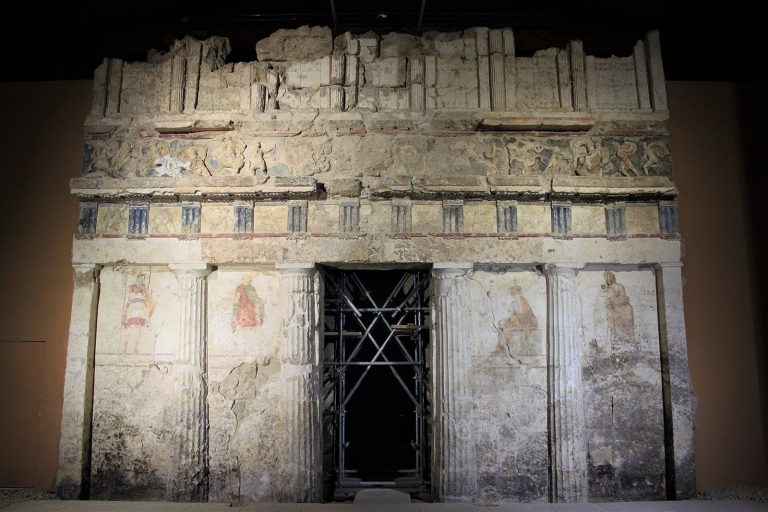
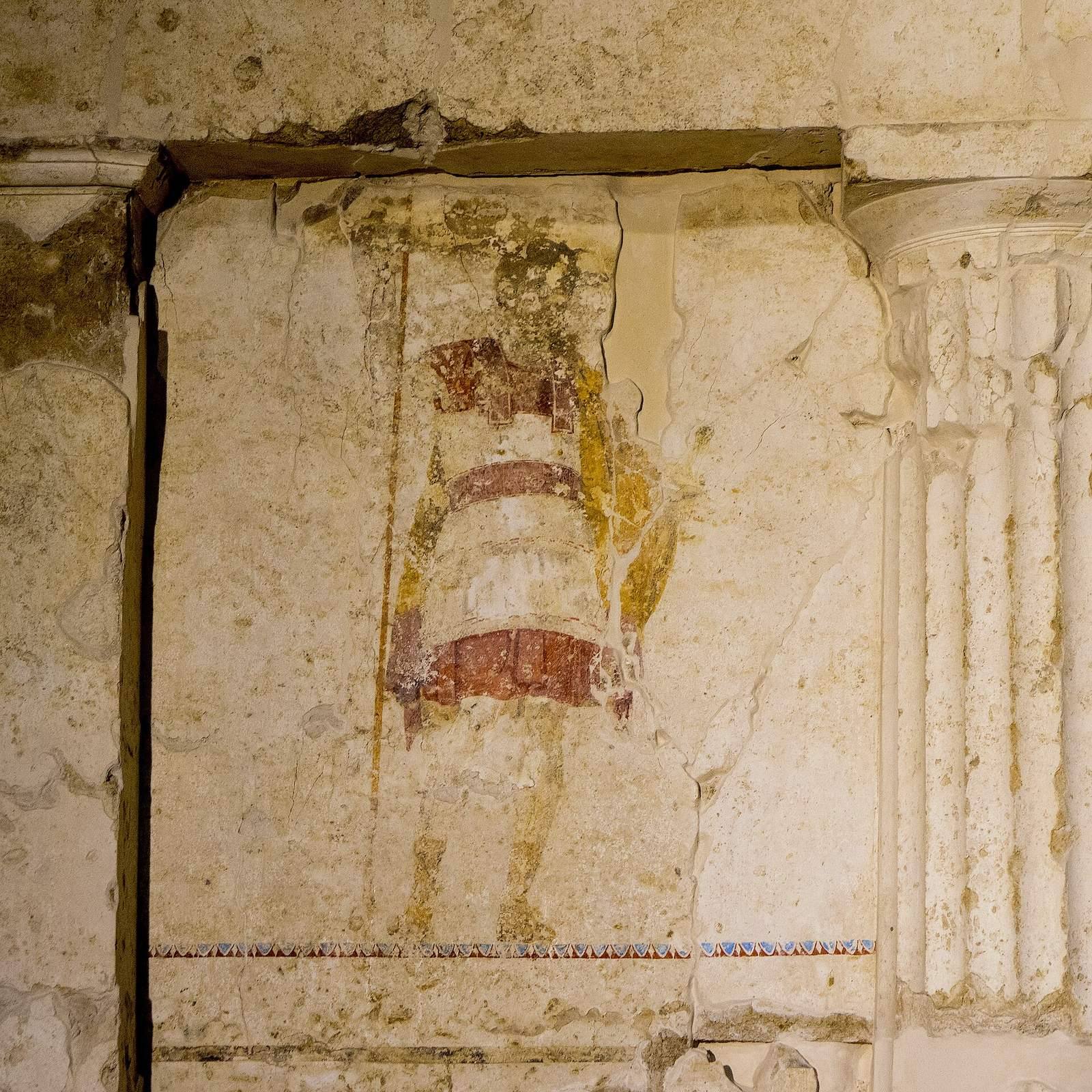
The tomb takes its familiar name from paintings that present the judgment of the dead, an unusual subject in ancient Greek art. Hermes, who could guide the dead to the underworld in Greek mythology, appears with figures identified as Aeacus and Rhadamanthys, judges of the dead. The warrior in the paintings may represent the tomb’s occupant, and the scene may show him being led before the judges in Hades; these identifications remain interpretations.
Discovery and conservation
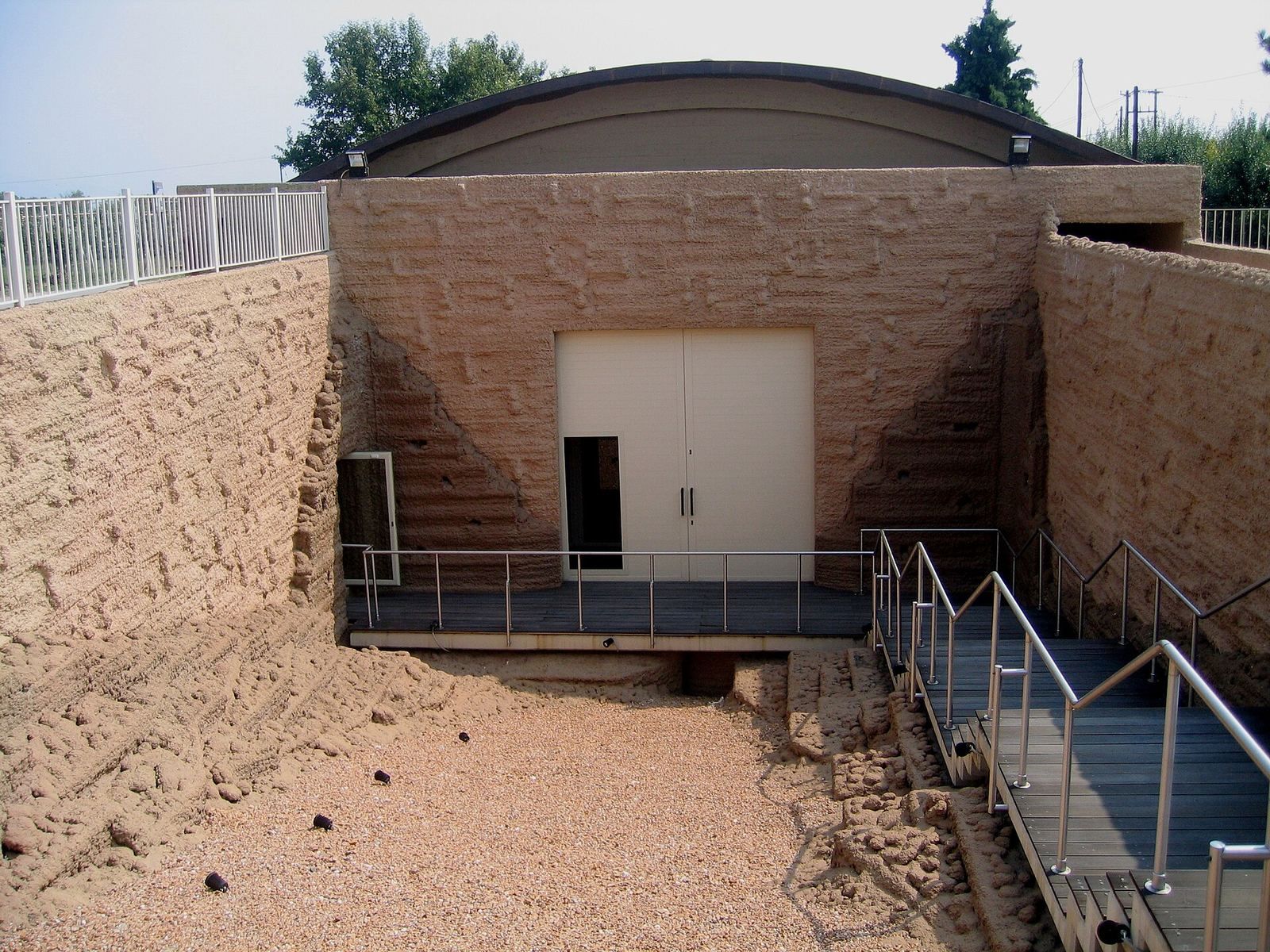
Road construction revealed the tomb in 1954. Greek archaeologist Photis Petsas excavated it from 1954 to 1964, and work resumed in 1998. Liana Stefani later restored the structure, and a modern protective building was added to shelter it from the weather.
Remains
Facade and paintings
Overall design
The tomb has a monumental, two-level facade and two chambers with continuous arched ceilings. An earthen mound approximately 10 metres across and 1.5 metres high once covered the tomb; excavation removed it. The facade measures 8.55 metres high and 8.68 metres wide. Its triangular upper feature, or pediment, once had a decorated central panel, but nearly all of this crown and its ornament have been lost. Six columns attached to the wall, each 1.46 metres high, stand on the upper level between seven decorative false windows, most of which have lost their upper sections. Four more attached columns frame the lower level, with the entrance to the antechamber in the middle.
Battle decoration
A horizontal band beneath the upper columns shows cavalry and foot soldiers fighting. The figures, formed in lime mortar, have painted clothing and armor against a dark-blue ground; the opposing forces probably represent Macedonians and Persians. On the lower level, a projecting molding decorated with flowers and scrolls sits above a horizontal architectural band. Its frieze alternates twelve dark-blue triglyphs with eleven panels, called metopes, showing the mythological battle between the Lapiths and Centaurs. The triglyphs are colored raised reliefs, while shading on the flat-painted panels creates the appearance of depth.
Painted judgment scene
Four paintings fill the upper parts of the spaces between the lower columns. At the outer left, a warrior faces forward, his left hand resting on his sword sheath and his right holding a downward-pointing spear. He wears a red tunic, white armor, a yellow cloak over his right shoulder, and tall yellow boots. In the space nearer the doorway, Hermes moves to the right while turning his head back; he extends one arm and holds his staff, the caduceus, in the other. His clothing includes a red tunic, a blue cloak edged in purple, and tall yellow boots. Inscriptions identify the two figures to the doorway’s right as Aeacus and Rhadamanthys. Aeacus sits facing left on a cubic seat, raising a long rod in his left hand and resting his right hand on his thigh. He wears a brown draped garment, with one shoulder and the upper chest uncovered, and has a beard, ribbon, and wreath. Rhadamanthys stands leaning on a staff, also bearded and wreathed, in a lighter-colored draped garment.
Chambers and finds
Antechamber
The antechamber measures 7.7 metres high, 6.5 metres wide, and 2.12 metres long, on a scale corresponding to the facade. It suffered heavy damage in antiquity. Two relief shields remain visible on either side of the doorway leading into the burial chamber. A small female figurine with ivory elements was found here among the tomb’s burial goods.
Burial chamber and finds
The barrel-vaulted burial chamber is 5.26 metres high, 4.8 metres wide, and 4.72 metres long. Its walls are coated in stucco, with a projecting ledge around the base supporting shallow pilasters, a horizontal beam, and a cornice. The wall panels between the pilasters are red, while painted rosettes ornament the stucco features. The design recalls wall paintings in houses of the same period at Pella and Delos. Burial goods also included a wooden couch with ivory elements. Finds from the tomb are held at the Archaeological Museum of Veroia.