Convent of Santa Maria Maddalena: A Venetian Women’s Convent and Prison
Site at a Glance
- Popularity
- Medium
- Country
- Italy
- Primary era
- Early Modern
- Eras represented
- Early Modern
- Civilizations
- Venetian
- Site type
- Religious
- Remains
- Monastery
On this page9 sections
History
The Convent of Santa Maria Maddalena was a Venetian convent on Giudecca in Venice, Italy, established for women known as the Convertite, who were expected to undertake penitence or prepare for another way of life. It became Venice’s first public institution devoted exclusively to isolating former prostitutes, combining charitable provision with efforts to control people regarded as socially undesirable. The convent’s origins date to 1530–1534, and its first core was built in 1543.
Origins and religious rule
A community of the Convertite had formed at Venice’s Ospedale degli Incurabili, a hospital, before 1525. Angela Merici may have contributed to its formation during a temporary stay there. Between 1530 and 1534, the first members moved across the Giudecca Canal to rented rooms near Sant’Eufemia on Giudecca. They remained under the hospital’s authority and continued to bury their dead there until 1551. The convent’s location on reclaimed marshland at the lagoon’s edge supports its sixteenth-century origins.
In 1551, Pope Julius III authorized the women to follow the Augustinian rule, a religious way of life based on the Rule of Saint Augustine. The convent answered to the Patriarch of Venice, the city’s senior Catholic authority, and the Abbot of San Giorgio, the head of the monastery on San Giorgio Maggiore. A bull issued by Pope Paul IV assigned financial oversight to the governors, while spiritual leadership remained with the patriarch and his successors.
Community, work, and governance
The number of residents grew from 220 in 1553 to nearly 400 in 1620. Most were former prostitutes. They learned reading, sewing, weaving, psalms, and devotional practices. Venice had earlier seen a private charitable institution, Zuanne Contarini’s Ospitale di Santa Margherita, founded in 1407. The Casa del Soccorso followed around 1577, and the Ospedale delle Penitenti around 1700.
The convent generally depended on occasional bequests and alms rather than regular public funding. The Senate contributed money in 1564, partly drawn from fines. In 1586, the nuns sought a portion of a surcharge on fines that already supported the Pietà. The two institutions petitioned the Council of Ten, a governing council of the Venetian Republic, in 1588 and 1589 to prevent their shares from being evaded.
In 1553, the convent sought permission to establish a spinning mill. Authorities required it to obtain raw materials through outside artisans, restricting its work to subcontracting. The convent also ran a printing enterprise from 1557 to 1561. Its 25 known publications were religious works, mostly short, with 11 in the vernacular and 14 in Latin. Some illustrated initial letters linked to the convent appeared in books printed in Padua by Pasquati from late 1561.
The press’s inspiration remains uncertain. Pietro Leon da Valcamonia, the convent’s first chaplain, may have been involved; he may also have been the Giovanni Pietro de Leonibus connected with academic circles in Padua. The printing operation ended in 1561, the year Leon was executed. He confessed to having seduced 20 women in the convent’s care and killed their newborn children. On 10 November he was beheaded and then burned between the columns in St Mark’s Square. Leon tried to affirm the mother superior’s innocence, but she remained imprisoned and died on 27 December 1564.
Expansion and later use
The church was consecrated in 1576 by Giovanni Trevisan, Patriarch of Venice, and dedicated to Mary Magdalene. Bequests supported the convent’s expansion between 1595 and 1606. In 1601, the Senate created a governing congregation of 12 members, half patricians from Venice’s hereditary ruling elite and half citizens outside that class. The congregation grew to 20 members in 1690, retaining the same division. A new parlour and dormitory were built between 1696 and 1698, and the church was renovated in the early eighteenth century.
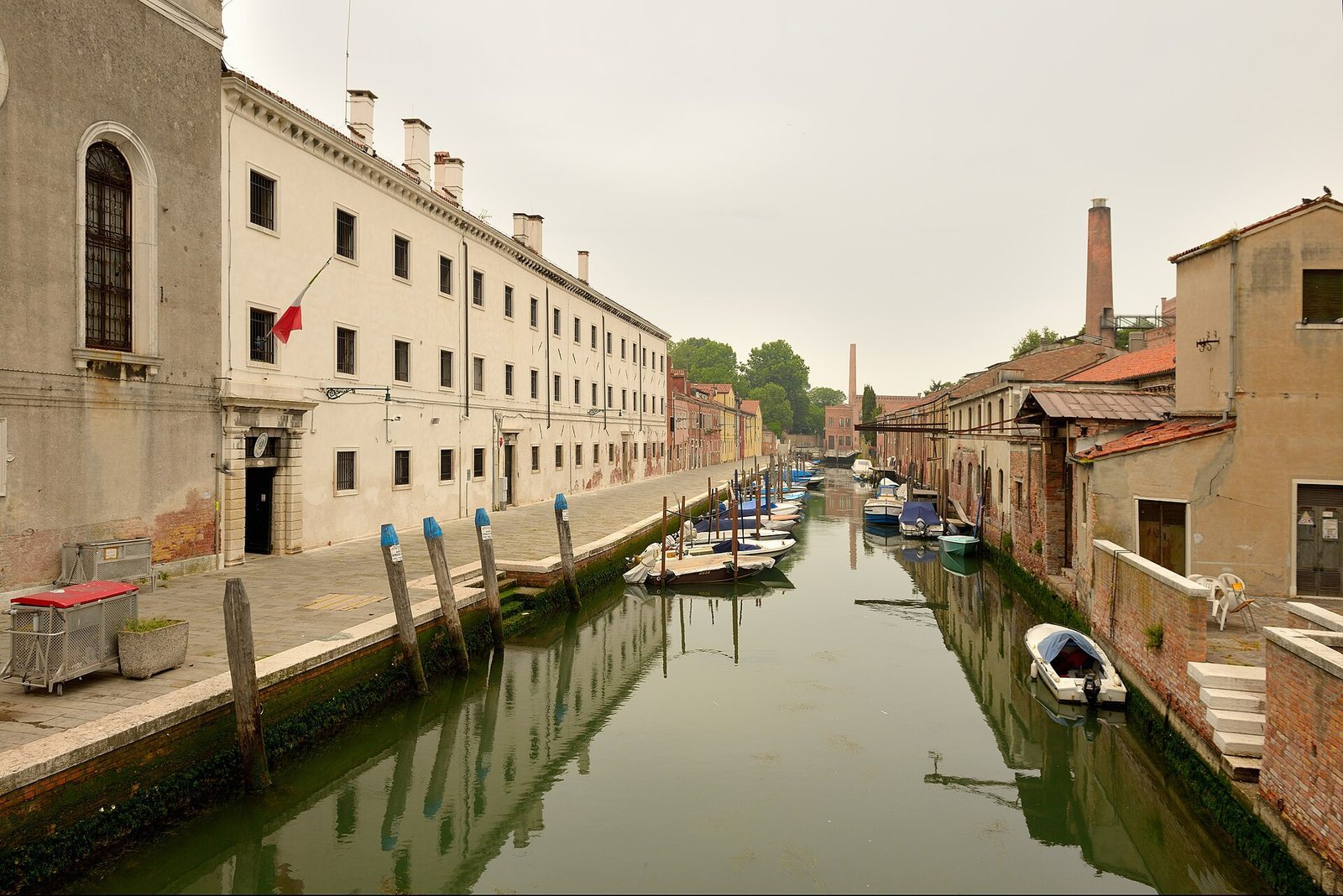
Napoleon’s decrees suppressed the convent in 1806. The vacated complex first served as a military hospital, then became a women’s prison in 1837 under Austrian rule. The Daughters of Charity of St Vincent de Paul took charge of the institution, which continued as a state women’s prison. The church itself was put to prison use from 1857. The former convent remains one of Italy’s women-only prisons.
Remains
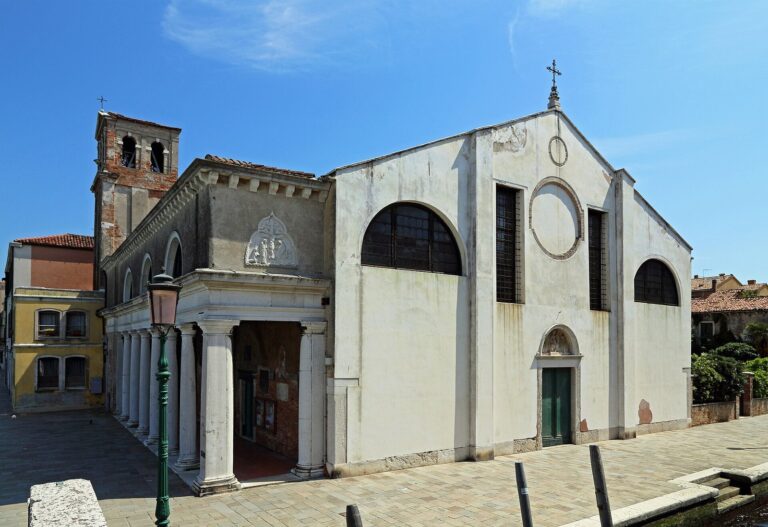
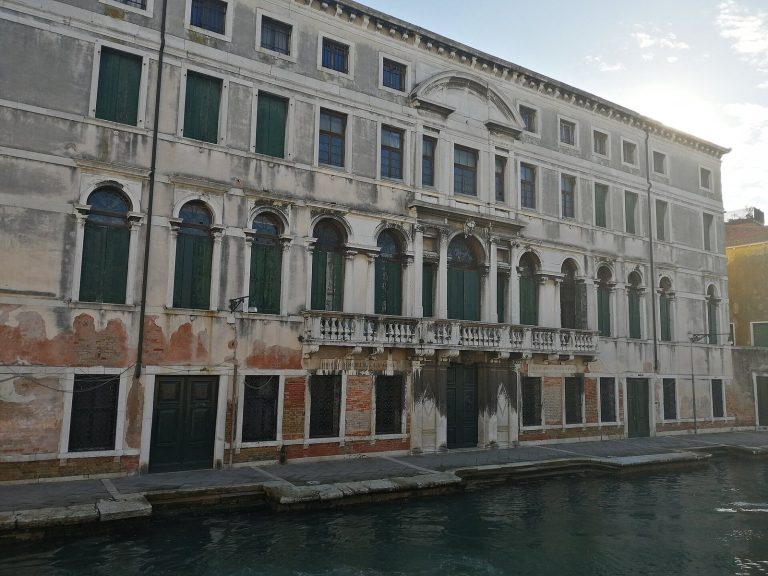
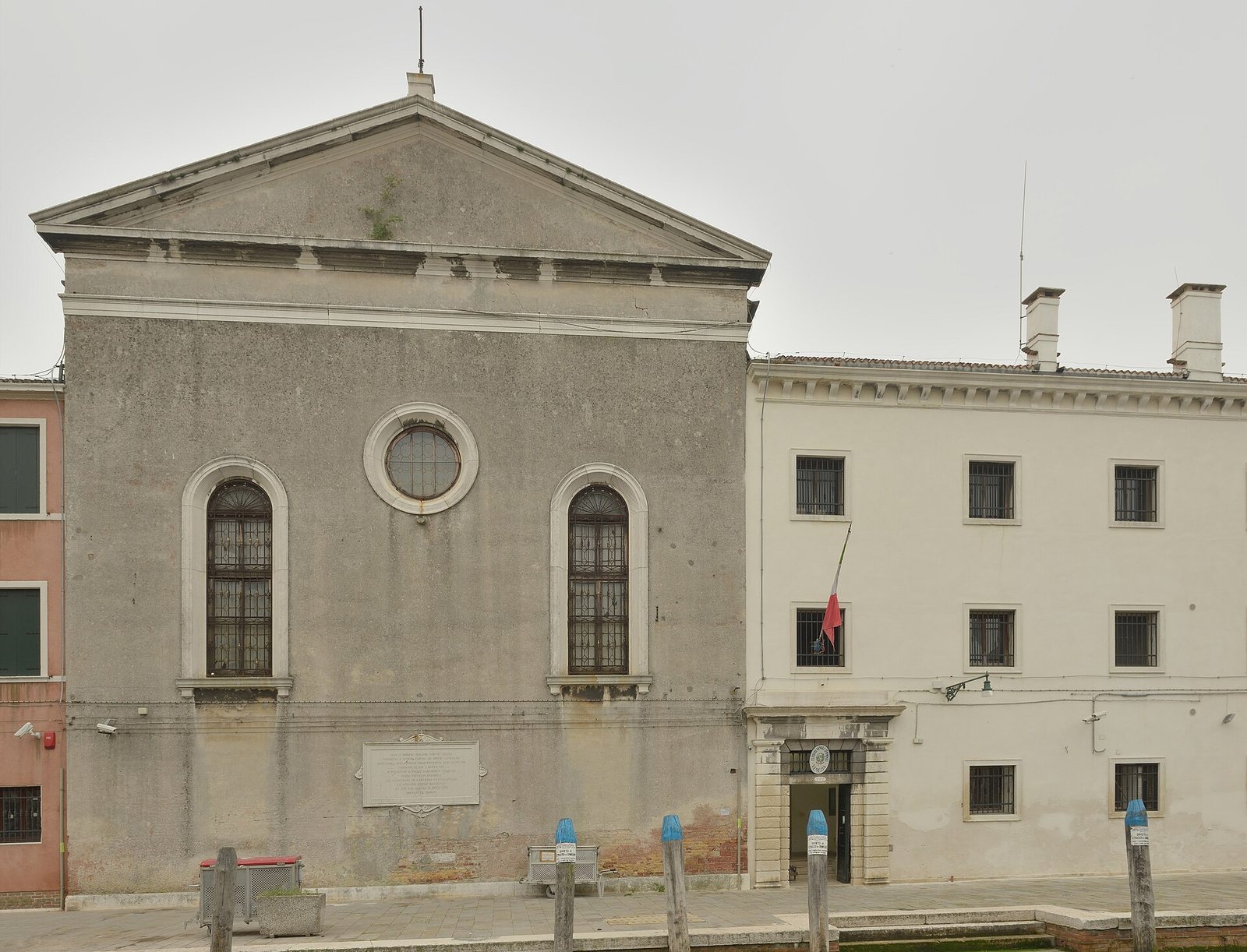
The complex retains the volumes of the former convent. Its small, square-plan church stands in front of a cloister, a covered walkway. To the north, a block shaped like a reversed F encloses a large courtyard. A substantial garden beyond the buildings once reached the edge of the lagoon.
The church
Exterior and altars
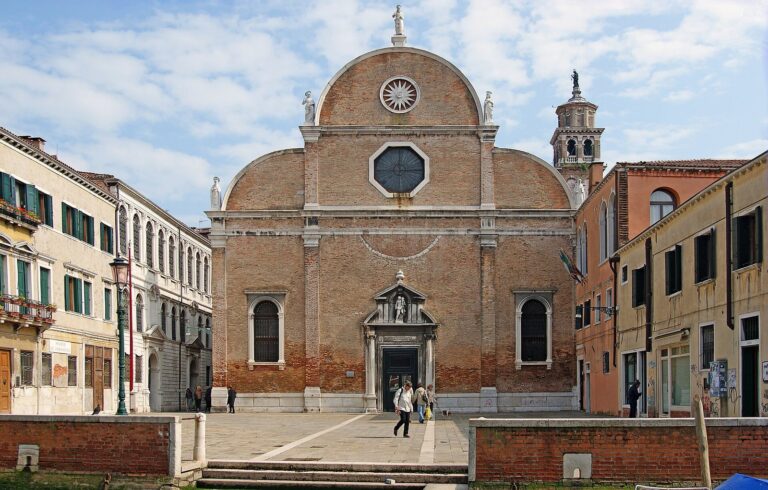
The church’s exterior is exceptionally plain. Masonry now blocks its doorway; a modest portal and short flight of steps were removed, although Giacomo Guardi recorded them in a sketch. A plaque on the blocked entrance commemorates Habsburg emperor Francis Joseph as refounder of the women’s prison. The church had six altars. Its present main altar holds a Madonna with two saints, a work by an unidentified sixteenth-century school whose provenance is unknown. It replaced the church’s earlier decoration.
Paintings and ceiling
Alvise dal Friso’s former high altarpiece showed Christ appearing to Mary Magdalene as a gardener, an episode known as Noli me tangere. Paintings of Saints James the Greater and Andrew flanked it. Palma the Younger painted the Father Eternal and the Annunciation for the ceiling. On the rear wall, the altar left of the high altar held a Pietà, a depiction of Mary with the dead Christ, surrounded by angels. Works by Baldassare d’Anna were associated with the altar to the right, including an Annunciation with Saint Nicholas and a dead Christ in his mother’s lap. Another altar on the church’s right side held Palma’s Christ in the Garden of Olives.
Matteo Ingoli painted John the Baptist, Francis of Assisi, Lorenzo Giustiniani, and Charles Borromeo at the foot of a cross on the left wall. A Last Supper in the Titianesque school hung above the entrance. Palma richly decorated the ceiling in painted compartments, including saints, the four Evangelists, and Old Testament scenes in grisaille, a monochrome technique using shades of grey. The central scene’s subject is uncertain: Ridolfi called it the Assumption of Magdalene, while Boschini, Martinelli, and Zanetti in 1733 described it as Paradise. Zanetti’s 1771 description referred instead to various representations. A painting by Bonifacio Veronese showing Magdalene among angels stood in the passage to the parlour.
Works from the convent collection
Pietro Edwards, who oversaw requisitions, inventoried at least 355 other works associated with the convent. They included an Annunciation by Bartolomeo Scaligero and three panels he attributed to Albrecht Dürer. The panels are now believed to be Jan de Beer’s Triptych of the Adoration of the Magi, a three-panel painting. Held at Brera in Milan, the triptych is identified as the sole surviving work from the convent’s collection.