Beata Vergine Annunciata: Parish Church of San Secondo Parmense
Site at a Glance
- Popularity
- Very Low
- Country
- Italy
- Primary era
- Early Modern
- Eras represented
- Medieval, Early Modern, Modern
- Civilizations
- Duchy of Milan, Duchy of Parma and Piacenza, Italian
- Site type
- Religious
- Remains
- Church
On this page10 sections
History
The Beata Vergine Annunciata is a Roman Catholic parish church in San Secondo Parmense, Italy, originating as an oratory commissioned in 1450 by Pier Maria II de’ Rossi. By the early fifteenth century, the area had two parish churches. San Genesio stood about two kilometres west of the settlement, while the ancient church of San Secondo at Zoccolanti served the earlier village of Villa di San Secondo, founded in the tenth century by the Attonids, a medieval noble family. The older San Secondo chapel, which gave the town its name, was probably dedicated to a soldier-martyr linked to the Theban Legion, a Christian tradition about soldiers killed for their faith, rather than to Saint Secondo of Asti.
In the early thirteenth century, the Rossi, a prominent noble family in the Parma region, established a fortified settlement that grew into a new centre. It initially had no church of its own. In 1450, Pier Maria ordered an oratory beside the main road toward Cremona and dedicated it to the Annunciation, the Christian commemoration of the angel Gabriel telling Mary that she would bear Jesus. Pier Maria regarded Mary as his protector, and the feast, on 25 March, was also his birthday.
In 1470, Bishop of Parma Giovanni Antonio della Torre raised the church to a provostry, an institution headed by a senior cleric called a provost, and it became a parish, taking that role from the two older churches. At Pier Maria’s request, the bishop also granted him patronage over the selection, appointment, and presentation of holders of all the church’s benefices, or endowed church offices.
Expansion and continuing parish life
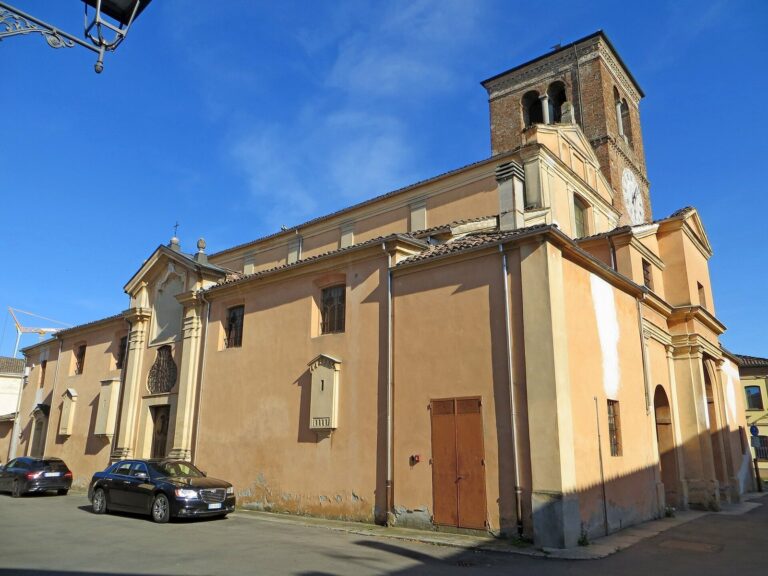
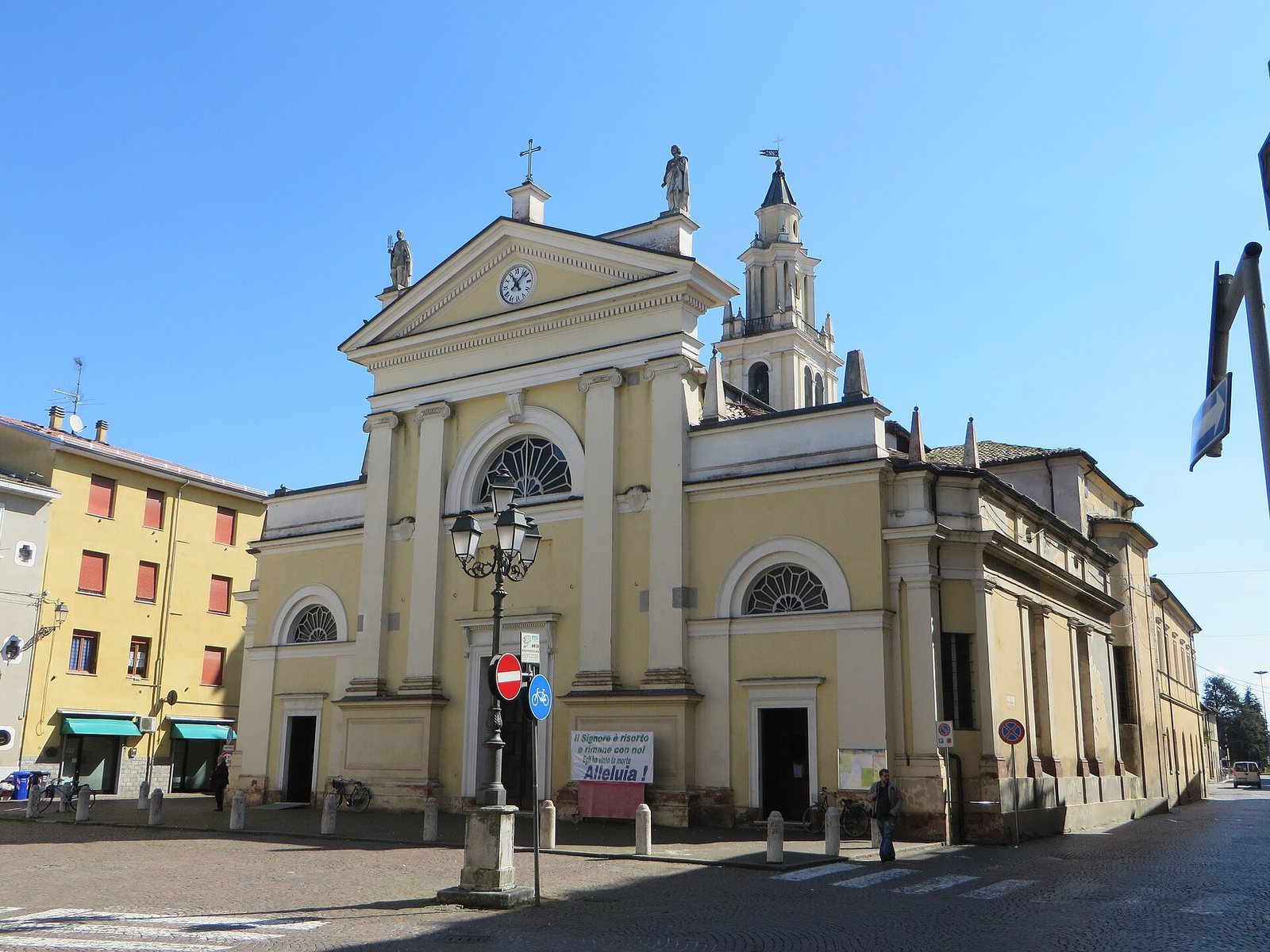
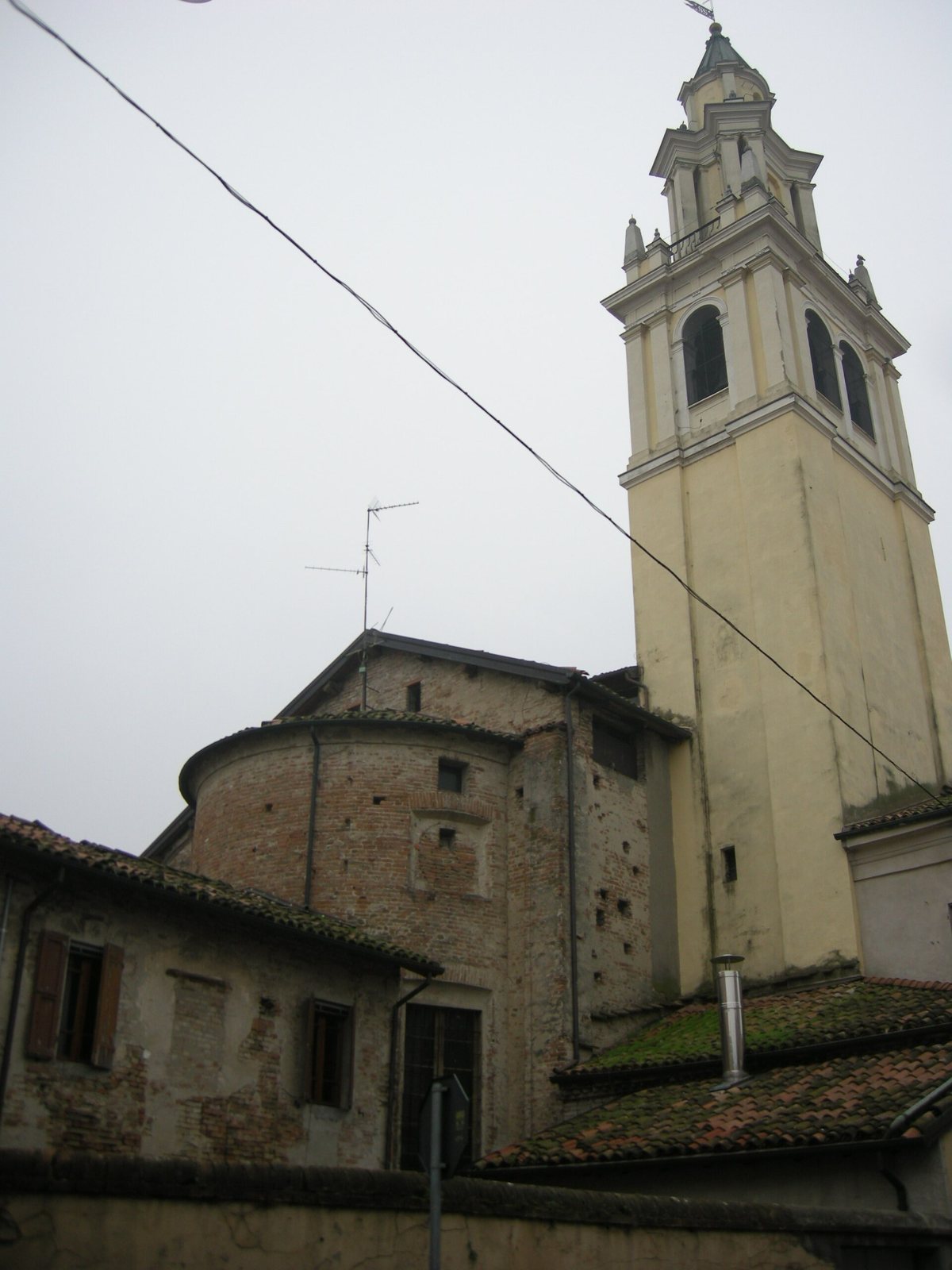
The church was enlarged during the eighteenth century. Side aisles were added in 1716–1719, followed by a new presbytery and bell tower in 1733–1734. Carlo Bossi was commissioned to carry out stucco decoration. In 1865, the façade was completely rebuilt, with sculptural work by Emilio Romanelli.
In 1940, the church hosted the sixth Eucharistic Congress of the Diocese of Parma, a gathering focused on the Eucharist, the Christian sacrament commemorating the Last Supper. The church serves as a parish in the diocese’s Bassa pastoral zone, a grouping of parishes within the territorial church jurisdiction overseen by a bishop.
Remains
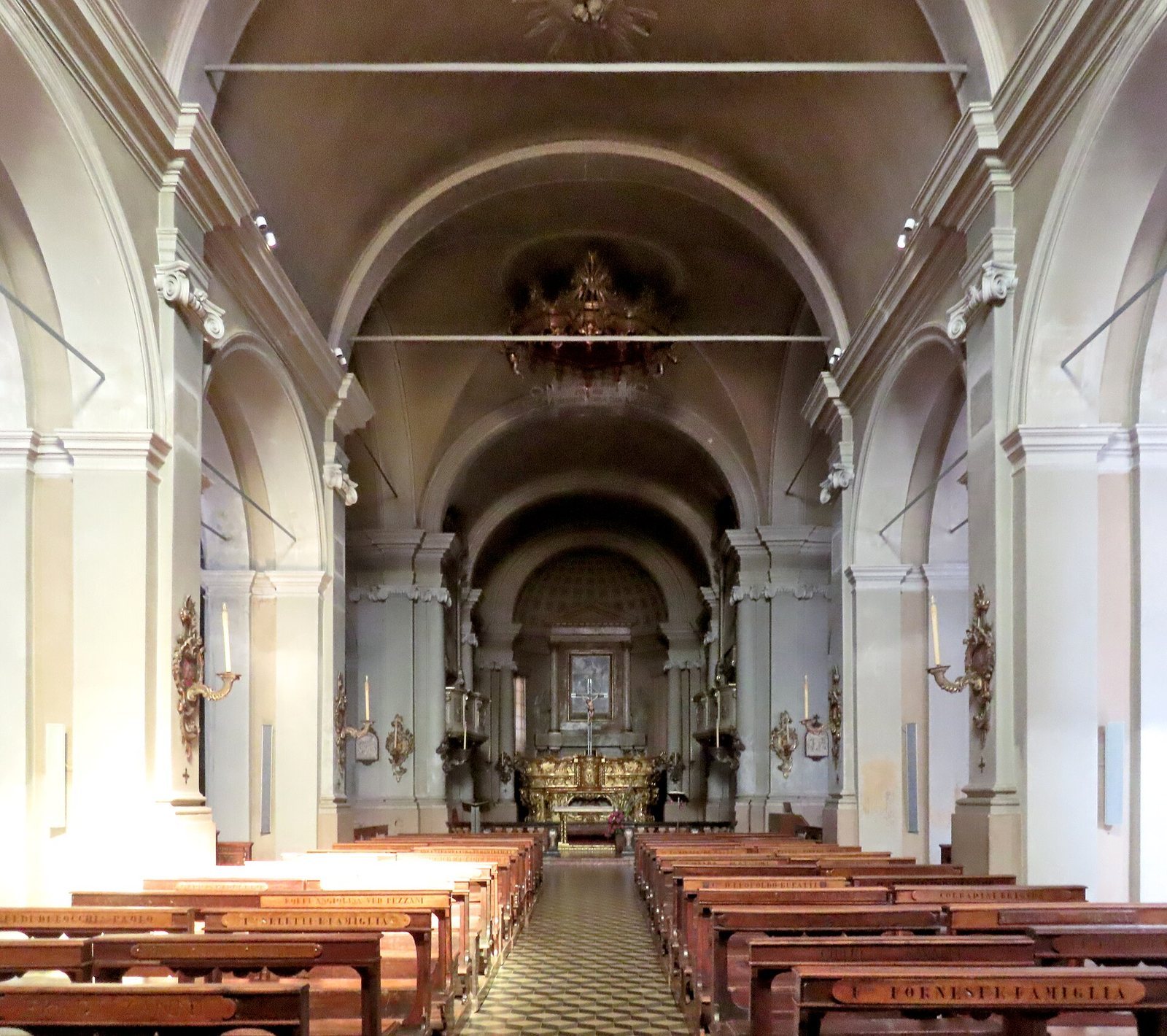
The church has a cross-shaped plan on an east–west axis. Its central nave, the main worship space, is flanked by two side aisles, and a deep presbytery, the clergy’s area around the main altar, ends in a recessed apse. Behind the church, a sacristy, a room for clergy and church furnishings, and the chaplain’s quarters occupy one side, with the bell tower on the other. The building also includes an upper room.
Historical plans and exterior
Earlier plans
A perspective plan from 1572 and a later plan from Don Alberto Pescaroli’s tenure as provost (1699–1714) preserve details of the church’s earlier arrangement. They show a single central space that widened at the crossing to the width of the present building, with three altars and a shorter apse. The later plan also recorded the positions of the benches and choir stalls.
Façade and chapels
The façade follows a neoclassical design, a revival of ancient Greek and Roman forms. Its upper triangular section appears to rest on four columns and bears statues of Saint Secondo and Saint Genesio, recalling the saints associated with the area’s older churches. Each side aisle ends in a rounded-end chapel. The chapel on the left is dedicated to the Holy Trinity, and the one on the right to Our Lady of the Holy Rosary.
Interior furnishings and artworks
Altars and relic
In the presbytery, Antonio Formaiaroli’s large sculpted altar artwork, made in 1734, depicts the Annunciation and contains a relic of Saint Secondo of Asti. The relic was brought to the church in 1694. The gilded wooden high altar was made by Carapezzi between 1763 and 1769.
Choir and carved works
Wooden choir stalls stand behind the altar at the end of the apse. The organ is raised above floor level on the right side of the presbytery. The interior also has molded-plaster decoration, confessionals, and carved wooden works, including a crucifix, a figure of the dead Christ, and statues of Saint Genesio, Saint Secondo, and Saint Anthony Abbot.
Paintings and floor
The church’s oil paintings on canvas include The Baptism of Jesus by Jan Soens (1547–1611), The Annunciation and Madonna and Child with Saints by Gervasio Gatti, and The Martyrdom of Saint Agatha and Saint Secondo by Antonio Bresciani (1720–1817). Other paintings include Saint Lucy and Saint Francis by Andrea Mainardi and works by Pier Antonio Bernabei (1567–1630). The flooring was completely renewed in 1905.