Caxias Charterhouse: A Baroque Carthusian Monastery in Portugal
Site at a Glance
- Popularity
- Medium
- Country
- Portugal
- Primary era
- Early Modern
- Eras represented
- Early Modern, Modern
- Civilizations
- Portuguese
- Site type
- Religious
- Remains
- Monastery
On this page8 sections
History
Foundation and construction
Caxias Charterhouse is a former Carthusian monastery at Laveiras, in Caxias, Portugal, founded in 1594 and developed as a Baroque complex from 1603. The Carthusians were a Catholic order founded by Saint Bruno, whose houses combined communal worship with secluded monastic life. Jorge de Ataíde, Bishop of Viseu, established the monastery, initially in temporary quarters at Pampulha in Lisbon. Its move to Laveiras was supported by Simoa Godinho, who bequeathed an estate there for a convent for poor nuns or friars. A papal brief authorized the transfer in 1597, and King Philip II of Portugal, also known as Philip III of Spain, secured the estate for the Carthusians. The community moved in 1598.
The male monastery belonged to the Diocese of Lisbon and the Carthusian Province of Castile, a regional administrative district of the order. Its church was dedicated to Our Lady of the Conception and Saint Bruno. Caxias was one of two Carthusian monasteries in Portugal, the other being at Évora. Its title, Valley of Mercy, echoed the dedication of Godinho’s Lisbon chapel to Our Lady of Mercy.
Construction for a community of 12 monks began in 1603. The monastery was enlarged between 1613 and 1621, and building work continued until 1736, though the complex was never completed. Basile de Faria-Severino, a prior, initiated the early works and built a cloister. Benefactors paid for eight monastic cells, with three more added toward the end of the seventeenth century. In 1652, Francisco de Castro, a bishop and head of the Portuguese Inquisition, left the monastery 20,000 réis, the currency then used in Portugal. King João V, Queen Maria Anna of Austria, Prince Joseph of Brazil, and the infants Pedro and António visited in October 1738.
Earthquake and later monastic life
The Lisbon earthquake of 1755 damaged the church, which was subsequently rebuilt. In 1758, a hermitage belonging to the monks and dedicated to Our Lady of Porto Seguro served as a Christmas pilgrimage destination for residents of Lisbon.
Dissolution and new uses
A law passed on 24 October 1823 reduced the Carthusian Order in Portugal to its house at Évora. An inventory was made of the Lisbon monastery’s property, but the monks stayed until 1833. They dispersed as a Liberal army approached during the Portuguese Civil War, a conflict between constitutional liberals and absolutists. Under a law of 30 May 1834 that closed religious houses, the monastery’s possessions were seized and sold, and its property passed to the Portuguese state. The last monk, José Félix, joined the Augustinian Canons Regular at Mafra, a community following the Rule of Saint Augustine. The monastery’s documents entered Portugal’s national archive in 1866, and the unoccupied buildings fell into ruin.
The monastery’s holdings included properties in Barcarena, Cascais, Caxias, Colares, Sintra, Fanares, Frielas and the surrounding area, Laveiras, Loires, Oeiras, Pampulha, Salitre, Terrugem, Torres Vedras, and Valejas, as well as property on São Bento Street in Lisbon. Since 1903, the former monastery has housed the Padre António de Oliveira educational center, the first and principal establishment in Portugal’s national juvenile-justice network. A Central Reform School established in 1911 aimed to provide vocational training for minors, although this goal was not fully realized until 1956. In 2021, an agreement placed the building under the Municipality of Oeiras on a 42-year concession.
Remains
Setting and layout
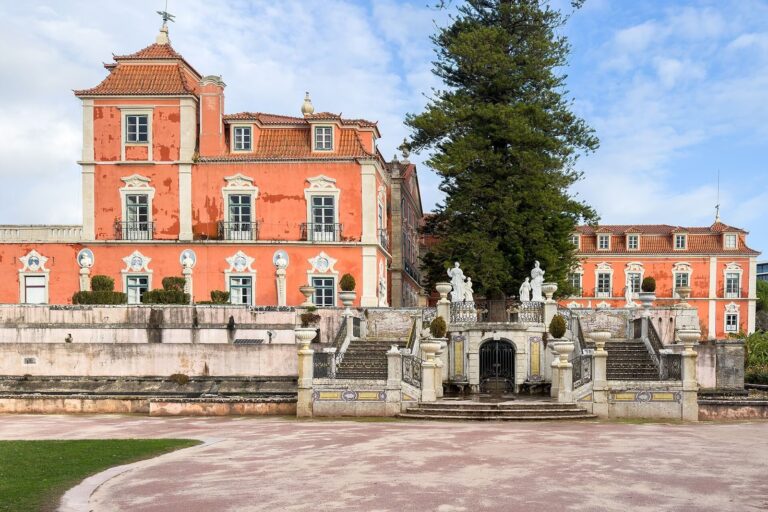
The monastery stands in the valley of the Ribeira de Barcarena, about 25 kilometres from Lisbon and near the Tagus estuary. Its Baroque complex included a church, a small cloister, five chapels, a sacristy, a meeting room, a communal dining hall, and a large cloister bordered by the monks’ cells.
Church
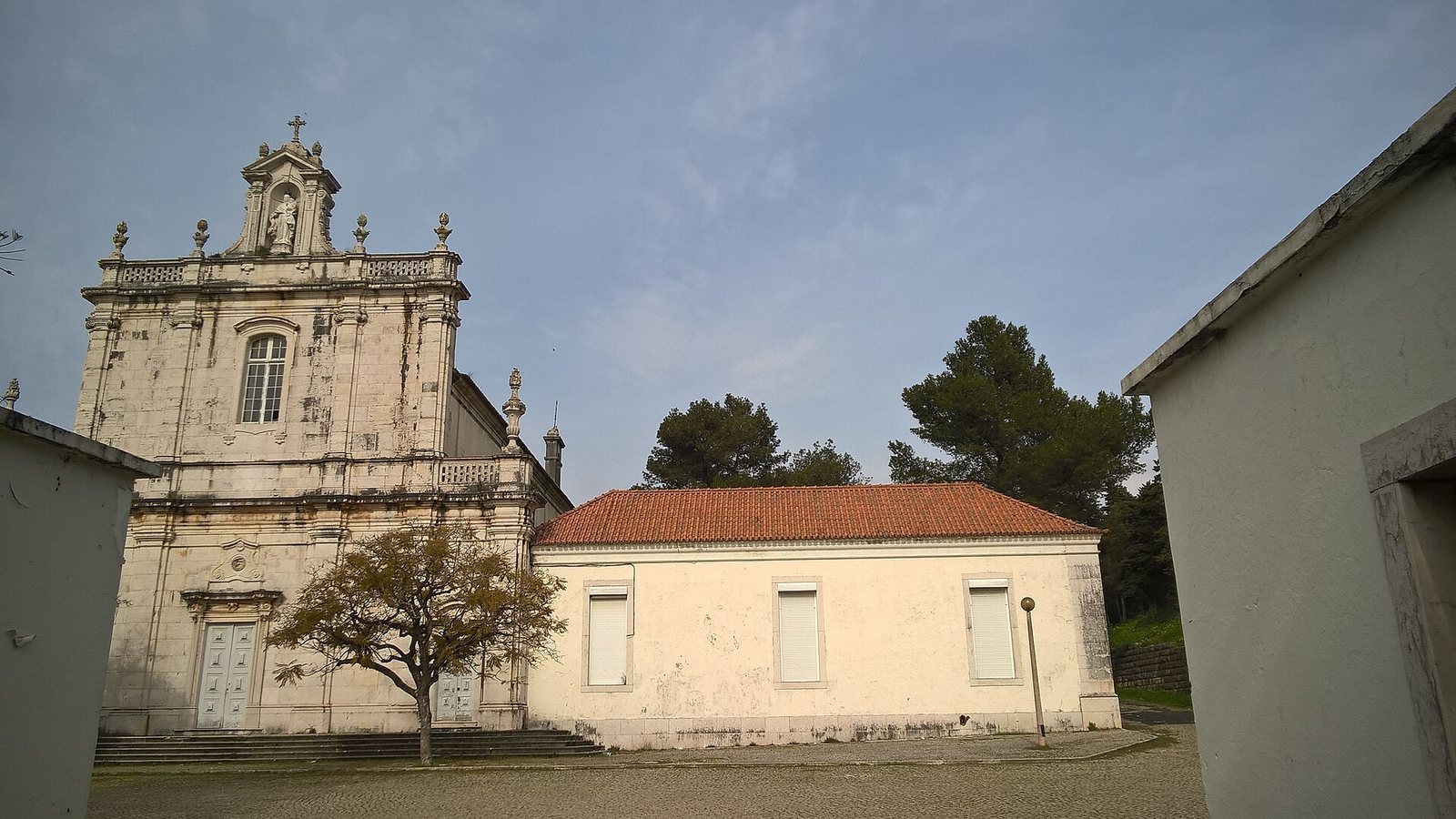
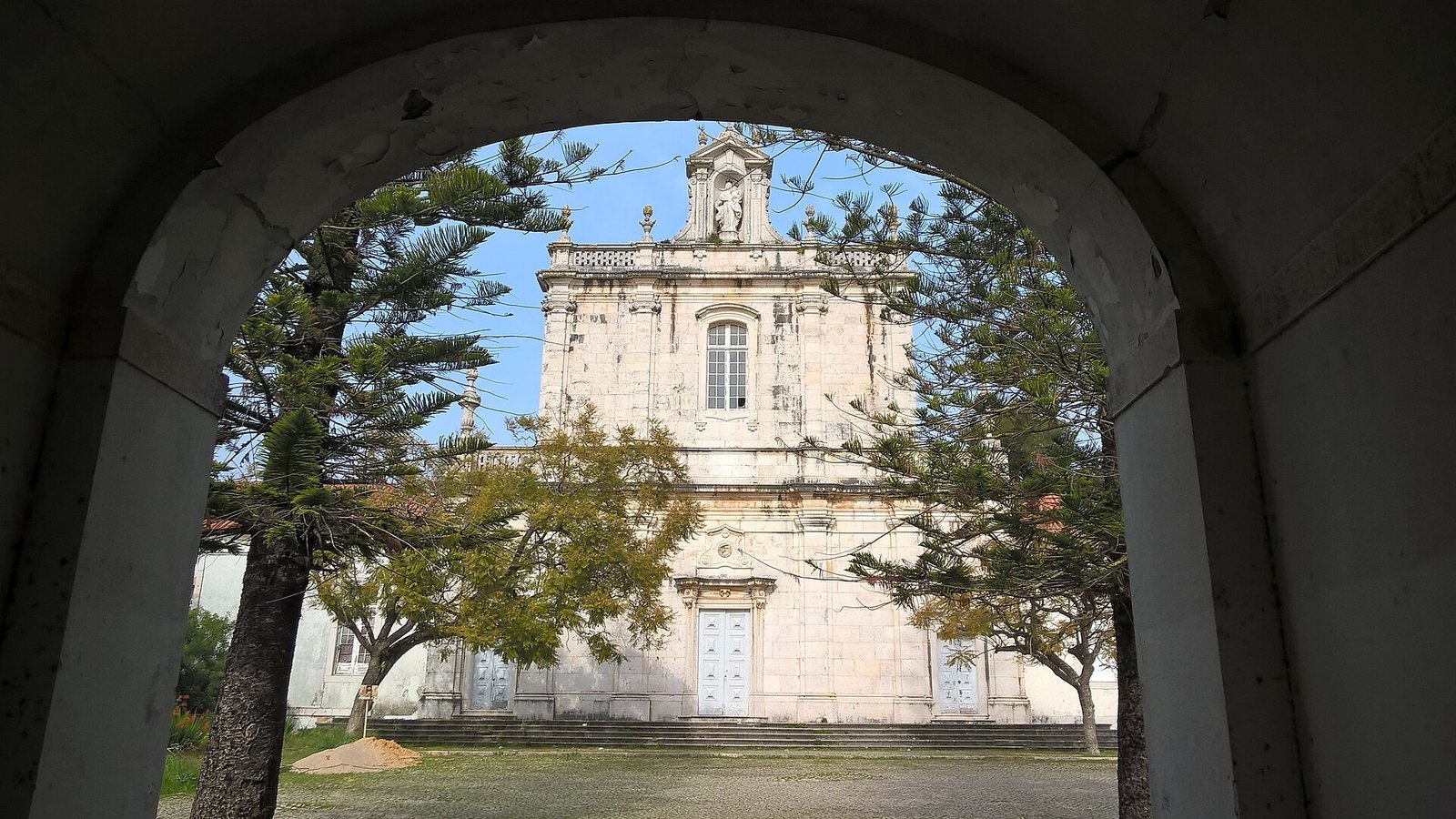
An earlier church, described as small and in poor condition, was replaced by the present temple. The church was rebuilt after earthquake damage in 1755. Its design freely adapts the Carthusian church at Évora and resembles the Church of Santa Cecilia in Trastevere, Rome. The eighteenth-century façade is limestone, with an image of the Virgin and Child at its highest central point. The church is noted for its acoustics, which have been used for recordings. Paintings by Domingos Sequeira depicting episodes from Saint Bruno’s life, once inside the church, are now in Lisbon’s National Museum of Ancient Art. A large painting by Francisco Vieira Lusitano depicting Saint Bruno’s arrival at the Charterhouse dominated the main altar.
Cloisters and later buildings
A door on the church’s left side opens directly into the small cloister, whose wings each have three arches and are enclosed by five chapels. The large cloister was surrounded by the monks’ cells. Residential pavilions for the institution for minors were added between 1949 and 1958.