Rocca Priora Fortress: From Medieval Stronghold to Agricultural Estate
Site at a Glance
- Popularity
- Medium
- Country
- Italy
- Primary era
- Medieval
- Eras represented
- Medieval, Early Modern
- Civilizations
- Papal States
- Site type
- Military
- Remains
- Castle
On this page9 sections
History
Rocca Priora Fortress, in Falconara Marittima, Italy, was built by the people of Jesi in 1194 to mark their territorial reach and guard against Ancona’s expansion. First called Rocca di Fiumesino, it gave Jesi control of the then-navigable Esino River and a route to the sea. A watchtower may have stood on the site earlier to watch the coast.
Foundation and border dispute
Jesi’s construction of the fortress came in the year Frederick II was born in the city. His birth, he later became Holy Roman Emperor, encouraged Jesi’s expansion into nearby territory. The fortress also served as a defense against Ancona’s growth, making control of the site a source of dispute between the two cities for centuries.
Ancona’s defenses
Around 1356, the dispute was settled in Ancona’s favor, and the fortress became part of the city’s defensive network. Optical signals connected it with Cassero castle, the castle of Offagna, and Monte D’Ago tower. In 1382, Louis I of Anjou occupied it during a campaign in Italy, accompanied by Peter, Count of Geneva, brother of Clement VII, a rival claimant to the papacy during the Western Schism. The occupation caused severe damage. Ancona’s Council of Elders later ordered repairs and appointed Balligano di Filippuzio as castellan, or castle commander.
Pope Leo X assigned the fortress to Ancona’s municipality in 1516, ending the ownership dispute. In the seventeenth century it remained part of the city’s defenses, with a garrison watching for attacks by Venice and Turkish pirates.
From fortress to estate
In 1755, Ancona leased the fortress and surrounding Fiumesino lands to merchant Francesco Trionfi, aiming to encourage local economic activity. His investment in land reclamation, planting, livestock, and buildings transformed the medieval stronghold into the center of an agricultural estate. The property became known as Rocca Priora. Two years later, Pope Benedict XIV granted Trionfi the hereditary title of Marquis of Rocca Priora, passing through the male line.
Pasquale Andreoli was born at the fortress on 22 November 1771 and later became one of the earliest aeronauts, or balloonists. Joachim Murat, King of Naples, stayed there on 29 April 1815, shortly before the Battle of Tolentino, often regarded as the first battle of the Risorgimento, the nineteenth-century movement for Italian unification.
After Trionfi’s death, his sons Luigi and Bonizio mismanaged the family fortune. In 1826, the Apostolic Chamber, the papal government’s financial and administrative body, acquired the property after Bonizio failed to pay rent and taxes. The estate later passed to Marquis Brancadoro and his nephews, then to the Marquises Antici and the Cenci Bolognetti family, princes of Vicovaro. Alfredo Baldoni bought the estate and its ruined fortress in 1927; he became the forebear of the family identified as its present owners. The fortress has Italian national heritage designation.
Remains
Plan, defenses, and later additions
Enclosure and setting
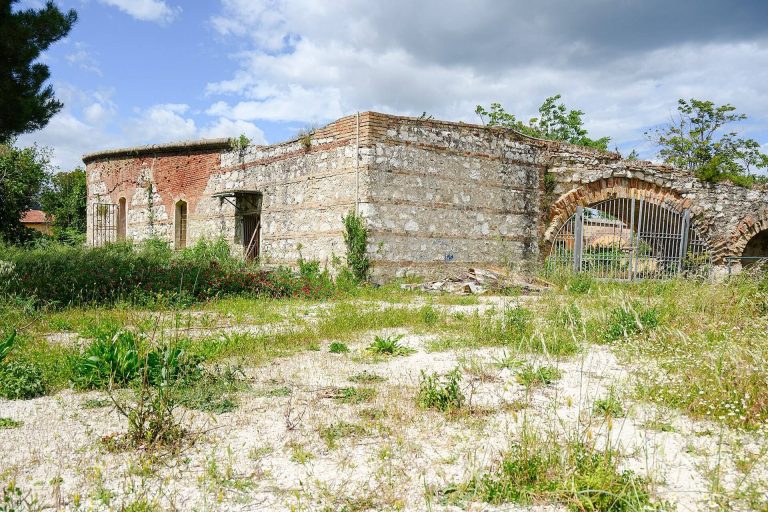
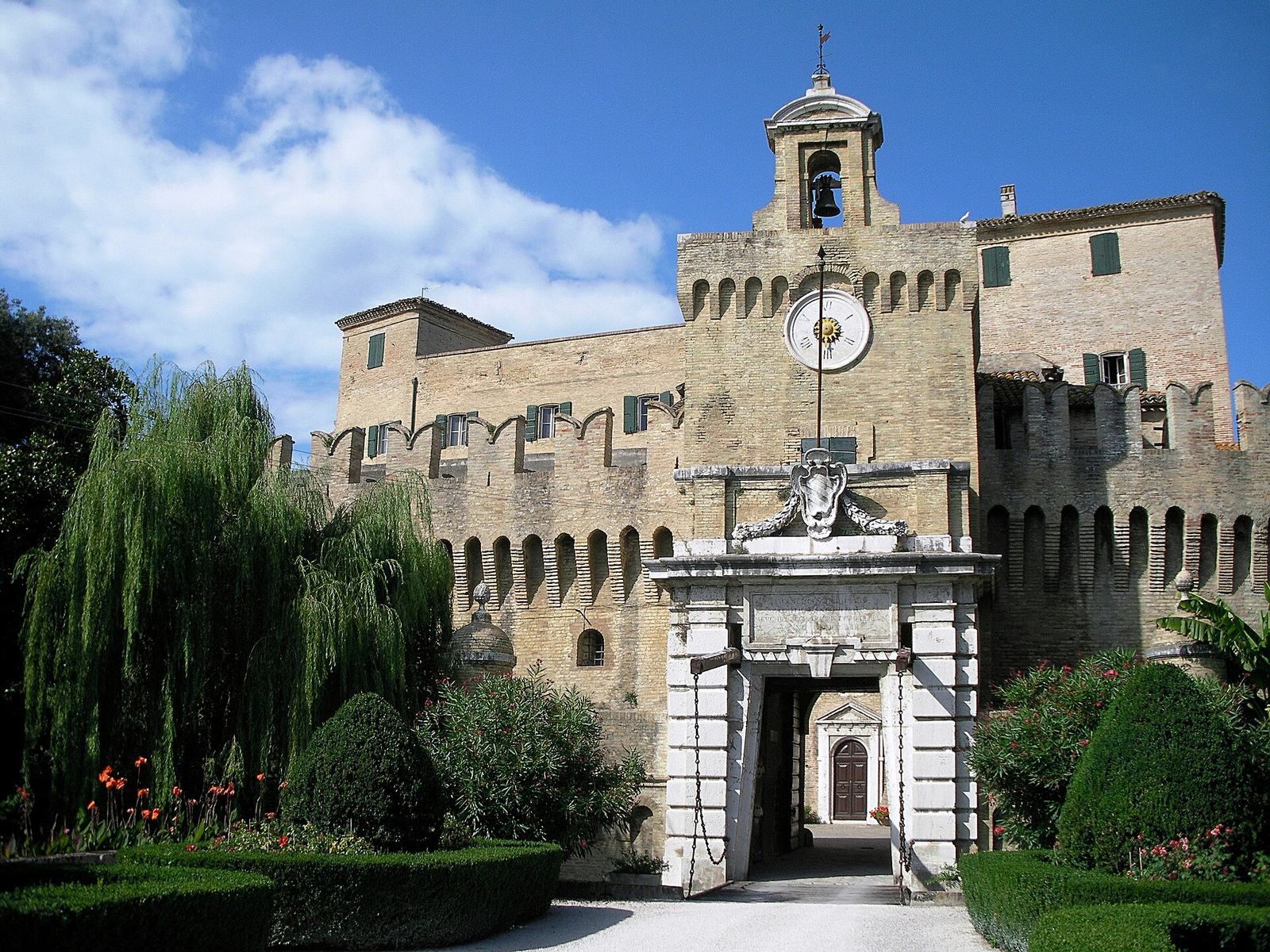
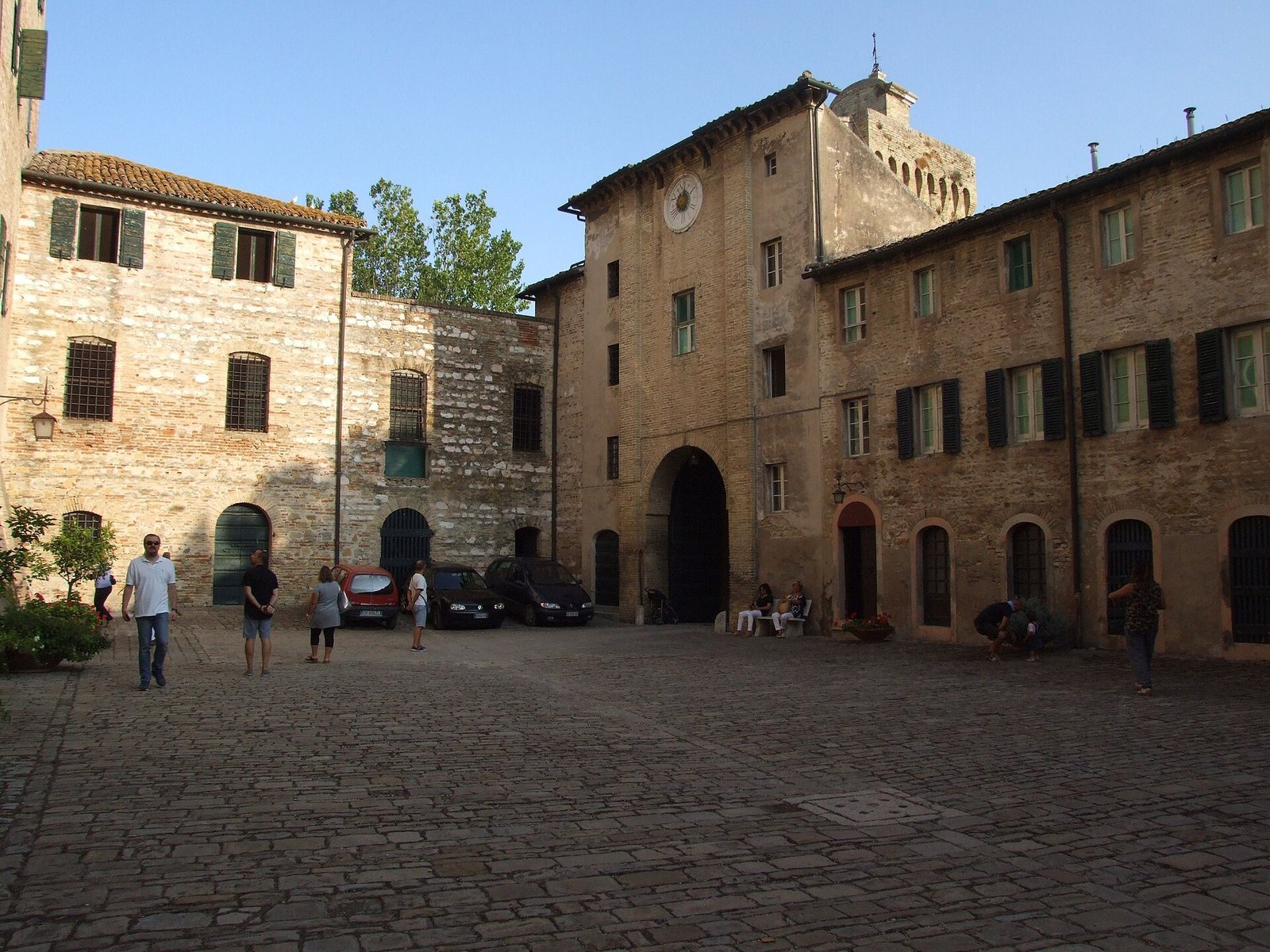
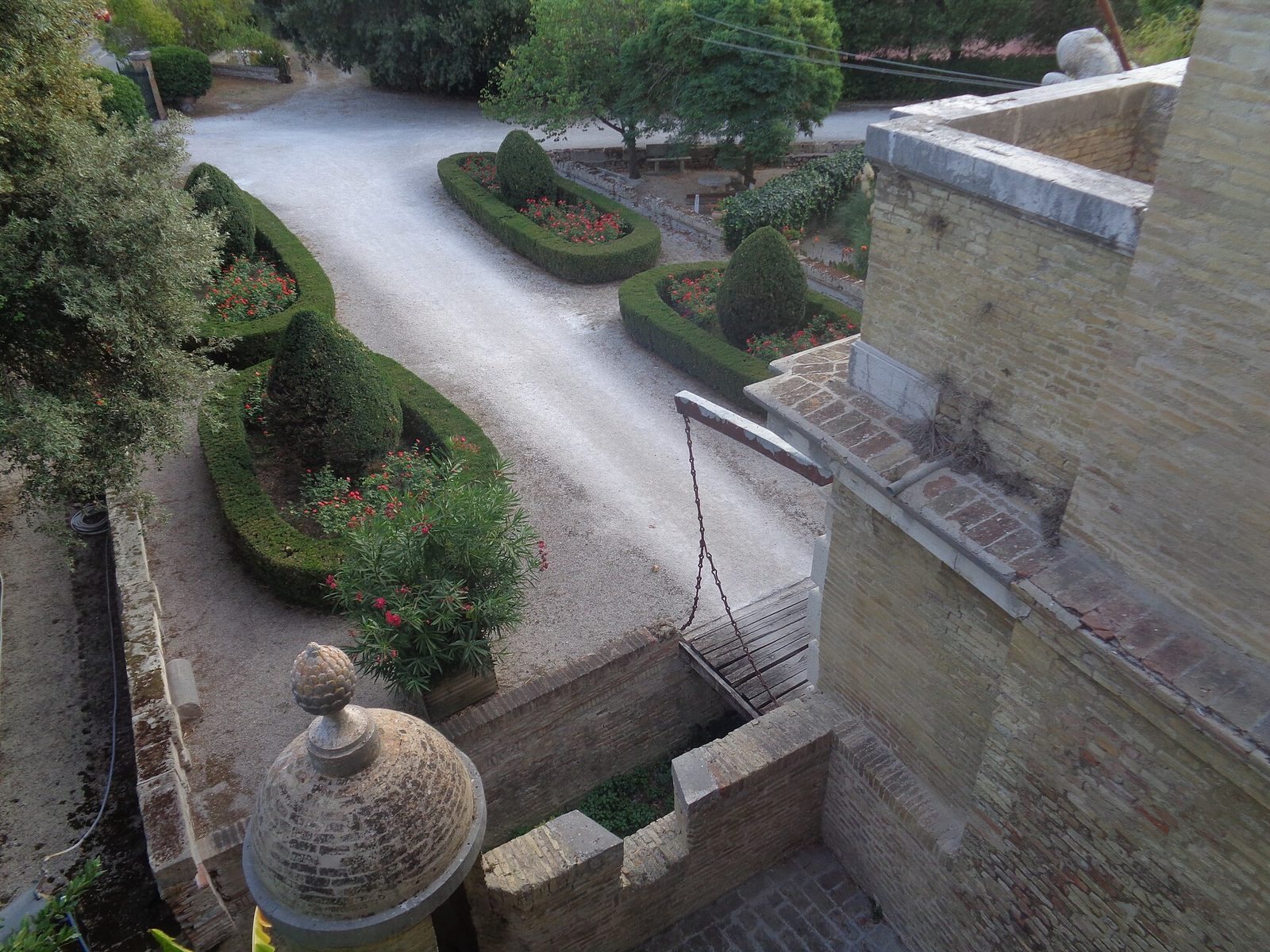
The complex stands on the left bank of the Esino at its mouth, near the crossing of Strada Clementina and a variant of the Via Flaminia. Built of brick, it has an elliptical plan enclosed by high walls and a surrounding moat.
Towers and battlements
Three towers remain visible along the northeastern side. A smaller fourth tower was added above the entrance in the eighteenth century. Ghibelline-style battlements, a notched wall-top form associated with the medieval Ghibelline political tradition, once crowned the walls and towers. They now survive on the western, entrance side; residential changes that raised some floors and added roofs removed them elsewhere.
Church and residential alterations
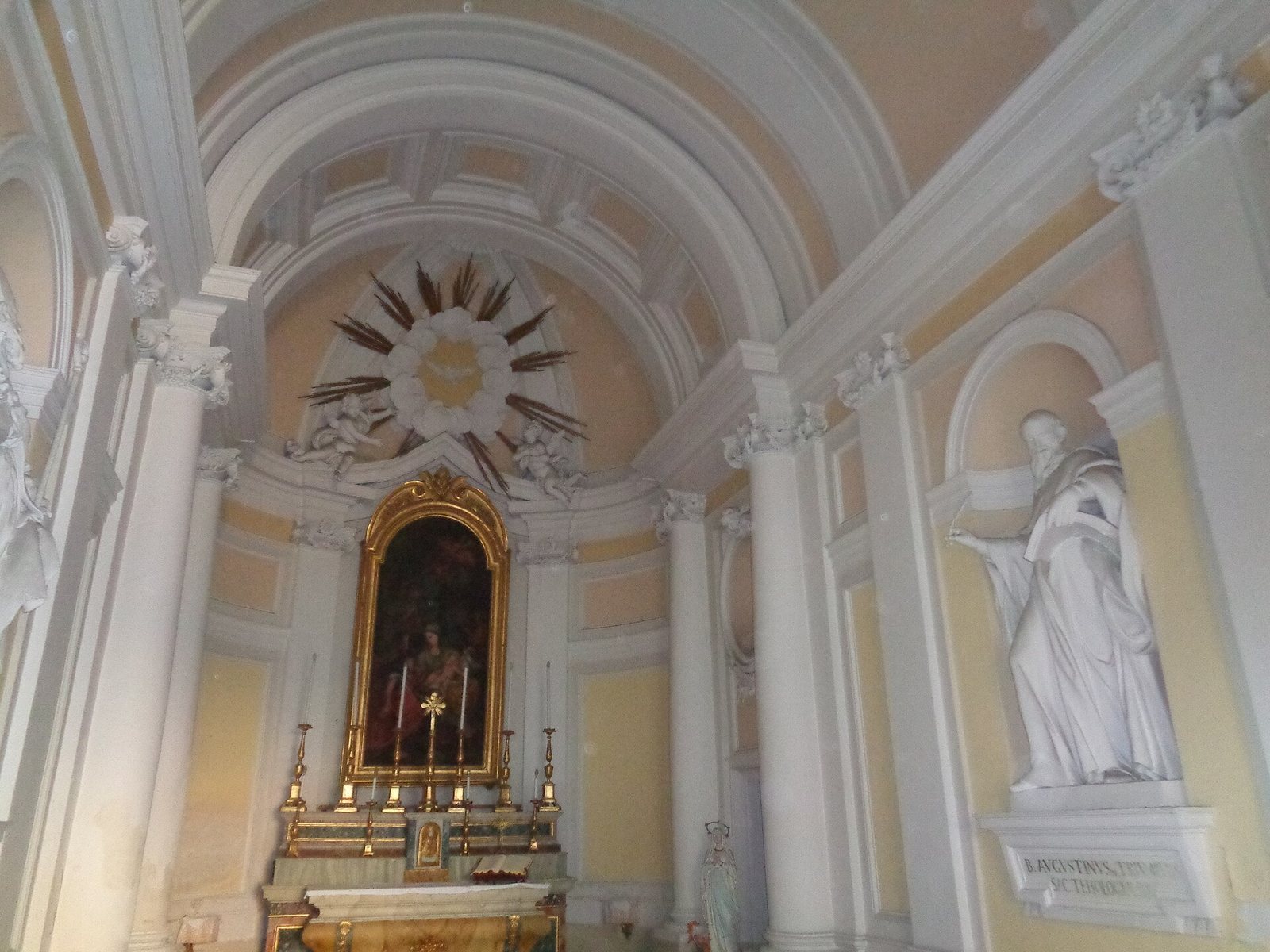
Eighteenth-century work added a small church dedicated to the Nativity of the Virgin Mary and altered the main entrance with stone decoration inspired by the portals of Ancona’s Lazzaretto, a quarantine facility. The interiors were renovated for residential use. Despite extensive changes, medieval structures remain within the complex, which is well preserved and restored.