Palazzetto Medici: A Historic Palazzo in Florence
Site at a Glance
- Popularity
- Very Low
- Country
- Italy
- Primary era
- Early Modern
- Eras represented
- Medieval, Early Modern
- Civilizations
- Grand Duchy of Tuscany, Republic of Florence
- Site type
- Domestic
- Remains
- Elite Residence
On this page10 sections
History
Palazzetto Medici is a historic palazzo in Florence, Italy, on a site first occupied by two medieval buildings. The property underwent a major transformation in the second half of the seventeenth century, giving it a history shaped by repeated alteration and rebuilding.
Medieval origins and seventeenth-century transformation
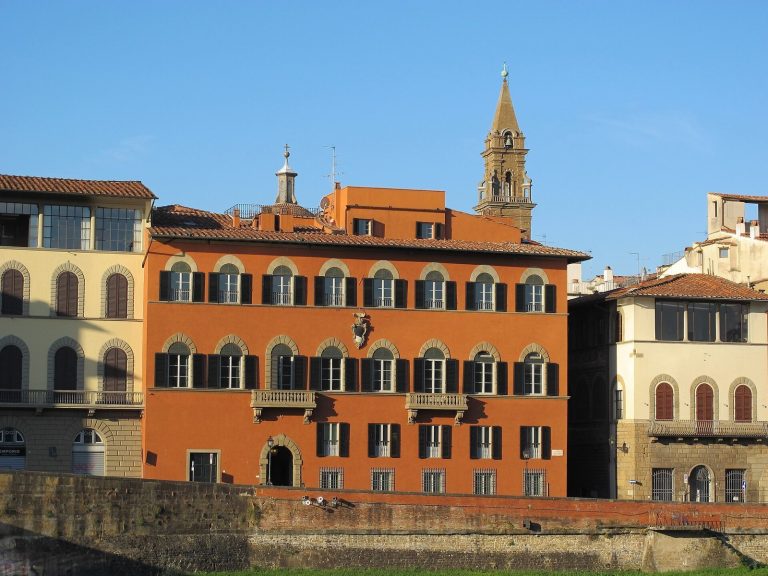
Two medieval buildings originally stood on the site. They had probably been joined by the fifteenth century and were altered several times. In the second half of the seventeenth century, the property was substantially transformed in the manner of Gherardo Silvani, a Florentine architect and sculptor associated with the city’s architecture of that period. The palazzo may also once have been connected internally to Palazzo Medici-Soderini behind it, whose entrance was on Lungarno Guicciardini.
Rebuilding in 1759
An inscription dated 1759 records that Ottaviano Giuseppe de’ Medici paid to rebuild the building from its foundations to its roof, saying he was compelled by necessity. It identifies him as bailiff of the Dauphiné, a historic region in southeastern France. A bailiff was an administrative or judicial officer.
Francesco Ferrucci and a disputed birthplace
Palazzetto Medici and the adjoining building at no. 32 have both been associated with the birthplace of Francesco Ferrucci. Born on 14 August 1489, Ferrucci served as a commissioner of the Florentine Republic during the 1529–30 siege and was killed by Maramaldo on 3 August 1530. Federico Fantozzi identified a marked part of the property as the birthplace. Francesco Bigazzi proposed that the two buildings might once have formed a single house, later divided into smaller homes to meet demand for cheaper accommodation, but presented this as his own conjecture. A memorial plaque to Ferrucci was placed on the adjoining building at no. 32.
Ownership and later restoration
The property passed through several hands, including the Medici, a powerful Florentine family that exercised political influence and supported the arts, and, in the nineteenth century, the Schneiderff family. In 1901, it appeared on a Directorate-General of Antiquities and Fine Arts list of monumental buildings considered part of Italy’s national artistic heritage. By the early twentieth century, the palazzo had deteriorated and been substantially altered, with its ground floor converted into a garage. It was later restored.
Remains
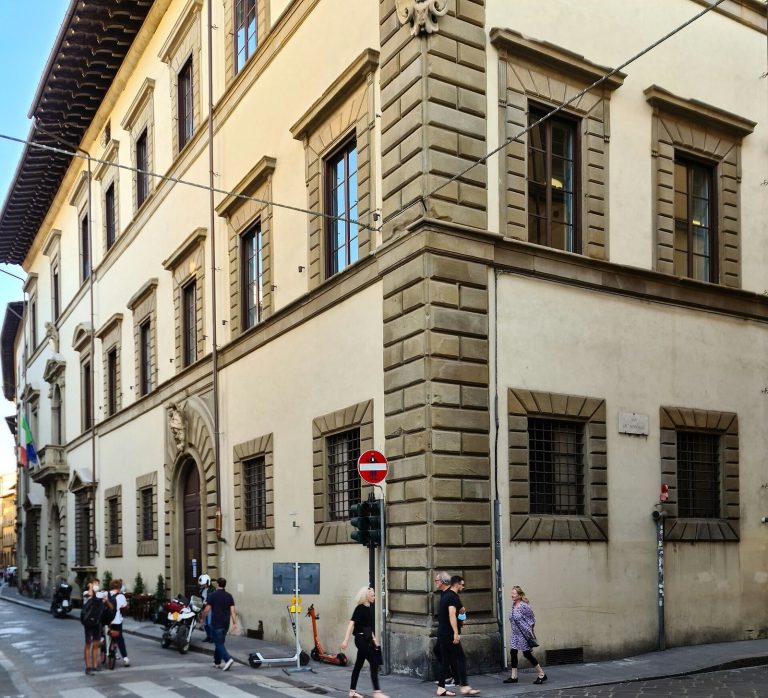
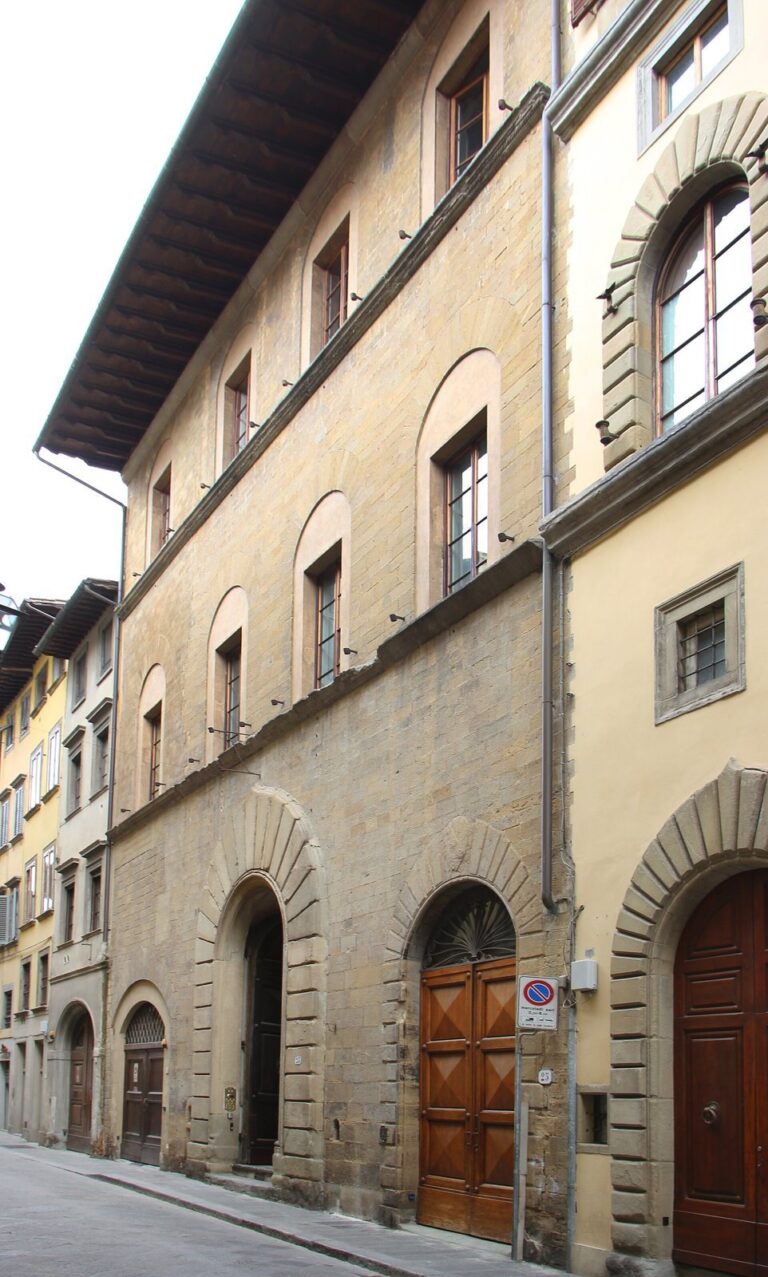
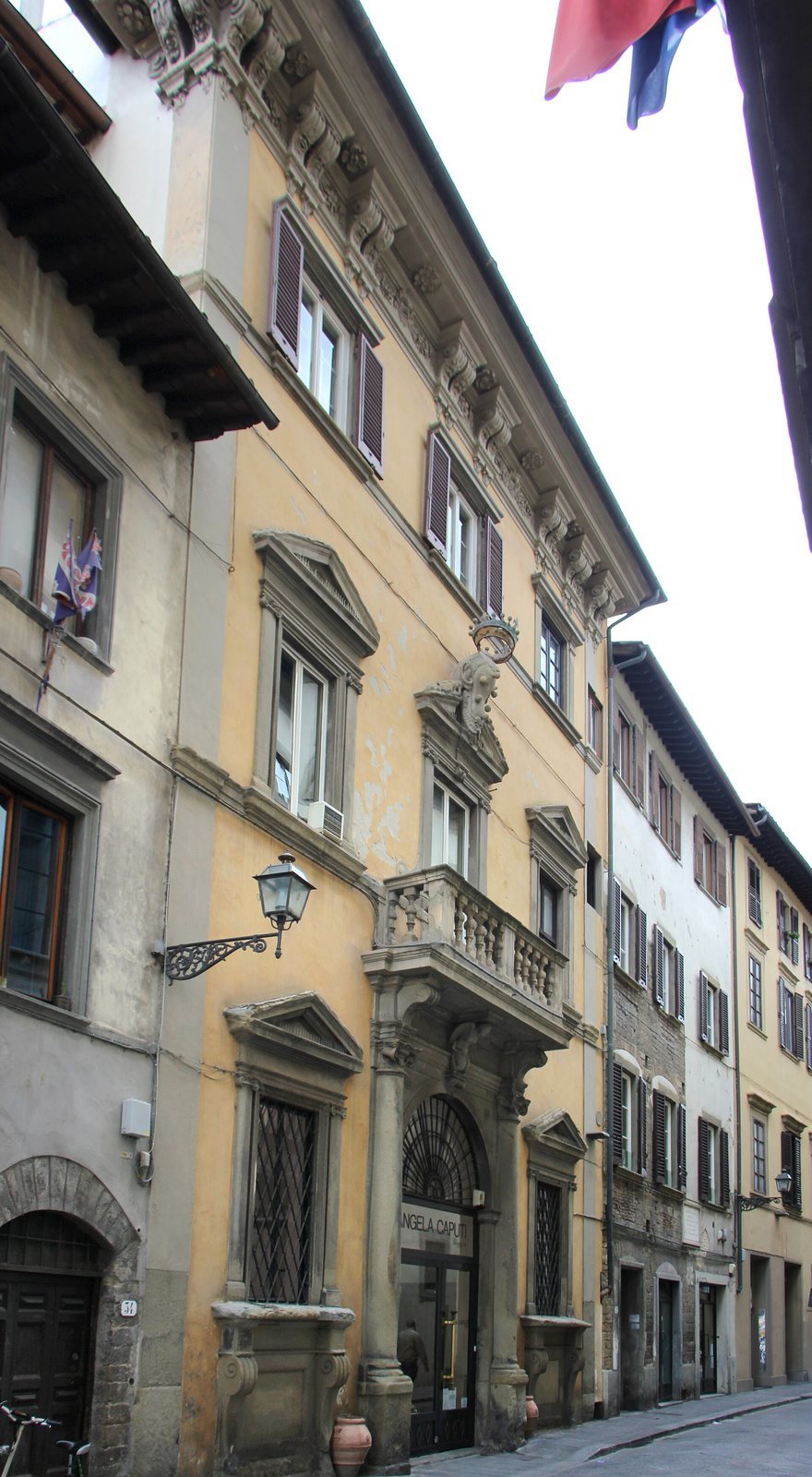
The restored facade rises three stories, with a central ground-floor entrance, windows on either side, and rows of windows above. Its stone architectural details and inscriptions preserve evidence of the building’s successive phases.
Street facade
Entrance and ground-floor windows
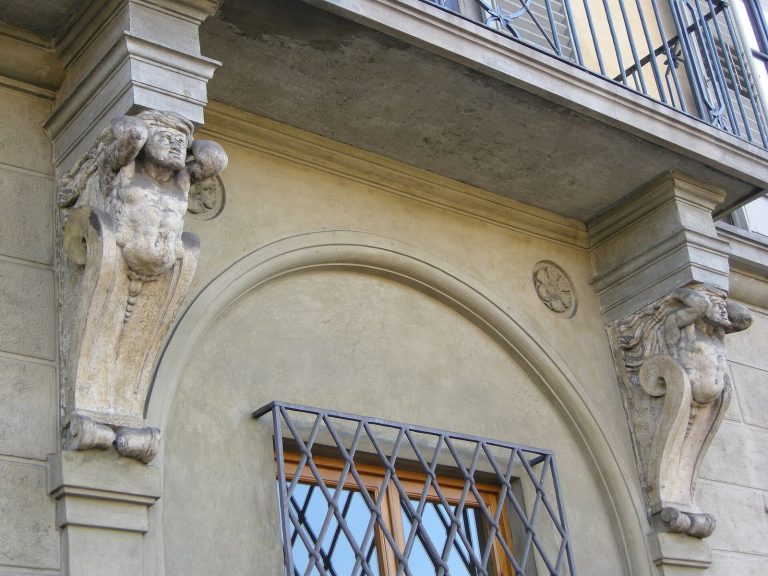
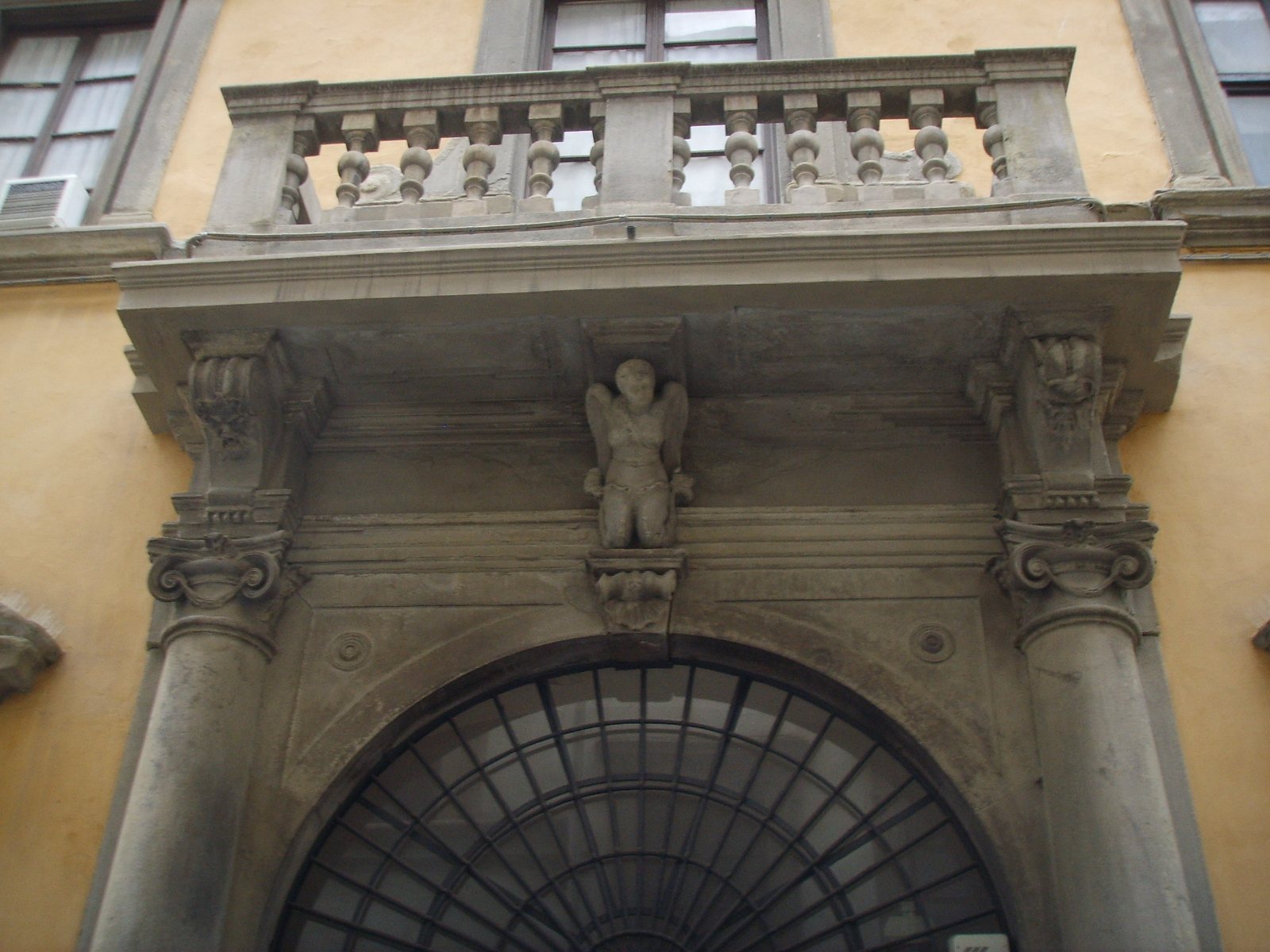
An arched portal occupies the center of the ground floor. Two half-columns attached to the wall frame it, and supports above them carry a balcony of gray sandstone. The portal’s keystone, the central stone at the arch’s crown, takes the form of a harpy, a mythological creature, and also supports the balcony. Two kneeling windows flank the entrance. Each has a projecting sill carried on brackets, whose shape suggests bent knees.
Upper windows and roofline
Horizontal bands mark the window levels on the two upper stories, each of which has a row of three windows. The first-floor windows have triangular pediments and Ionic pilasters, flat wall columns topped by scroll-shaped capitals. On the second floor, the windows have architraves, framing elements around the openings, and Doric capitals, plain column tops. A projecting cornice, a molded edge at the roofline, finishes the facade; beneath the eaves, a stone band is decorated with rosettes.
Arms, inscriptions, and marker
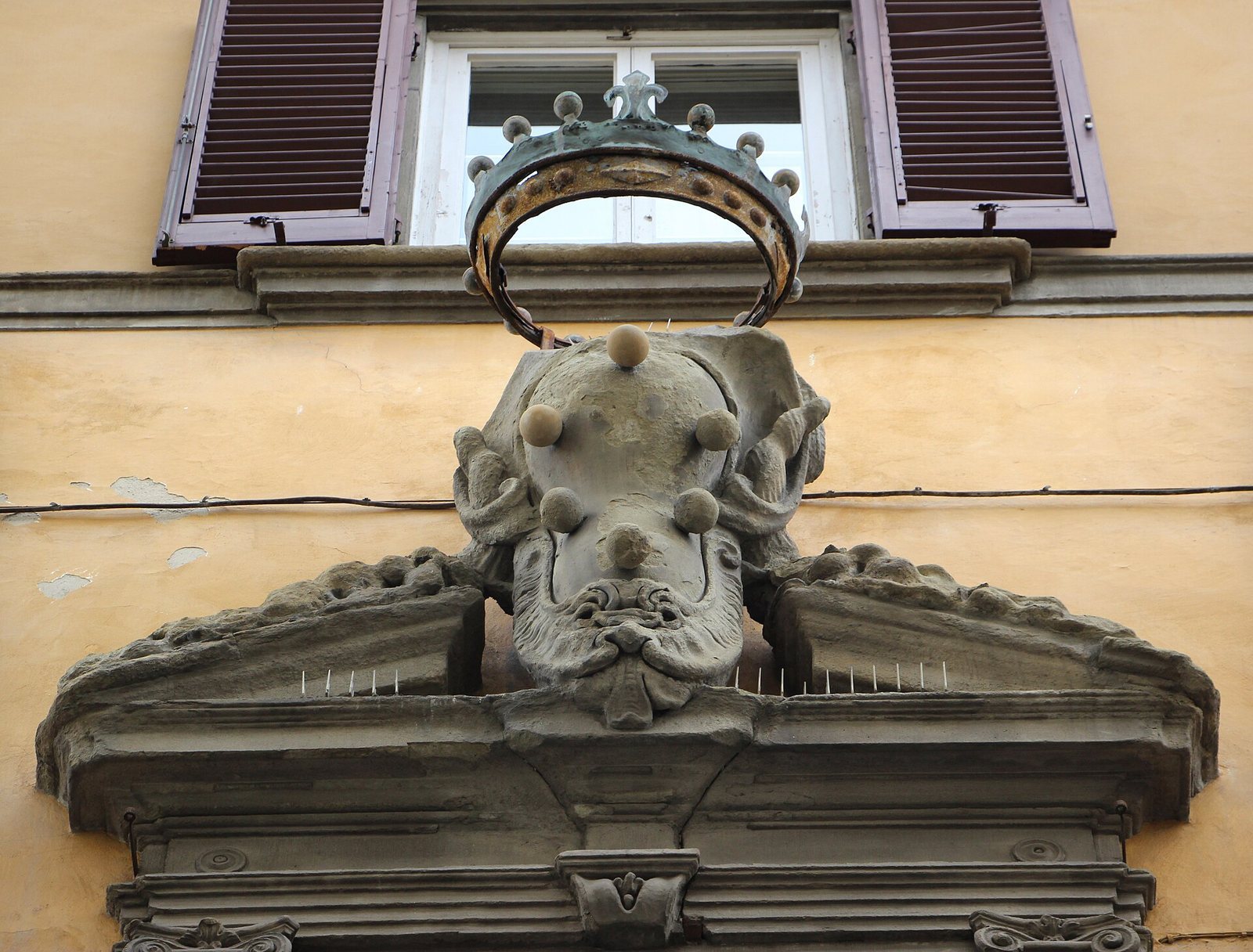
The window opening onto the balcony bears a shield with the Medici arms. An inscription beneath it, dated 1707, records a ring given by Joseph I, Holy Roman Emperor from 1705 to 1711, and cites his benevolent regard for Francesco Pecori. It describes Pecori as a marquis and count of the Holy Roman Empire, a Central European political entity that lasted in changing forms until 1806. Beneath a paired Medici and Firidolfi coat of arms is a plaque dated 1759, with text partly in Italian and partly in Latin.
A small stone marker associated with charitable works by the chaplains of Florence Cathedral stands at the far right of the facade, beyond its framing pilaster. Its position makes it more likely to relate to the humbler adjoining house than to Palazzetto Medici, a point relevant to the disputed identification of Ferrucci’s birthplace.