Church of the Kazan Icon of the Mother of God: An Orthodox Church in Polevshina
Site at a Glance
- Popularity
- Very Low
- Country
- Russia
- Primary era
- Early Modern
- Eras represented
- Early Modern
- Civilizations
- Russian
- Site type
- Religious
- Remains
- Church
On this page6 sections
History
Founding and stone building
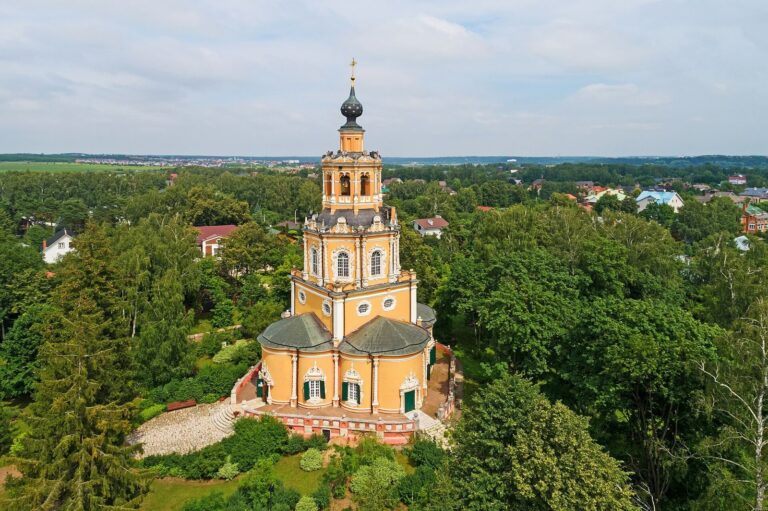
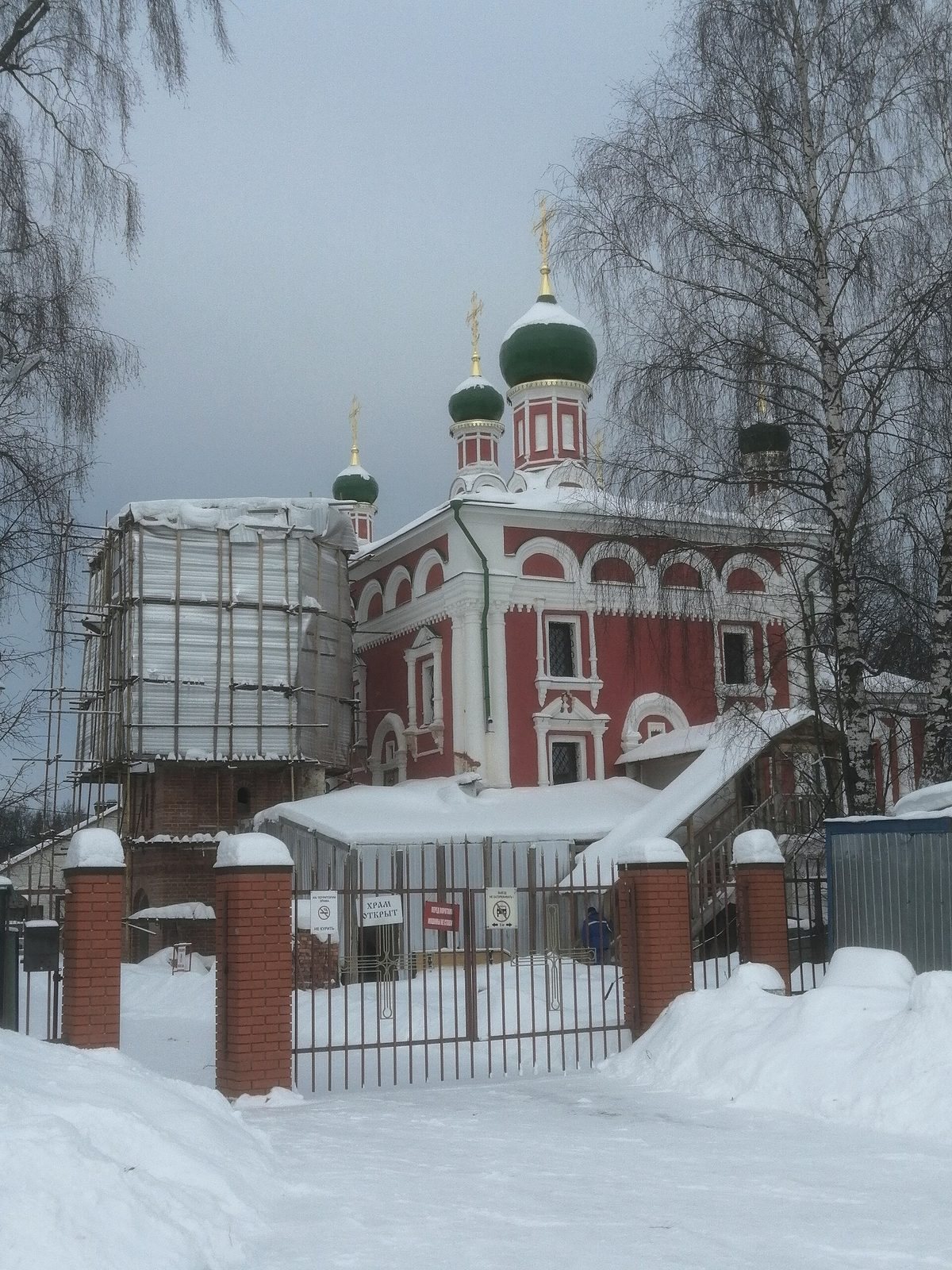
The Church of the Kazan Icon of the Mother of God is an Orthodox church in Polevshina, Russia, built in stone in the Old Moscow style. Its first church, made of wood, was established in 1670 by Ivan Andreevich Polev and his son Mikhail Ivanovich. The Polevs, members of Muscovy’s high aristocracy, owned the village, then called Malinki. They dedicated the church to the Kazan Icon, an Orthodox image of Mary revered as the Mother of God.
The stone church’s foundation is dated to 1694, though construction had begun on 6 April 1692 with funding from Fedor Mikhailovich Polev. Patriarch Adrian, head of the Russian Orthodox Church, blessed the work. At Fedor’s request, the wooden church was moved intact to the cemetery rather than demolished. The St Nicholas side chapel was formally dedicated on 7 May 1694; the main church received its dedication in 1704.
Parish changes and closure
Because the parish was small, the church was placed under the Church of the Transfiguration in Buzharovo in 1838. Pavel Grigoryevich Tsurikov later funded rebuilding work during the nineteenth century. The church closed in 1935.
Wartime use and renewed worship
During the Second World War, known in Russia as the Great Patriotic War, a shell hit the church but did not explode. Residents of nearby villages burned during the conflict took shelter inside. The building was later used as a pottery workshop, a grain store, and a school storehouse.
The church was returned to Orthodox worshippers in 1996, when restoration began. Services resumed in 2013, and the church is active. It is a cultural heritage site of federal significance in Russia and belongs to the Istra deanery, a local grouping of parishes within the Moscow Diocese, a bishop’s regional jurisdiction.
Remains
Stone church and associated structures
The principal building is a two-tier stone church with a four-sided roof carrying five domes. Its Old Moscow style draws on traditional Russian church forms associated with Moscow, while its decoration follows Moscow Baroque, a Russian style prominent in the late seventeenth century. The church complex also included a bell tower with a tall, tent-shaped roof and an enclosure; both were dismantled in the 1940s. The earlier wooden church contained a burial vault for the Polev family. Their tombs were removed from it during the 1940s, and their later fate is unknown.