Zincirli Madrasa: A Historic Center of Islamic Learning in Ukraine
Site at a Glance
- Popularity
- Medium
- Country
- Ukraine
- Primary era
- Early Modern
- Eras represented
- Early Modern, Modern
- Civilizations
- Crimean Khanate, Ottoman
- Site type
- Religious
- Remains
- Madrasa
On this page8 sections
History
Zincirli Madrasa is a historic Islamic school of higher learning founded in 1500 at Salachik, near Bakhchisarai in Crimea, Ukraine, by Meñli I Giray, ruler of the Crimean Khanate, a Tatar state centered in Crimea. It was intended to raise the standing of scholarship at the khans’ new residence and rival the school at Solkhat, a former seat associated with Uzbek Khan, ruler of the Golden Horde, a Mongol-Tatar state that ruled much of the Eurasian steppe.
Foundation and endowment
The school held a substantial waqf, an Islamic charitable endowment supporting religious or educational work. Its property included two land parcels totaling 4,578 dessiatinas and 417 square sazhen, historical units of land area, with land near Ulukul (Ulakli). Other holdings included about 300 dessiatinas near Alma-Tamak and 24.5 near Aktachi in Evpatoria district. The endowment also comprised a garden and cemetery beside the school, an estate at Orta-Kesek-Ulukol, now part of Uhlove, three shops in Bakhchisarai’s Arasta bazaar, and two shops in Evpatoria.
Changing curriculum and institutional use
Zincirli Madrasa continued as a school of higher Islamic learning until 1917. Russian language and writing entered its curriculum in 1868. In 1917, Bolshevik authorities reorganized it as the eight-year Mengli-Giray Institute and converted it into a medical school. During the Soviet period, the building served for many years as an outpatient clinic for neurological and mental-health care, while the surrounding complex became a mental hospital in 1939. After Crimean Tatars returned to the region, they regained control of the historic building.
Restoration and heritage status
Repair and restoration work took place in 1965–66, followed by a restoration funded by Turkey in 2007. Zincirli Madrasa is the oldest surviving building associated with an educational institution in Ukraine and the only historic madrasa in Crimea to have survived the Soviet period. It forms part of the Bakhchisaray Historical and Cultural Preserve and is designated a nationally significant cultural-heritage monument by Ukraine. After Russia’s 2014 annexation of Crimea, Russian authorities also listed it as a federal cultural-heritage site in October 2015.
Remains
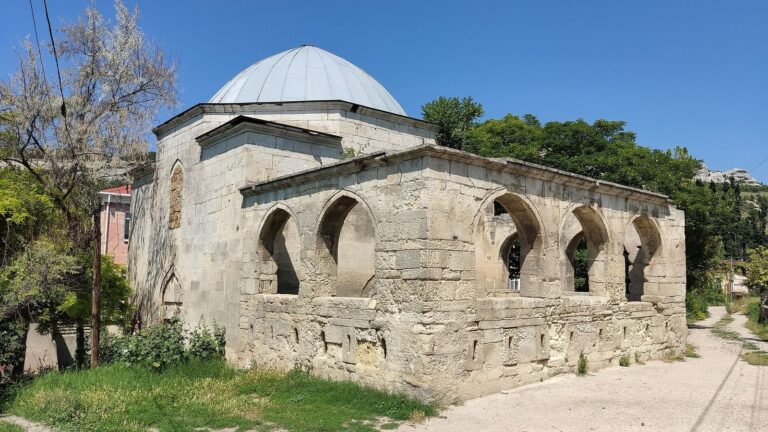
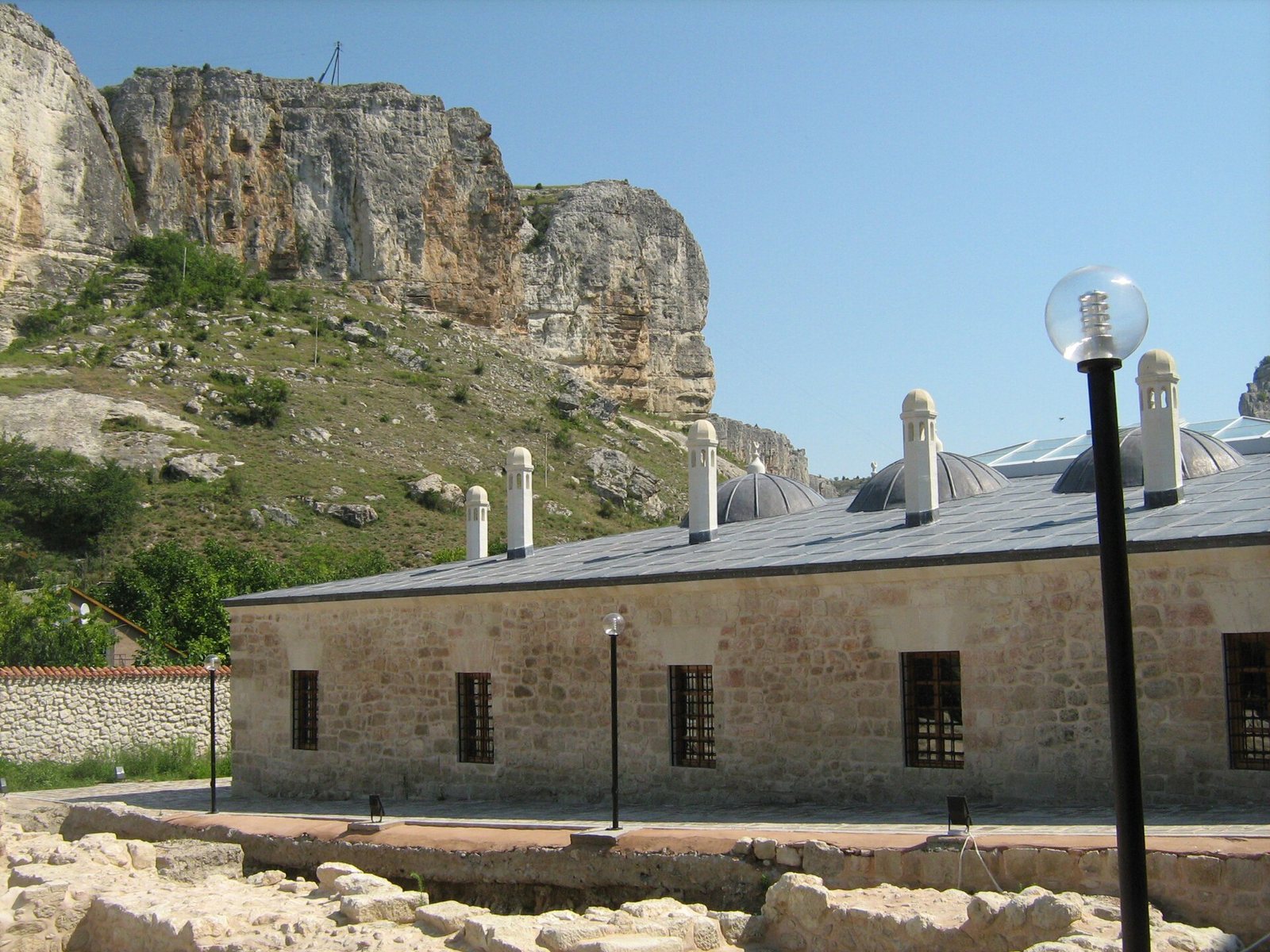
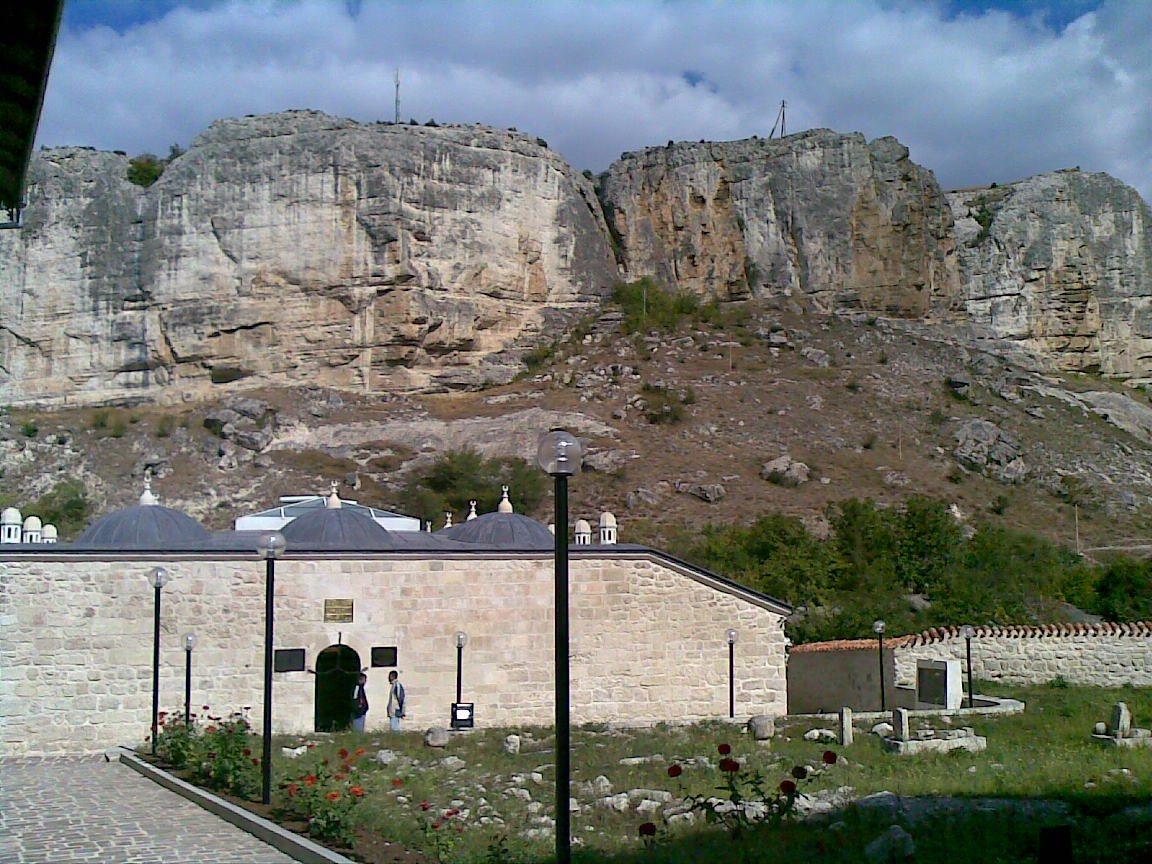
The madrasa is a single-storey stone building with a square plan, organized around an inner courtyard. The courtyard was arranged around a fountain, and a glass roof now covers the space.
Courtyard and teaching rooms
An arcaded gallery runs around the courtyard. Its ten hemispherical domes rest on pendentives, curved supports that carry domes over square spaces, and are held by pointed arches and columns. Residential and teaching rooms with pointed vaulted ceilings line three sides of the gallery.
Entrance and inscription
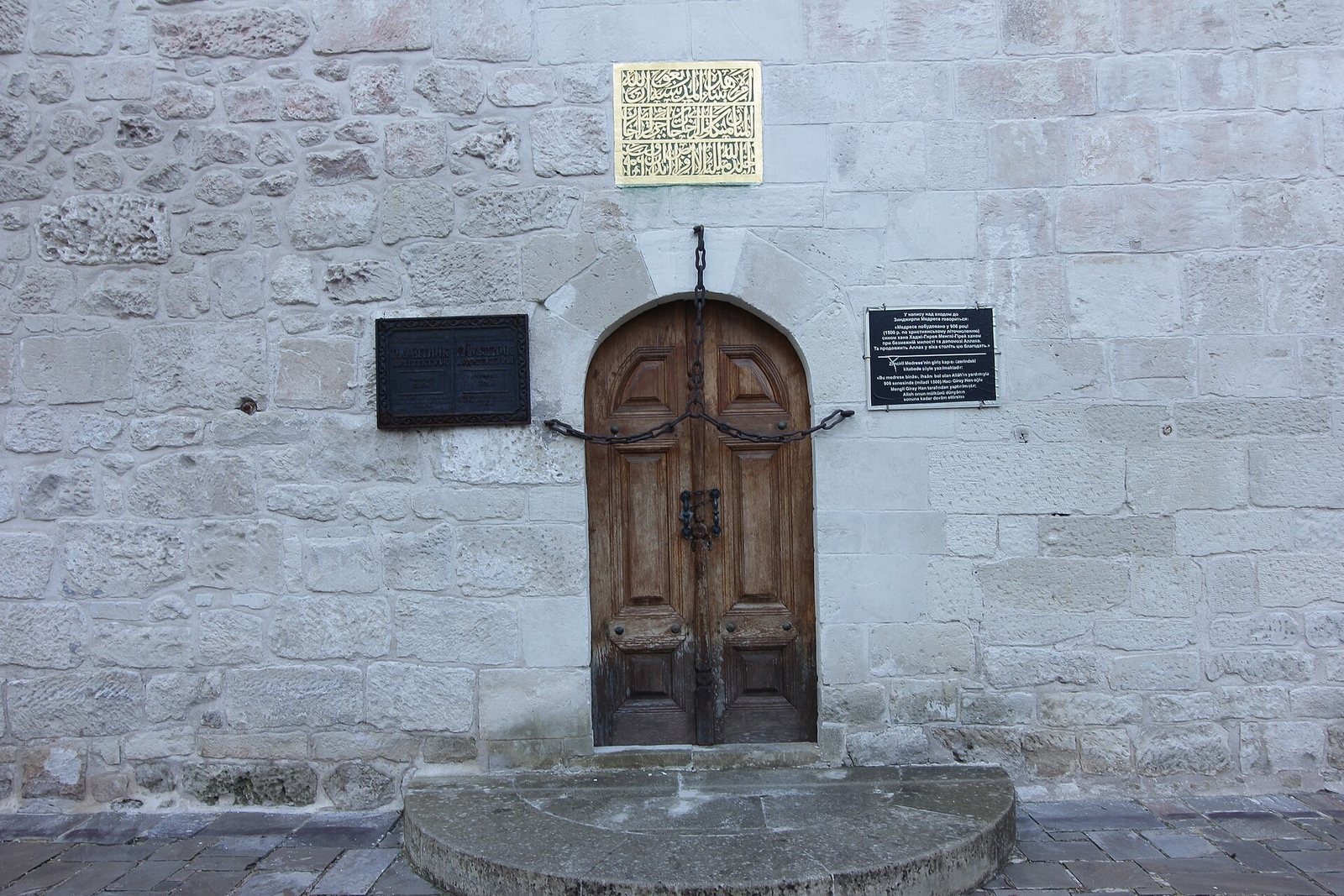
The austere exterior has a fortress-like appearance. An iron chain hangs across the opening of the building’s single entrance, making people bow their heads as they pass beneath it. The name Zincirli means “with a chain.” Above the doorway, a stone inscription identifies the school as commissioned by Khan Meñli Giray, son of Khan Haji Giray, and invokes divine blessing on Meñli’s reign. The inscription bears the date 906.
Memorials and nearby mausoleum
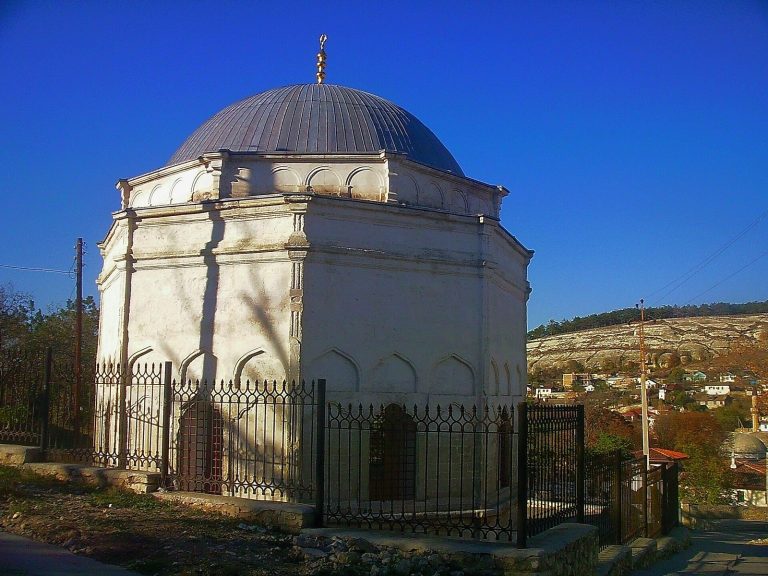
A symbolic grave marker in the compound commemorates Ismail Gaspirali, a prominent Crimean Tatar educator buried there in 1914. The nearby mausoleum of Haji I Giray, identified as the first Crimean khan, was also included in the 2007 restoration work.