Kinalehin Friary: A Carthusian Monastery and Franciscan Friary in Ireland
Site at a Glance
- Popularity
- Very Low
- Country
- Ireland
- Primary era
- Medieval
- Eras represented
- Medieval, Modern
- Civilizations
- British, Norman
- Site type
- Religious
- Remains
- Monastery
On this page10 sections
History
Kinalehin Friary is a monastic site in the village of Abbey, County Galway, Ireland, founded around 1252 by John de Cogan as a Carthusian house. It was Ireland’s only Carthusian monastery before its later Franciscan use. Its surviving architecture includes Romanesque and Gothic work, including Late Gothic features.
The Carthusian house
The Carthusians were a contemplative monastic order. Kinalehin’s first monks came from Hinton Charterhouse, Witham Friary in Somerset, or possibly both. The house may have been destroyed around 1279. If so, Richard de Burgh, Earl of Ulster, known as the Red Earl, rebuilt it soon afterward. The refounded monastery took the name Domo Dei, meaning “House of God.”
In 1282, King Edward I granted protection to the prior, the head of the house, along with its monks and lay brothers. Benefactors included John d’Alain, Bishop of Clonfert, and his successor Robert, a Benedictine monk from Canterbury. Stephen de Fulbourn and William Bermingham, both Archbishops of Tuam, also supported Kinalehin.
The monastery’s income was six pounds in 1302, and its prior also served as parish rector. Kinalehin was involved in disputes with the Bishop of Clonfert and the Knights Hospitaller, a religious order with a military role. Negotiations to sell the house to the Hospitallers began in 1306, but the sale apparently did not proceed. In 1321, the Carthusian order’s governing assembly dissolved the monastery. The Diocese of Clonfert, an ecclesiastical district under a bishop, took possession in 1341.
Franciscan refoundation
Around 1371, Pope Gregory XI authorized the de Burgh family to re-establish Kinalehin with Conventual Franciscans from the Diocese of Elphin. The Conventuals were one branch of the Franciscan order. The friars lived under the family’s protection, which continued after the de Burghs held the title of Lords of Clanricard.
In 1400, Pope Boniface IX granted an indulgence to penitential pilgrims who gave alms for the upkeep and restoration of Kinalehin and its church, dedicated to St Patrick. An indulgence was a Catholic grant associated with remission of temporal punishment for sin. In 1414, two further Franciscan houses, at Kilconnell and Meelick, were established in the diocese under the authority of John XXIII, an antipope who claimed the papacy from 1410 to 1415. Franciscan influence grew across the diocese. From 1405 until the Reformation, all but one of its bishops belonged to the order.
Dissolution, return, and renewed disruption
Kinalehin closed in 1540 during the Dissolution of the Monasteries. Richard Burke, 2nd Earl of Clanricarde, later purchased the monastic lands from Elizabeth I and retained them for the friars. In 1608, the monastery was sacked and dissolved. The friars withdrew to nearby woodland and joined the Observant Franciscans in 1611; the Observants followed a stricter interpretation of the order’s rule.
Richard de Burgo, 4th Earl of Clanricarde, later bought the property back from the Crown and arranged repairs to the dormitory and other rooms. The friars returned in 1615. Around this time, a fire damaged the monastery. The nave was given a new roof, while other parts remained unrestored; repairs were also carried out in 1616. In 1629, the fifteenth-century Irish manuscript An Leabhar Breac was held at Kinalehin.
John de Burgo was consecrated bishop at Kinalehin in 1642. The friars fled during Oliver Cromwell’s campaigns in Ireland and returned during the reign of Charles II, after the 6th Earl of Clanricarde recovered the family’s possessions in 1662.
Banishment and the last community
The 1697 Bishop’s Banishment Act, part of Ireland’s penal laws directed against Catholic clergy, required bishops and clergy to leave the country by 1 May 1698. The friars departed Kinalehin, entrusting valuables to friendly families. Local tradition says that some elderly friars remained nearby and were captured and killed close to Coolfin, at a bridge later known as Friar’s Bridge.
Some Franciscans returned in 1715 as enforcement of the penal laws eased. A landowner gave them land and free accommodation, allowing them to build a small chapel. The last Franciscans associated with Kinalehin died around 1825. The site is a National Monument of Ireland and is also protected as a scheduled monument.
Remains
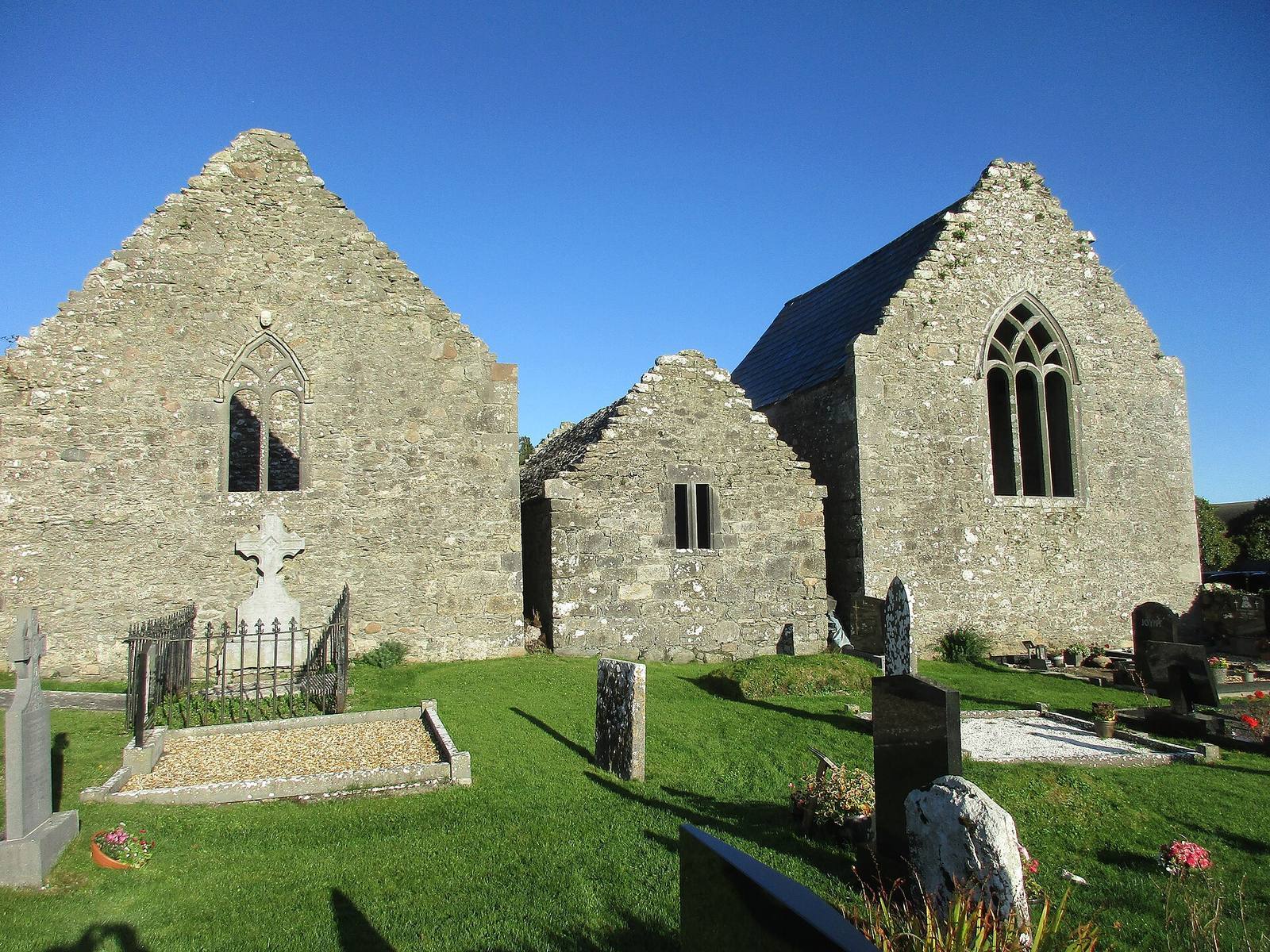
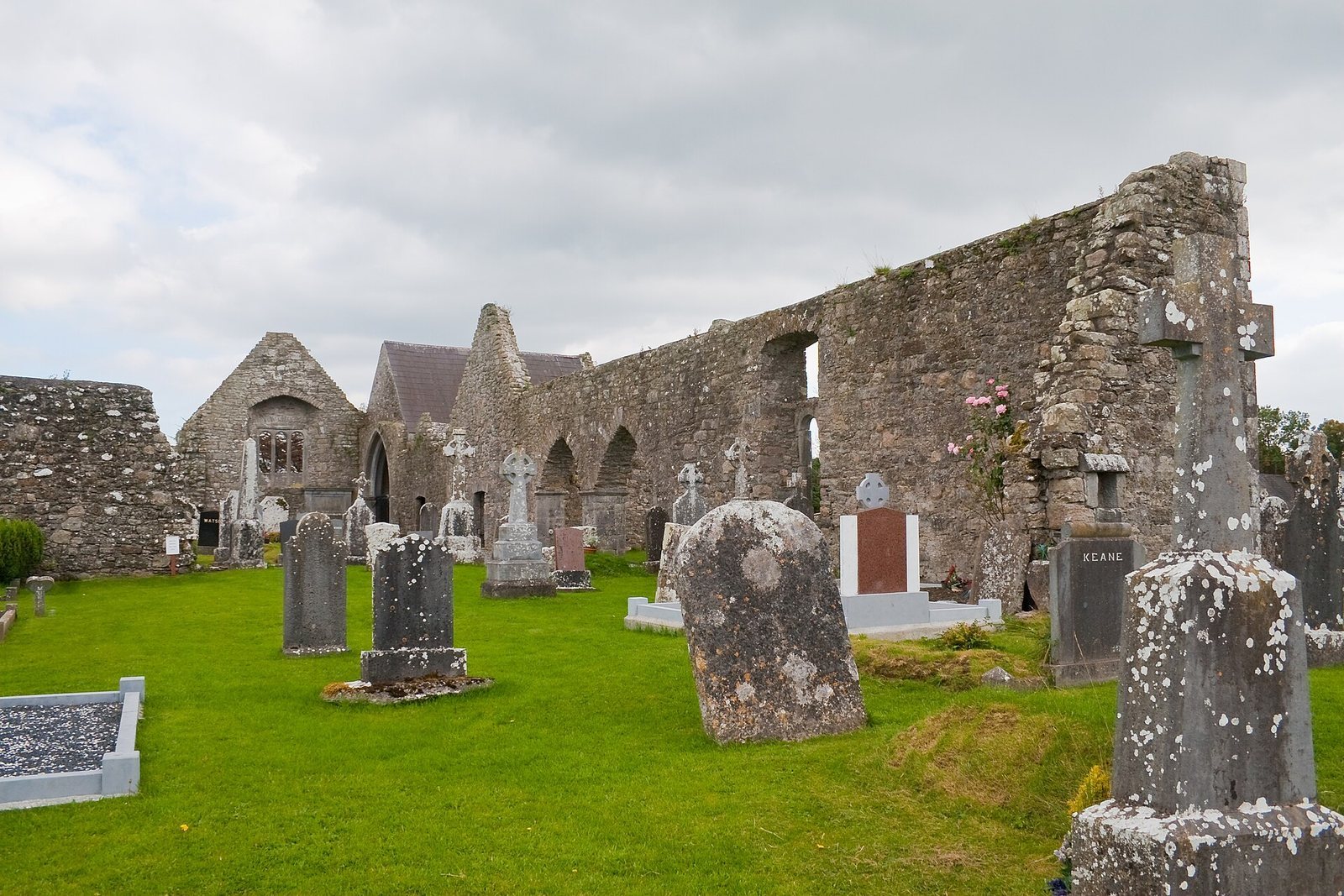
The friary stands in Abbey, County Galway, near the boundary with County Clare and at the edge of the Slieve Aughty foothills. It lies 6.7 kilometres west of Ballyshrule, south of the Duniry River and the town of Duniry, and northwest of Lough Derg. The principal remains include the church, cloister, chapels, and part of a tower, while earthworks preserve some Carthusian elements.
Architectural remains
Church and chapels
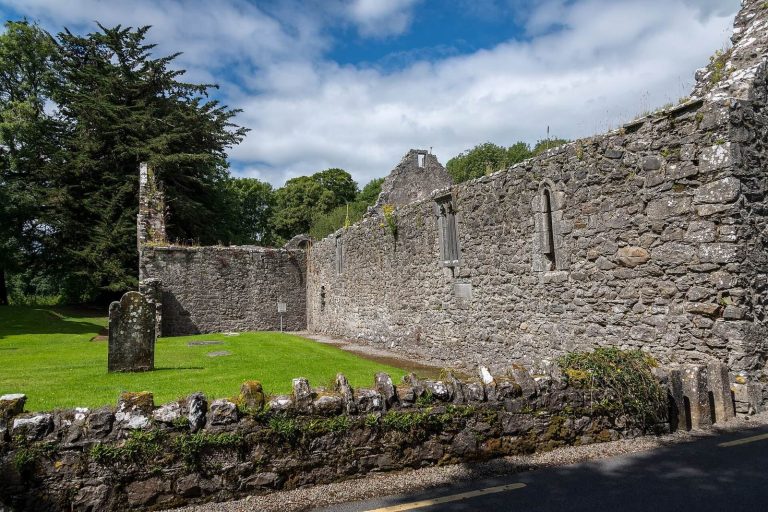
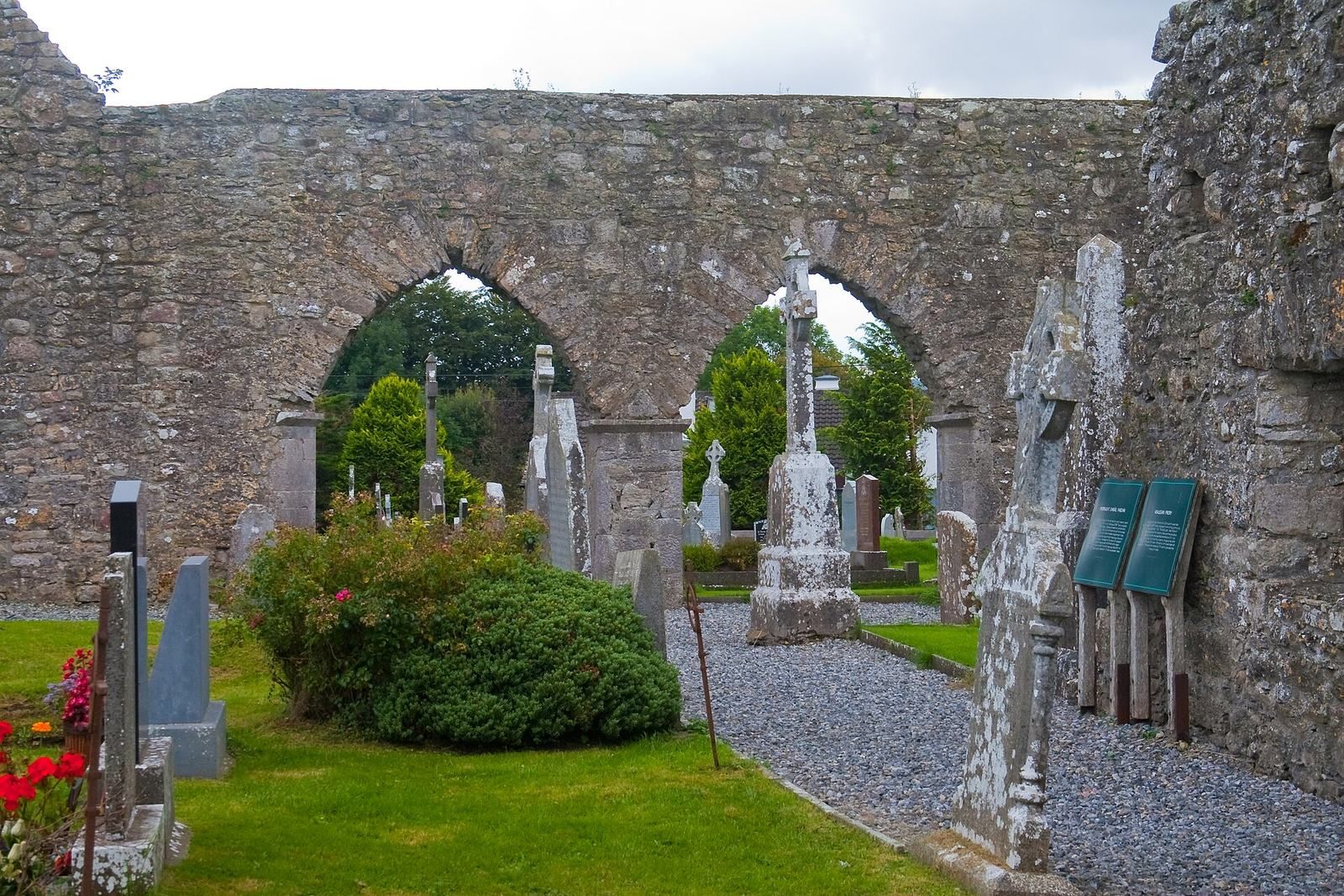
The church survives in parts, including its nave and choir. Pointed arches remain in a nave wall. Three chapels are among the surviving structures, and side chapels are also identified within the remains.
Cloister and tower
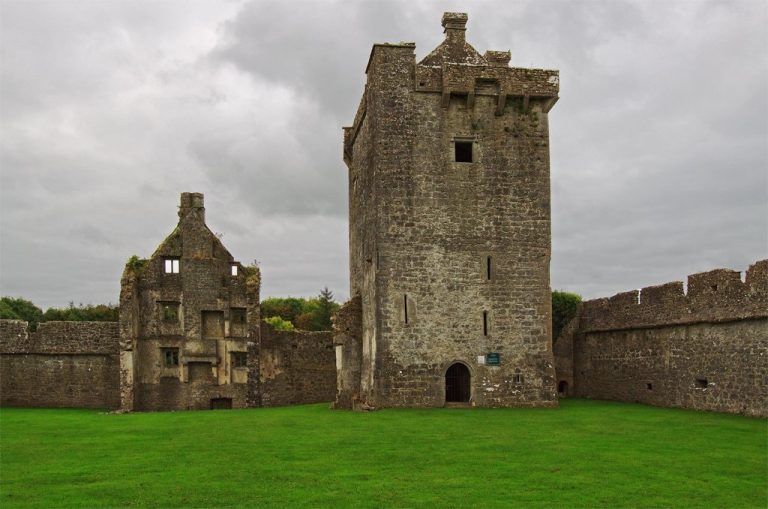
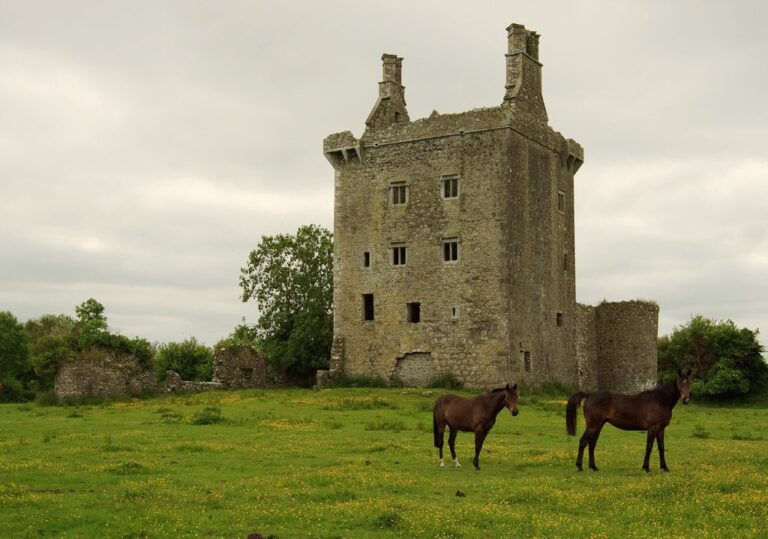
Arches survive in the cloister remains. Fragments of a tower include a fireplace and chimney, preserving parts of the building’s former interior arrangement.
Carthusian earthworks
Although the visible archaeological remains are mainly Franciscan, some elements associated with the earlier Carthusian house survive as earthworks.