Palazzo Vescovile: The Bishop’s Residence and Curial Seat in Potenza
Site at a Glance
- Popularity
- Very Low
- Country
- Italy
- Primary era
- Early Modern
- Eras represented
- Early Modern
- Civilizations
- Kingdom of Naples, Spanish
- Site type
- Religious
- Remains
- Palace
On this page9 sections
History
Construction and ecclesiastical role
Palazzo Vescovile is the bishop’s residence and the seat of the Curia, the administrative body of the Archdiocese of Potenza-Muro Lucano-Marsico Nuovo, in Potenza, Italy. Bishop Andrea Caracciolo, whose episcopate lasted from 1616 to 1623, ordered the project; Achille Caracciolo was also a commissioner. Local Lucanian craftsmen built the palace, which was completed sometime between the seventeenth and eighteenth centuries.
Revolution, destruction, and restoration
In 1799, Bishop and intellectual Giovanni Andrea Serrao was murdered in the palace by Sanfedisti, counterrevolutionary forces in southern Italy who opposed the Jacobins and their revolutionary political ideas. Their conflict formed part of the upheavals in Italy that year.
Maintenance and conservation took place in the early twentieth century during the episcopates of Bishops Monterisi and Razzoli. Bombing during the Second World War destroyed the building. Bishop Bertazzoni oversaw its restoration from 1947 to 1950, and Bishop Vairo commissioned further restoration after the 1980 earthquake damaged it.
Remains
Plan and exterior
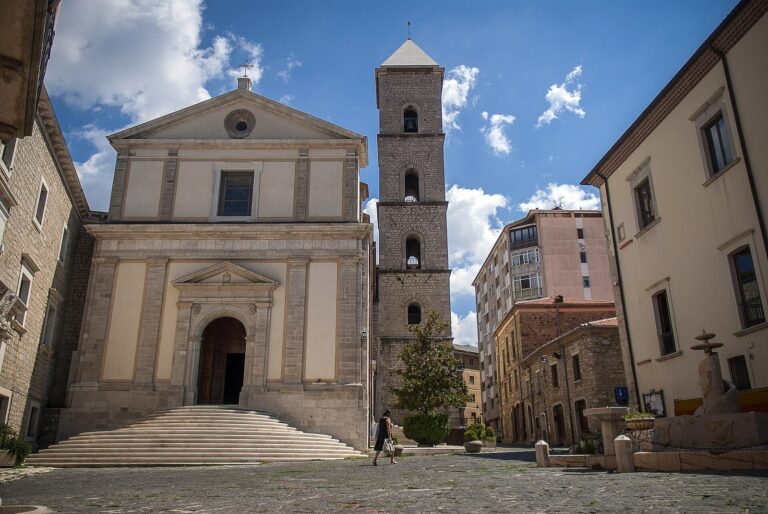
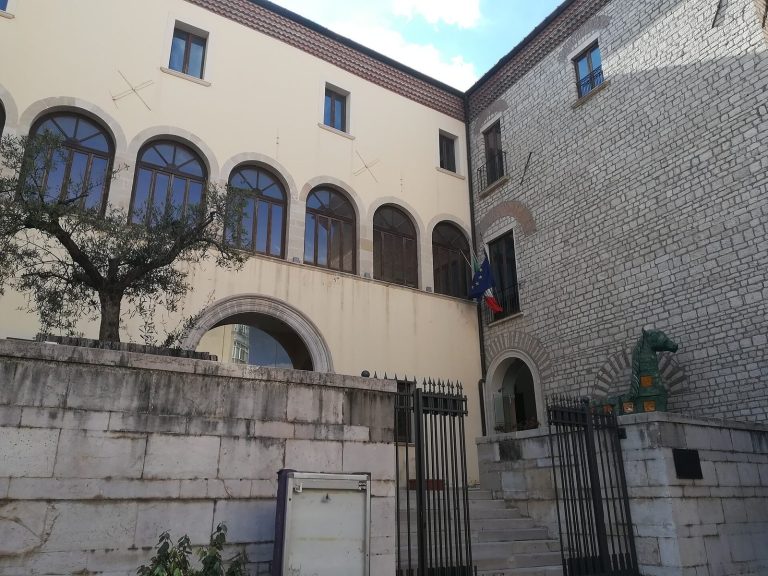
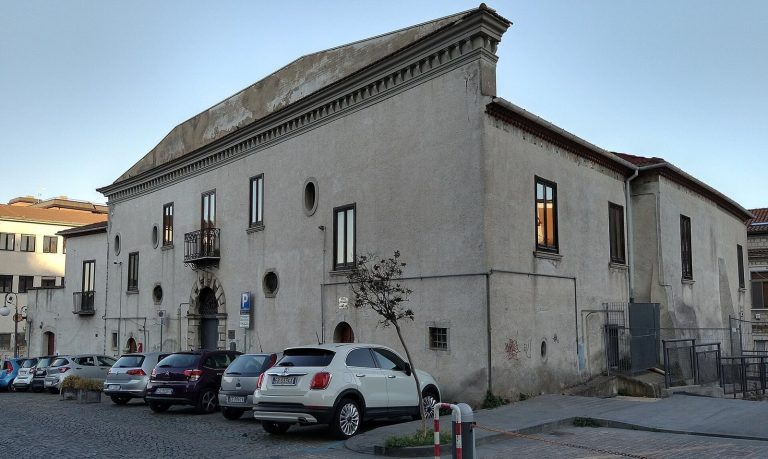
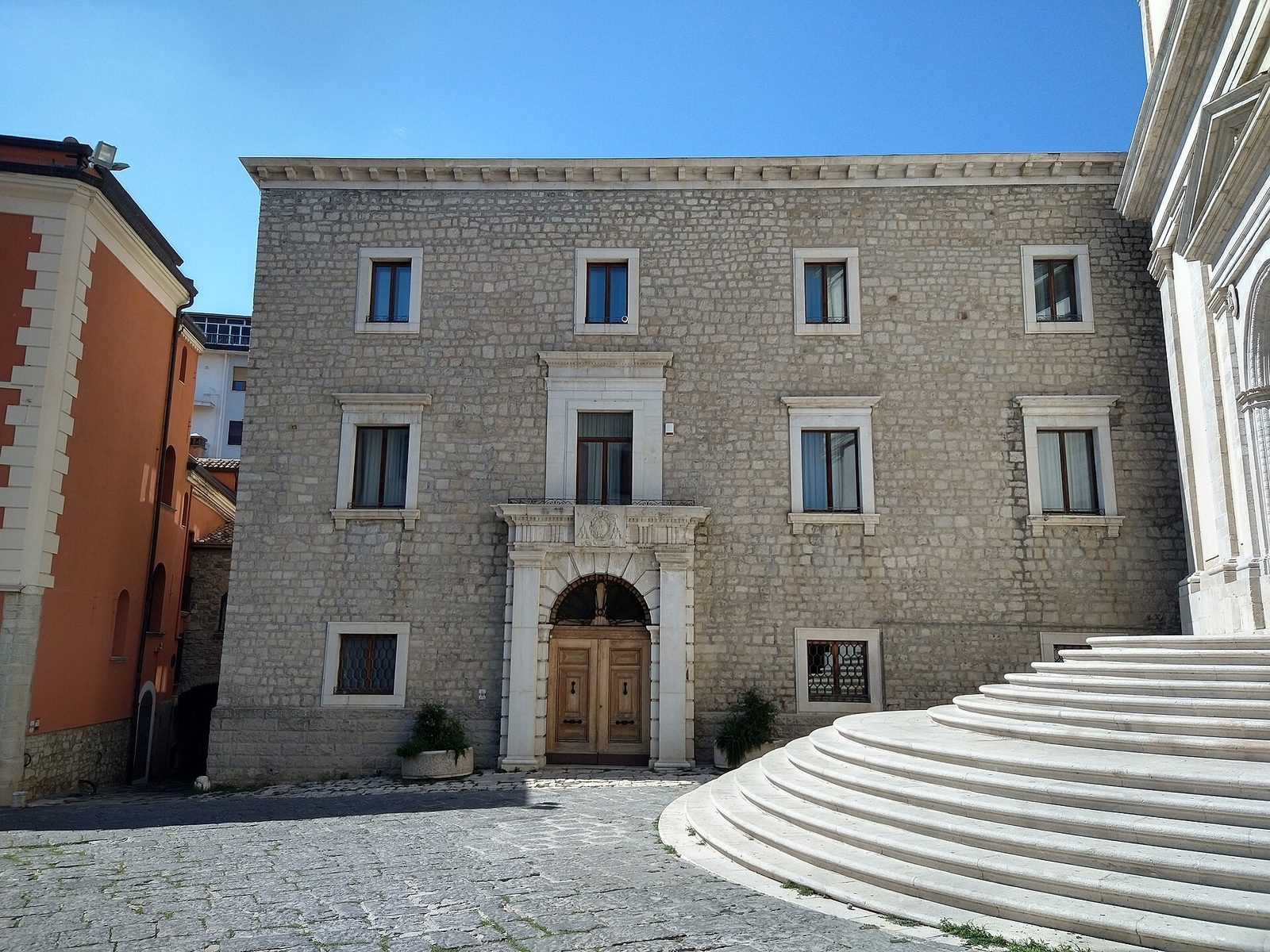
The three-storey palace has a rectangular plan and load-bearing walls built of local stone. It stands to the left of the Cathedral of San Gerardo in Potenza’s historic center. Its position along a road outside the city walls meant that it also formed part of a line of fortification. Despite restoration, the building retains its original architectural appearance.
The front façade has exposed stonework. Above the entrance portal, a cornice bearing Bishop Augusto Bertazzoni’s coat of arms rests on two pilasters. A window-balcony with a shaped stone lintel extends along the cornice.
Interior arrangement
The ground floor contains the entrance atrium, offices of the Curia, and a vestibule with artworks. The bishop’s living quarters and a private chapel occupy the first floor, while small apartments fill the upper floor.
Artworks
Vestibule
A marble sarcophagus in the vestibule formerly held the remains of Saint Gerard of Potenza, a medieval bishop venerated as the city’s patron saint. Dating to the second or third century, it is carved with repeated curved grooves. Two winged figures associated with love stand at its corners, each holding a downward-pointing torch as a sign of mourning; the central panel depicts the Three Graces, figures associated with beauty and grace. The vestibule also contains a statue of the Sacred Heart of Jesus, a Catholic devotion in which the heart represents divine love.
Private chapel
The chapel contains a polychrome-marble altar brought from the Church of San Francesco and a crucifix made of majolica, tin-glazed earthenware, mounted on a wooden structure with gilded decoration. Both works are by Francesco Carbotti.