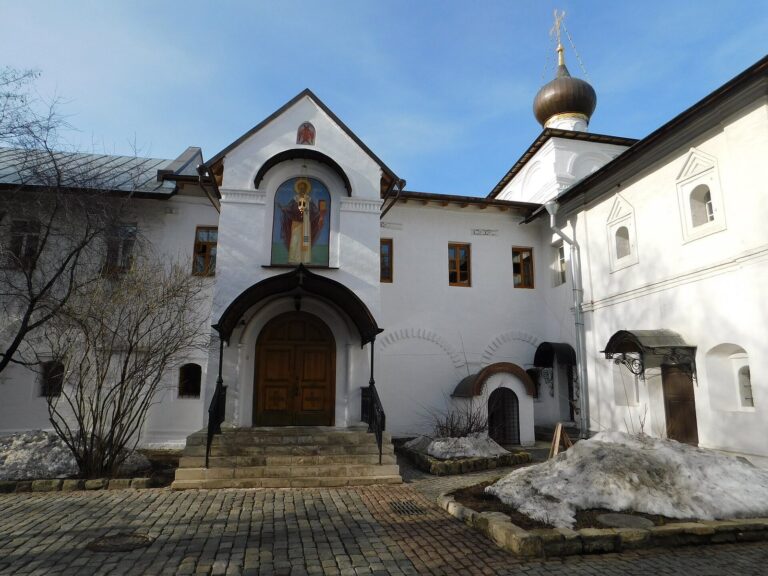
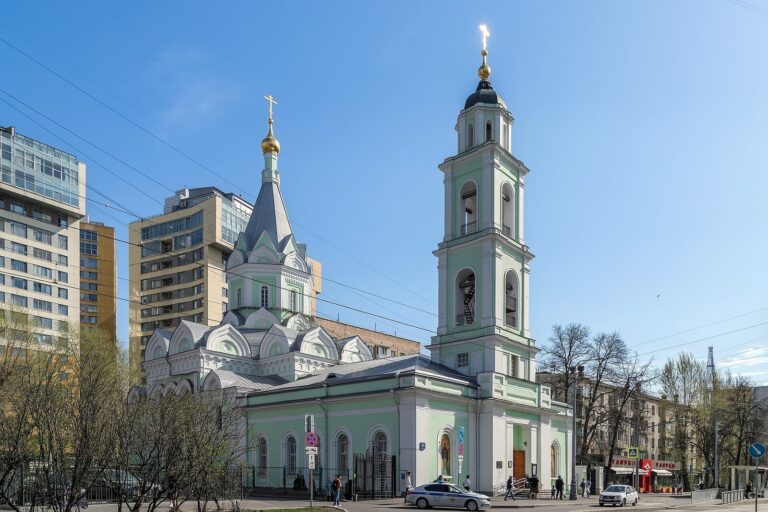
Church of the Nativity of the Theotokos in Old Simonovo: Monastic Church and Kulikovo Memorial
Site at a Glance
- Popularity
- High
- Country
- Russia
- Primary era
- Early Modern
- Eras represented
- Early Modern, Modern
- Civilizations
- Russian
- Site type
- Religious
- Remains
- Church
On this page12 sections
History
The Church of the Nativity of the Theotokos in Old Simonovo is a Russian Orthodox church in the former Simonov settlement on the left bank of the Moskva River in Russia. Theotokos is the Christian title for Mary, the mother of Jesus, and the Nativity celebrates her birth. The church’s history began in 1370, when the monk Theodore Simonovsky founded Simonov Monastery there and built a wooden church.
Monastic foundation and the Kulikovo burials
In 1379, as the monastery grew, its main community moved about a quarter of a verst, a traditional Russian measure of distance, north. The church remained at Old Simonovo with a smaller monastic community under Theodore. Monks were buried there, and the site also offered a retreat for those seeking solitude. Theodore was consecrated a bishop in 1388 on the order of Grand Prince Dmitry Donskoy. In 1390, the monk Kirill became abbot of the Simonov community. After leaving that office, he lived as a monk and later joined the Old Simonovo community.
After the Battle of Kulikovo in 1380, Dmitry ordered the burial at the church of Alexander Peresvet and Andrei, also known as Rodion, Oslyabya. The two warrior monks had fought with Dmitry’s forces in this major battle, which took place on the feast of the Nativity of the Theotokos. Their graves were found near the church in the eighteenth century.
Stone church and parish life
A stone building replaced the wooden church in 1509–1510 and was consecrated by Metropolitan Simon, the senior Orthodox bishop of Moscow. Its construction is attributed to Aleviz the New, an Italian-born architect active in Russia, although chronicles do not confirm the attribution. By the early seventeenth century, the church served a parish but remained dependent on Simonov Monastery.
A parish register from 1747 lists retired military personnel and their families, monastery employees, peasants and landless peasants from Simonov, and out-of-town households. It also includes a ten-person women’s almshouse, a charitable residence supported by the monastery. In 1757, the priest Pyotr Afanasyev and parishioners sought permission to replace a deteriorated wooden bell tower, which stood over the stone chamber associated with Peresvet and Oslyabya’s burial. They received permission to collect donations for two years. In 1778, two nearby villages, Gravoronovo and Kozhukhovo, were added to the parish to increase its income.
Between 1785 and 1787, stone buildings replaced the wooden refectory and bell tower, and a chapel dedicated to Saint Nicholas was established and consecrated. Simonov Monastery was reorganized under an imperial order in 1788. In 1794, Empress Catherine II provided funds for two inscribed stone memorial tombs to the warrior monks in the church refectory. The following year, she ordered the monastery restored to its former status.
Nineteenth-century rebuilding
In 1844, the priest Ivan Tsvetkov and parishioners petitioned to enlarge the refectory and replace the stone bell tower. The plan was approved in 1846, and the emperor authorized it that November. Rebuilding took place from 1849 to 1855, with chapels dedicated to Saint Nicholas and Saint Sergius of Radonezh arranged in the refectory.
For the church’s quincentenary in 1870, the priest and churchwarden sought to restore the exterior closer to its earlier appearance. That year, merchants I. V. Tsurikov and M. E. Popov paid for a cast-iron memorial tomb with a canopy to Peresvet and Oslyabya, placed in the Saint Sergius chapel.
Closure, damage, and return to worship
The church closed in 1928. Its bell tower was demolished in 1932, and the cast-iron memorial was sent for scrap. As the Dynamo factory expanded around the church, access was shut off and the building was put to industrial use. A factory compressor was installed over the monks’ graves, and the church deteriorated close to ruin. Its dome was removed, and its original interior furnishings were destroyed.
The church was slated for transfer to a museum exhibition on the Battle of Kulikovo in 1980. The factory released it in 1987 and transferred it to the Historical Museum. In 1989 it returned to worshippers and was reconsecrated on September 16. It remains an active Russian Orthodox church in the Moscow diocese and has federal-level cultural heritage status.
Remains
Church and associated buildings
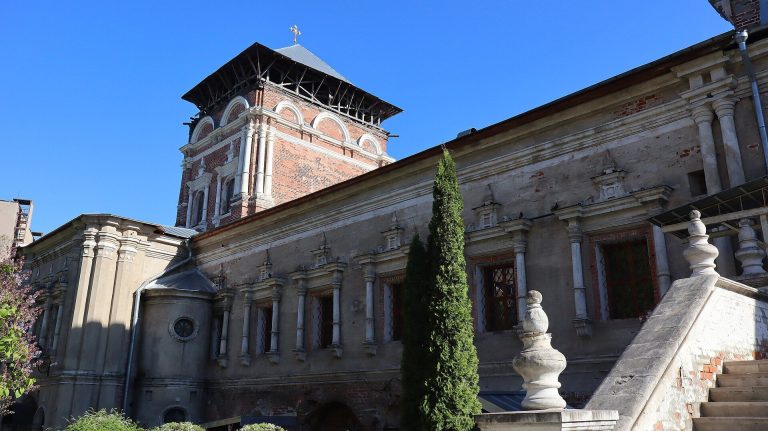
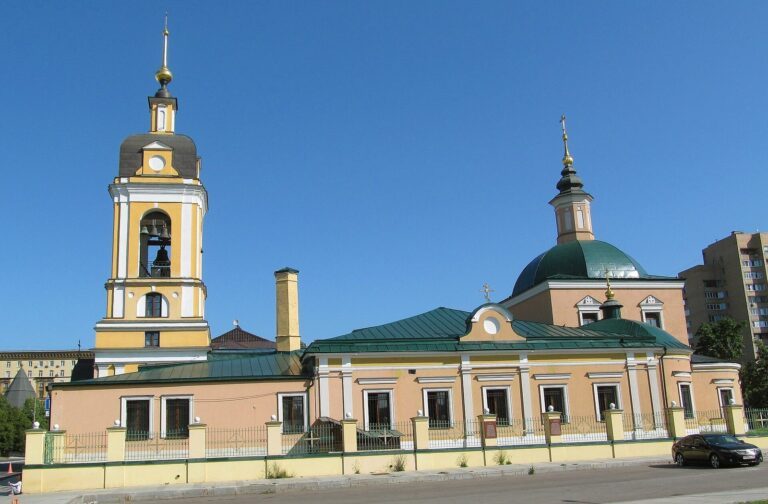
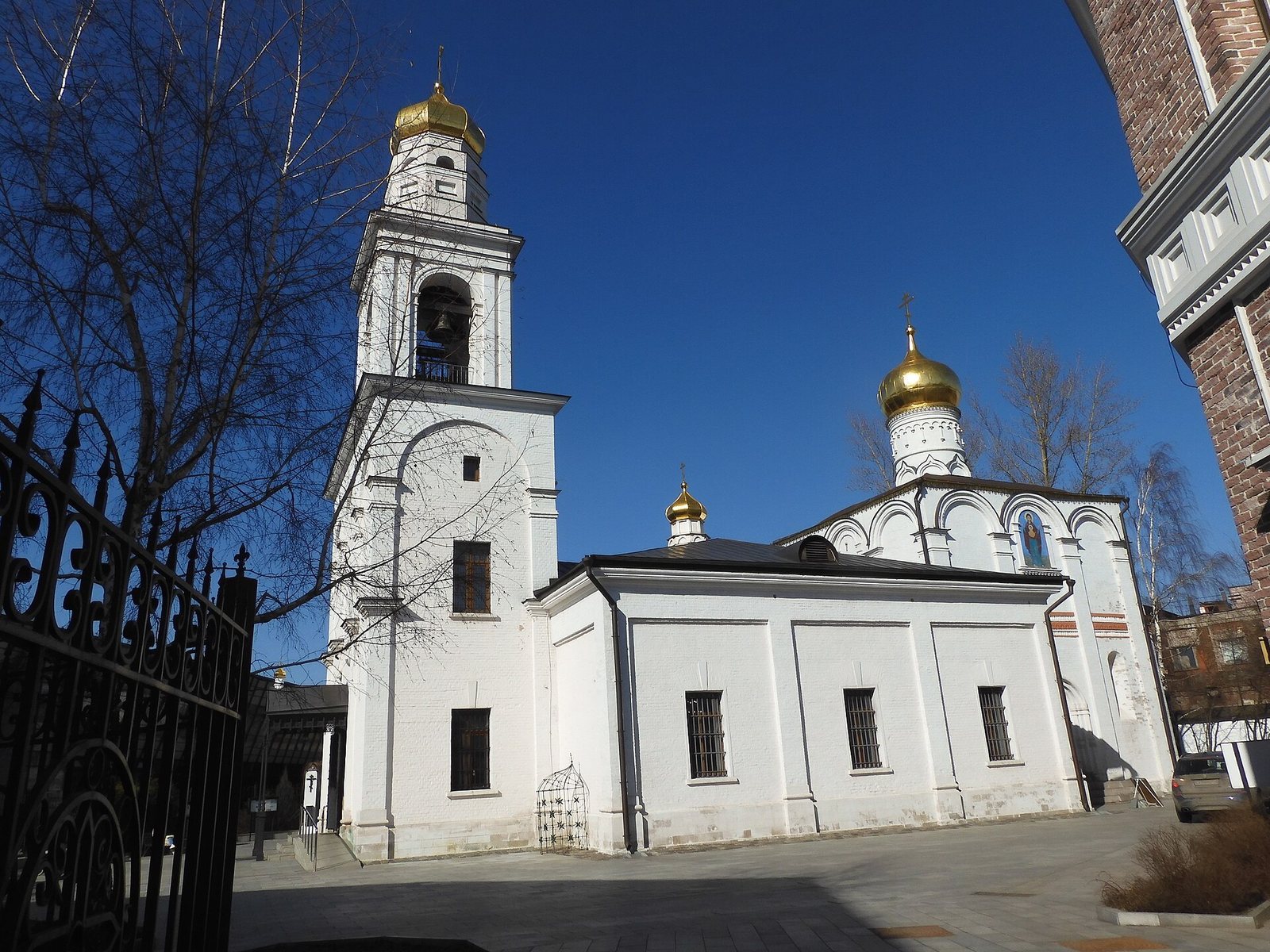
The surviving group comprises a brick church, a stone refectory, and a stone bell tower attached to the church. The refectory is a communal dining hall in a monastery.
Main church
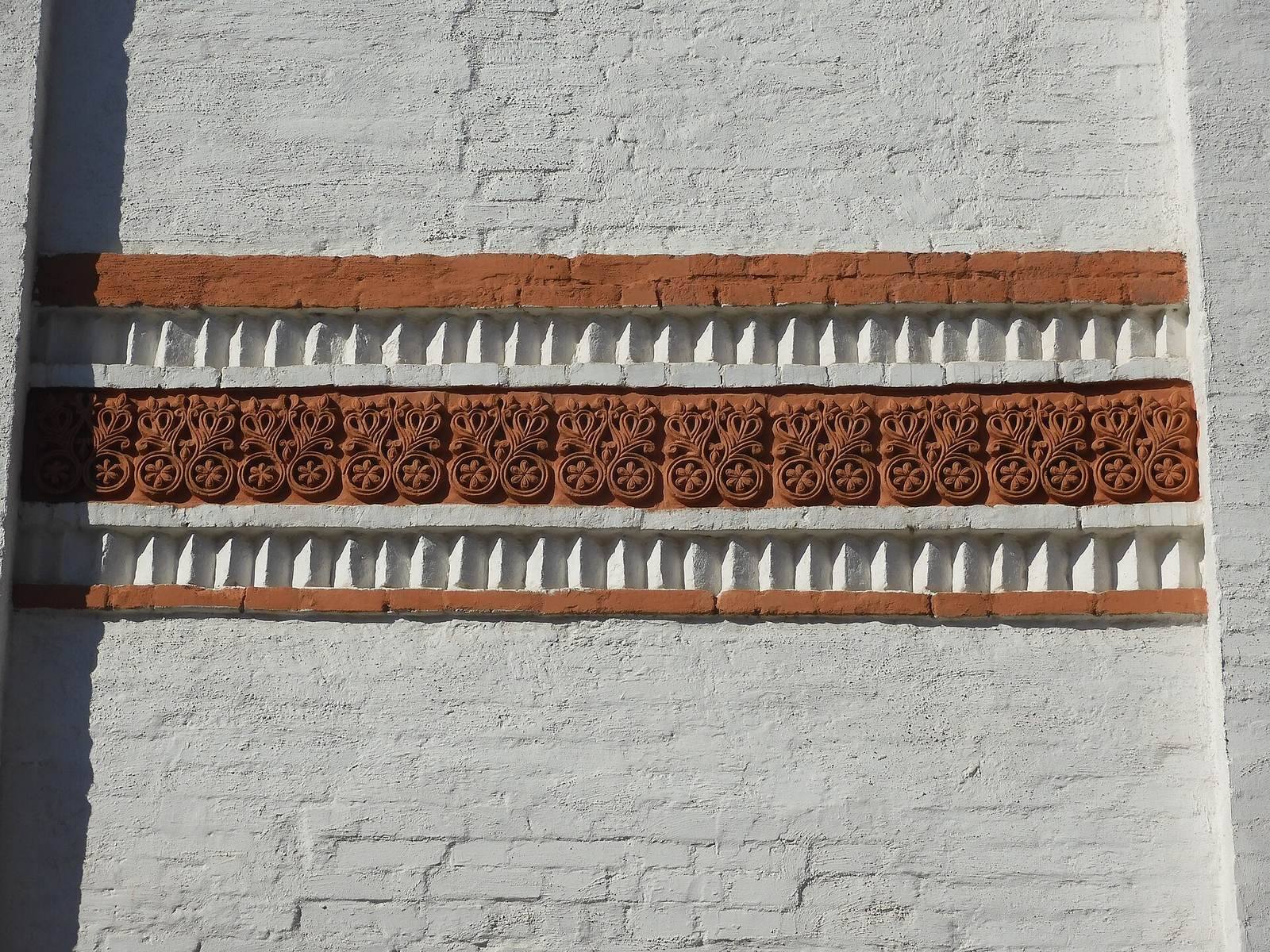
The church was originally single-domed. Its main body has a square plan, but rebuilding of the upper part left only the lower half of the original structure, ending at a carved horizontal band. The building has no internal masonry supports today, although it may originally have had four. Its altar area was formed with three arches. The church has a single main worship space and three icon screens, or iconostases, separating the sanctuary from that space.
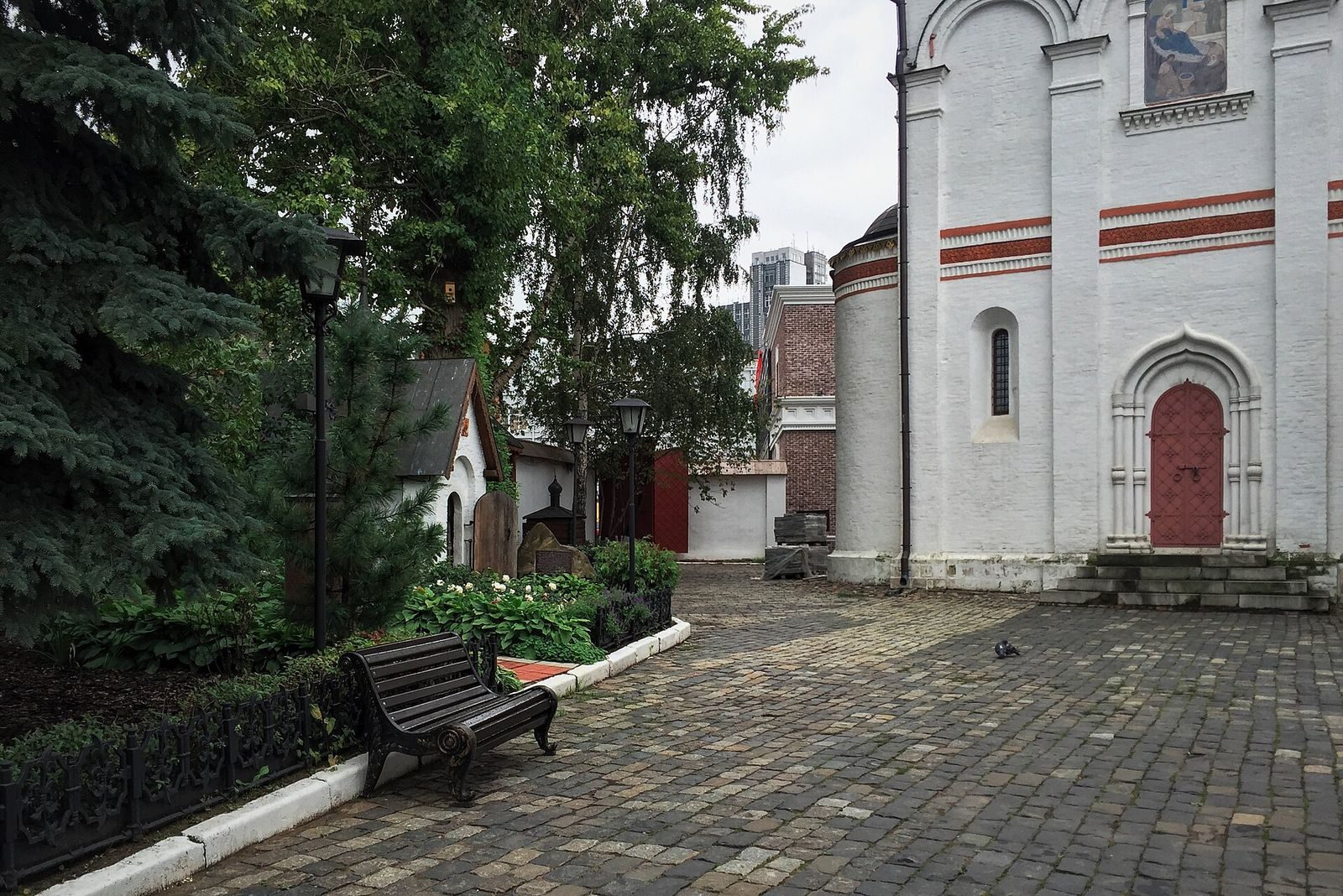
The exterior retains the earlier arrangement of windows and their ornament. In 1870, newly cut openings in the east, north, and south walls were closed, earlier windows reinstated, and their historic decorations renewed.
Refectory and bell tower
The stone refectory contains side chapels dedicated to Saint Nicholas and Saint Sergius of Radonezh. The attached bell tower has a dome and was restored in 2006. A 2,200-kilogram bell called Peresvet was donated by the governor of Bryansk Region, the homeland of Peresvet and Oslyabya.
Memorials and movable objects
Memorials to Peresvet and Oslyabya
A wooden cenotaph, a memorial tomb that does not contain remains, marks the place in the refectory regarded as the warrior monks’ burial site and resembles an earlier memorial. Their remains are still buried at the church. A marble monument to the two monks, made by sculptor Vyacheslav Klykov, stands on the church grounds; it formerly stood in the refectory.
Icons and liturgical objects
The church’s earlier objects included an icon of the Nativity of the Theotokos titled “Weep Not, Mother,” an icon of Saint Nicholas, and a silver incense burner from the late seventeenth century. Objects associated with the reopened church include a venerated Tikhvin icon of the Mother of God and an icon of Saint Panteleimon containing a fragment of a relic. A carved icon of the Mother of God in the Blachernae tradition, associated with a shrine in Constantinople, was later returned to Vysokopetrovsky Monastery in Moscow.