Church of the Resurrection of Christ: A Medieval Orthodox Church in Russia
Site at a Glance
- Popularity
- Very Low
- Country
- Russia
- Primary era
- Medieval
- Eras represented
- Medieval
- Civilizations
- Pskov Republic
- Site type
- Religious
- Remains
- Church
On this page6 sections
History
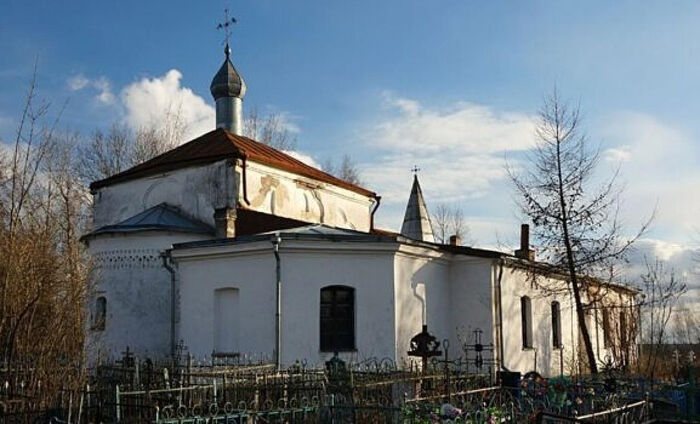
The Church of the Resurrection of Christ is a small Orthodox church in Russia, built in 1496 in the Pskov school of medieval Russian architecture, a regional tradition associated with Pskov. Builder Feodorit constructed it, and a construction inscription discovered during restoration established its date.
Foundation and monastery tradition
Local tradition connects the church with a monastery that had been abandoned by the seventeenth century. A shepherd is said to have rediscovered the building later, an event linked to the village name Pustoye Voskresenye. An ancient image of Christ’s Descent into Hades, which depicts Christ entering the realm of the dead and is associated in Orthodox belief with the Resurrection, was regarded as the church’s patronal icon. Its association gave the church its dedication.
Later use and restoration
A bell tower was added in 1870, and services resumed the following year. The church closed in 1933, and the tower was destroyed in 1937. Before the Second World War, the building served as a warehouse for the border commandant’s office. After the area was liberated in 1944, it became a collective-farm grain store.
Restoration took place from 1958 to 1963, with further work in 1990. By the early twenty-first century the church was gradually deteriorating, though it remains in religious use, with services held on a special schedule. Russia recognizes it as a cultural heritage monument of federal significance.
Remains
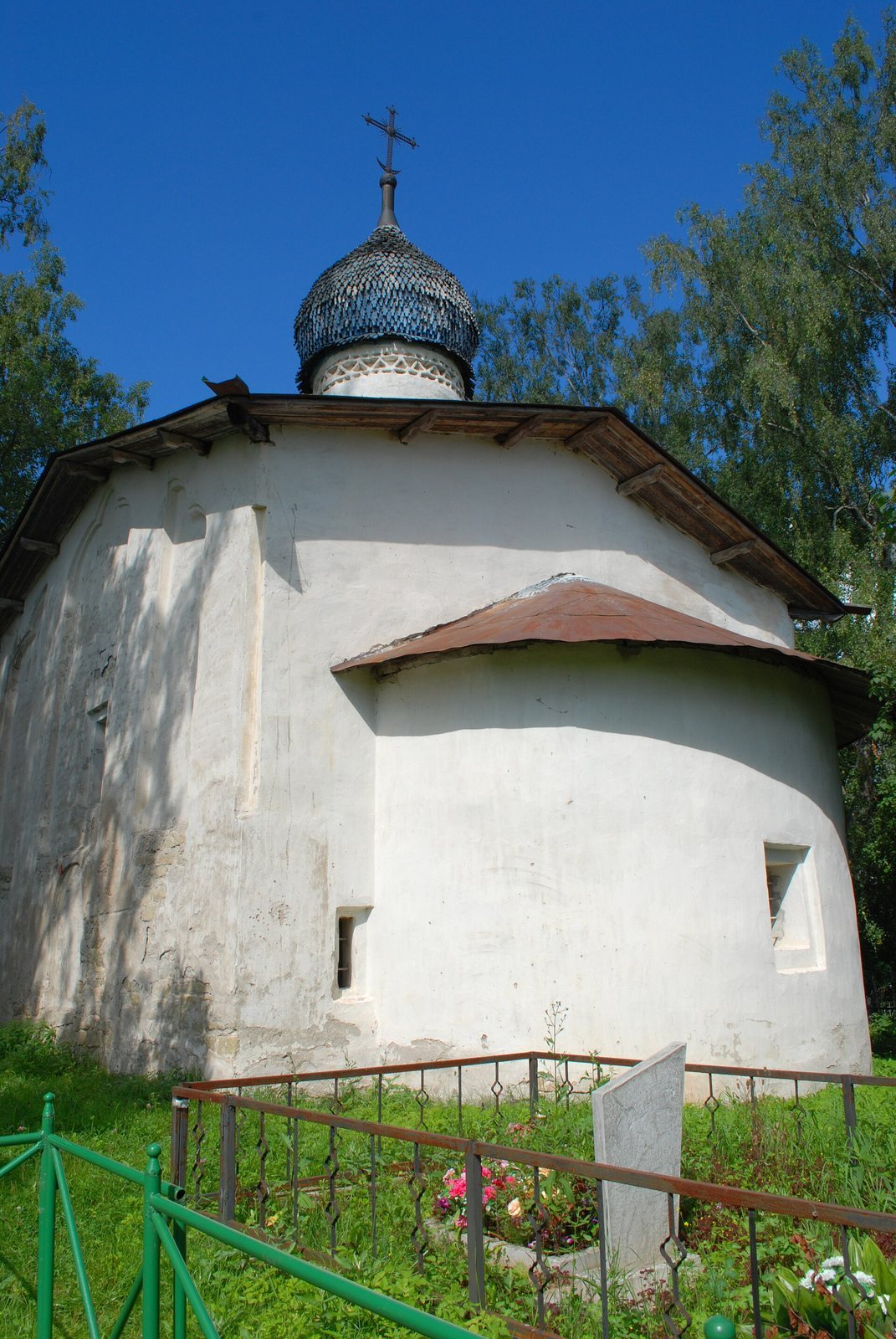
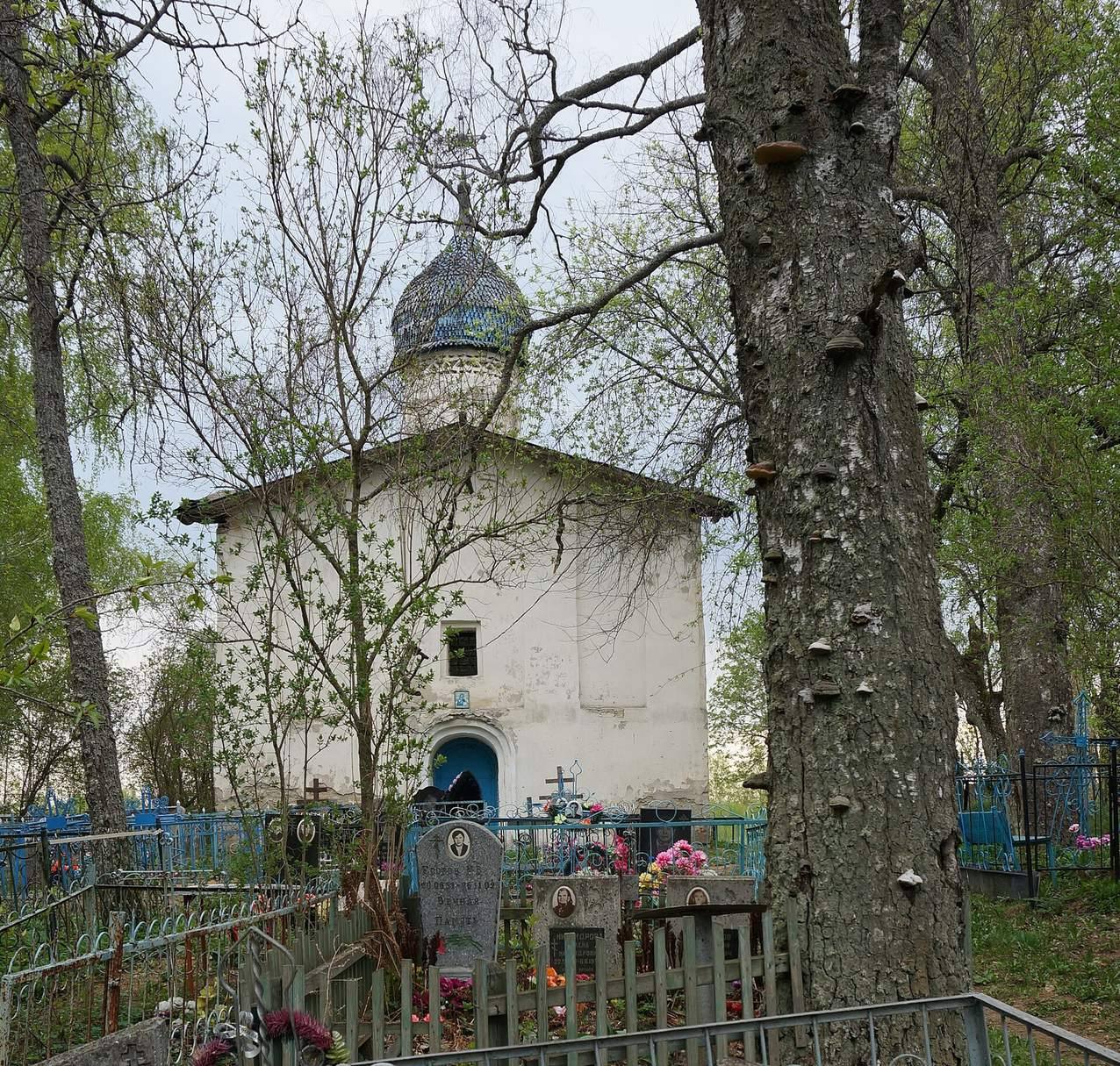
The small church stands in a tree-overgrown cemetery at the edge of the village. Built of dressed limestone, it has a single apse, a projecting sanctuary space, and a pillarless interior. It has few windows, while vessels built into its walls contribute to its acoustics.
Roof and dome
The original roof had eight slopes before being replaced by a four-slope roof. Restoration in 1963 recovered the earlier form, including reconstructed gables and a drum, the structure supporting the dome, with an upper section built of logs. The work also recreated a vault, an arched ceiling, and an onion-shaped dome covered with wooden shingles.
Construction inscription
Ceramic letter tiles once encircled the upper part of the drum and were secured with nails. Restoration uncovered fragments of the inscription, which is the earliest construction inscription found in the Pskov region.