Palace in Ojerzyce: A Neo-Renaissance Country Estate
Site at a Glance
- Popularity
- Very Low
- Country
- Poland
- Primary era
- Modern
- Eras represented
- Early Modern, Modern
- Civilizations
- Holy Roman Empire, Kingdom of Prussia
- Site type
- Domestic
- Remains
- Manor House
On this page9 sections
History
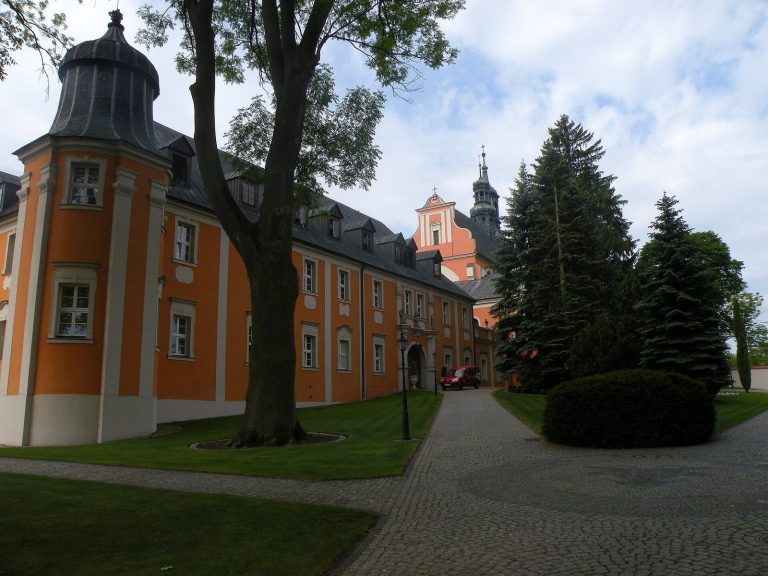
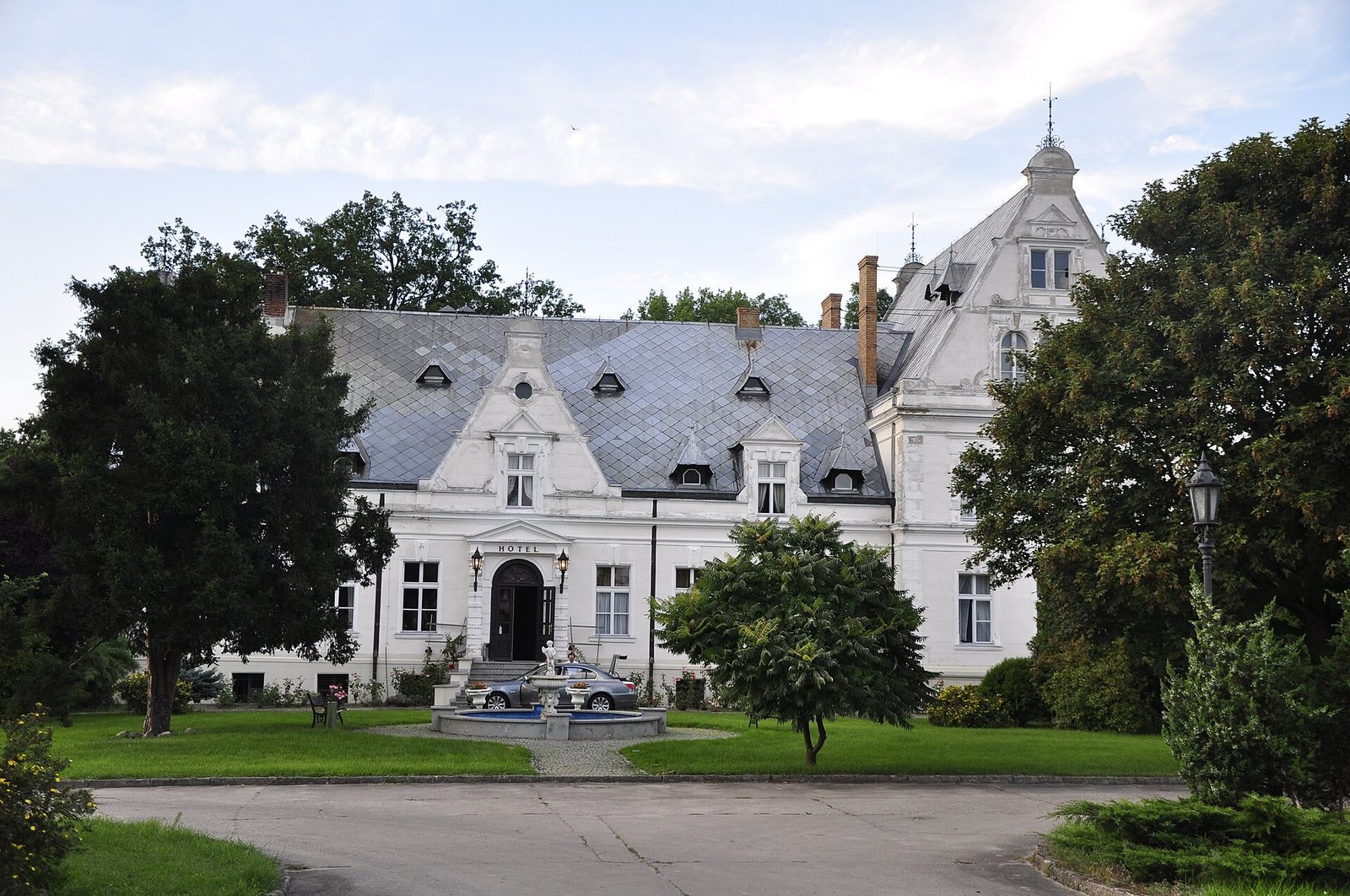
The Palace in Ojerzyce is a country mansion in Poland, built in its present form in 1855 in the Neo-Renaissance style, a nineteenth-century revival drawing on Renaissance architecture. It was the center of an agricultural estate with about 400 hectares of arable land and meadows. The village, then called Oggerschütz, is first recorded in 1416, when it belonged to Jan von Waldrode, also known as Walderode.
Medieval and Early Modern Estate
A castle belonging to the Kyau family may have stood at the site or nearby during the thirteenth or fourteenth century. The von Knobelsdorff family owned the estate from 1450 to 1675, and several family members served as castle governors of Schwiebus, the historical German name for Świebodzin. Siegesmund von Knobelsdorff, the last of the family to live at Ojerzyce, died in 1675.
Eighteenth- and Nineteenth-Century Ownership
After 1706, ownership changed several times. Samuel von Kalkreuth acquired the estate that year, and Max von Schlichting took it over in 1734. From 1752 it belonged to Hans Heinrich von Briesen, then passed by inheritance to his daughter Charlotte. Between 1810 and 1836, the owners were either Herr von Angern or his daughter Beate Charlotte. Until 1851, Captain von Rabenau and Landwehr lieutenants Alexander Ewald and Hermann Hilscher operated the estate. The Landwehr was a territorial reserve or militia, and its lieutenants held officer rank within it.
Hermann-Friedrich Schneider took possession in 1851 and gave the mansion its present form in 1855. His building work also included a distillery, houses, and stables. After Schneider’s death, the estate passed to his daughter Marie and her husband, Eugen von Schmeling.
Twentieth-Century Changes
Günter von Schmeling became owner in 1919. Before the estate was expropriated in 1945, it belonged to Carola, Countess von Hahn, née von Schmeling, and her husband, Friedrich, Count von Hahn. The Polish state owned the property until 1992, when Peter and Renate Ohlig acquired it. A renovation in 2007 accompanied its conversion into a hotel named Park-Hotel Clara. The estate’s building ensemble is protected as a monument.
Remains
The estate combines the mansion with a small landscape park to its north and a spacious historic farmyard. Most of the farmyard buildings date to the nineteenth century. The village church stands opposite the entrance to the estate.
Mansion
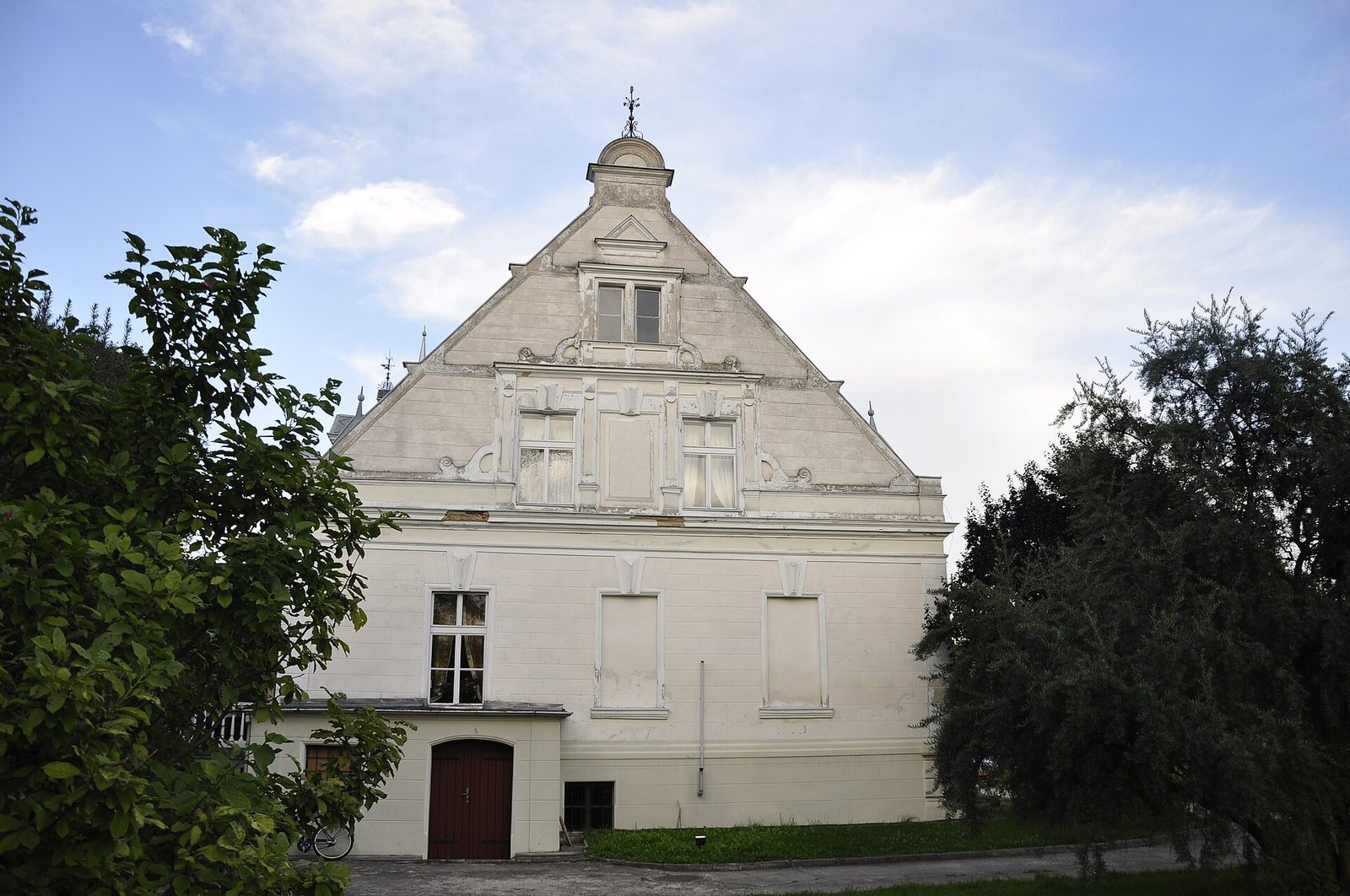
The mansion’s present Neo-Renaissance design dates to 1855, and its walls incorporate parts of an earlier manor house from the seventeenth or eighteenth century.
Landscape Park
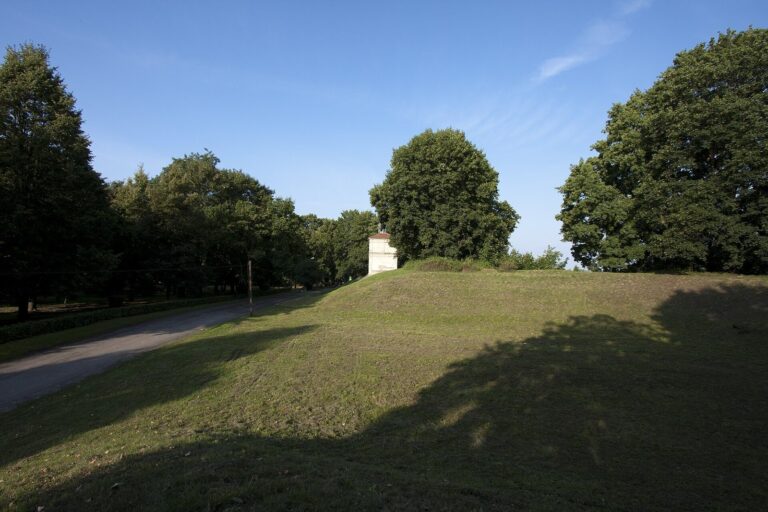
The small English-style park dates to the first half of the nineteenth century. Its pond has horseshoe-shaped extensions to its ditches, which may preserve traces of an earlier castle moat.
Farmyard
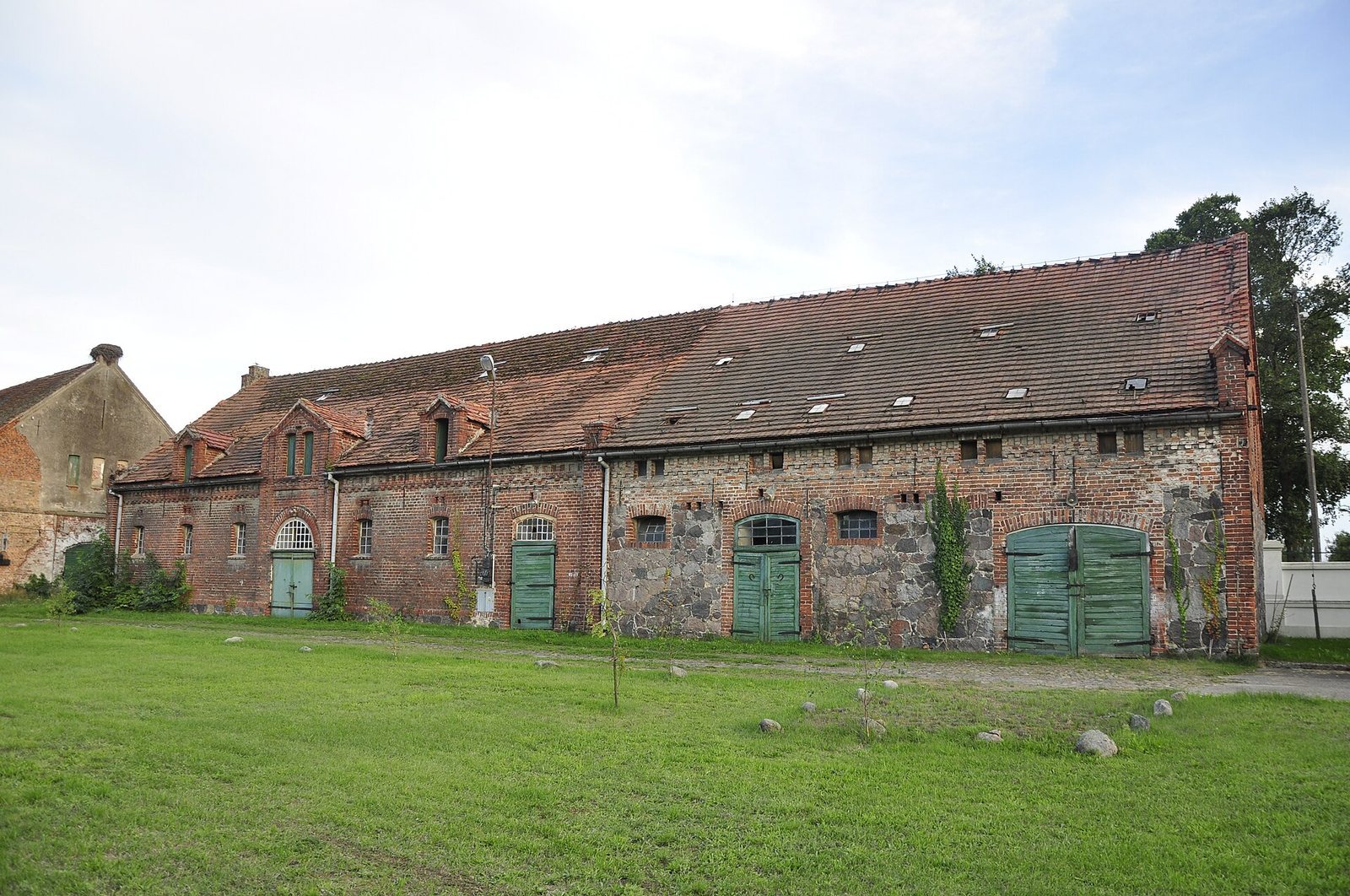
The farmyard includes stables, a former administrator’s house with a storage area, and a gate on the eastern side of the complex. Some of its buildings are in good condition and appear to be used as dwellings and garages. The former stables are unused and need partial repairs.
Church and Family Graves
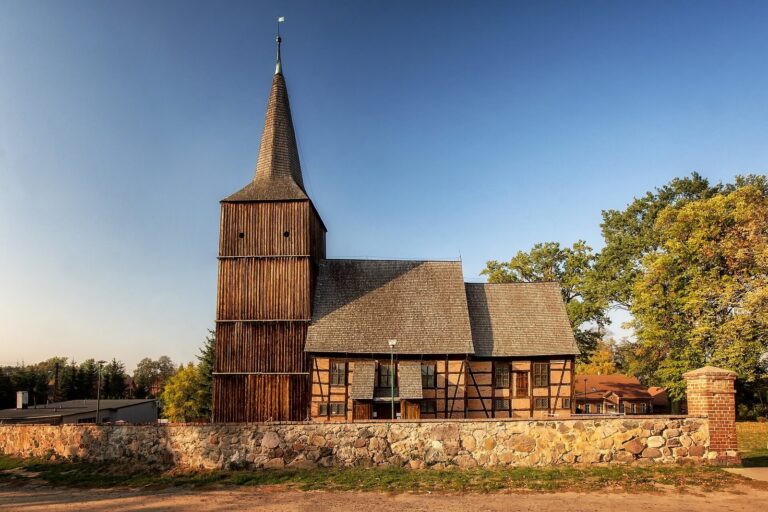
The church opposite the estate entrance was built in 1909, replacing a timber church dating to 1670. Its disused churchyard contains a few graves. Grave slabs for Siegesmund von Knobelsdorff and his wife are set into the church wall facing the estate.