San Nicolò di Bari: Parish and Mother Church of Roccella Valdemone
Site at a Glance
- Popularity
- Very Low
- Country
- Italy
- Primary era
- Early Modern
- Eras represented
- Early Modern
- Civilizations
- Kingdom of Sicily, Spanish
- Site type
- Religious
- Remains
- Church
On this page14 sections
History
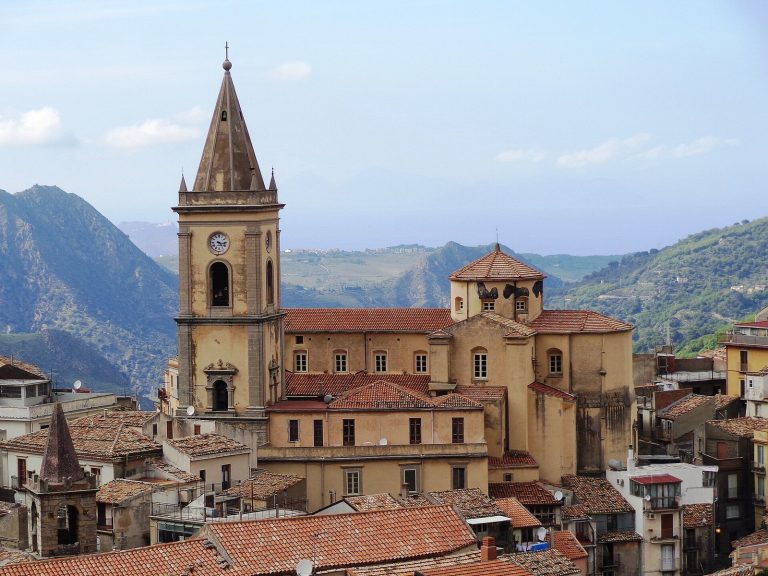
San Nicolò di Bari is the Catholic parish and mother church of Roccella Valdemone, Italy, and the town’s largest place of worship. Rebuilt in 1625, it combines Romanesque, Renaissance, and Baroque styles.
The monastery at Pillera
A predecessor religious house, the monastery of San Nicolò di Pillera, stood in the valley of the Pillera stream at San Niccolò Pass, about three kilometres from the present settlement. It had existed by 1112, though its beginnings may reach back to the Byzantine period, the history of the Eastern Roman Empire. The monastery belonged to a group of 38 under the Archimandry of the Most Holy Savior of Messina, a monastic jurisdiction led by an archimandrite. In 1175, Pope Alexander granted concessions to that mother monastery.
During Muslim rule in Sicily, local Christians paid the jizya, a tax imposed on certain non-Muslim communities, in order to practise their faith freely. A later church with the same dedication was established in the settlement, near its baronial castle.
Parish and ecclesiastical authority
In 1296, Damiano Spatafora, a soldier serving Frederick III of Aragon, the medieval king of Sicily, received the title of lord and baron of Roccella because of his financial resources. In 1302, Queen Eleanor of Anjou, queen consort of Sicily, ordered Roccella’s church to be incorporated into the archpriesthood of Castiglione. An archpriesthood is an ecclesiastical district administered by an archpriest.
After the Sicilian Queen’s Chamber, a royal institution associated with queens’ domains, ceased operating in 1537, Roccella’s archpriesthood came under the Bishop of Messina. During the reign of Charles V, who held the Spanish and imperial crowns, San Nicolò had the status of both parish and archpriest church. It also held precedence over the churches of Santa Maria dell’Udienza, the Carmine, San Sebastiano, Santa Maria dell’Itria, and San Michele. Today, the church belongs to the Archdiocese of Messina-Lipari-Santa Lucia del Mela and the Vicariate of Valle dell’Alcantara, an ecclesiastical district under the patronage of Mary as the Assumption.
Rebuilding and devotional life
The church in Roccella’s main square was rebuilt and brought into its present form in 1625. Its annual Feast of the Assumption, which commemorates the Christian belief that Mary was taken into heaven, is observed on 14 and 15 August. On 15 August, a statue of the Virgin and Child known as the Madonna dell’Udienza is carried through the town’s main streets to the Carmine church on a simple shoulder-borne processional litter called the û baiardu.
Remains
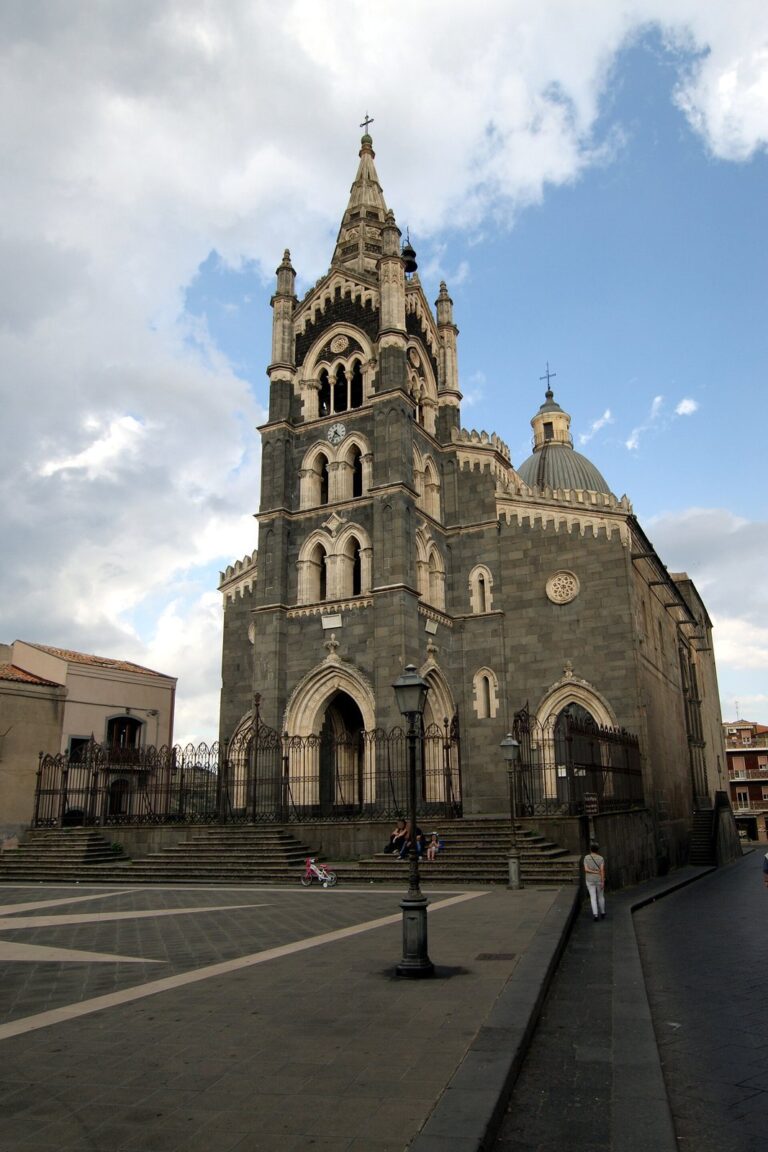
The church combines Romanesque, Renaissance, and Baroque forms. Its west façade faces Piazza Duomo, while the Romanesque interior has three aisles, a transept, or crosswise arm, and three rectangular apses, the sanctuary ends of the building.
Exterior
West façade
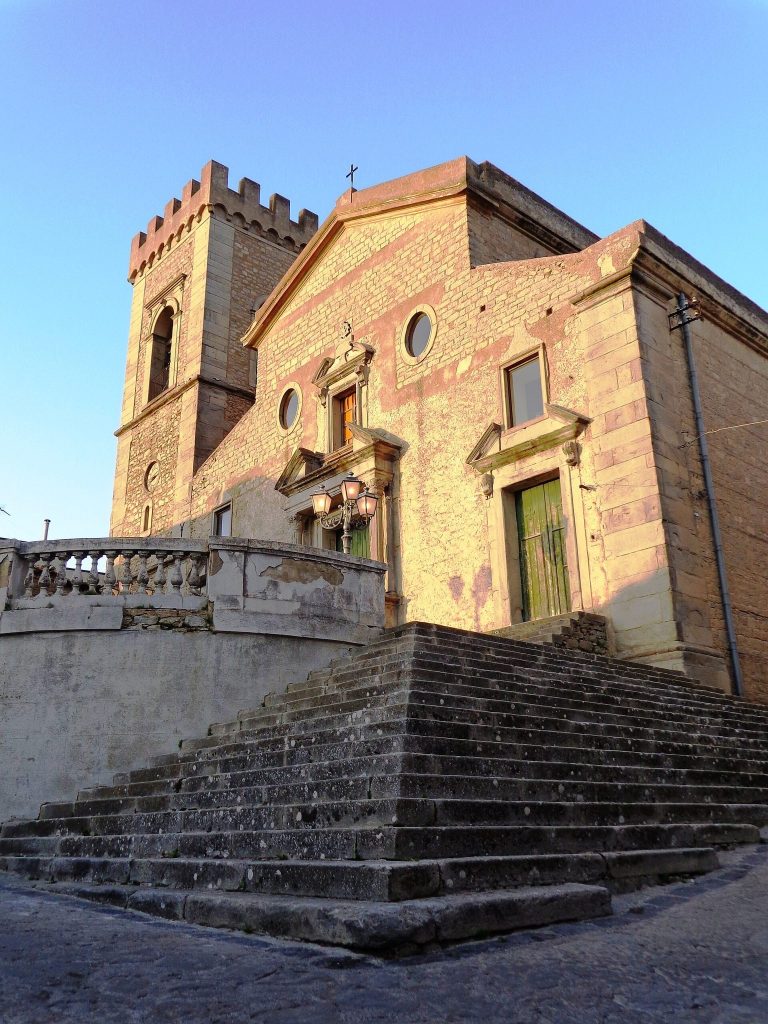
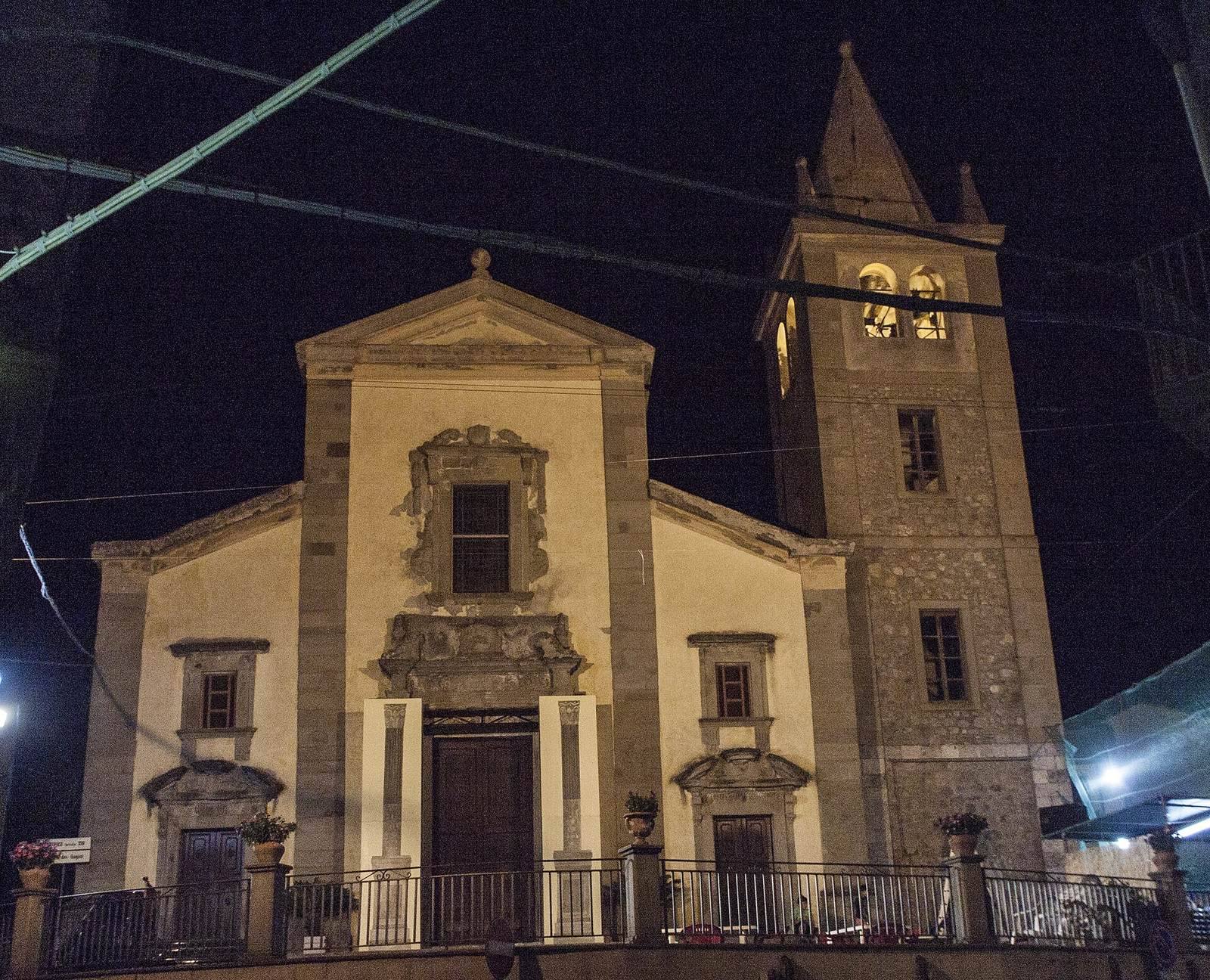
A small arched forecourt, enclosed by half-pilasters and railings, stands in front of the façade; an open area lies to its south. Four ashlar pilasters, shallow vertical wall projections made from finely cut stone, divide the front into three bays, or sections. Each bay has a portal below a window. The central bay rises to a triangular pediment with an ornament at its peak. The side portals have broken pediments, their upper lines interrupted by a smaller half-arch.
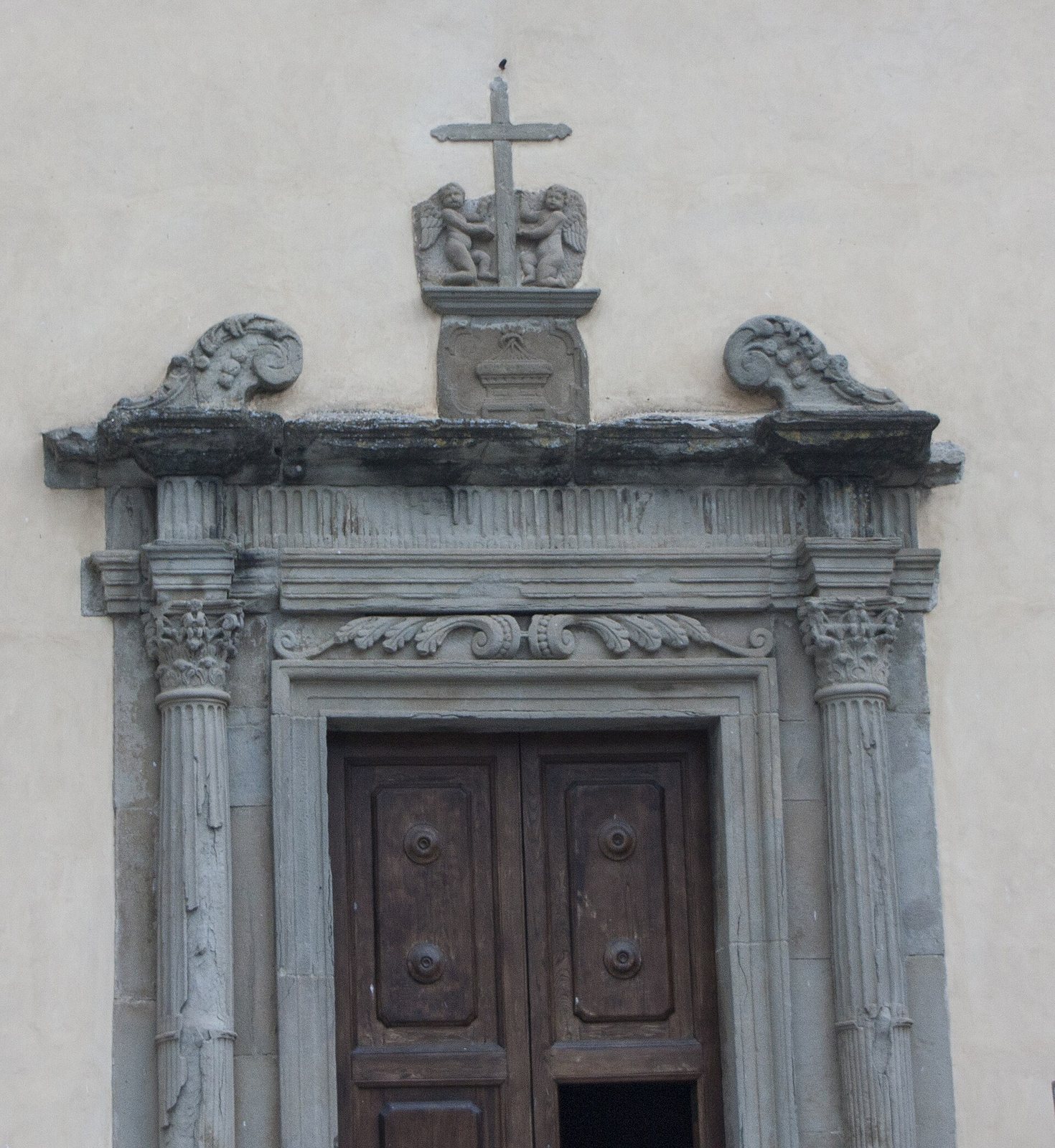
The central portal has a carved lintel with spiral ornaments and an upright decoration at its centre. Flanking columns stand on high stone bases; their lower shafts have interlaced patterns, while their upper sections are fluted. The window above has an ornamented frame with further spiral details.
Bell tower
The tower has outward-bulging pilasters and ashlar blocks at its corners. Its three stone levels have windows on the front, and the upper bell chamber has paired windows on all four sides. A clock face on the third level points south. Above it, an eight-sided spire rises with small pinnacles at its corners. The design imitates the Norman style, recalling the period of Norman rule in Sicily.
Interior
Columns and sanctuary
Twelve columns divide the interior. Eight are sandstone shafts cut from single blocks, while the other four are assembled from stacked limestone pieces. Their Corinthian capitals, the decorated tops of the columns, carry acanthus leaves and allegorical figures. Rounded sandstone arches rest on the columns, with similar arches marking the side spaces of the bays. A wooden ceiling covers the church. The presbytery, the area around the main altar, is raised; a crucifix occupies the arch over the apse, and an organ is also present.
Paintings, doorway, and pulpit
Eight canvases by unidentified artists, dating from the seventeenth and eighteenth centuries, decorate the side aisles. Their subjects include Saint Paschal Baylon, the Glory of the Society of Jesus, Saints Cosmas and Damian, the Guardian Angel, the Annunciation, the Souls in Purgatory, and the Virgin Mary as Gate of Heaven. The first four bays of the left aisle contain, in order, paintings of Saint Paschal Baylon, the Jesuit scene, Saints Cosmas and Damian, and the Guardian Angel; the fifth bay has an opening. On the right, paintings occupy the first and fifth bays, while the second shows Mary as Gate of Heaven and the fourth the Souls in Purgatory. A painting of the Baptism of Jesus in the River Jordan is in the right arm of the transept.
A small, finely decorated portal in the third bay of the right aisle opens south onto Piazza Duomo. A carved wooden pulpit with a small domed canopy stands at the fourth bay.
Chapels
Chapel of the Most Holy Sacrament
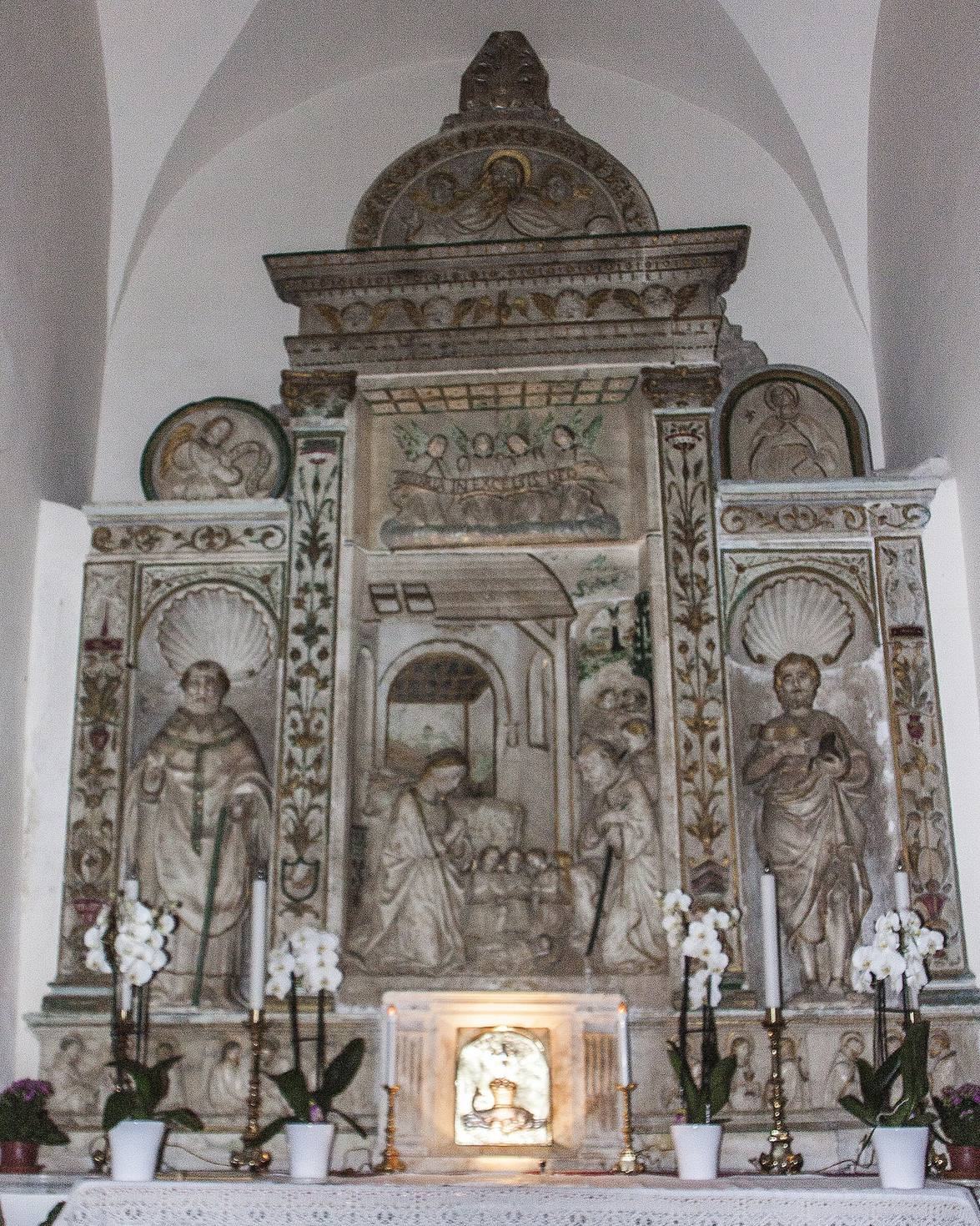
Assigned to the small apse on the left, the Chapel of the Most Holy Sacrament contains a marble altarpiece showing the Nativity. Giovanni Michele Spadafora, baron of Roccella, commissioned it from Antonello Gagini in 1526. Gagini completed most of the work; his son Giacomo finished it with Vincenzo’s collaboration. The altarpiece was delivered to Roccella in April 1540.
A panel of adoring angels sits above the Nativity and includes a Latin inscription. Statues of Saint John the Baptist and Saint Nicholas of Bari flank the work. Two medallions show separate moments of the Annunciation, with the angel delivering the message and the Virgin receiving it. Above them, a semicircular panel depicts God the Father among adoring angels; the lower section of the altarpiece presents the twelve apostles. At its centre is a ciborium, a structure associated with the Eucharist, surrounded by ornament, cherubs, and bands of candelabra reliefs.
Chapel of the Holy Cross
Also assigned to the small apse on the left, the Chapel of the Holy Cross contains a seventeenth-century wooden crucifix mounted on a replacement cross made of oak.