Rocca di Asolo: A Medieval Fortress in Italy
Site at a Glance
- Popularity
- Medium
- Country
- Italy
- Primary era
- Medieval
- Eras represented
- Medieval
- Civilizations
- Venetian
- Site type
- Military
- Remains
- Fort
On this page9 sections
History
Early settlement and medieval authority
Rocca di Asolo is a medieval fortress on Monte Ricco in Asolo, Italy, dated to the late twelfth or early thirteenth century. Tradition places an earlier defensive complex on the site in pre-Roman times. Asolo declined during the ninth and tenth centuries, and its diocese was probably abandoned. In 969, Emperor Otto the Great joined the Diocese of Asolo to that of Treviso.
Amid the Hungarian invasions of 899–901, a fortified settlement on Monte Ricco, known as Braida or Breda, probably grew in importance. An imperial privilege issued by Otto III in 991 described the settlement as having its own autonomy, nearly in contrast to Asolo. Other documents refer to a steward, an official managing a lord’s affairs, who served the Tempesta family of Noale. In 1223, the Commune of Treviso transferred the fortress to the Bishop of Treviso after acquiring it through the Tempesta inheritance.
Control of the fortress and town
The fortress subsequently passed among the da Romano family, the Commune of Treviso, the Republic of Venice, and the da Carrara family, a noble house associated with Padua. Around 1320, Asolo placed itself under Venetian authority, beginning to reverse the Rocca’s long dominance over the town below. Venice established a podesteria at Asolo in 1339, an administrative district governed by an appointed civic magistrate. The fortress came definitively under Venetian rule in 1388.
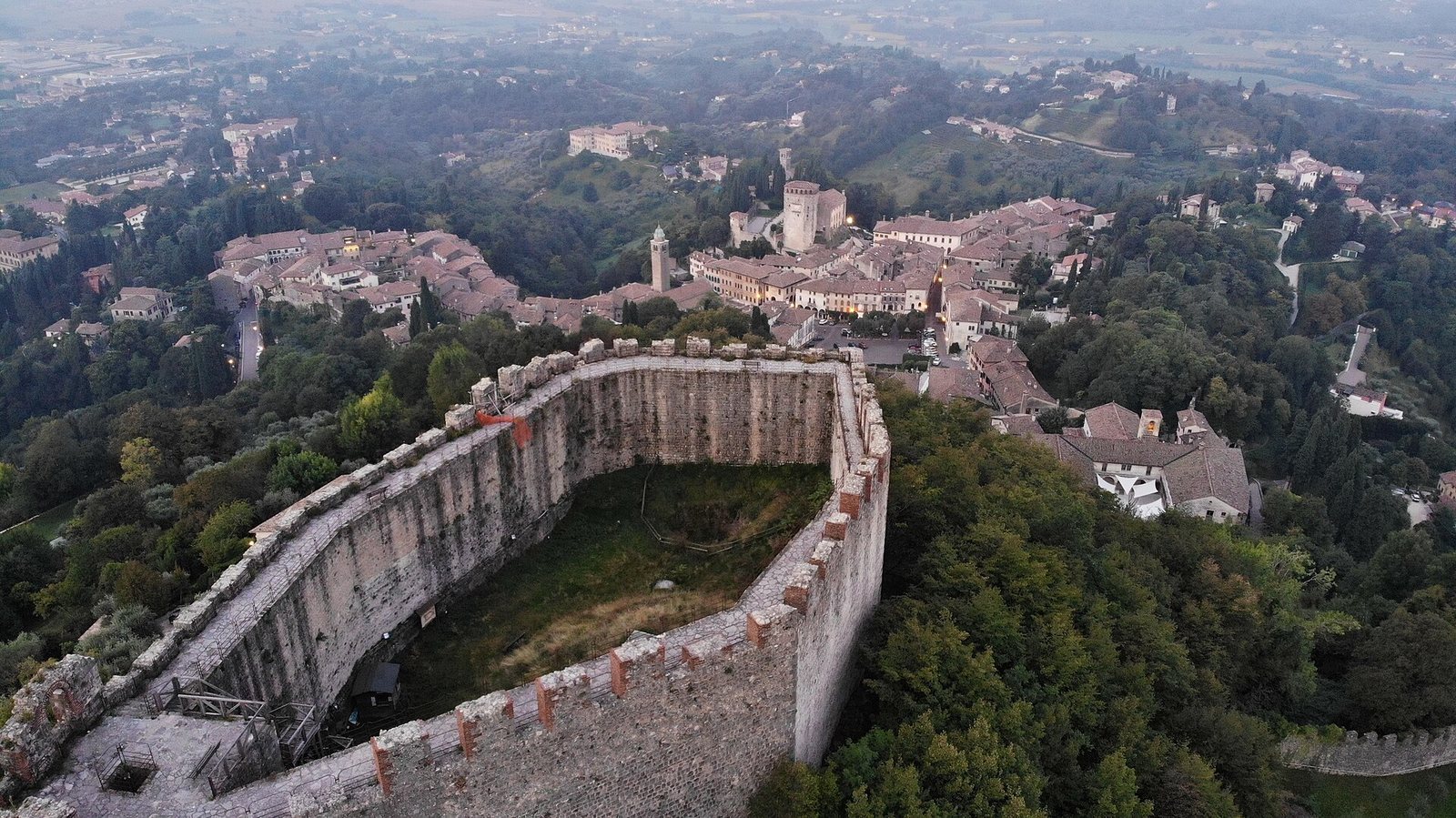
The da Carrara began building walls to link the fortress with lower Asolo. After their defeat, Venice completed the defensive circuit, joining the Rocca and the town in a single fortified system. The fortress’s last military episode took place in 1510. As its strategic importance waned, it served other purposes, including as a lazaretto, a place for isolating people during epidemics, amid recurring plagues in the sixteenth century. Venice disarmed the fortress in 1650 and tried to sell it to private buyers.
Archaeology and restoration
Excavations took place from 1984 to 1991, and the latest restoration followed in 1994.
Remains
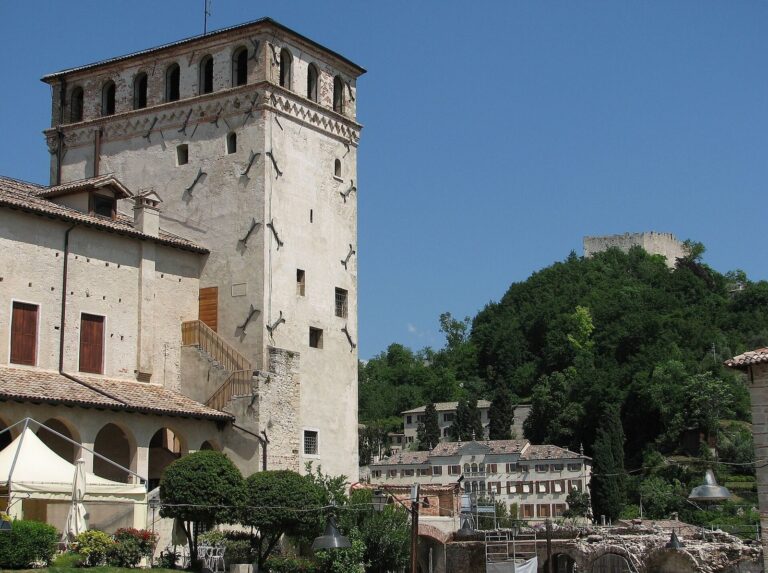
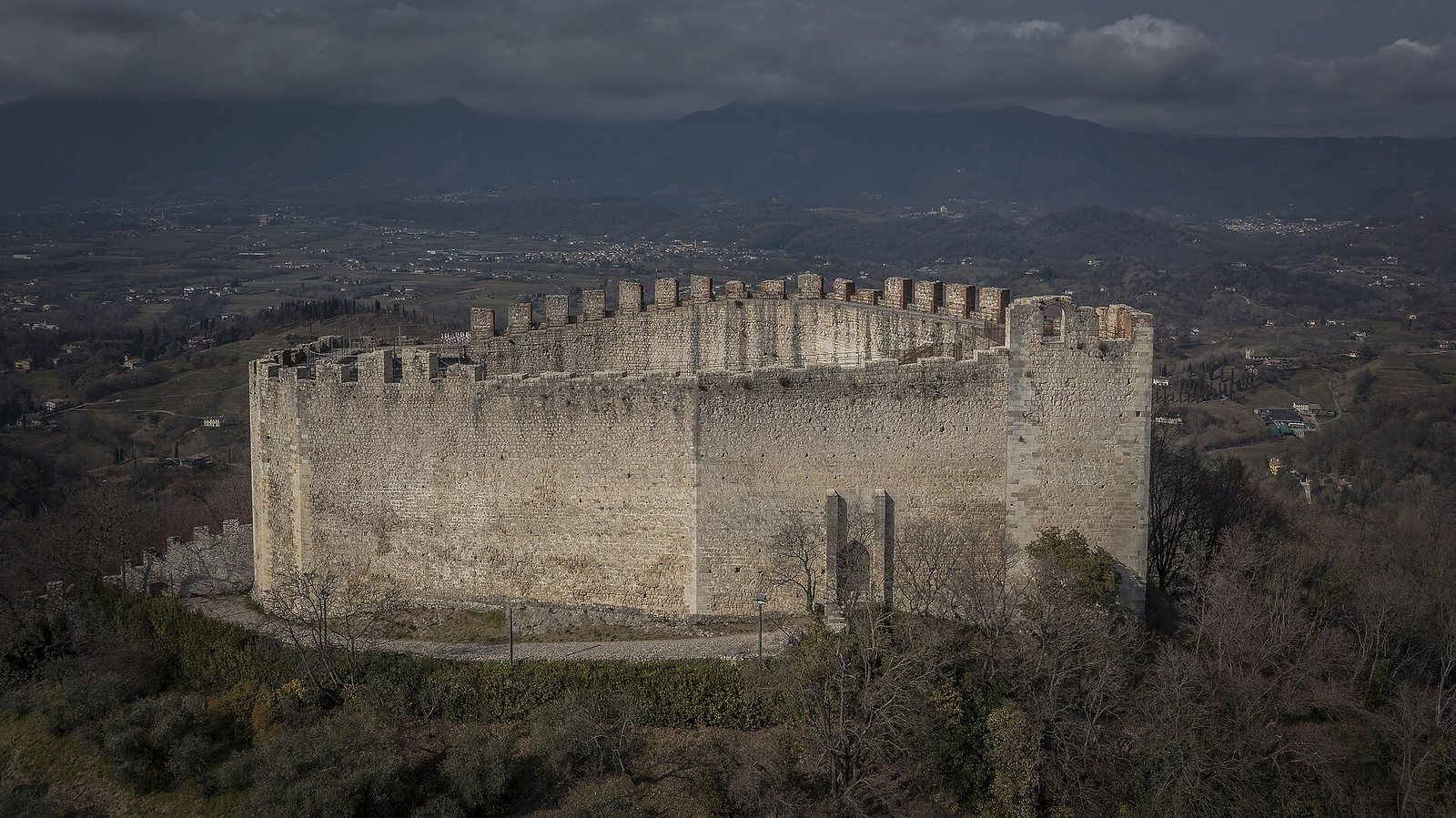
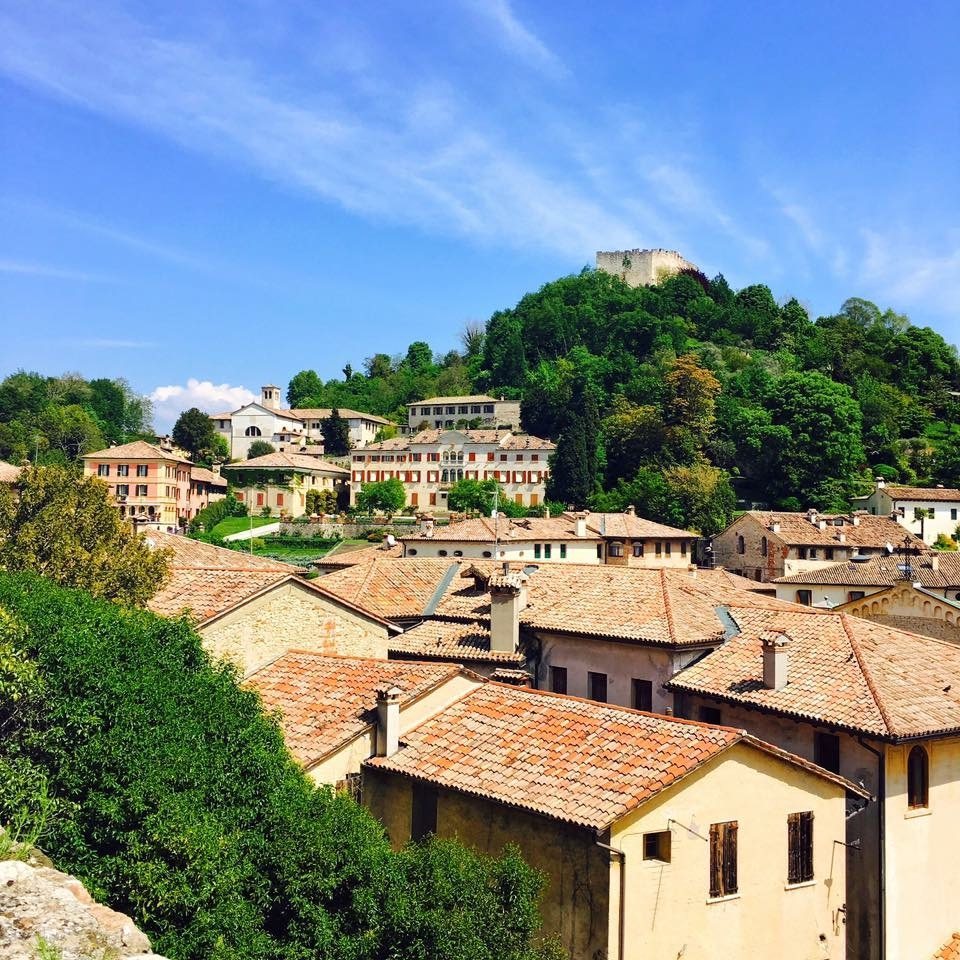
The Rocca stands on Monte Ricco above Asolo. Its nine-sided plan has sides of unequal length, and its high, thick walls form the fortress enclosure. A single doorway, formerly linked to the lower castle, provided entry to the upper stronghold within the town’s defensive system.
Excavated structures and features
Place of worship and burials
Excavations uncovered a small place of worship dated to the second half of the sixth century. It had an apse, a rounded end to the building, and later burials were found at the site. Mosaic decoration from the apse area is now held in Asolo’s civic museum.
Domestic and metalworking remains
Remains from a later phase include domestic structures with simple hearths and two crucibles, heat-resistant vessels used to melt metal.
Well and cistern
A Venetian-style wellhead and the cistern beneath it date to the fourteenth century.