Church of Saints Gervasius and Protasius: A Parish Church in Cisterna d’Asti
Site at a Glance
- Popularity
- Very Low
- Country
- Italy
- Primary era
- Early Modern
- Eras represented
- Early Modern, Modern
- Civilizations
- Duchy of Savoy, Italian
- Site type
- Religious
- Remains
- Church
On this page10 sections
History
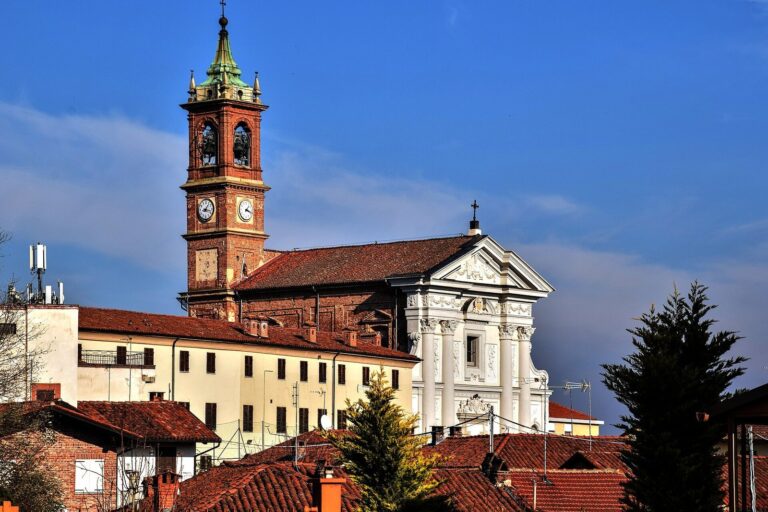
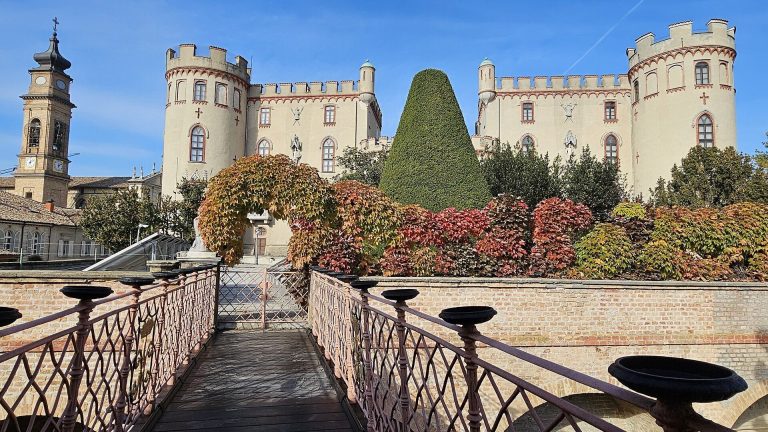
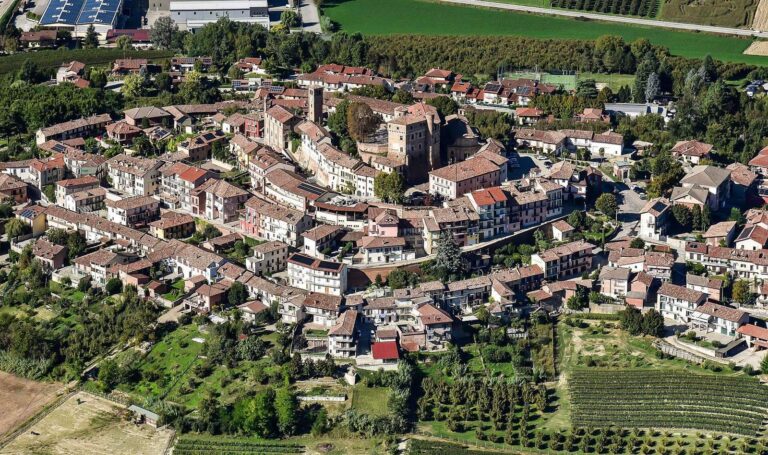
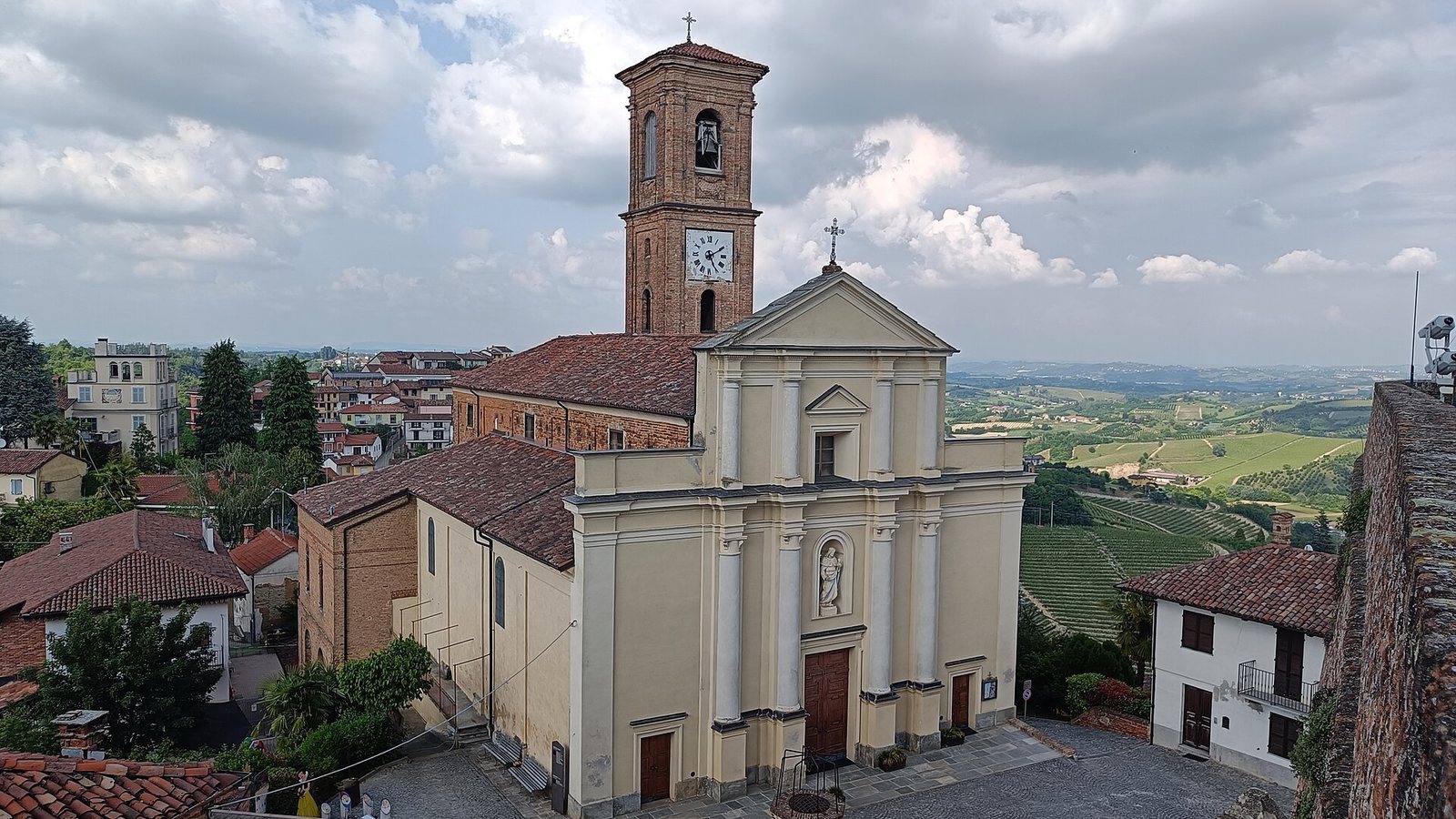
The Church of Saints Gervasius and Protasius is a Roman Catholic parish church in Cisterna d’Asti, Italy, dedicated to the early Christian martyrs Gervasius and Protasius, who are associated with Milan. Its present Neoclassical appearance dates to 1880, when the bell tower and interior decorations were added. The church’s origins as a castle oratory connect it to a medieval fortress that held strategic importance in Piedmont for centuries.
Castle oratory and reconstruction
The church began as the castle’s oratory, a small place of worship, and served that role until the thirteenth century. The historic Oratory of the Holy Spirit had existed by about the middle of the sixteenth century, although its precise construction date is unknown.
After a plague epidemic, the community resumed public works, including the church’s reconstruction. Work formally began on 18 March 1632, but rebuilding from the foundations got underway in earnest in 1673. Three brick kilns were built to supply the project, and Prince Dal Pozzo made a major contribution by paying for the main altar.
Parish church
In 1697 the church became the parish church because the older chapel dedicated to the same saints stood outside the settlement and had become inconvenient for local residents. On 4 June 1780, Bishop Paolo Maurizio Caissotti formally dedicated the rebuilt church for worship. A plaque beside the presbytery, the area around the main altar, commemorates the ceremony.
Remains
Layout and exterior
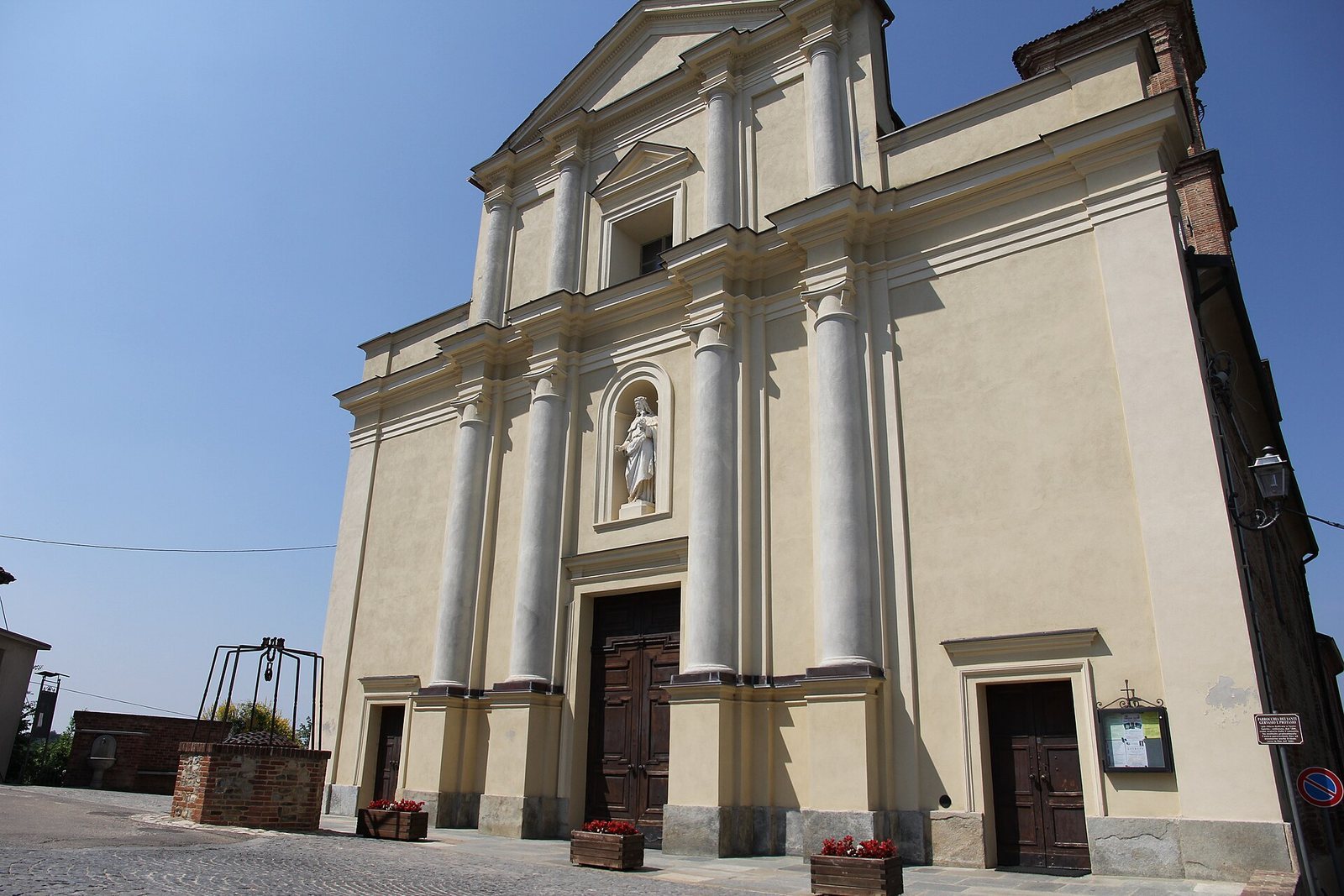
The church stands opposite the ramp leading to the medieval castle. Although outside the castle walls, it formed part of the fortified complex, alongside houses built along the perimeter walls. A plan from 1581 shows an earlier rectangular church with two naves, the main divisions of the interior: a central nave and one to its left. The sacristy, a room for clergy and church furnishings, stood at the end of the left nave. Buttresses on the earlier building may reflect Romanesque traditions. The present interior has three naves and four side altars. On the exterior, pilasters, or flat columns attached to a wall, divide the simple façade into two levels. A white Carrara-marble statue of Christ the King adorns it and was blessed in 1933.
Interior and furnishings
Altars and burial chambers
The four side altars have distinct dedications. On the right are the altar of St Fidelis and, farther in, the altar of the Madonna of the Rosary. The latter is made of gilded wood and includes an eighteenth-century carved and decorated statue by an artist from Turin. On the left are the altar of Our Lady of Sorrows and a marble altar of the Sacred Heart of Jesus. A pastoral visitation in 1743 listed seven altars in total, including the main altar and altars dedicated to the Rosary, prayers for the dead, the Holy Trinity, St Anthony Abbot, St Margaret of Cortona, and Blessed Fidelis of Sigmaringen. At that time the central nave also contained three burial chambers.
Frescoes
Turin painter Luigi Morgari (1857–1935) and Asti painter Giovanni Lamberti (1869–1956) painted frescoes on the central nave vault and the presbytery walls. A large work above the presbytery depicts the Church. The side walls show St Peter and St Paul on one side and the church’s patron saints on the other. Morgari’s ceiling fresco centers on the Eucharist, the central sacrament of Catholic worship, displayed in a gilded monstrance, a vessel for displaying the consecrated host, and surrounded by angels. Richly dressed kneeling women may represent saints or peoples already evangelized. Opposite them, figures with unfamiliar features may represent distant peoples viewed at the time as non-Christian or as converting; some kneel while others raise their arms. A woman dressed in blue and white may personify Faith or the Church. She holds a cross and scepter, with censers, crowns, and books at her feet. The fresco’s late nineteenth- or early twentieth-century style draws on Baroque and Neoclassical influences. Its dramatic arrangement and upward light convey solemnity. It may reflect renewed religious fervor, perhaps connected with missionary activity.
Choir altarpiece and paintings
Above the choir in the apse, the curved end of the church, a seventeenth-century altarpiece, an artwork placed behind or above an altar, shows Gervasius and Protasius receiving the crown of martyrdom. St Secondo appears with them, while the patron, Prince Giacomo Maurizio Dal Pozzo, is depicted below. Other paintings in the side naves include an eighteenth-century image of the Madonna of Good Counsel with St Margaret of Cortona, a 1913 oil painting of St Fidelis of Sigmaringen, and a canvas from the first half of the eighteenth century showing the Madonna of the Rosary with the Child, St Dominic, and St Rose of Lima.
Stained glass and organ
Four stained-glass windows made by the Janni firm of Turin depict St Nicholas, St Pius V, and St Francis of Assisi. Above the entrance, the gallery holds an organ made by Giuseppe Gandini of Varese, enclosed in a finely crafted wooden case.