Ca’ Cappello: A Venetian Palace Remodeled in the Renaissance
Site at a Glance
- Popularity
- Low
- Country
- Italy
- Primary era
- Early Modern
- Eras represented
- Medieval, Early Modern, Modern
- Civilizations
- Italian, Venetian
- Site type
- Domestic
- Remains
- Elite Residence
On this page12 sections
History
Ca’ Cappello is a palace in San Polo, Venice, Italy, where the Grand Canal meets the smaller canals Rio di San Polo and Rio delle Erbe. It began as a Gothic palace and underwent extensive remodelling in the Renaissance style during the sixteenth century. Its story is linked to Venetian official Antonio Cappello and, centuries later, to British diplomat and archaeologist Austen Henry Layard.
Antonio Cappello and the Renaissance remodelling
Cappello, who owned the palace, was a procurator of Saint Mark, a senior official of the Venetian Republic. He had supervised major projects in Venice, including the start of work on the Rialto Bridge, the Marciana Library, and the Golden Staircase in the Doge’s Palace.
Layard’s residence
With help from historian Rawdon Brown and his wife, Enid, Layard acquired Ca’ Cappello sometime between 1874 and 1878. He moved his collection of Italian Renaissance paintings into the palace in 1875 and undertook extensive restoration and redecoration. After his diplomatic career as British ambassador in Istanbul, which ended amid serious disagreements with William Gladstone and the Ottoman sultan, Layard made the palace his home. He died of cancer in London in 1894.
After Layard’s death, Lady Layard donated his Italian painting collection to the National Gallery in London. Under the couple, the palace had become a gathering place for British and international cultural, political, and diplomatic circles, especially in the late nineteenth and early twentieth centuries.
The salon and later ownership
Enid Layard continued to receive guests after her husband’s death. In 1911, Kaiser Wilhelm II and Lord Kitchener held private talks at the palace. Enid died in 1912, and the outbreak of the First World War brought Ca’ Cappello’s years as a prominent social and literary salon to an end.
The Carnelutti family acquired the palace afterward. Jurist Francesco Carnelutti lived there until his death in 1965, and Ca’ Foscari University of Venice took possession in 1967. The university remains its owner, and the building houses the university’s section for the Near and Middle East and the Caucasus within its Department of Asian and Mediterranean African Studies.
In 2013, a proposed exchange involving Ca’ Cappello and two other university buildings drew criticism over the possibility of hotel conversion, the lack of a public auction, and concerns about heritage law. Rector Carlo Carraro defended the proposal as a financial measure, but his forecast of serious budget consequences over the next six years did not come to pass.
Remains
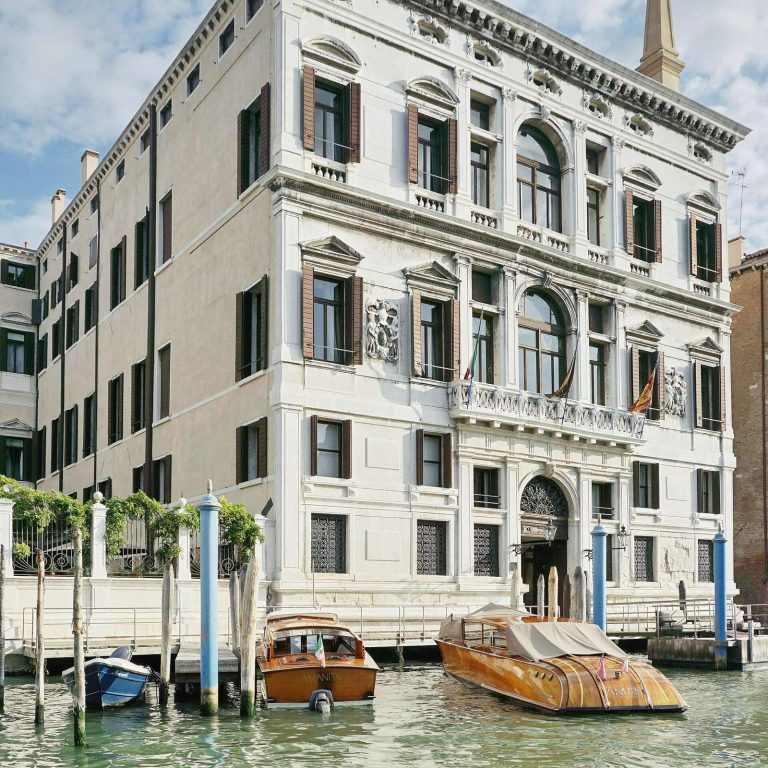
The three-storey palace presents a separate façade to each of the three waterways. A small courtyard occupies the center, while a second courtyard beside the Grand Canal loggia, an open-sided gallery, and entrance portico was probably enclosed in the nineteenth century. The building retains its Gothic origins alongside features shaped by the later Renaissance remodelling.
Waterfront façades
Grand Canal façade
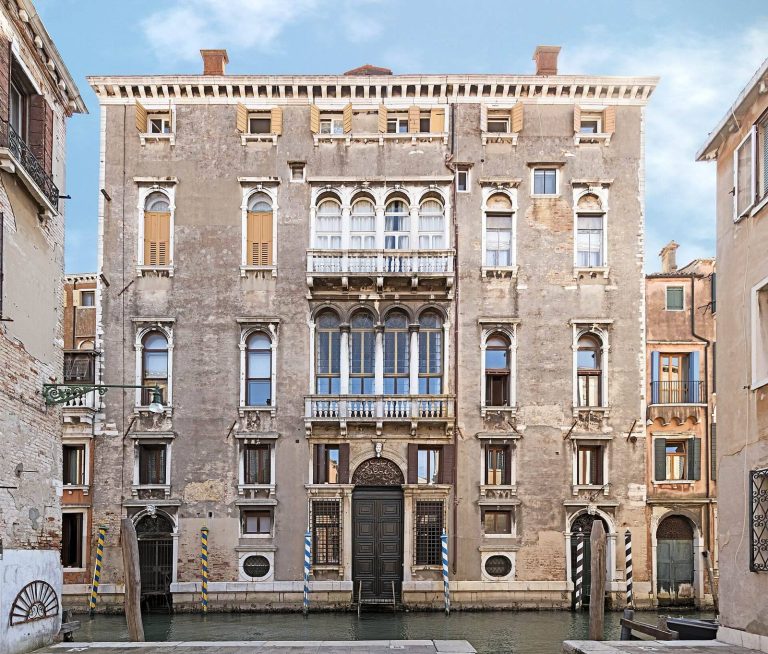
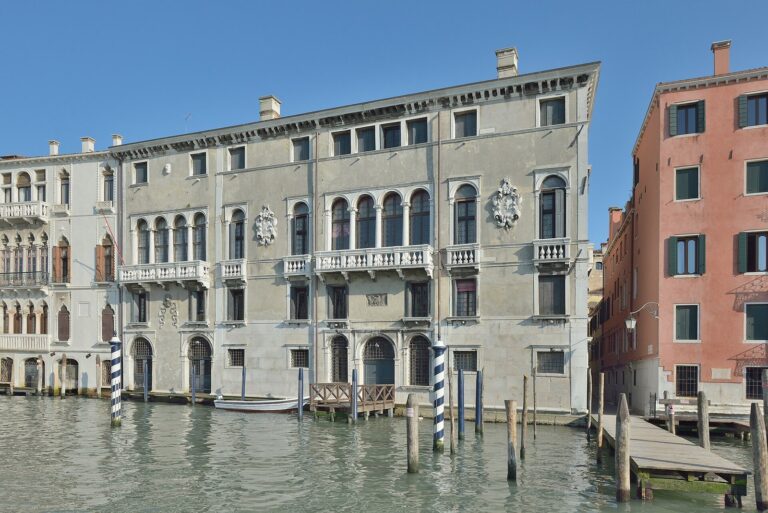
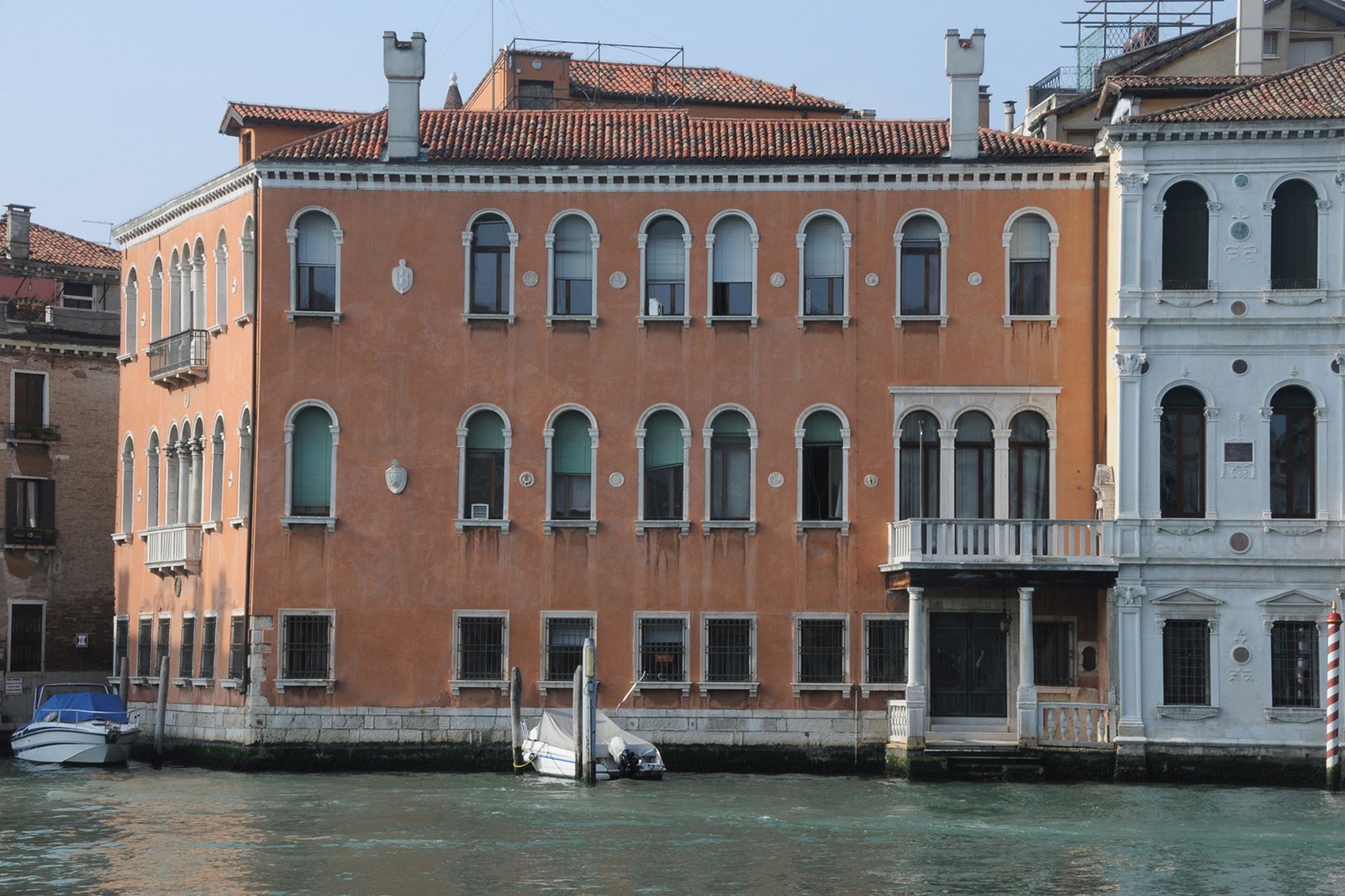
The broad Grand Canal façade is restrained in appearance and has 22 windows, each with a single opening. The upper floors include groups of nine and eight arched windows. On the first principal floor, the palace’s main formal reception level, a simply framed window with three vertical openings leads onto a terrace beside Palazzo Grimani Marcello. The façade also has a canal entrance with a staircase and two freestanding columns, as well as a three-arched loggia with Gothic capitals, the decorated tops of columns, carved with foliage.
Rio di San Polo façade
This façade has two balconied windows, each divided into three vertical openings, with elaborate capitals. A pair of single-opening windows flanks each of them. The carved heraldic shields and round ornamental reliefs are nineteenth-century imitations; the reliefs follow a Romanesque manner, drawing on a medieval European style.
Rio delle Erbe façade
The façade facing Rio delle Erbe is plain, with little architectural ornament.
Painted decoration and furnishings
Exterior frescoes
Antonio Cappello commissioned Giovanni Battista Zelotti and Paolo Veronese to paint the palace exterior. The artists had received other work from him through their connection with architect Michele Sanmicheli. Their frescoes, wall paintings made on wet plaster, included Ceres, associated with agriculture; Pomona, linked to fruit and orchards; Pallas, connected with wisdom and warfare; Diana, associated with hunting; and other deities.
A fire in 1627 badly damaged the painted cycle. Some figures could still be seen in the seventeenth century, and Zelotti’s deities remained visible in 1760; the paintings had vanished by the nineteenth century. Venetian art writers differed over the arrangement of the works. Carlo Ridolfi described Veronese’s figures with Zelotti’s above them, while Anton Maria Zanetti placed Veronese’s paintings on the second principal floor.
Layard’s interiors and art
During the Layards’ time, red, yellow, and green fabrics covered the interiors, while Spanish silks hung at the windows and draped over balconies. Assyrian reliefs, carved panels from Nineveh in the ancient Mesopotamian Assyrian empire, and a Hellenistic funerary relief from Samos were set into the wall beside the staircase. The Hellenistic period followed Alexander the Great’s conquests and spread Greek culture. After the reliefs went to the Museo Correr in 1892, floral paintings by Neapolitan artist Francesco Lavagna took their place. The Layard collection also included a portrait of the Ottoman ruler Mehmed II by Venetian painter Gentile Bellini.