Menelaion: Mycenaean Settlement and Hero Sanctuary in Greece
Site at a Glance
- Popularity
- High
- Country
- Greece
- Primary era
- Classical
- Eras represented
- Bronze Age, Iron Age, Classical
- Civilizations
- Ancient Greek, Mycenaean
- Site type
- Religious
- Remains
- Sanctuary
On this page12 sections
History
The Menelaion is a hilltop archaeological complex about 5 km southeast of Sparta, Greece, where a major Mycenaean settlement preceded a sanctuary for Menelaus and Helen. Occupation reaches back to the Middle Helladic period, and the area was known in archaic times as Therapne.
Bronze Age occupation and early Sparta
The Mycenaean settlement belonged to the Bronze Age culture of mainland Greece. Its elites wore gold jewelry and traded across the Mediterranean, and their refined way of life differed from that of later Classical Sparta.
After the Bronze Age collapse, early Spartans established their city in the unfortified valley below rather than rebuilding on the ridge. The Mycenaean complex at Therapne may have been the place Homer imagined as the wealthy kingdom of Menelaus and Helen.
Hero cult and sanctuary
By about the eighth century BCE, a hero cult had formed on the hill. Menelaus and Helen, the royal couple of Greek epic tradition associated with Sparta and the Trojan War, were revered as divine ancestors. A hero cult gave ritual honors to a figure believed to hold power after death. Worship may first have centered on an altar within an enclosure.
The cult helped legitimize Spartan political control of the region, and Menelaus and Helen had a particular cult in Laconia in historical times. The sanctuary developed through successive building phases, including a Classical-period rebuilding.
Excavation and interpretation
Ludwig Ross recognized the site as a hero shrine in 1833 and excavated there the following year. The British School at Athens began the first systematic excavation in 1909, led by John Percival Droop, M. S. Thompson, and Alan Wace. Richard MacGillivray Dawkins directed further work in 1910.
About six decades later, Hector Catling investigated the sequence between the Mycenaean remains and the later cult. From the buildings’ arrangement and Bronze Age finds, he proposed that they had served as administrative centers and anticipated the large palaces at Pylos, Mycenae, and Tiryns. Inscriptions from the site supported the identification of the shrine as a place of worship for Menelaus and Helen. During excavations at Therapne in the 1980s, Richard Catling considered some offerings associated with the Mycenaean remains possible dedications to a Bronze Age hero or heroine.
Remains
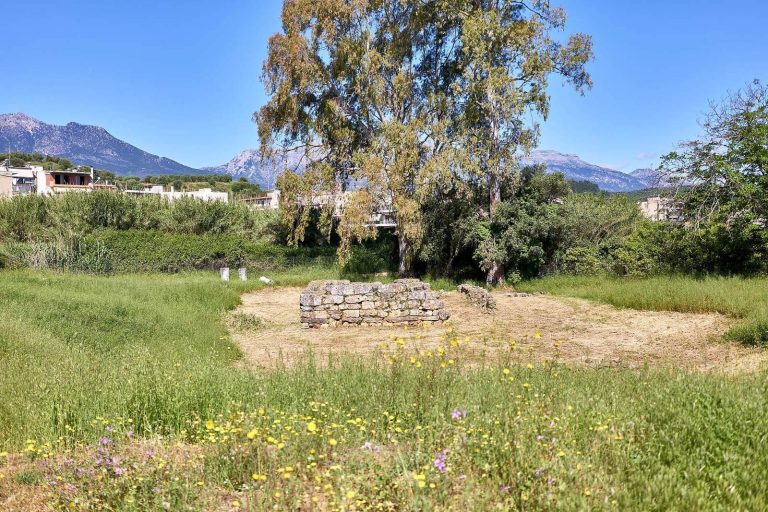
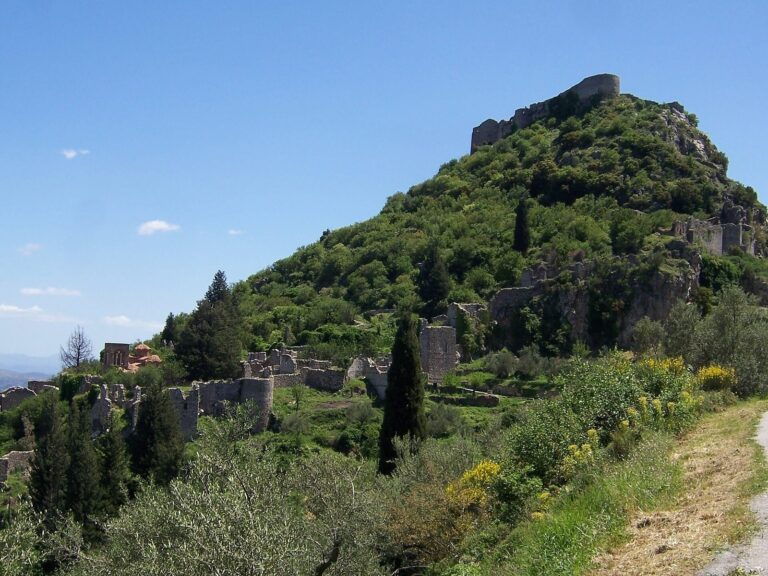
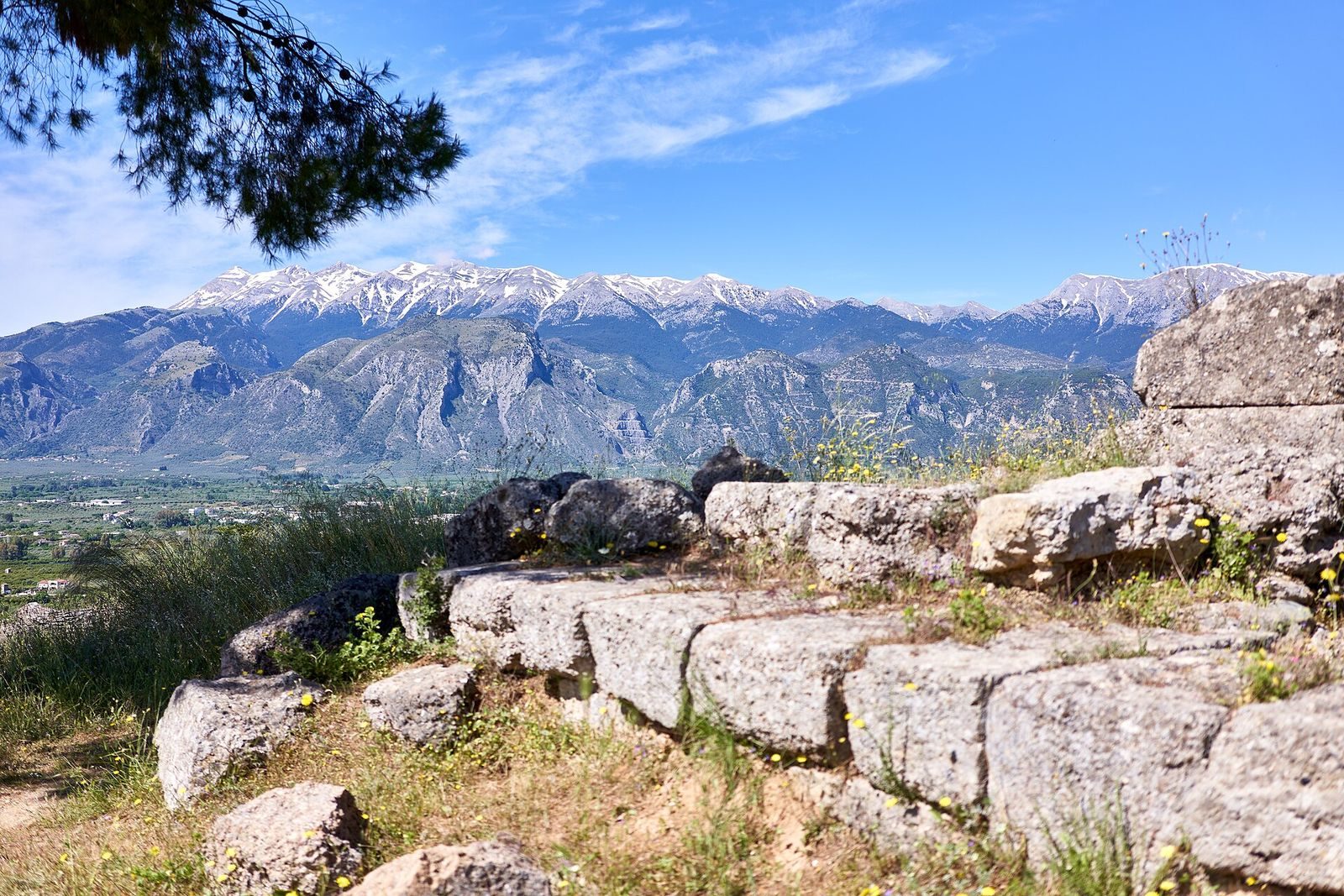
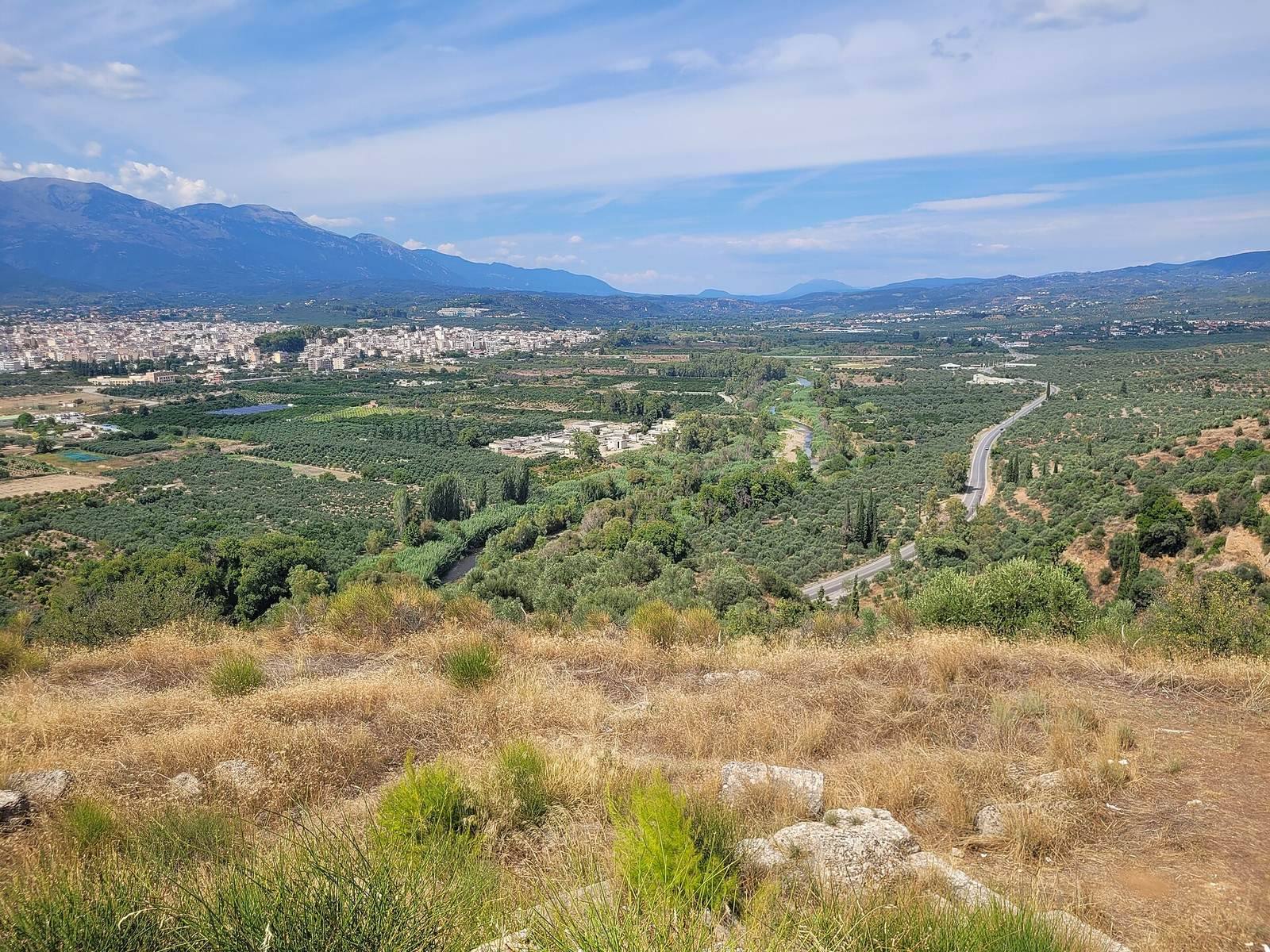
The complex spreads across the Northern Hill, Menelaion, Profitis Ilias, and Aetos, on a ridge outside the ancient city wall and overlooking the Eurotas plain. The valley’s alluvial ground, mild climate, and surrounding low hills form the setting. The remains include prehistoric deposits, ridge-top buildings made from unfired brick and painted plaster, and later limestone sanctuary structures.
Ridge setting and Bronze Age remains
Deposits across the hills
The Northern Hill yielded a small number of Middle Helladic finds and traces of prehistoric settlement in disturbed deposits associated with Late Helladic pottery. Late Helladic is the archaeological sequence for the later Bronze Age in mainland Greece; IIIB and IIB2 are subdivisions within it. On Aetos, south of the Menelaion ridge, a surface layer contained Late Helladic IIB2 pottery.
Mycenaean ridge buildings
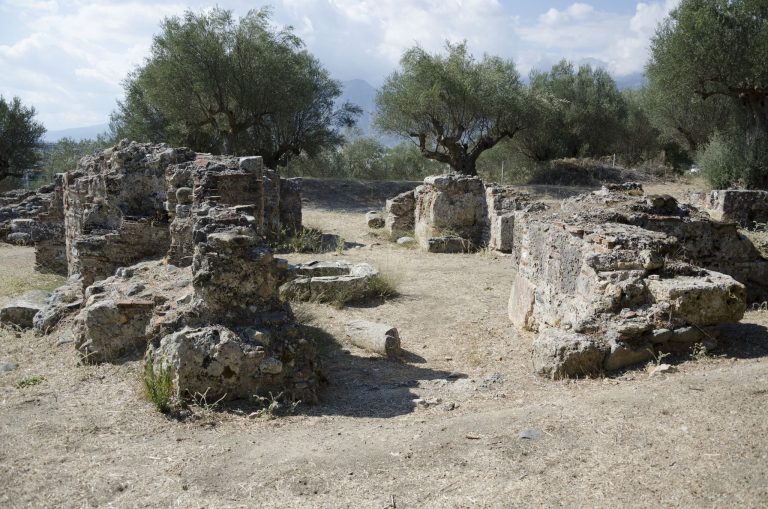
Building 1 stood on the eastern summit of the Menelaion ridge and dates to about 1450 BCE. It faced south, had two storeys, and comprised three parallel units, with a large principal hall in the center. Its unfired-brick walls were coated with painted plaster. The building was destroyed soon after its construction, possibly by an earthquake. Building 2 was erected about 10 m away on a different alignment and was abandoned during Late Helladic IIIA1. Building 3 marks renewed occupation at the end of that phase.
Sanctuary terrace and offerings
South terrace
On the southern side of Menelaion Hill, excavations revealed disturbed layers containing offerings from the Sub-Geometric and Early Archaic periods. The terrace also preserves walls and a floor belonging to a structure dated to the late thirteenth and twelfth centuries BCE.
Sanctuary buildings
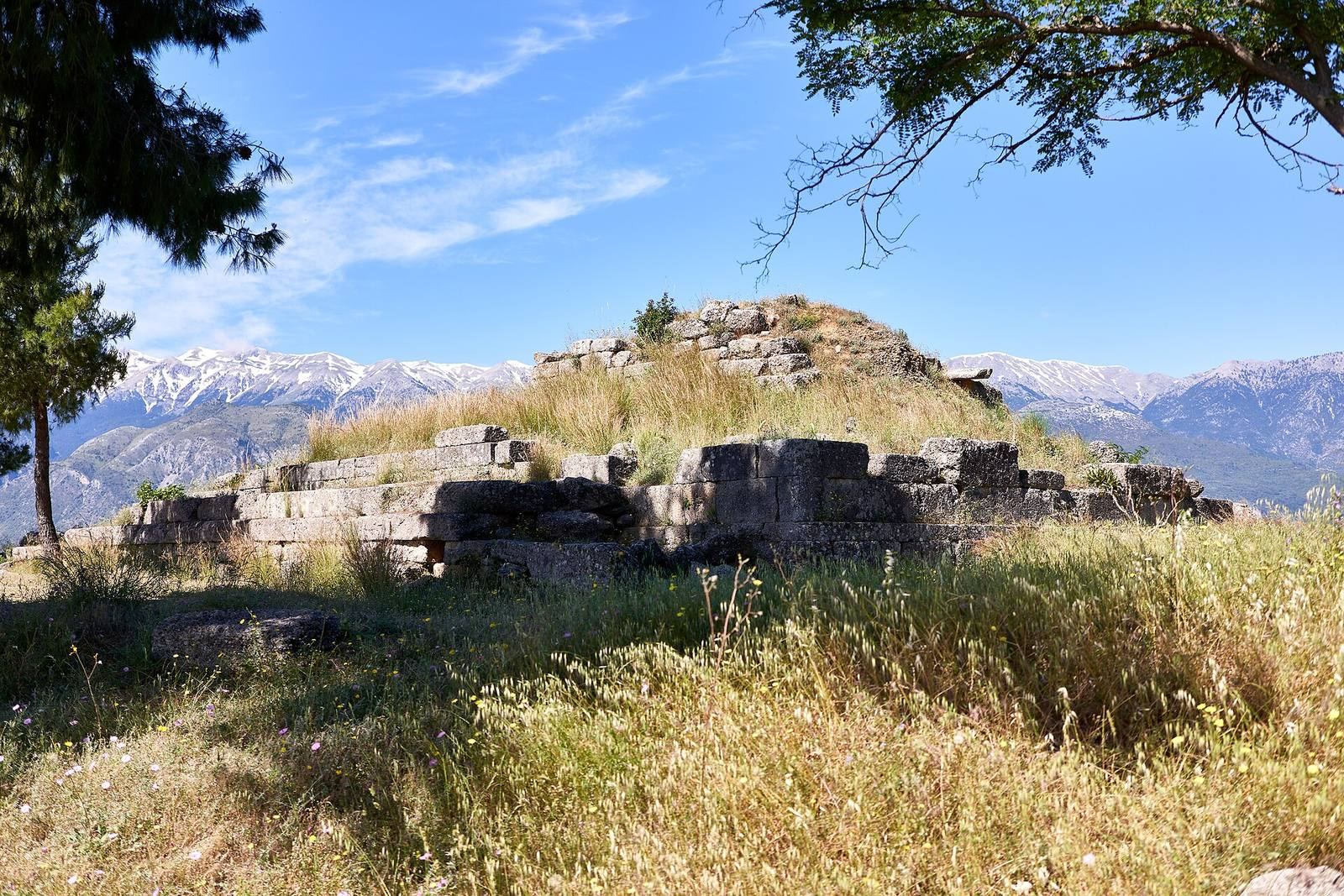
Scattered limestone blocks represent the sanctuary’s earliest architectural phase. A small monumental limestone temple followed around the end of the seventh or beginning of the sixth century BCE. It was demolished in the fifth century BCE, when a Classical sanctuary was built over the earlier structure. The small temple survives only at foundation level, and the visible remains are ruins. It may be the building identified as a storehouse during the 1909 excavation.
Votive offerings and inscriptions
Finds include lead offering figurines of Laconian type and a seventh-century BCE bronze aryballos, a small vessel for oil or perfume. Its inscription, written in alternating lines that reverse direction, records Deinis’ dedication to Helen, wife of Menelaus. A second bronze object of uncertain function, dated to 570 BCE and found in the same trench, also bears a dedication to Helen. Catling later found a limestone stele, an upright inscribed stone, at the bottom of a cistern. Dating to the early fifth century BCE, it once supported a bronze statuette and carries Euthykrenes’ dedication to Menelaus.