Church of the Visitation in Biały Kościół: A Rebuilt Romanesque Church
Site at a Glance
- Popularity
- Very Low
- Country
- Poland
- Primary era
- Medieval
- Eras represented
- Medieval
- Civilizations
- Unclassified
- Site type
- Religious
- Remains
- Church
On this page8 sections
History
The Church of the Visitation in Biały Kościół is a church in Poland. Its foundation is linked to Bolko II, Duke of Münsterberg, who established it to relieve the parish church in Strzelin. A separate tradition dates its construction to 1256 and places it at a former pagan worship site. The surrounding area was probably settled during the episcopate of Thomas I, bishop of Wrocław. The church is first mentioned in 1264, when it was called a “new church.”
Medieval foundations and monastic ties
In 1301, the church became part of the Poor Clares’ monastery at Strzelin, a community of women in the Franciscan tradition. It also collected tithes from lands belonging to the Cistercian monastery at Henryków, a monastic order. These included dues from the Field of Dalibor, which were passed on to Henryków.
Reformation and confessional change
During the Reformation, monastic property and the church’s patronage rights passed to the dukes of Brieg. Vinzentius Hoffmann was the last Catholic priest before the change in religious use. In 1551–1552, Pankratius Freudenberg of Münsterberg became the first Lutheran preacher; Lutheranism is a Protestant tradition that emerged during the Reformation. From then until 1945, the church served the German Protestant congregation as the parish church of St. Michael.
A fire in 1643 was followed by rebuilding. From 1675, the Duchy of Brieg pursued the restoration of Catholic practice. After the pastor died in 1698, the Jesuits, a Catholic religious order, sent Father Schneider to the church. The Convention of Altranstädt, an agreement restoring Protestant churches in Silesia, returned it to Protestant use in 1709. Magister Herzog then became pastor.
Parish life and later rebuilding
After the First Silesian War of 1740–1742, fought between Prussia and the Habsburg monarchy over Silesia, patronage passed to the Prussian royal house and later to the Breslau administrative district. Between 1766 and 1780, parish registers recorded 955 baptisms, 789 burials and 214 marriages. A fire in 1768 was followed by rebuilding, and Johann Christian Kundmann was pastor in 1783. By the mid-19th century, the Evangelical parish also served communities in the Strzelin and Münsterberg districts, with some settlements visited by its clergy.
Overcrowding led to a major building campaign in 1827, and the churchyard was enlarged the following year. During the Second World War, the German Wehrmacht, the armed forces of Nazi Germany, used the church to store munitions. In 1945, German soldiers blew up the store, destroying the church. It was reconstructed between 1984 and 1990 in a form based on its Romanesque predecessor. Today it is a Roman Catholic filial church, subordinate to a principal parish, dedicated to the Visitation of the Blessed Virgin Mary, the Christian episode in which Mary visits Elizabeth.
Remains
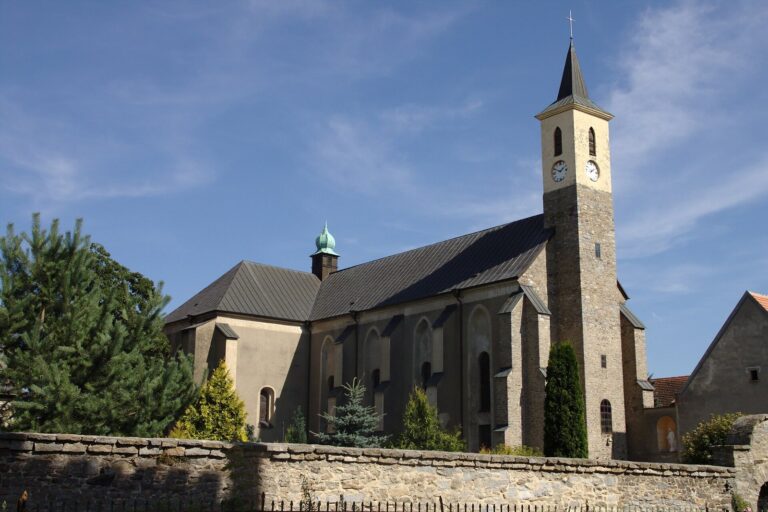
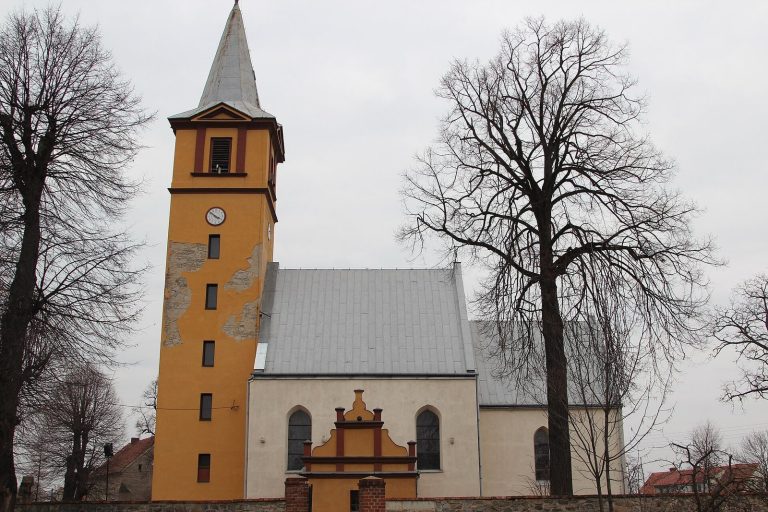
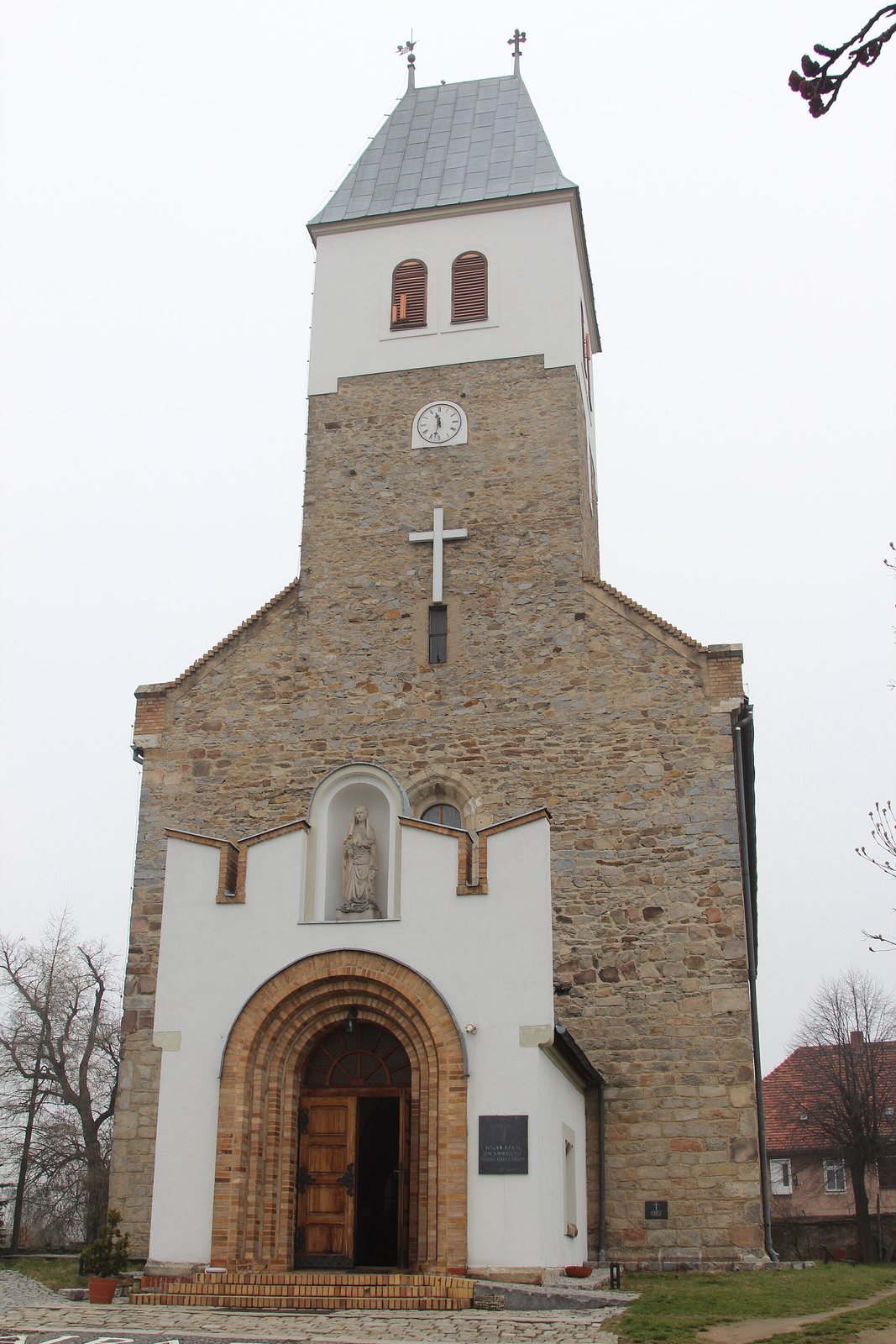
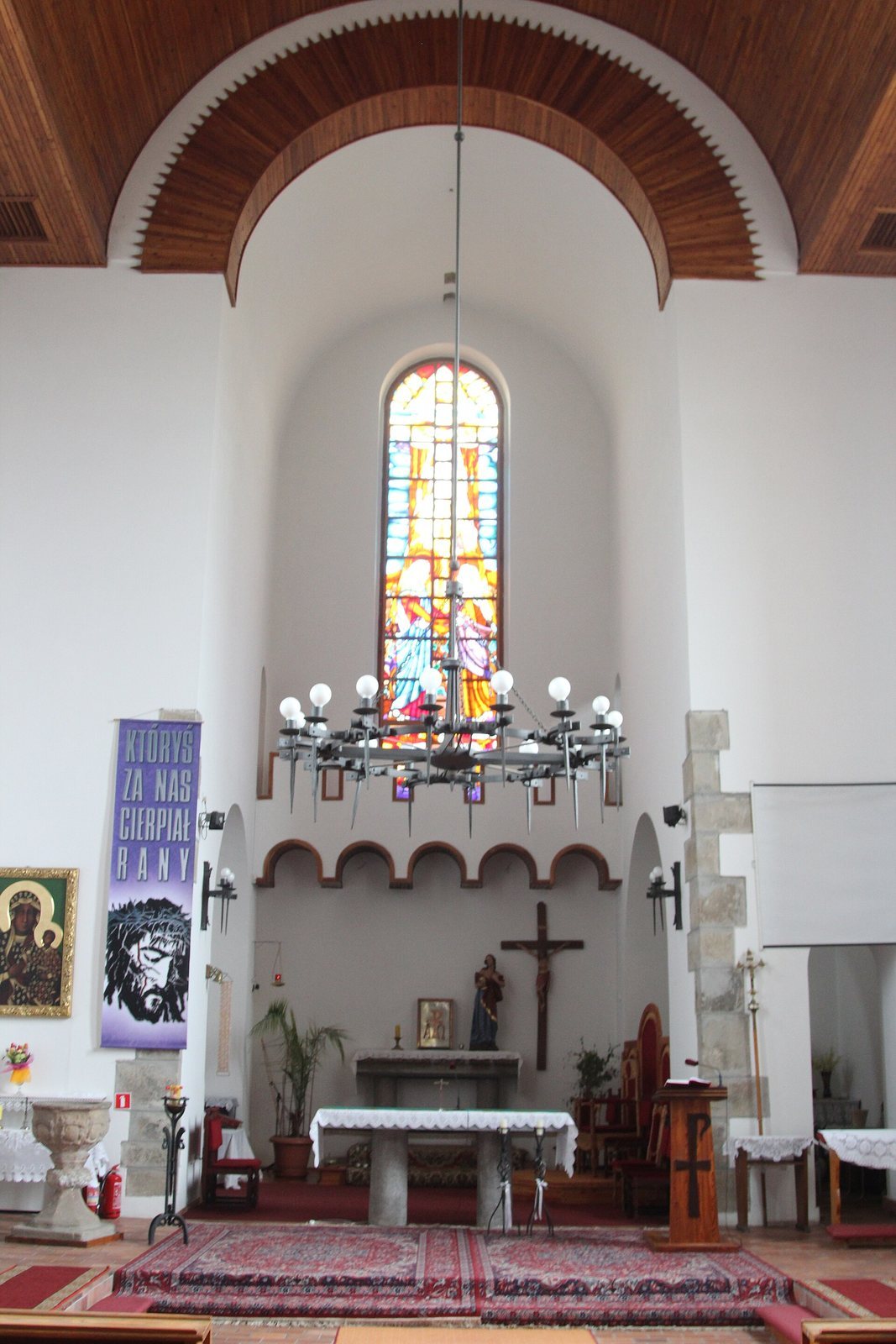
The reconstructed church has a nave with a semicylindrical barrel vault, an eastern presbytery, the area around the altar reserved for clergy, and a rectangular tower at the west end. Its design follows the Romanesque, or medieval, form of the earlier church, while fragments of that predecessor were incorporated into the building.
Romanesque fabric and earlier furnishings
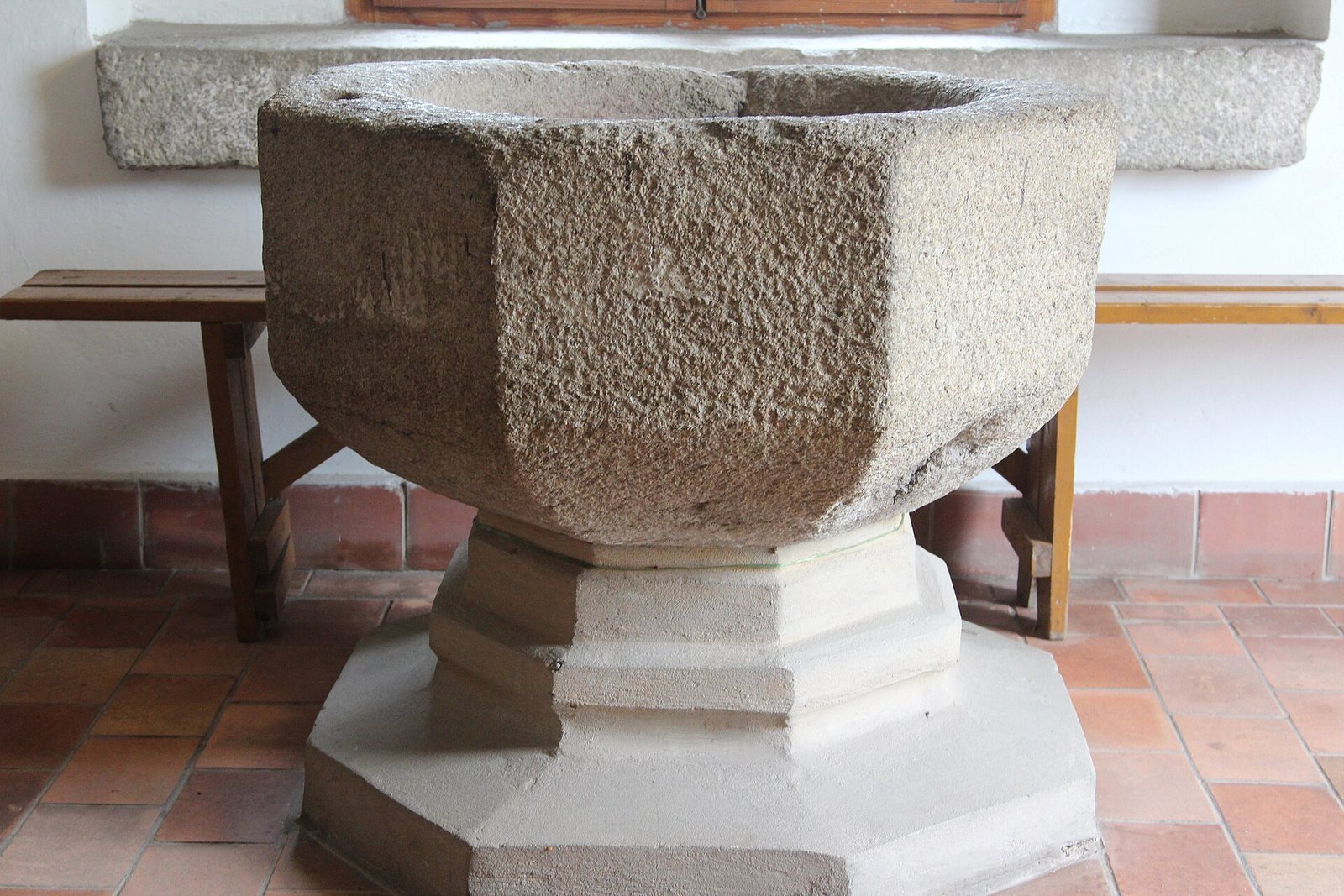
Surviving remains of the earlier church include sections of the nave walls, fragments of a tympanum, the panel above a doorway, parts of the entrance portal and the base of an interior gallery. A medieval baptismal font from the church’s earlier furnishings also survives.
Nineteenth-century alterations
During the 1827 building campaign, the presbytery was enlarged, galleries were added, the tower was raised and the decoration was changed to a classical style. The roof covering was replaced with zinc.
Cemetery remains
Tombstones dating from the 17th and 18th centuries are located along the cemetery wall.