Miliutin Mansion, Moscow: A Historic Estate and Silk Manufactory
Site at a Glance
- Popularity
- Medium
- Country
- Russia
- Primary era
- Early Modern
- Eras represented
- Early Modern
- Civilizations
- Russian
- Site type
- Domestic
- Remains
- House
On this page10 sections
History
Foundation and growth
The Miliutin mansion is a historic estate in Moscow, Russia, founded in 1714 when Alexei Yakovlevich Milyutin, a court stoker serving Peter I, the Russian ruler also known as Peter the Great, built a house and factory in what was then Kazenny Lane. By the late 18th century, the factory had become Moscow’s oldest and largest silk manufactory, employing more than 350 people.
Alexei’s younger brother, Andrei Yakovlevich Milyutin, helped develop the business and inherited the property after Alexei died. Andrei’s sons, Alexei and Mikhail, later received the estate. As the family expanded its enterprise, Kazenny Lane came to be called Milyutinsky Lane. Milyutin descendants retained the property until 1828.
The estate divided in 1829
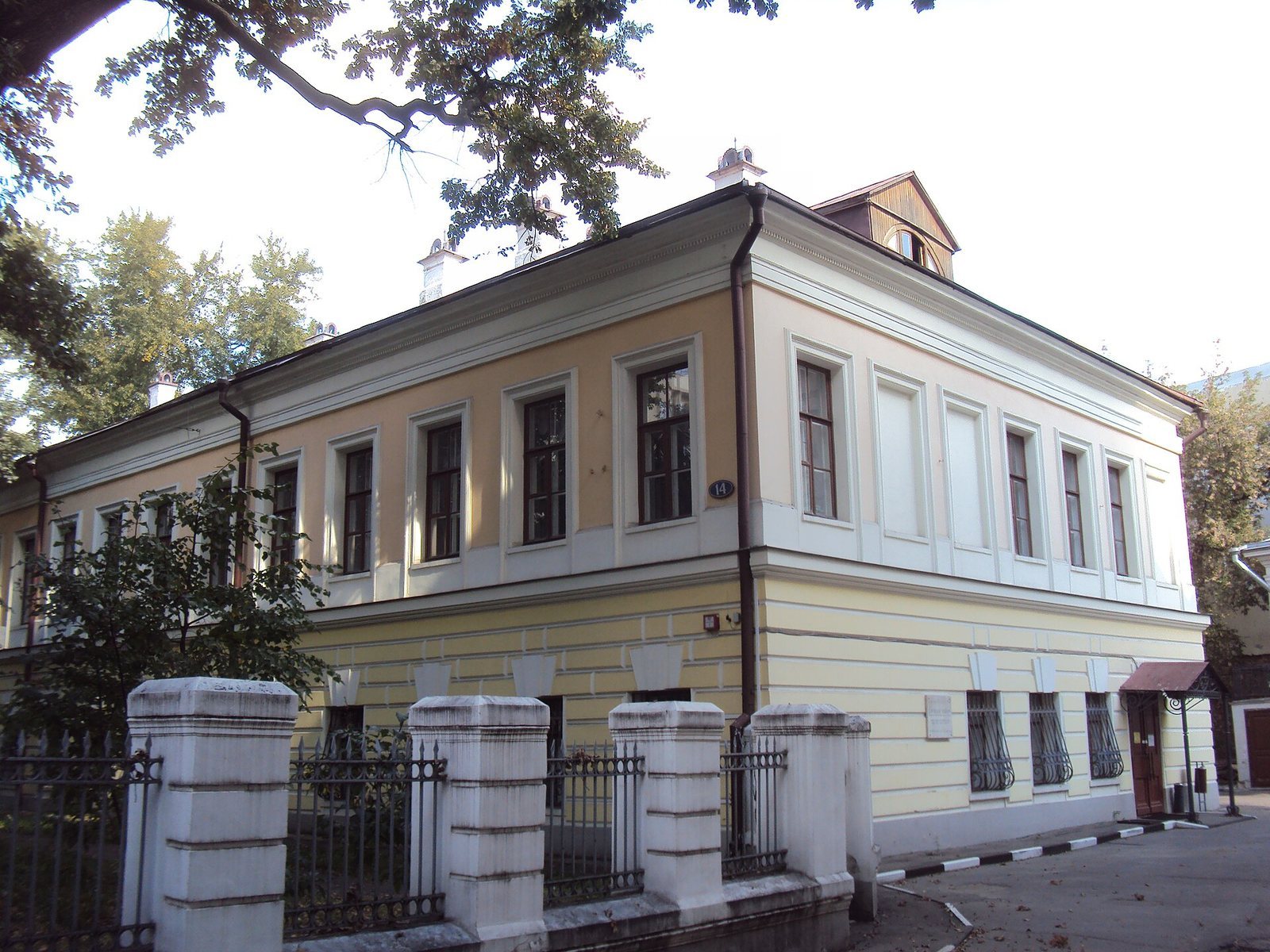
In 1829, the estate was split into two portions and sold separately. The property at no. 14, formerly Alexei Milyutin’s house, was bought by M. F. Sekretareva, who arranged repairs. She sold it in 1835 to the Kherodinov family, whose head was a colonel. The family rented rooms, including to historian and literary scholar Pyotr Bartenev, publisher of the historical journal Russian Archive.
Yakov Kuzmich Bryusov and his wife also lived at no. 14. Their son Valery, a poet and an early founder of Russian Symbolism, was born there in 1873. Symbolism used symbolic images to suggest spiritual or emotional meanings. Merchant Ferdinand Leontievich Fulda bought the property in 1882 and established a firm dealing in paints and related supplies, chemicals, and metal products.
No. 16 had different owners from 1829 until 1912. Its first purchaser was Major P. F. Mitkov, whose brother Mikhail had taken part in the War of 1812 and the Decembrist revolt of 1825 against imperial rule. From 1834 to 1837, Alexander Pushkin’s relatives, the Solntsevs, lived in the main house, and the poet visited them. In 1837, after Pushkin’s death, his father received news of it at the house from Yevgeny Baratynsky, a prominent Romantic-era poet.
Theatre and heritage protection
From 1912 to 1915, the street-side building at no. 16 housed the cabaret theatre The Bat, bringing the property wider recognition. Its performers included Russian singers Fyodor Chaliapin and Sobinov, and actors Kachalov and Varlamov. The English writer H. G. Wells, known for his science fiction, visited on January 21, 1914. Actors from the Moscow Art Theatre, including K. N. Elanskaya, I. Ya. Sudakov, and I. M. Raevsky, lived in the house.
The no. 16 property is a federal-level cultural heritage site. In November 2017, its principal house and residential wings were registered as a regional heritage ensemble. A restoration project was approved in 2010, and preservation work was ordered in 2014, but work had not begun by 2017.
Remains
The estate developed from a small wooden building that was later rebuilt in stone, with further buildings added as nearby plots were acquired. The two separately sold portions, nos. 14 and 16, retain different parts of the former complex.
No. 14
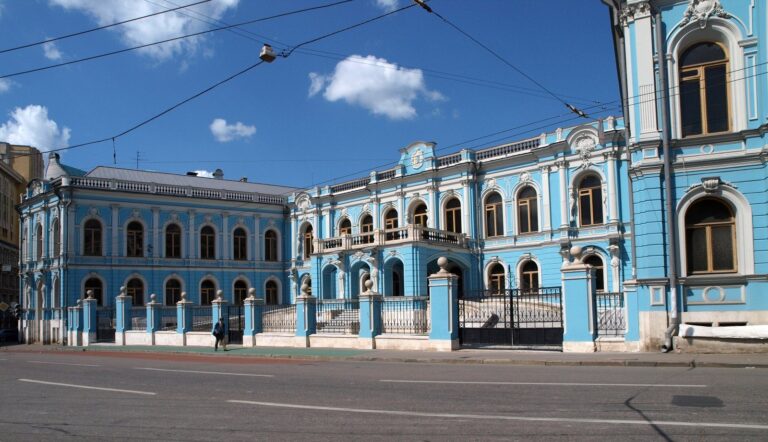
The former principal house at no. 14 has Empire-style exterior decoration. A fence runs along the street frontage, with a gate on each side of the house.
No. 16
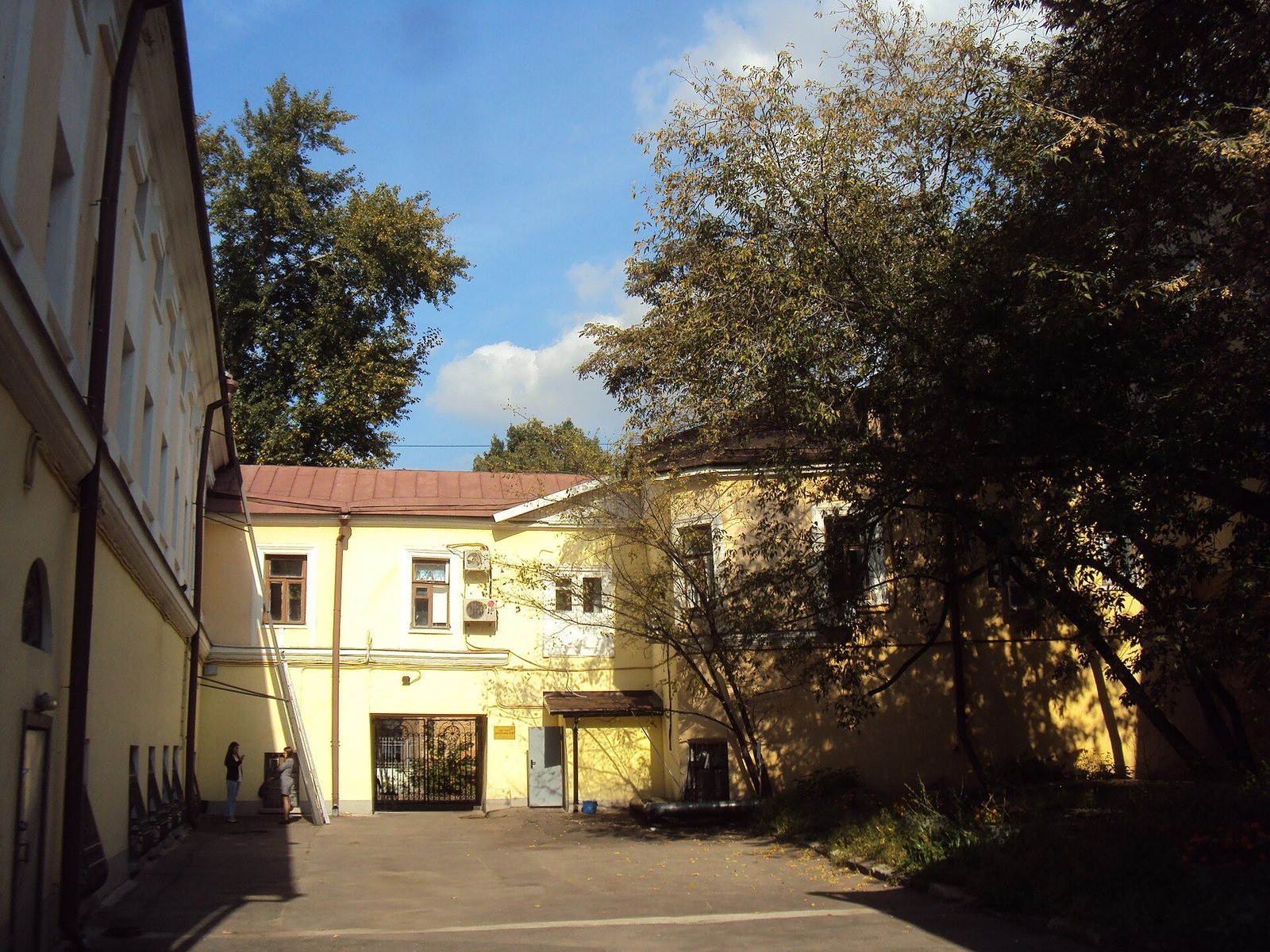
At no. 16, the principal house stands deep in the courtyard behind the old factory chambers. The property also includes residential wings and a building facing the street.
Principal house
Identified as building 3, the house retains main fabric dating to the 18th century. By 2017 it was vacant and considered unsafe, and a false facade covered it.
Factory chambers
The old Milyutin factory chambers are identified as building 2 and form part of the estate’s surviving industrial buildings.
Street-side building
Building 1 is the structure at the street frontage of the no. 16 property.