San Niccolò Psychiatric Hospital: A Former Monastery and University Complex in Siena
Site at a Glance
- Popularity
- Medium
- Country
- Italy
- Primary era
- Modern
- Eras represented
- Modern
- Civilizations
- Italian
- Site type
- Civic
- Remains
- Hospital
On this page7 sections
History
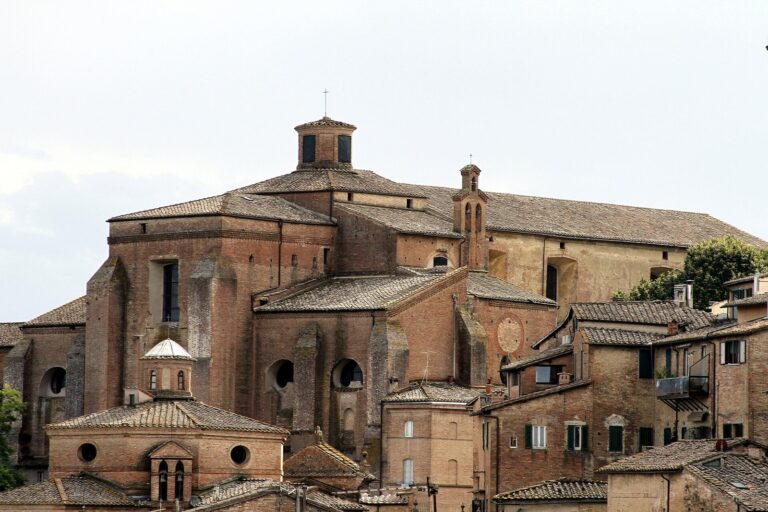
San Niccolò Psychiatric Hospital is a former monastery and psychiatric institution in Siena, Italy, founded as a religious community in the 14th century and used as a hospital from 1818 to 1999.
Monastery and confraternity
The monastery’s foundation is associated with a testamentary bequest made in April 1336. Its founding is attributed either to Niccolaccio Petroni or to his son, Francesco di Niccolaccio Petroni. The nuns followed the Rule of Saint Clare, observed by the Poor Clares, a Franciscan order for women. The monastery also held numerous agricultural estates.
In 1783, the suppressed monastery of San Lorenzo outside the city walls was incorporated into San Niccolò. San Niccolò was suppressed in 1810 and transferred to a penitential confraternity founded by Saint Bernardino of Siena. The confraternity later became known as the Society of Executors of Pious Dispositions, a charitable institution that administers religious bequests.
Psychiatric hospital and later use
From 1818, the former monastery housed a psychiatric hospital that replaced the House for the Insane on Via San Marco. That earlier institution had opened in 1762 under the supervision of Santa Maria della Scala, a major Siena hospital and charitable institution. Giuseppe Lodoli, professor of practical and clinical medicine at the University of Siena, became the new hospital’s first director. He introduced treatments that were less coercive than practices then common.
Carlo Livi, a psychiatrist from Prato, directed the hospital from 1858 to 1873. A purpose-built hospital replaced the monastery premises between 1870 and 1890.
The Conolly Pavilion began operating in 1876 as an isolation unit for patients then described as noisy and difficult to manage. Named after English psychiatrist John Conolly, who advocated nonviolent treatment, it nevertheless served as a maximum-security ward.
During the Fascist period, the pavilion was used as a prison for dissidents. In the 1990s, the University of Siena’s Faculty of Engineering used the building. After psychiatric hospitals closed, the pavilion fell into severe disrepair; a gradual recovery began in 2018, supported in part by its inclusion in the Italian Environment Fund’s Places of the Heart heritage initiative. The former hospital complex has since been adapted for university use.
Remains
Main hospital building
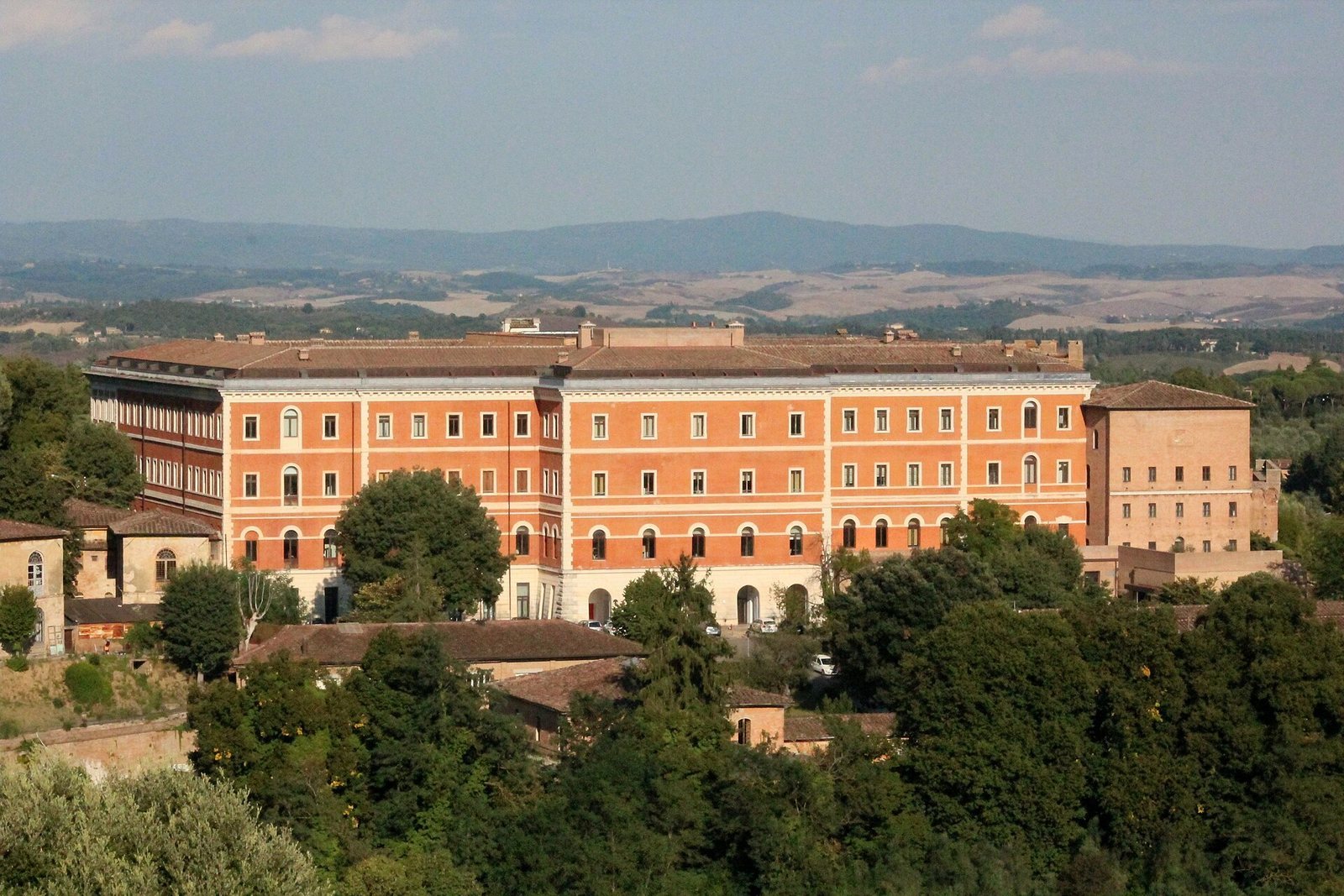
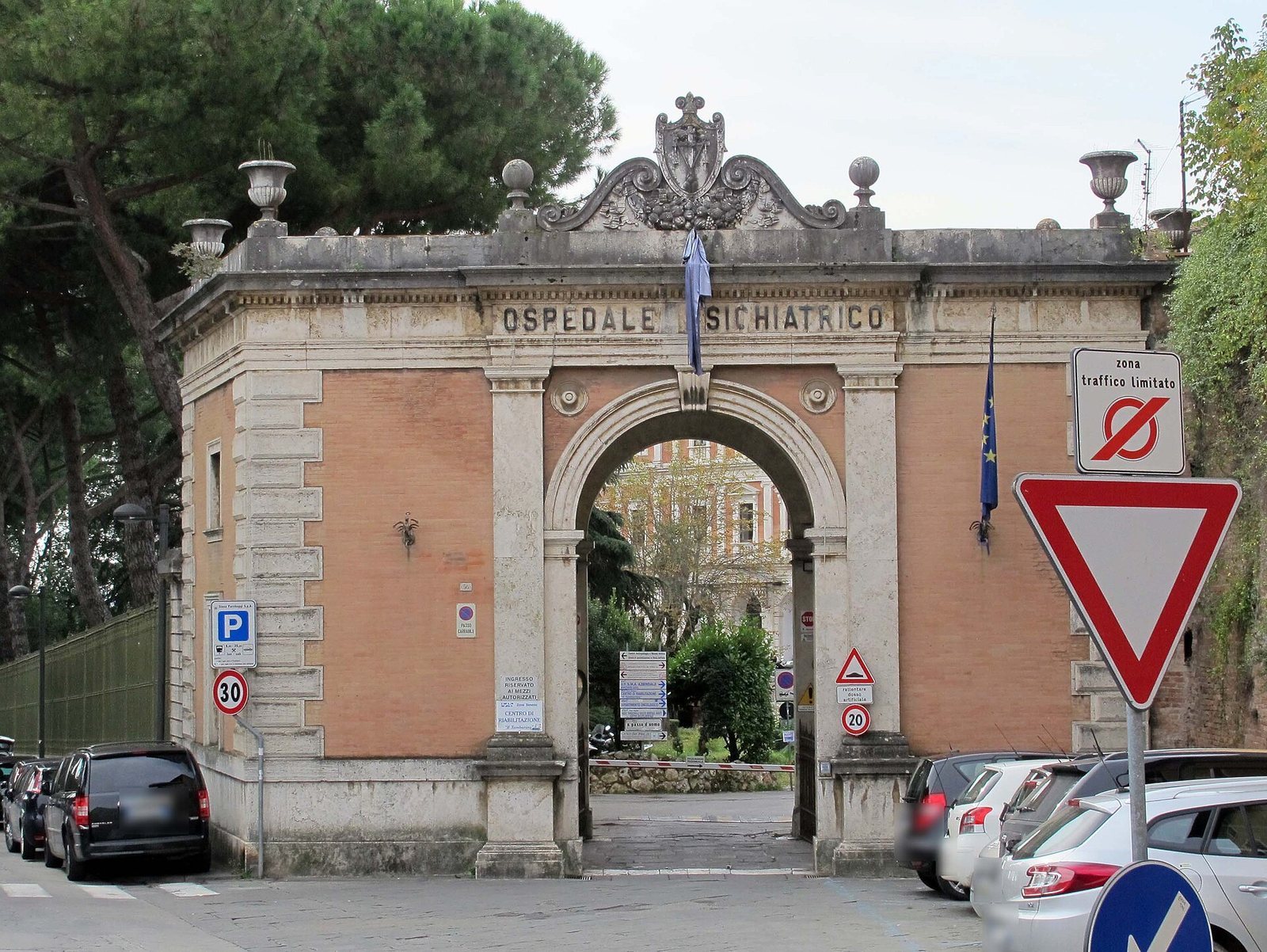
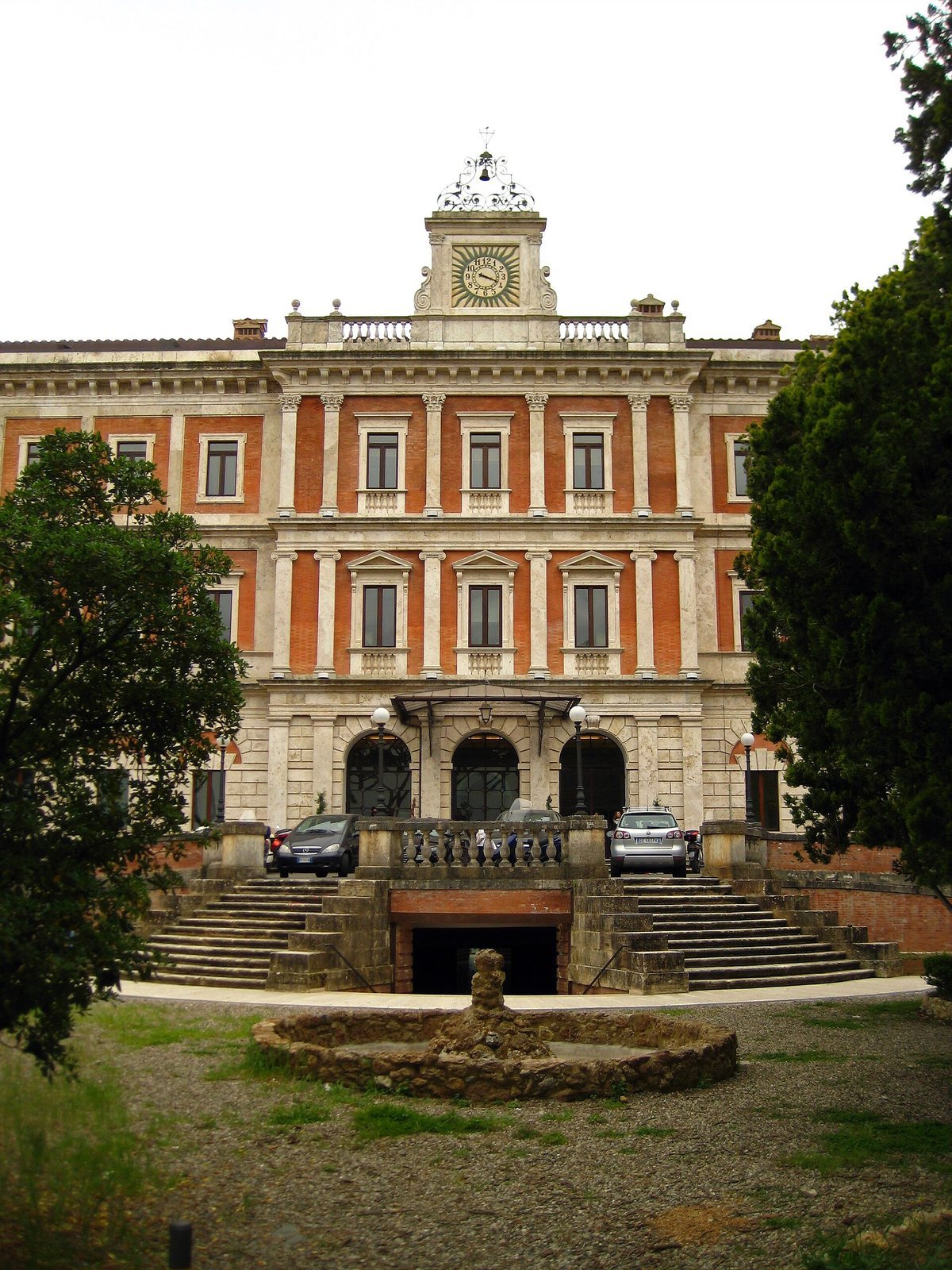
The 15-hectare complex lies near Porta Romana, in Siena’s historic San Martino division. Its main hospital building has a rectangular, symmetrical plan organized around two inner courtyards and a central chapel. An entrance arch decorated with terracotta and travertine opens onto the main courtyard. The façade has two levels of windows and prominent horizontal bands of masonry, while two projecting sections divide its face vertically. An ornate bell-shaped feature and a clock crown the central section. Inside, an atrium with three round arches supported by columns leads to the chapel. Renovated areas now contain teaching rooms and laboratories used by University of Siena departments in Information Engineering and Mathematical Sciences, Philology and Criticism of Ancient and Modern Literatures, and Social, Political and Cognitive Sciences.
Conolly Pavilion
The pavilion is a panopticon, a layout that lets observers watch people in separate spaces from a central vantage point. Its arrangement enabled staff to monitor patients continuously, while each patient had an individual cell and access to the open air. It is described as the only surviving Italian example of a panopticon designed for healthcare; the prison on Santo Stefano Island is another Italian example. Inscriptions on the cell walls preserve evidence of the pavilion’s use during the Fascist period.
Former laundry
The former hospital laundry stands in the valley below the main complex. Renovated for university use, it has housed the University of Siena’s Department of Physics since 2004.