Rocca di Montefiorino: Medieval Fortress and Resistance Museum in Italy

Site at a Glance
- Rating
- 4.5
- Popularity
- Low
- Country
- Italy
- Primary era
- Medieval
- External website
- Open
- Eras represented
- Medieval
- Civilizations
- Holy Roman Empire
- Site type
- Military
- Remains
- Castle
On this page9 sections
History
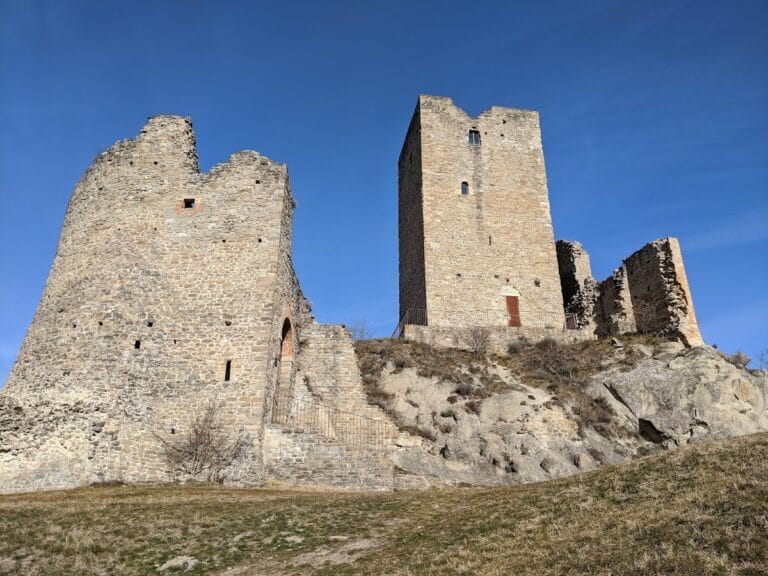
Rocca di Montefiorino is a medieval fortress in Montefiorino, Italy, built and enlarged by the Montecuccoli family in the Romanesque period. Its principal tower dates to 1170, while major expansions followed around 1230 and in 1245. The fortress served as a center for controlling the northern part of the Lands of the Abbey, a territory governed by the Abbots of Frassinoro.
Montecuccoli fortress and Modenese campaigns
The Montecuccoli were the principal feudal lords of the Abbots of Frassinoro, and their authority explains the fortress’s early territorial function. Around 1230, as Modena expanded southward, they strengthened the older fortification and added a residential palace-tower. Modenese troops later occupied and damaged the complex, prompting another reinforcement in 1245. This phase included an outer fortified section, or cassero, defended by two towers.
Near the end of the thirteenth century, Modenese forces captured the fortress again after a prolonged siege. They damaged it so severely that it could not readily be rearmed against them. The attack took place shortly before the Modenese defeat at Fossalta. Afterward, the complex remained abandoned for several decades.
Seigneurial residence and Este administration
Two monks from Frassinoro later reused the abandoned fortress as a hermitage. From 1320, Guidinello Montecuccoli made it his residence, and the complex was adapted into a fortified seigneurial home. The borough of Montefiorino was founded during the same period, alongside construction of the Torre del Mercato, now the town’s bell tower. Both structures were associated with the Montecuccoli.
After the last descendant of Guidinello was expelled, the people of Montefiorino requested direct rule by the House of Este, the dynasty that governed the territory. The fortress became the seat of the podestà, an appointed or locally governing magistrate, and later housed the municipal administration.
The Partisan Republic of Montefiorino
During the Second World War, Nazi-Fascist forces held Montefiorino and its fortress. After partisan groups formed, German forces used the fortress to bombard settlements in the opposite Dragone valley, including Susano, Costrignano, and Monchio. Troops were also sent overland to destroy villages and kill inhabitants.
On 17 June 1944, lay and Catholic partisans occupied the fortress and proclaimed the Partisan Republic of Montefiorino, a partisan administration established in territory controlled by anti-Fascist resistance groups. The fortress became the seat of the republic’s political institutions and of its mayor, Teofilo Fontana. After 45 days, German forces retook Montefiorino. Many residents had already sought refuge in hamlets within the municipality, leaving the town largely deserted. The German forces burned both the town and the fortress and deported the remaining civilians to Fossoli, an internment and deportation camp in northern Italy.
Rocca di Montefiorino now accommodates municipal offices, the local office of the Union of the Municipalities of the Ceramic District, and the Museum of the Resistance, also known as the Museum of the Republic of Montefiorino. The fortress holds Italian national heritage status.
Remains
Fortified layout and entrance
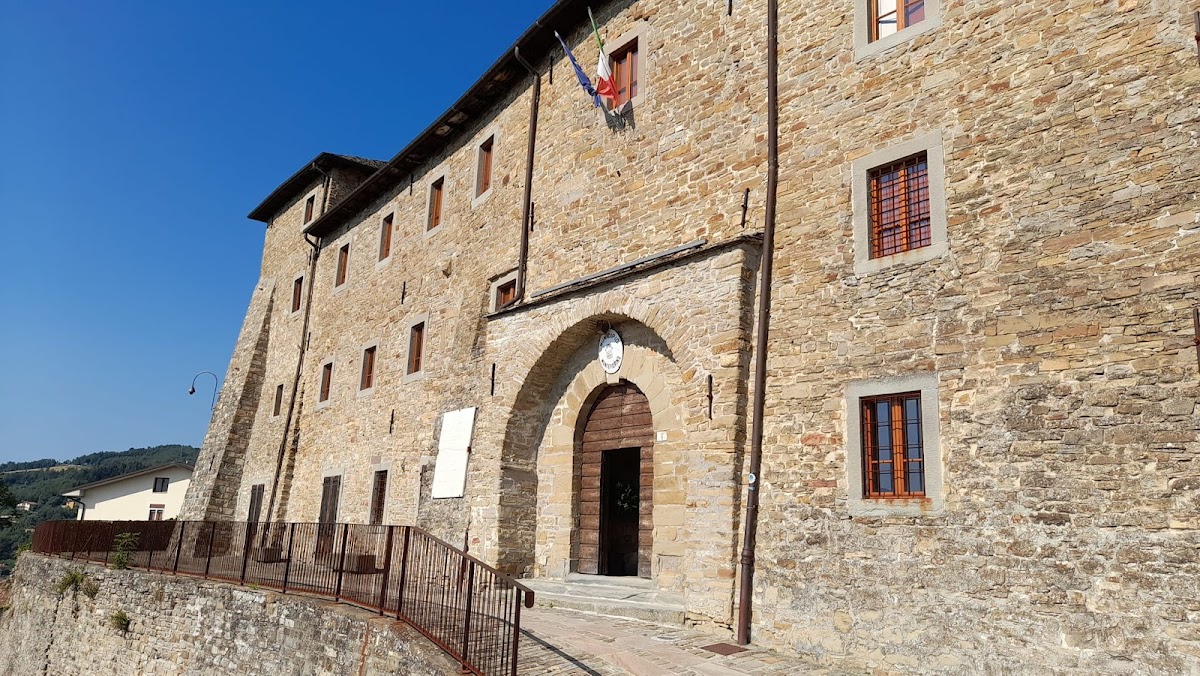
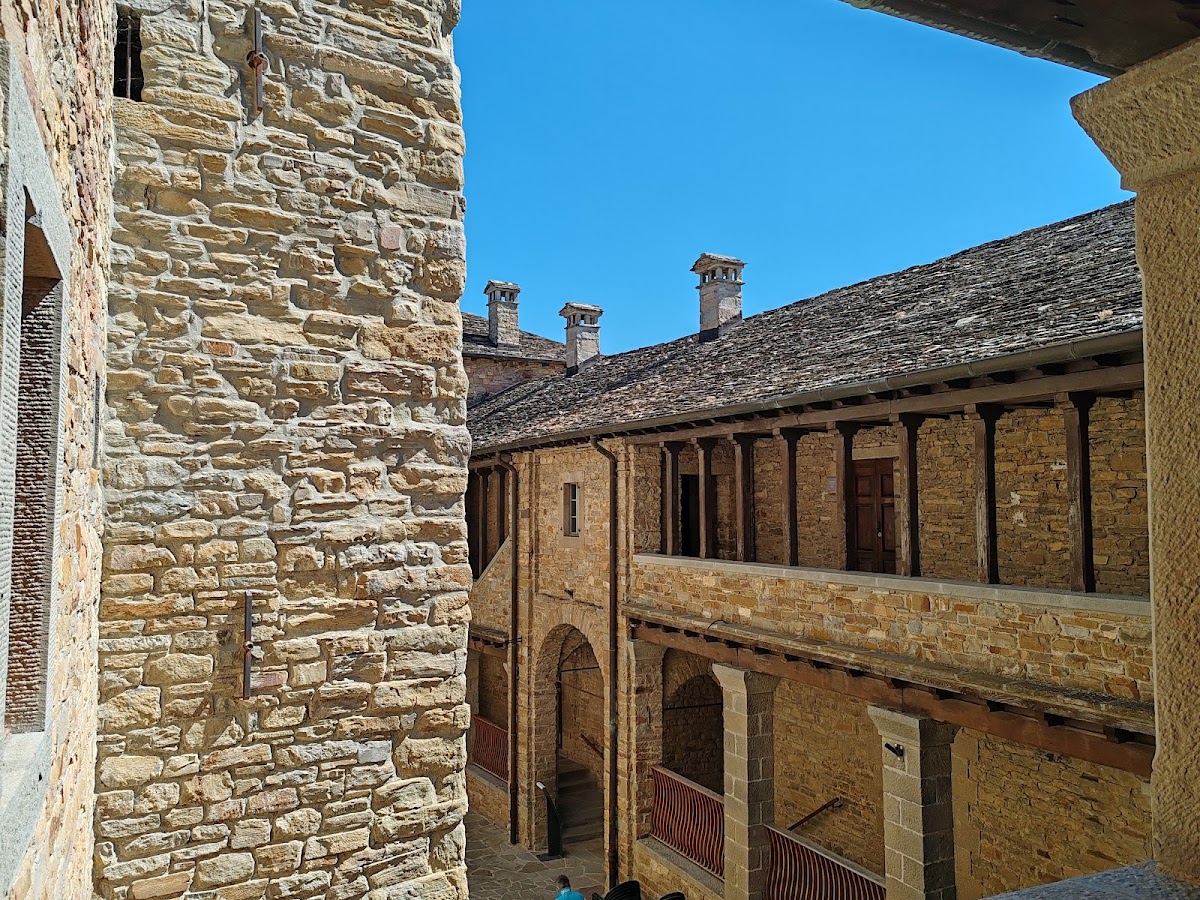
Built of stone and mortar in the Romanesque style, the complex consists of four building ranges enclosing a rectangular courtyard. Porticoes with an upper floor run along three sides. The square-set facade has a round-arched entrance fitted with a thick wooden door, while two of the four structures added during the fortress’s reinforcement can be seen at the sides. A relief of Saint Michael the Archangel is set into the right side of the facade, recalling the dedication of the castle chapel.
Immediately inside the entrance, a staircase leads toward the inner courtyard. An ancient, disused well stands on the left. Two connected arcaded corridors surround the courtyard and provide access to the castle rooms and the upper floor. The upper level repeats this arrangement with a porticoed corridor around the courtyard and entrances to the rooms. A distinctive raised structure occupies the center of the courtyard.
Torre della Rocca
The west side is dominated by the keep, or principal fortified tower, known as the Torre della Rocca. It stands opposite the entrance staircase. A doorway near the top has been walled up, and an ancient rainwater cistern was found at the tower’s base. The tower now contains temporary exhibitions and displays about Montefiorino’s history, with particular attention to the Second World War.
Museum and interior rooms
The right wing contains an exhibition devoted to the Republic of Montefiorino. Its displays include Second World War objects, artifacts associated with the partisan republic, documentaries, thematic rooms, and interviews. The Sala Ermanno Gorrieri, the first room on the left beyond the entrance, serves as a theater and meeting room, while other rooms accommodate temporary exhibitions.
The Torre del Mercato tradition
A local tradition holds that an underground tunnel once linked the fortress with the Torre del Mercato. According to the tradition, it allowed movement through the town unseen and offered a defensive advantage. Repeated searches have not established that the tunnel existed.