Klaipėda Castle: A Teutonic Order Fortress in Lithuania
Site at a Glance
- Rating
- 4.6
- Popularity
- Medium
- Country
- Lithuania
- Primary era
- Medieval
- External website
- Open
- Eras represented
- Medieval, Early Modern, Modern
- Civilizations
- Brandenburg-Prussia, Duchy of Prussia, Livonian Order, Teutonic Order
- Site type
- Military
- Remains
- Castle
On this page20 sections
History
Klaipėda Castle is a former Teutonic Order fortress in Klaipėda, Lithuania, founded in 1252 at the mouth of the Danė River. Built by the German military-religious order that established fortified bases during campaigns of conquest and Christianization in the eastern Baltic, it secured the Order’s lands against Samogitian and Lithuanian attacks and linked its Prussian and Livonian possessions. The castle became the seat of the Memel commandery, an administrative and military district governed by a commander, and a base for the Order’s activities in Courland and Lithuania. It is described as Lithuania’s oldest brick castle and the country’s only medieval castle built by Germans rather than Baltic peoples.
Foundation and the Memel commandery
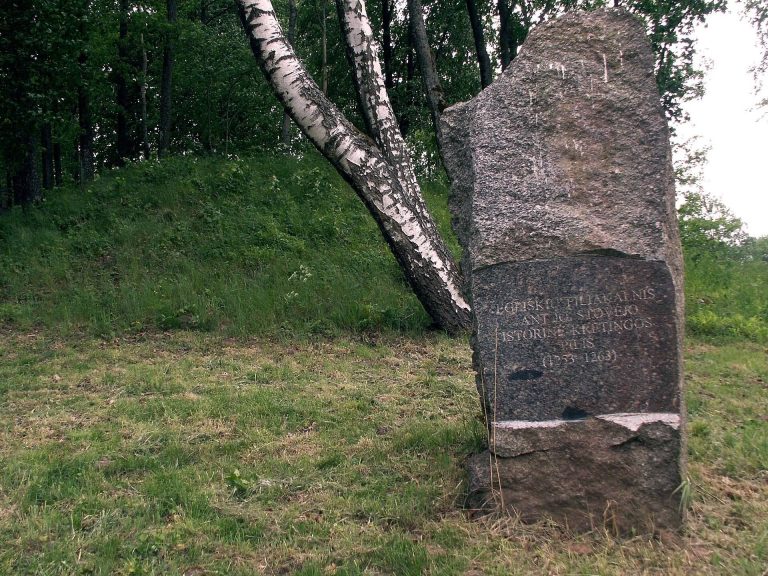
A foundation agreement was concluded in 1252 by Eberhard von Sayn, representing the Livonian branch of the Teutonic Order, and Heinrich, Bishop of Courland. A wooden water fortress called Memelburg was built that year, followed by the beginning of a larger brick castle in 1253. The Livonian Order was the northern branch of the Teutonic Order, operating mainly in the lands that are now Latvia and Estonia. Klaipėda’s position between the Nemunas and Danė rivers, close to the channel connecting the Curonian Lagoon with the Baltic Sea, gave the new stronghold military and strategic value.
The first castle stood on one of the small islands in the Danė delta and contained a main castle, two outer wards, wooden buildings, a waterside keep, palisades, earth ramparts, and water ditches. Its marshy ground restricted expansion, so a second castle was begun in 1253 on a larger island several hundred metres away. This brick-and-timber enclosure was built around a rectangular courtyard and included a chapel and other stone and timber buildings. A settlement for the castle’s personnel developed on a neighbouring island and later became the town of Memel.
Attacks and changes of control
Memel Castle faced repeated attacks from Samogitians and Curonians, with occasional assaults by Scalvians and Sembians. Recorded attacks took place in 1257, 1263, 1307, 1323, 1360, 1379, 1402, and 1409. In 1323, forces led by Gediminas, grand duke of Lithuania from 1316 to 1341, destroyed the town but failed to capture the castle. After the attack, the Livonian Order transferred the Memel commandery, castle, and town to the Teutonic Order in 1328 because the overland connection with Courland had been lost. The Bishop of Courland retained one-third of Memel until 1392, when the castle and town came fully under Teutonic control.
The castle was destroyed by Lithuanian and Samogitian forces in 1379. A defensive tower erected in 1393 was destroyed by the Lithuanians later that same year. Reconstruction received strong support from 1399 and was completed in 1409. About 500 forced labourers from Warmia took part in the work. Grand Master Ulrich von Jungingen visited the castle in 1408 and 1409 and brought the Order’s master builder, Nikolaus Fellenstein, to assist with the rebuilding.
Attacks continued during the early fifteenth century. The castle survived an assault in 1409, although the incompletely fortified town was burned. In 1414, Grand Duke Vytautas of Lithuania captured the castle, burned the town again, and deported approximately 3,000 inhabitants. Vytautas ruled Lithuania from 1392 to 1430 and was one of the region’s leading military and political figures. From about 1400 to 1422, Lithuanian forces attacked the site every two or three years, while the fortifications were repeatedly repaired and enlarged.
Border fortress and fifteenth-century wars
After the Teutonic Order’s defeat at the Battle of Grunwald in 1410, the castle remained strategically important because the frontier between Lithuania and the Order was still disputed. The Treaty of Melno in 1422 redrew the frontier and made Memel a border fortress once more. Improvement works ordered by Grand Master Paul von Rusdorf from 1422 were probably completed around 1440 or 1441. The new defenses incorporated additional ramparts and flood gates, while earlier earthworks were raised.
Memel was drawn into the Thirteen Years’ War, a conflict in which the Teutonic Order fought the Prussian estates and Poland. Lithuanian forces attacked in 1454, and the town was plundered and destroyed. Danzig forces attacked the castle from the sea in 1454 and 1457. During the 1457 assault, they captured fourteen warships sent from Hamburg and Lübeck, while six ships and one castle tower burned. A further attack by Danzig forces, joined by troops from Elbing and aided by a traitor, failed in 1464. Lithuanian forces besieged the castle again in 1472.
Modernization under Prussia
In 1520, during the conflict between Grand Master Albrecht of Brandenburg and Poland, Danzig warships attacked Memel. They destroyed half the town, seized merchant ships, and blocked the entrance to the Danė with large stones. The obstruction remained until 1814. In 1524 the fortress was strengthened with artillery, and after Albrecht secularized the Teutonic state in 1525 and established the Duchy of Prussia, the castle underwent extensive rebuilding and modernization. French engineers carried out major works between 1529 and 1559. The medieval enclosure was adapted into a fortress designed for artillery, with earth ramparts and bastions added between 1516 and 1519.
Memel came under Swedish control from 1629 to 1635, during the final phase of the Polish-Swedish War. Swedish forces failed to capture the fortress in 1675 and 1678, although the Swedish attack of 1629 devastated the castle. Fires caused further damage in 1660 and 1669. A fire accompanying the attack of 1678 destroyed the town but did not damage the castle. Under Elector Frederick William, the fortress was heavily strengthened and enlarged to house a garrison of about 400 men in peacetime and 800 during wartime.
During the Seven Years’ War, a conflict involving the major European powers between 1756 and 1763, Russian forces under General Wilhelm von Fermor besieged and captured Memel from 29 June to 6 July 1757. Bombardment from land and sea destroyed 110 houses and severely damaged the fortress. The last major renewal followed in 1763, after the war damage and another fire.
Decline and demolition
The fortress lost its strategic importance during the late eighteenth century. Its ditches were gradually filled, and outer fortifications were sold or demolished from 1770. Parts of the ramparts were converted into gardens. Castle buildings continued to serve municipal purposes as a court, prison, poorhouse, and hospital, but they deteriorated. During the French occupation in 1812, the complex contained barracks, an arsenal, warehouses, and a hospital.
Only two of the five towers were still standing in 1821. The entrance vaults began to collapse in 1840, the remains of the Great Powder Tower were removed in 1843, and the Duke’s Tower collapsed around 1865. The loss of the tower contributed to the construction of the Nerija Fort at Kopgalis. The last major castle buildings were demolished between 1872 and 1874, and their stone was reused in buildings in the town. Further sections, including two southern bastions and parts of the curtain walls, were removed between 1903 and 1914.
Industrial reuse and archaeological recovery
A large building belonging to Klaipėda’s Neptūnas rowing club was constructed within the castle grounds between 1901 and 1923 and survived until reconstruction work began in the third decade of the twenty-first century. Bunkers were installed in the eastern rampart during the Second World War. After 1945, a ship-repair enterprise occupied the former fortress area and built storage and workshop halls. The company was removed from the grounds in 2009. Under this industrial use, the two northern bastions and part of the northern rampart remained.
The castle, its fortifications, and Klaipėda’s Old Town received heritage protection from the monument-preservation authorities of the Lithuanian Soviet Socialist Republic in 1967. The Republic of Lithuania issued a restoration order in 1994 and transferred the castle grounds to Klaipėda’s municipal administration in 2000. Archaeological excavation began under Adolfas Tautavičius in 1968, expanded between 1975 and 1981, and was extended by the University of Klaipėda’s Research Centre for West Lithuanian and Prussian History under Vladas Žulkus in 1993. Extensive excavation and conservation from 1986 exposed cultural layers, foundations, paving, and other remains.
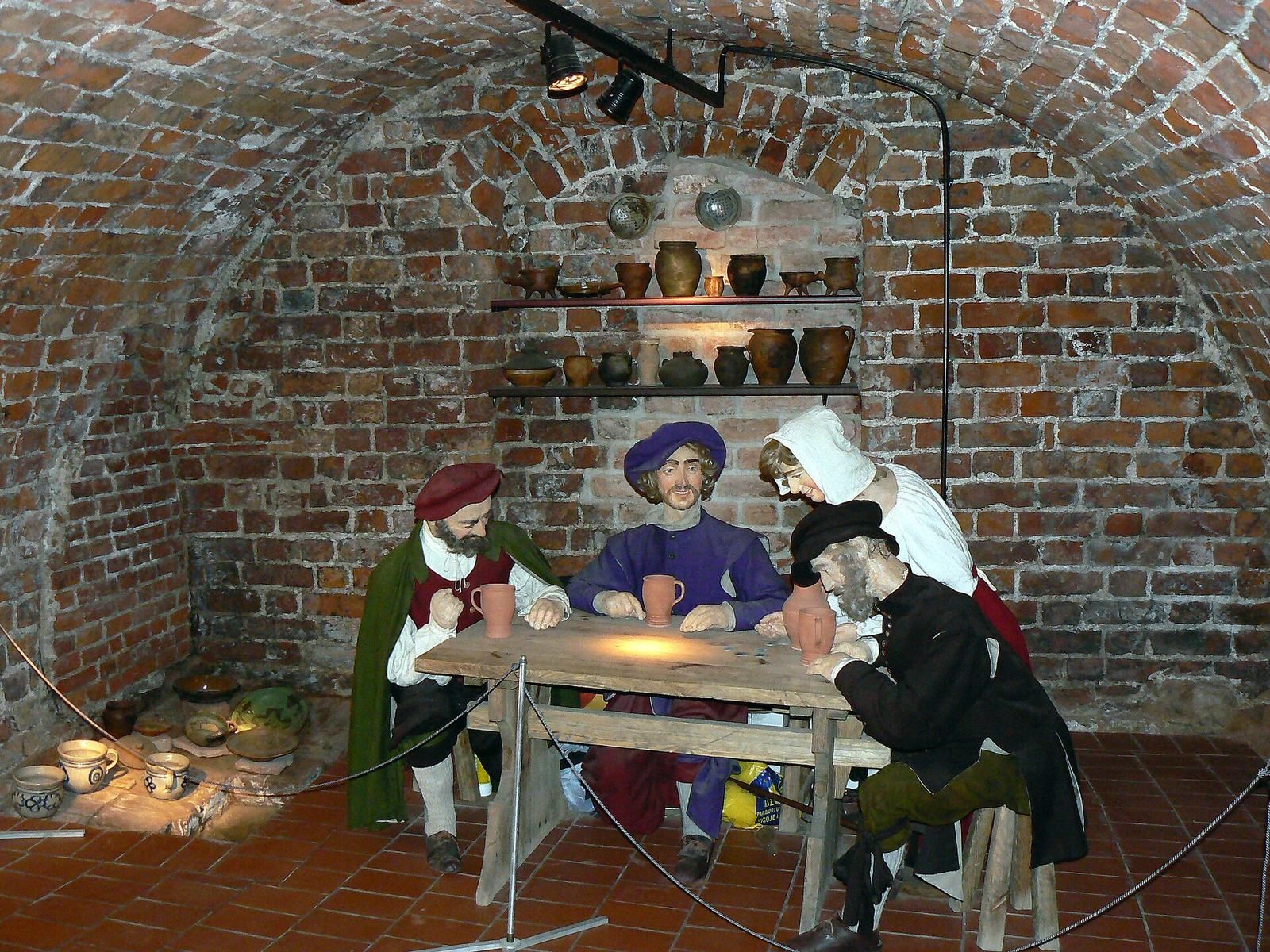
A castle museum opened on 1 August 2002 in restored casemates beneath the bastions during the 750th-anniversary commemorations of Klaipėda. It presents the history of the castle and town from the thirteenth to the twenty-first century and became a branch of the Museum of Minor Lithuania. A reconstruction programme adopted by Klaipėda in 2007 envisaged the restoration of the castle, ramparts, bastions, ditches, and museum facilities. Work beginning in 2012 restored the northern curtain wall, reconstructed the eastern curtain wall, converted a Second World War fuel store into exhibition rooms, and marked the original courtyard plan with paving.
Partial rebuilding began in 2023. The 47-metre-high Great, or Green, Tower was reconstructed and opened to visitors in November 2025, although its interior fitting-out had not yet been completed. Further reconstruction of the castle and the remaining fortifications is intended to proceed in stages. The archaeological site and museum also provide the setting for the annual Klaipėda Castle Jazz Festival.
Remains
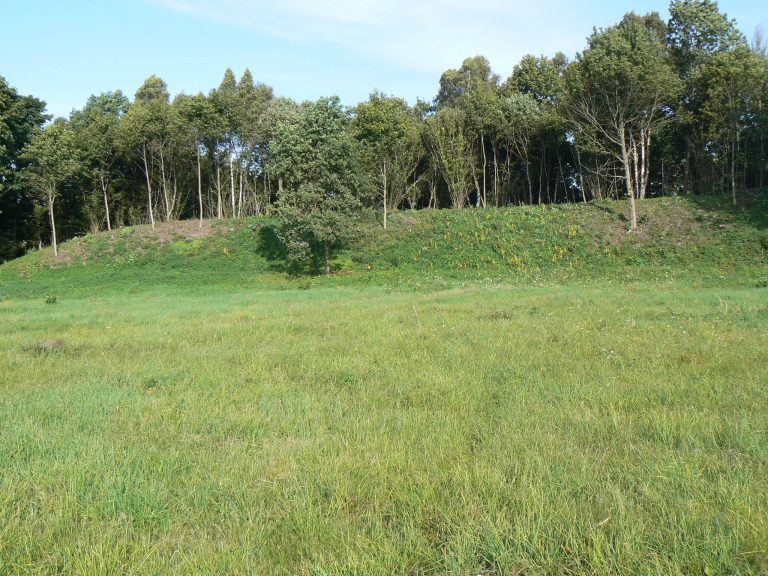
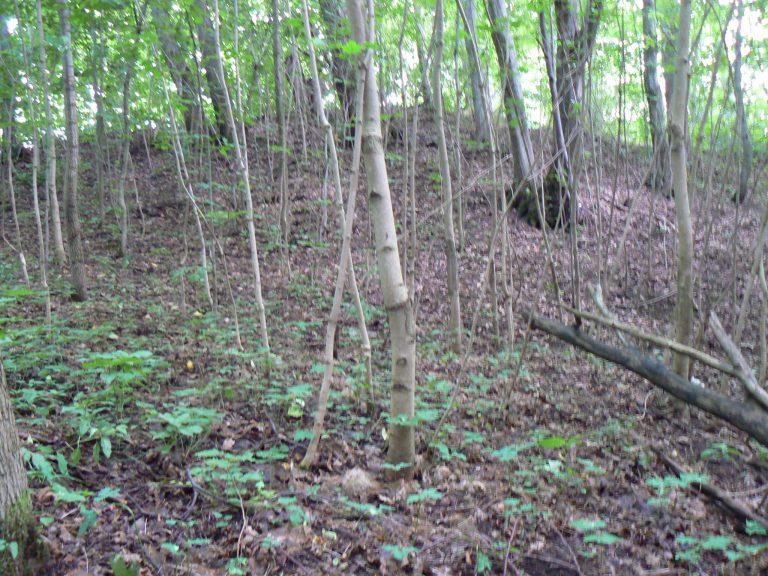
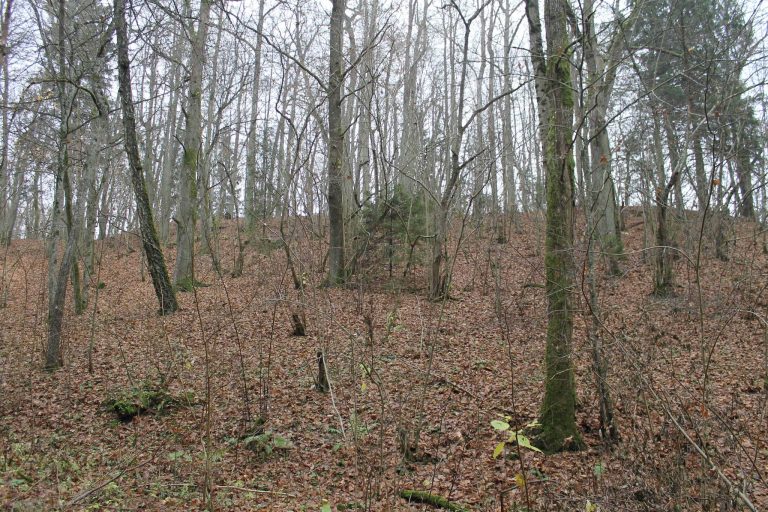
The surviving complex combines archaeological foundations, restored fortification sections, northern bastions, part of the northern rampart, and the reconstructed Great, or Green, Tower. The medieval castle occupied an island position near the Curonian Lagoon and was later enclosed by ditches, ramparts, and artillery bastions. Red brick was the principal building material, with fieldstone used in lower wall courses and foundations. The surviving architecture and decorative details reflect Brick Gothic, the northern European Gothic tradition expressed mainly through brick rather than dressed stone.
Early island fortifications
The first wooden castle
The first castle was a wooden water fortress built in 1252 on the southern of three sandy islands south of the medieval Danė channel, according to the interpretation associated with Vladas Žulkus. Its arrangement included a main castle and two outer wards connected by bridges. Wooden buildings, a waterside keep, palisades, earth ramparts, and natural and excavated water ditches formed a defense adapted to the delta environment. The exact location has been interpreted in different ways, while geological, archaeological, and cartographic reconstruction places it broadly on an island corresponding to the present left bank of the river.
The second castle
The second castle was begun in 1253 on the northwestern of three larger islands. It formed a brick-and-timber enclosure around a rectangular courtyard. A brick wall, water ditch, earth rampart, palisade, and second outer ditch protected the enclosure. The complex initially contained a chapel and other stone and timber buildings. A neighbouring island settlement housed castle personnel and developed into the town of Memel, creating the first physical relationship between the fortress and the urban settlement.
Medieval castle walls and towers
Northern wall and gate tower
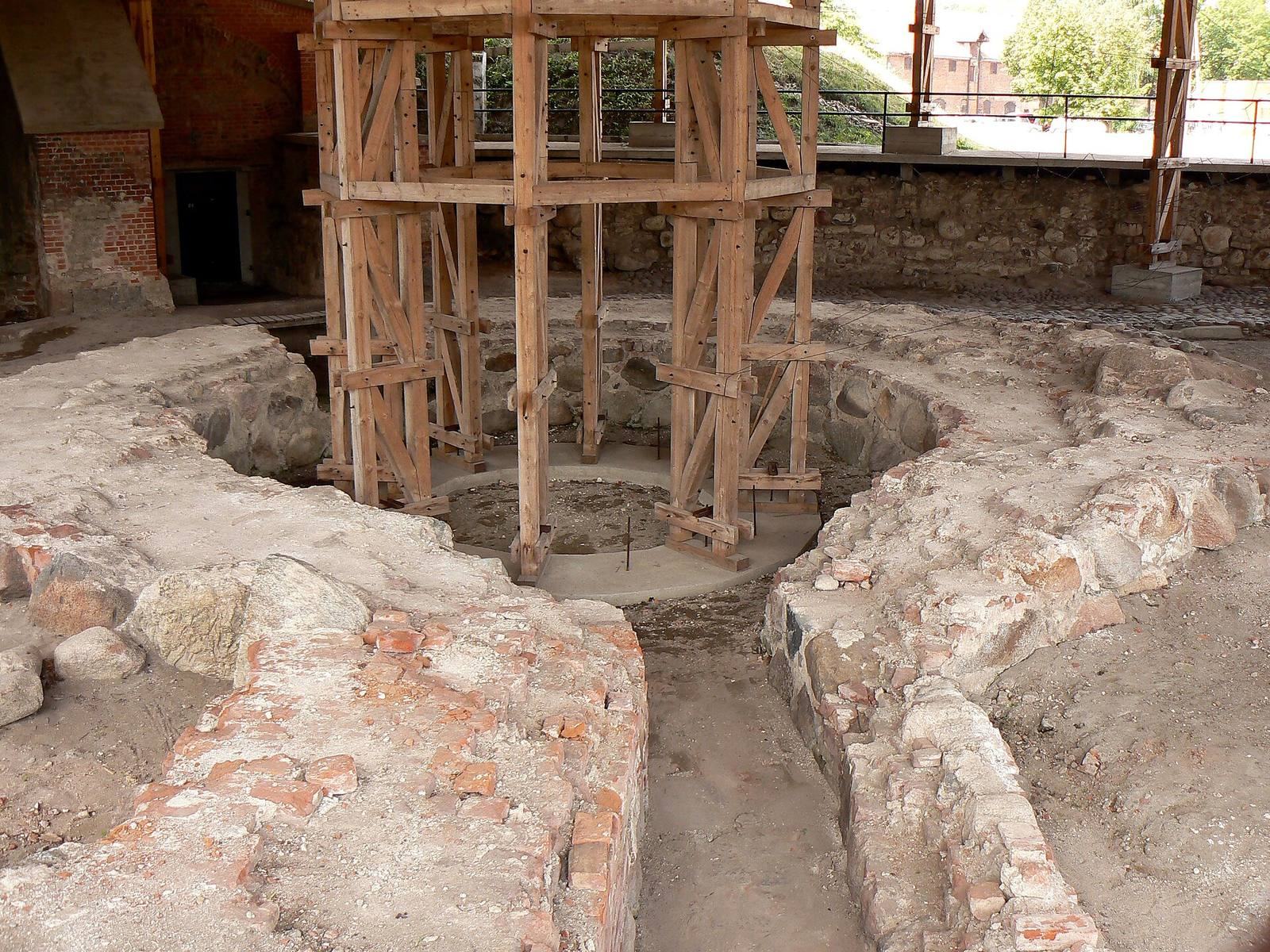
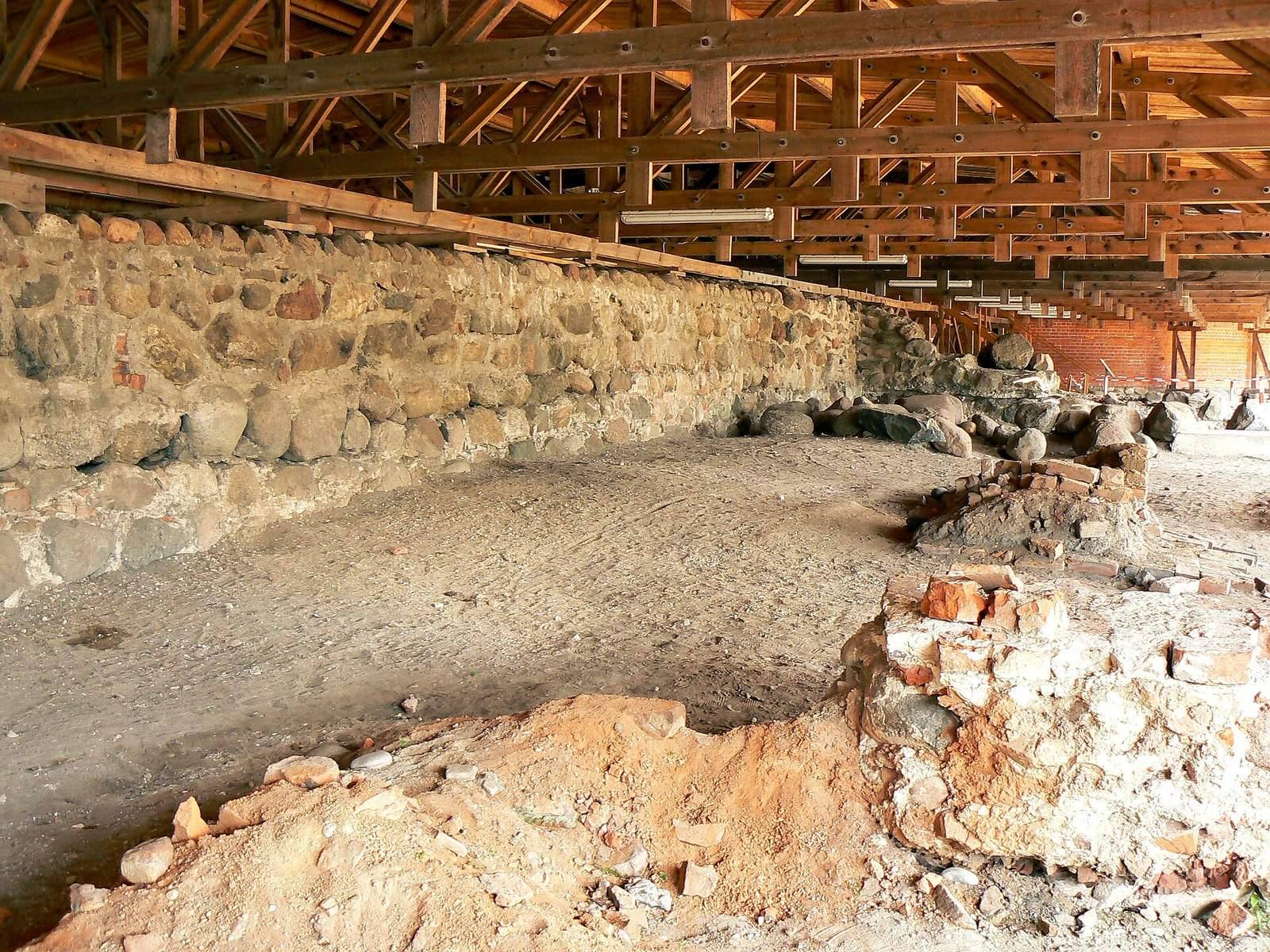
The fifteenth-century castle had an approximately rectangular plan measuring about 102 by 70 metres. Its northern wall was about 102 metres long, 2.1 to 2.2 metres thick, and probably reached up to 11 metres in height. Foundations extended 3 to 3.5 metres below ground. Fieldstone and brick formed the lower part, while the upper section was built mainly of brick. Excavations in the northern area uncovered two medieval tower foundations. One northeastern tower may have served as a gate tower. Its remains include a 2.5-metre-wide entrance, stone paving, and two adjoining rooms about 1.3 metres wide, probably used by gate guards. The tower measured about 10.5 metres in length, had a flat foundation without a basement, and probably contained one or two stories.
Stone paving from the northeastern tower apparently led towards a bridge built around 1395. A second tower stood at the northwestern corner of the northern wall, whose length was approximately 70 metres. Its dimensions remain uncertain, and its foundations extended only about 0.8 metres below ground.
Western towers
The western wall extended at least 70 metres between its towers. Round towers about 12 metres in diameter occupied the northwest and southwest corners. The northwestern structure was the Great Powder Tower, while the southwestern tower was known as the Duke’s or Elector’s Tower. Their foundations date from the early fifteenth century and were intended to protect the castle on the side facing the Curonian Lagoon. A possible additional round or rectangular tower may have stood southeast of the Duke’s Tower, but its identification remains uncertain.
Eastern defenses and the keep
The eastern side probably included a gate tower, represented by foundations excavated about 3 metres south of the present Great Tower. West of the Great Tower, a rectangular flanking tower projected from the northern wall and opened towards the courtyard. It measured 23.52 metres in length, had walls 1.5 to 1.9 metres thick, and extended 5.6 metres beyond the wall. The tower was probably built in the middle of the fifteenth century.
The rectangular keep is traditionally connected with the rebuilding of 1393, although its architectural dating remains uncertain because comparable freestanding square keeps were generally built in the Teutonic state between 1270 and 1360. It may have been an earlier structure rebuilt in 1393. The tower probably stood near the eastern corner beside the main building, measured approximately 12.5 metres on each side, and may have contained a prison in the fifteenth century. After Albrecht of Brandenburg established the Duchy of Prussia in 1525, it may have housed his chambers. The keep was demolished in 1546.
Ramparts, ditches, and artillery defenses
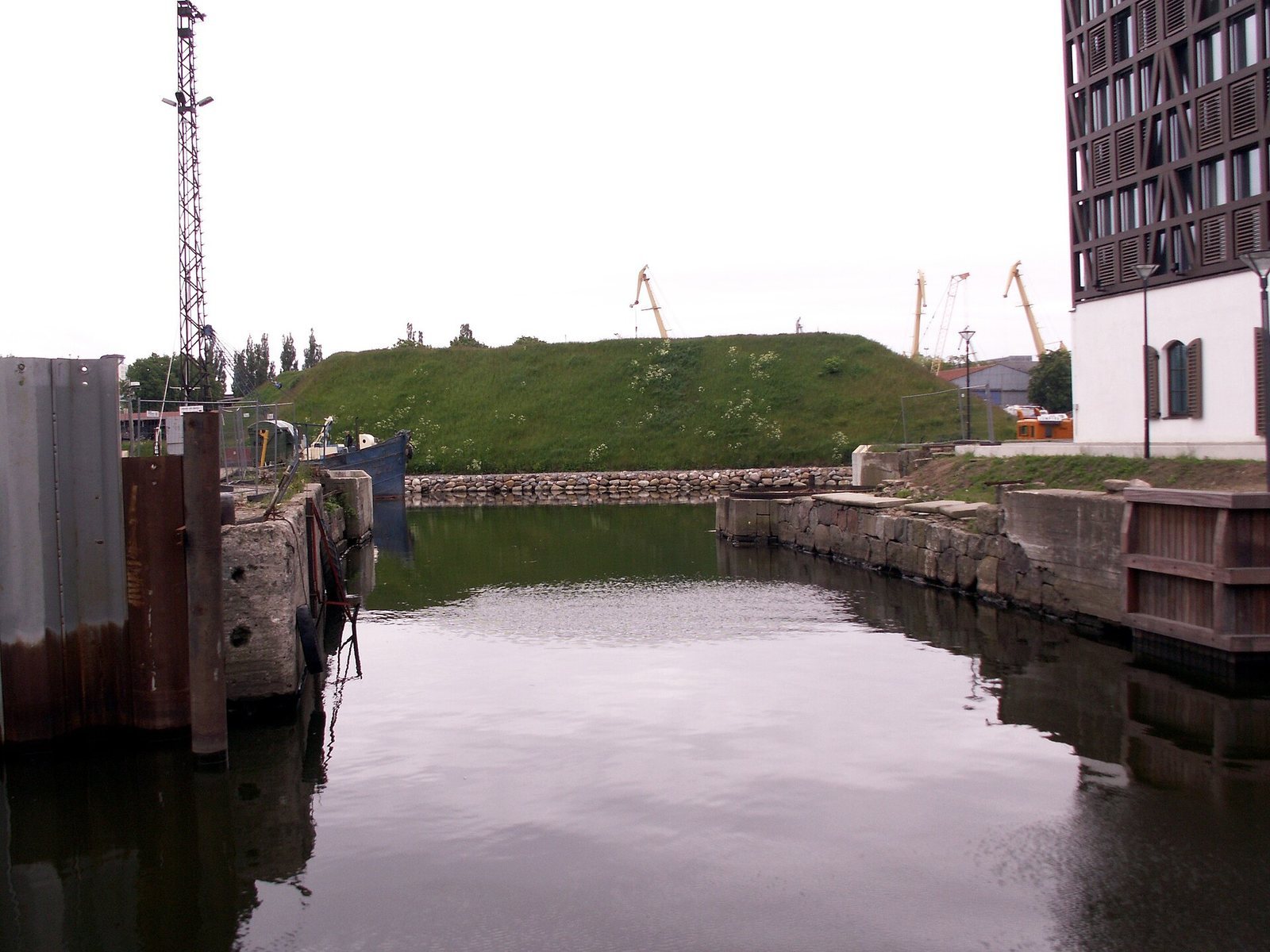
Outside the castle walls ran a road about 6 metres wide. Beyond it lay a water ditch 8 to 9 metres wide, followed by an earth rampart more than 20 metres wide and about 2 metres above courtyard level. A second dry ditch beyond the rampart was about 6 metres wide and up to 1.5 metres deep. From 1422, additional ramparts and flood gates were built, and earlier ramparts were raised by approximately 3 to 3.5 metres, reaching as much as 7 metres above sea level.
The early fifteenth-century defenses were adapted for stone-throwing guns and later firearms. In the sixteenth century, earth ramparts and bastions transformed the fortress into a bastioned enclosure, an artillery fortification with projecting gun platforms. The rebuilt complex formed an irregular quadrilateral with a gate opening in the southwest and five round towers. Sixteenth-century walls and buildings reused parts of the earlier defenses. Residential and service buildings along the inner and outer walls were approximately 12.5 metres wide.
During the early seventeenth century, bastions associated with Prince Karl, Prince Friedrich, Prince Ludwig, and Friedrich Wilhelm enclosed the fortress. Their ramparts were reinforced with stone-and-brick retaining walls and buttresses. Casemates, vaulted chambers beneath the bastions, were reconstructed and enlarged during the sixteenth century. The Prince Friedrich casemate now contains the castle museum, while the Prince Karl casemate also houses an exhibition. Artillery was stored in the Prince Friedrich chamber during the seventeenth century.
Later structures and archaeological material
Commandant’s House and water defenses
A two-winged Commandant’s House was built on the Prince Karl Bastion in 1670. The fortress ditches were later used for storing timber and wintering small boats. A connection was created between the Danė and the castle ditch, and a bridge known as the Chain Bridge was built across it in 1855. These features belonged to the later working life of the fortress and its surrounding water system.
Building materials and floor surfaces
Castle buildings were constructed mainly from red brick and used Brick Gothic treatment in both exteriors and interiors. Floors included square, diamond-shaped, and triangular fired-clay bricks, some of them glazed green. Roofing changed over time, from early pantiles to later flat tiles with different profiles and, in some cases, wooden shingles. Excavations recovered diamond-shaped and triangular window glass set in lead, wooden pile foundations beneath the fortification ramparts, paving, and other archaeological material connected with occupation of the castle and later fortress.
Restored and reconstructed areas
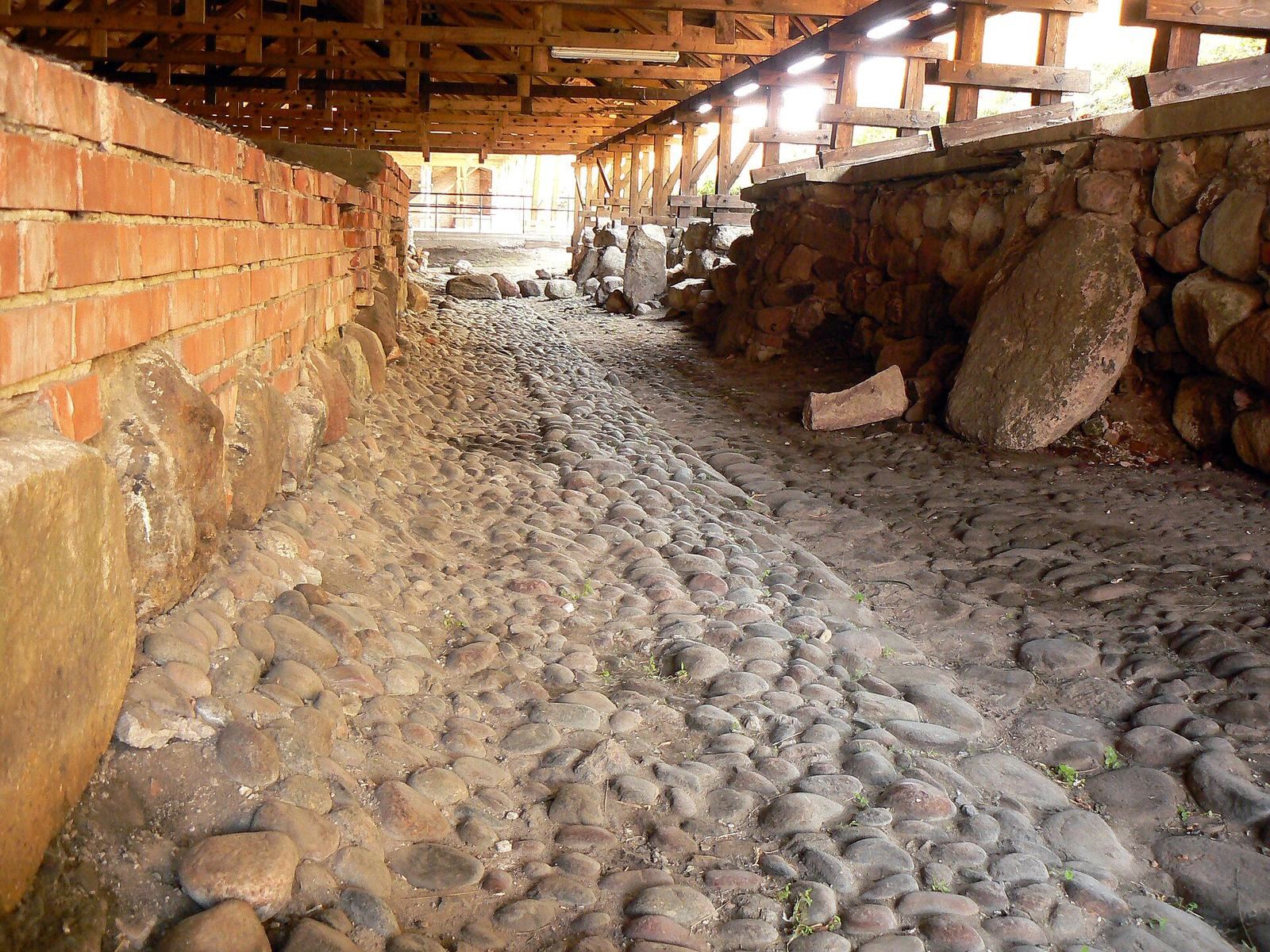
The museum gives access to excavated foundations, exposed structural remains, authentic surviving sections, and a sixteenth-century paved surface identified as Klaipėda’s oldest paving. Restored and reconstructed elements include the northern bastions, sections of the northern and eastern curtain walls, parts of the northern rampart, exposed tower foundations, and the reconstructed Great, or Green, Tower. Paving marks the original courtyard plan. A former Second World War fuel store within the eastern curtain wall has been adapted as exhibition space.