Labiau Castle: A Teutonic Order Fortress in Russia

Site at a Glance
- Rating
- 3.8
- Popularity
- Low
- Country
- Russia
- Primary era
- Medieval
- External website
- Open
- Eras represented
- Medieval
- Civilizations
- Crusader, Teutonic Order
- Site type
- Military
- Remains
- Castle
On this page7 sections
History
Labiau Castle is a former Teutonic Order fortress in Polessk, Russia, built by the German religious-military order between 1277 and 1280. It replaced an earlier Prussian fortress and a Teutonic wooden-and-earth fortification, becoming a fortified center beside the Laba River, formerly known as the Deime.
Foundation and medieval fortress
The castle was first recorded in 1277, when its stone construction began on the site of the earlier defenses. By 1360, four brick-and-stone buildings stood within defensive walls and a water-filled moat. The complex was named Labiau in 1330 after the Laba River.
In 1454, the Prussian Union, an alliance of Prussian estates that opposed Teutonic rule and sought closer ties with the Polish Crown, attacked the fortress. The defenders, led by Albrecht Sparukel, repelled every assault.
Teutonic and ducal connections
In May 1519, Teutonic Order Grand Master Albert received ambassadors of Vasily III at Labiau. Vasily III was the grand prince of Moscow from 1505 to 1533. After the secularization of the Order, meaning the conversion of its Prussian state into a hereditary duchy, the castle passed to Duke Albert, the former Grand Master and first Duke of Prussia.
In 1526, Albert gave Labiau to his fiancée, Dorothea of Denmark. After her death, ownership passed to his second wife, Anna Maria of Brunswick-Calenberg-Göttingen. The knight hall was decorated in 1564 with paintings by the Italian court artist Johann Baptist.
Diplomatic meeting and later uses
On 20 November 1656, Labiau hosted a meeting between Charles X Gustav, king of Sweden from 1654 to 1660, and Frederick William, elector of Brandenburg from 1640 to 1688. The meeting resulted in the end of Polish dependence.
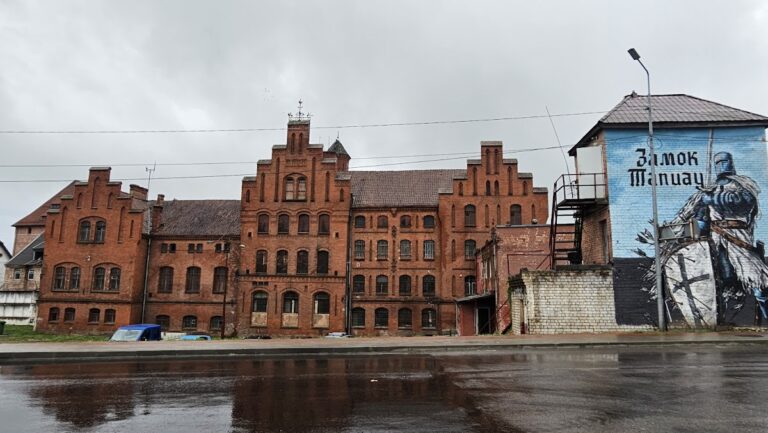
The castle was rebuilt in 1860 and subsequently used as a prison. A fire damaged it in 1917. In 1948, it became the headquarters of a Soviet Army aviation unit, a role it retained until 1953, when it was later transferred to the Yantar industrial enterprise.
Industrial use altered the interior rooms, stairways, and corridors. In 1968, an electrical short circuit caused a fire that destroyed the roof and part of the upper floors. In the early 2000s, the factory operating in the building closed, after which the premises began to be leased. The castle was transferred to the Russian Orthodox Church in 2010.
Labiau Castle is a federally significant cultural-heritage site of the Russian Federation. A 1960 resolution of the Council of Ministers of the Russian Soviet Federative Socialist Republic placed it under state protection. The complex is currently used as a museum, and a puppet theatre occupies part of the building.
Remains
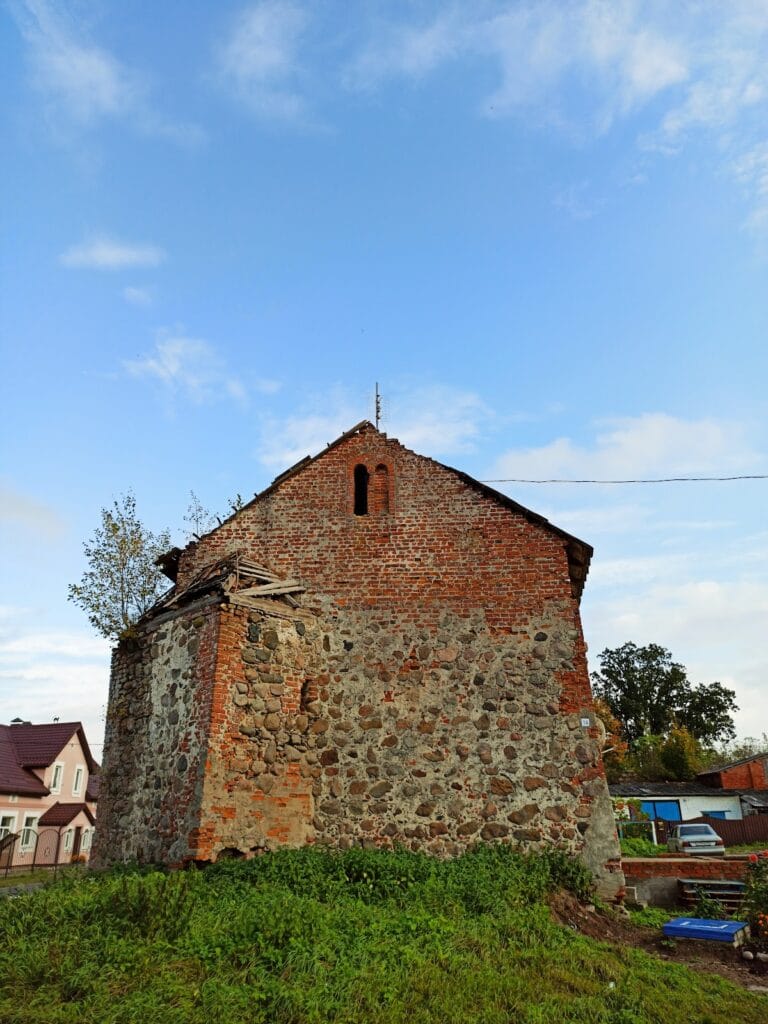
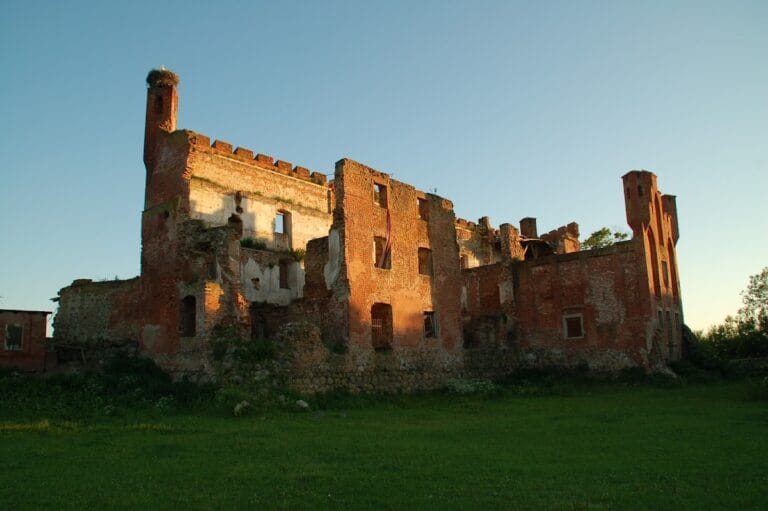
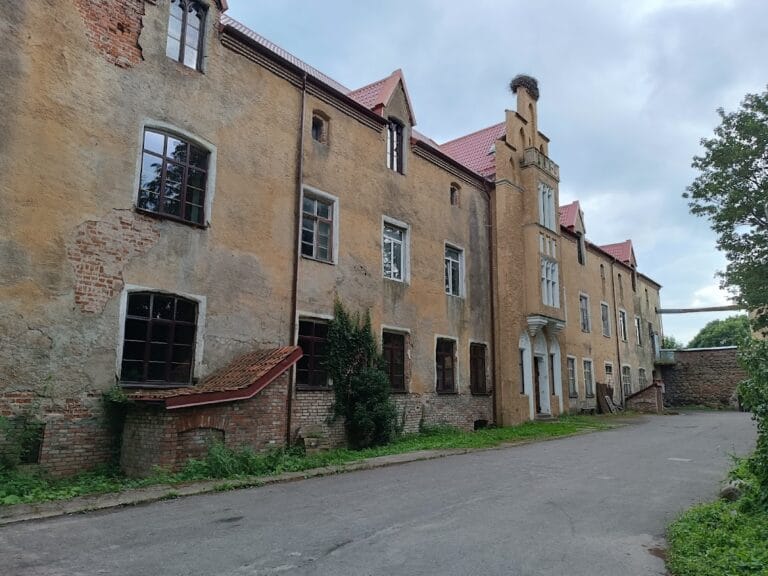
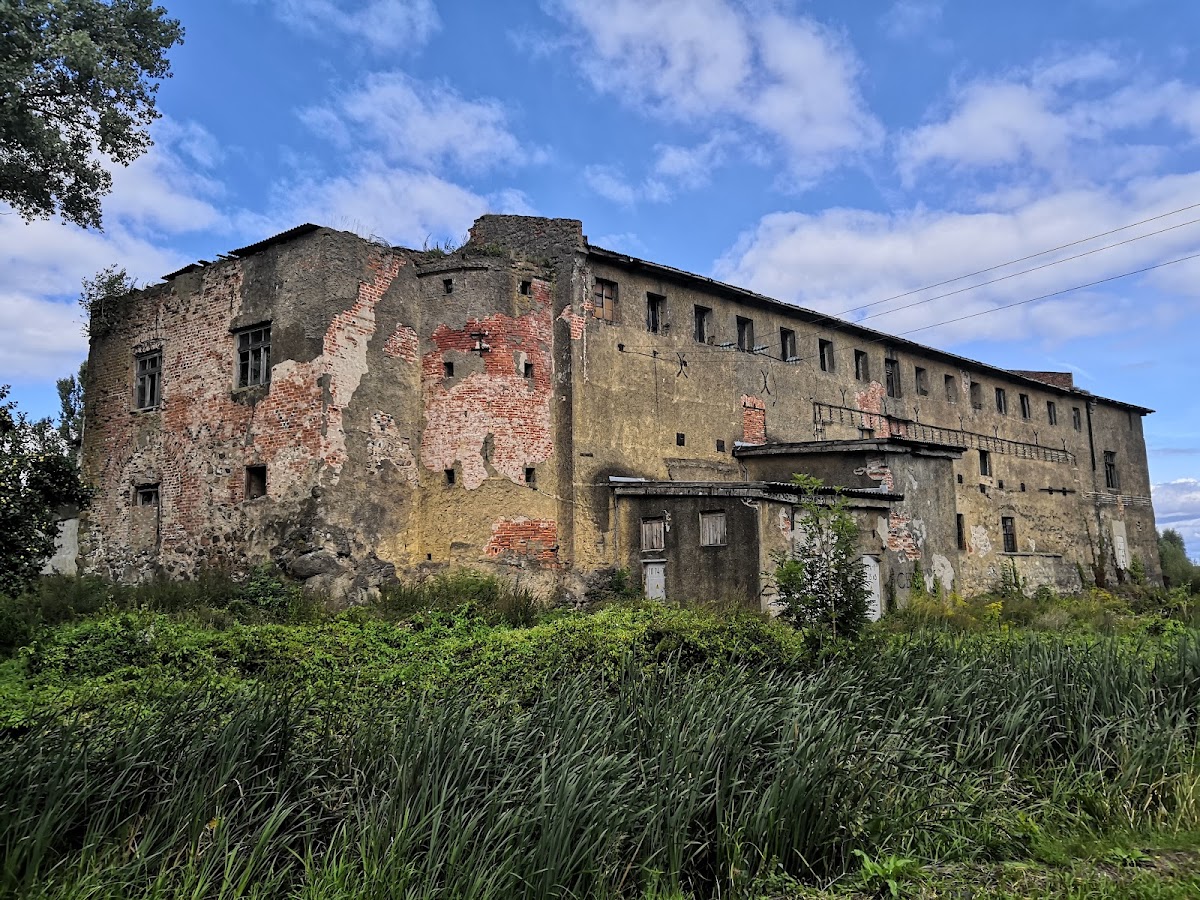
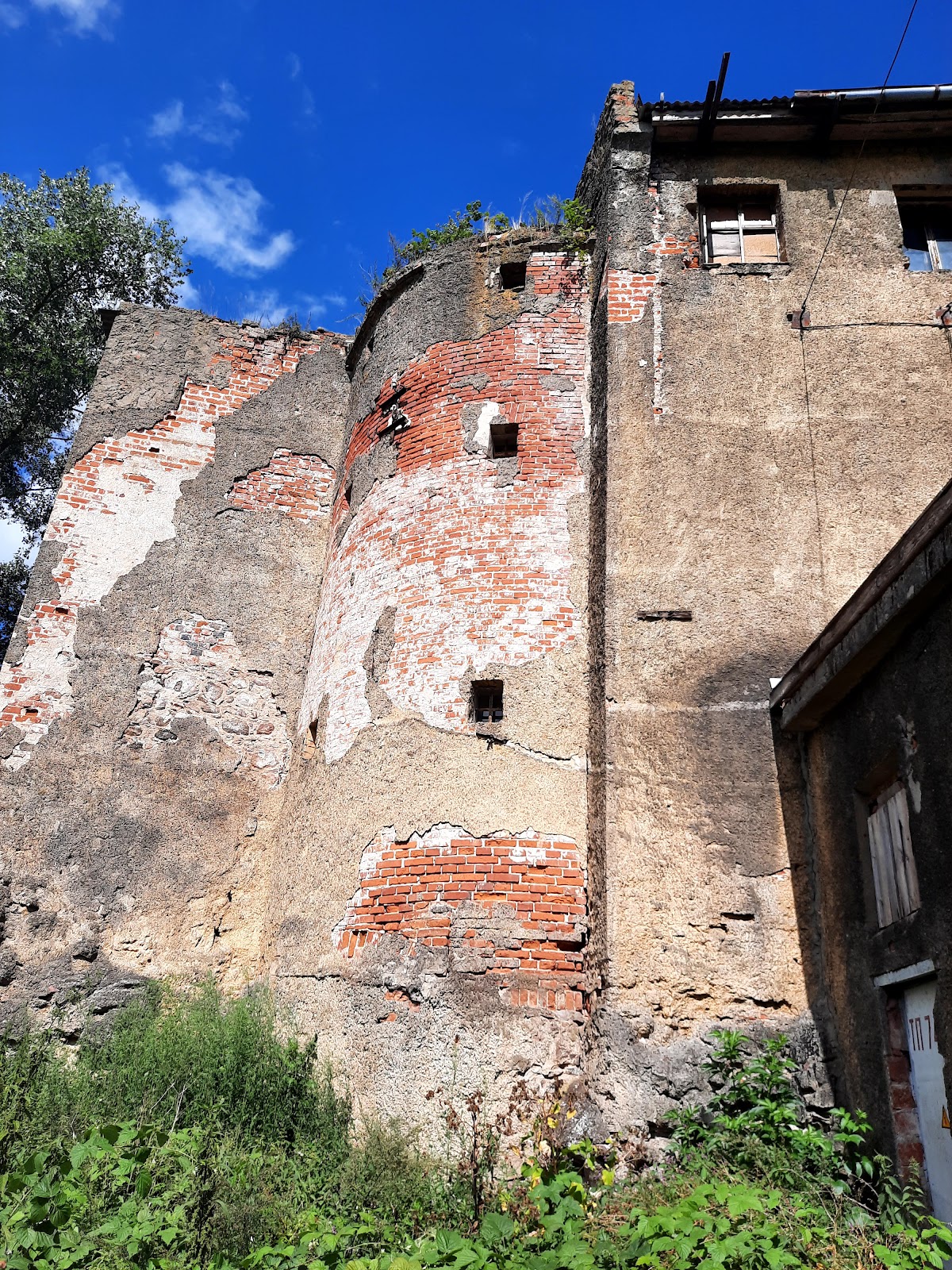
Labiau Castle stands in Polessk, Kaliningrad Oblast, beside the Laba River, formerly called the Deime. Its medieval complex consisted of four brick-and-stone buildings enclosed by defensive walls and a water-filled moat. Later rebuilding and industrial occupation changed the interior arrangement, while the 1968 fire left the surviving remains concentrated in the walls and cellars.
Medieval defensive complex
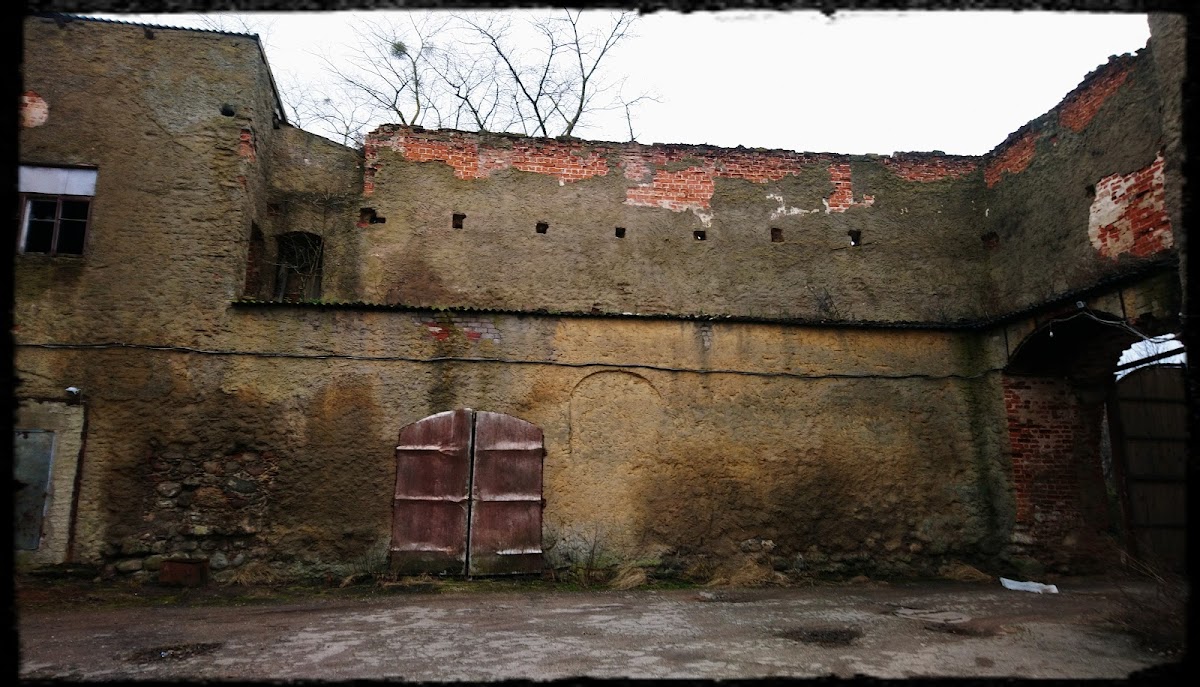
The original stone castle was built between 1277 and 1280 over earlier Prussian and Teutonic wooden-and-earth fortifications. By 1360, the four buildings were joined within a walled enclosure protected by a water-filled moat. The surviving walls preserve the principal remains of this fortified arrangement.
Interior and surviving fabric
The knight hall received painted decoration in 1564, and the castle was rebuilt in 1860 before its conversion into a prison. Later industrial use modified the rooms, stairways, and corridors. The 1968 fire destroyed the roof and part of the upper floors, leaving the walls and cellars as the surviving physical fabric. The complex has since been adapted for museum use, with a puppet theatre also located within the building.