Castell de Castellolí: A Medieval Castle and Frontier Stronghold in Spain



Site at a Glance
- Rating
- 4.1
- Popularity
- Low
- Country
- Spain
- Primary era
- Medieval
- Eras represented
- Medieval
- Civilizations
- Crown of Aragon
- Site type
- Military
- Remains
- Castle
On this page10 sections
History
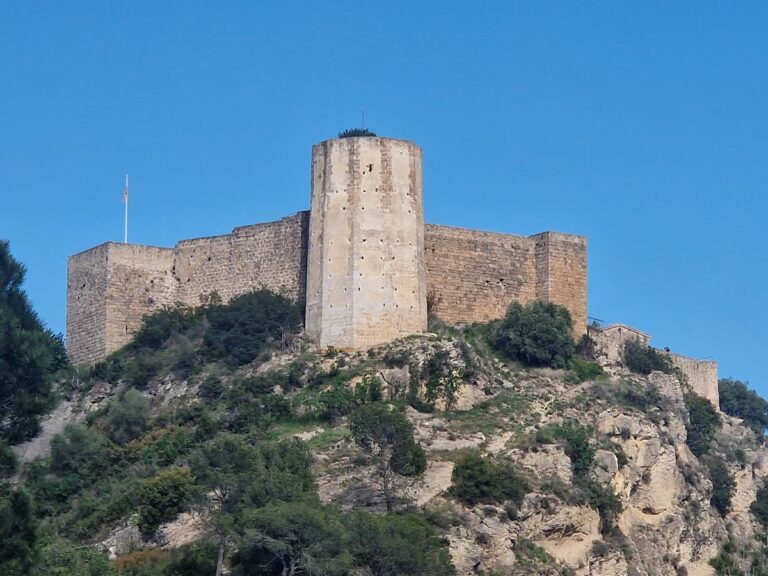
Castell de Castellolí is a heavily ruined medieval castle in Spain, near Bruguers in the municipality of Castellolí. Its earliest recorded mention dates to July 990, when land in the County of Manresa was placed within the territory of a castle called castrum Audelino. Built in a strategic position on the county frontier, it later became a possession of the Cardona family and remained connected with regional military and political conflicts for centuries.
Origins and early records
The castle was once known as Castell d’Aulí. Medieval records preserved its name in several forms, including Odelino, Adolino, Odolini, Udulini, Odolino, and Odilone. The historian and archivist Francesc Carreras i Candi linked these forms to a nobleman named Eulí, Aulí, or Odelí, whose name eventually developed into Olí.
In December 1003, Audesindo was killed while defending the castle during a siege by the Saracens. The term refers here to Muslim forces associated with the southern frontier of the medieval counties. Pope Sylvester II later mentioned the castle while confirming the possessions of the monastery of Sant Cugat del Vallès. The site appeared again in records from 1098 and 1131.
Castellany and feudal control
The record of 1131 refers to the castle’s castellany, the office and jurisdiction responsible for administering and defending a castle. Ramon Berenguer IV had entrusted this authority to the viscount Reverter, together with the administration of other castles.
After the Viscounty of Barcelona ended, King James I ordered Ramon Folc, Viscount of Cardona, to surrender the castles he held as a fief, meaning land or authority held from a superior lord in return for service and obligations. The order, issued in 1268, included Castellolí. Possession was to pass to Joan Pere Sabata, the royal bailiff of Montblanc, an official charged with carrying out royal administrative and judicial orders.
Cardona ownership and local conflicts
Castellolí remained involved in the political networks surrounding the Cardona family. In 1337, Guillem de Castellolí, named in the records as Guillem de Castell Auli, held the castle of Òdena for King Pere the Ceremonious and was associated with Ramon de Cardona. The jurors of Igualada objected to this relationship and repeatedly protested to the king.
A hearth register from 1359 counted 27 households at “Castellaulí of the Counts of Cardona.” A hearth register, or fogatge, was an enumeration of households often used for taxation. When the County of Cardona was created in 1375, Castellolí was incorporated into it. Conflicts between the Castellolins and Ocellons factions were later pacified by King Pere in 1384.
On 2 July 1416, a judicial sentence ordered Count Joan Ramon Folc of Cardona to pay 2,500 Aragonese gold florins to the donzel Bernat d’Argençola for rights connected with Castellolí Castle. A donzel was a member of the lower nobility. Together with the castles of Òdena and Claramunt, Castellolí remained a Cardona possession and maintained an antagonistic relationship with the royal town of Igualada until the seventeenth century.
Warfare and changing uses
During the Reapers’ War, the conflict between Catalan forces and the Spanish monarchy from 1640 to 1652, Castellolí and its castle played an important part in attempts to block the movement of Castilian troops. The site was also drawn into the First Carlist War, a nineteenth-century dynastic civil war in Spain. Castellolí became the centre of a military detachment established to defend the road and the approach to Igualada.
The adjacent church began as the Romanesque church of Sant Feliu and was later dedicated to Sant Vicenç. Romanesque architecture was a medieval style characterized by massive masonry, rounded arches, barrel vaults, and relatively small openings. Sant Vicenç served as the parish church until 1705.
Protection and heritage history
Castell de Castellolí is protected as a Cultural Asset of National Interest and as a Spanish heritage monument under reference RI-51-0005365. Heritage records associate the property with a 1949 date, while the designation is dated 8 November 1988. The site also carries architectural-heritage inventory number 746 in Catalonia.
Remains
The surviving complex occupies a strategically defensive position near the road linking Igualada and the Òdena Basin with Barcelona through Els Brucs. Its location related to the lands on the left bank of the Llobregat River and to two important routes across the medieval county frontier. Together with nearby Claramunt Castle, which controlled the passage through the Capellades gorge toward Penedès, Castell de Castellolí helped guard approaches associated with the frontier against the Saracens of Lower Penedès and the Camp de Tarragona.
Castle enclosure and interior
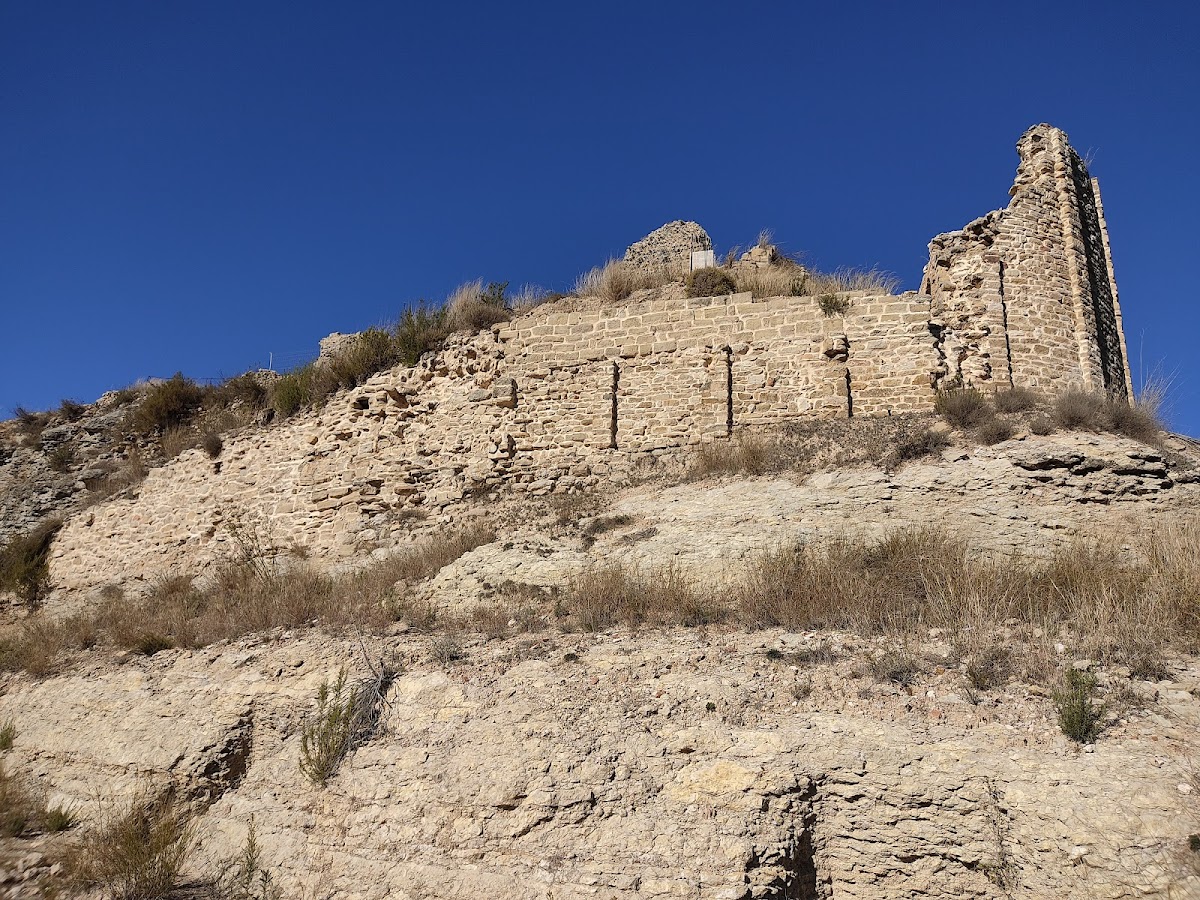
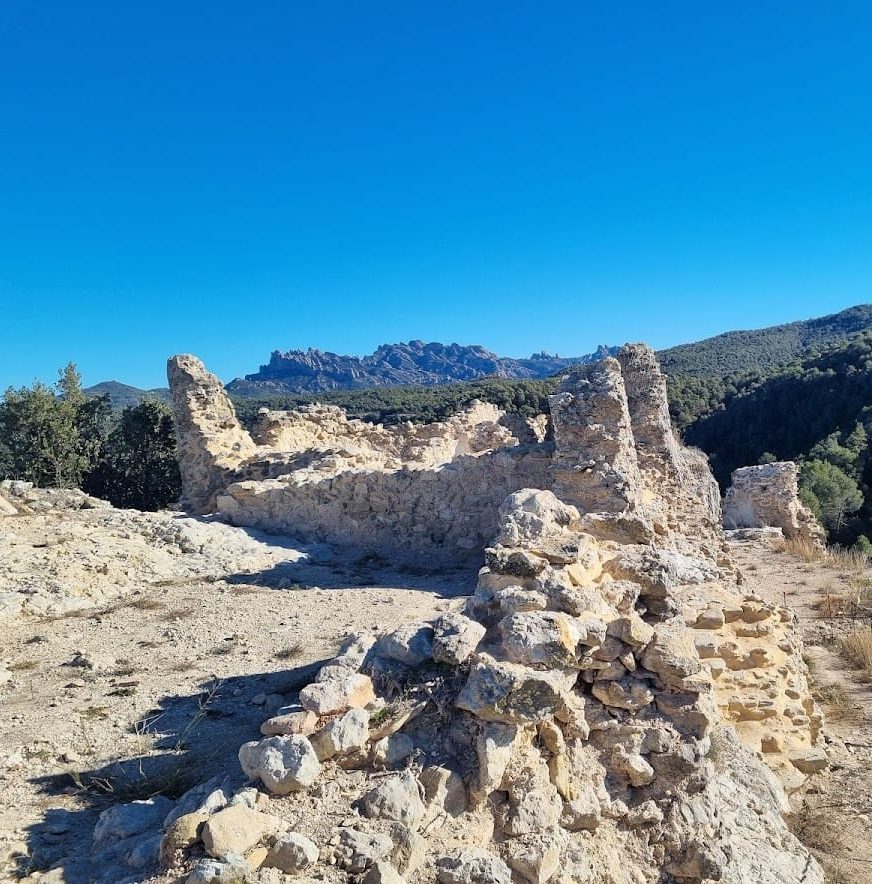
Important fragments of the castle’s enclosure wall remain, built from local stone bonded with mortar. The masonry consists of large, carefully squared blocks. Within the ruins are a large cistern and two rooms covered by semicircular barrel vaults. These surviving elements preserve parts of the castle’s enclosed defensive arrangement and water infrastructure. The remains also include construction from periods after the Middle Ages, reflecting continued changes to the complex.
Optical-telegraph tower
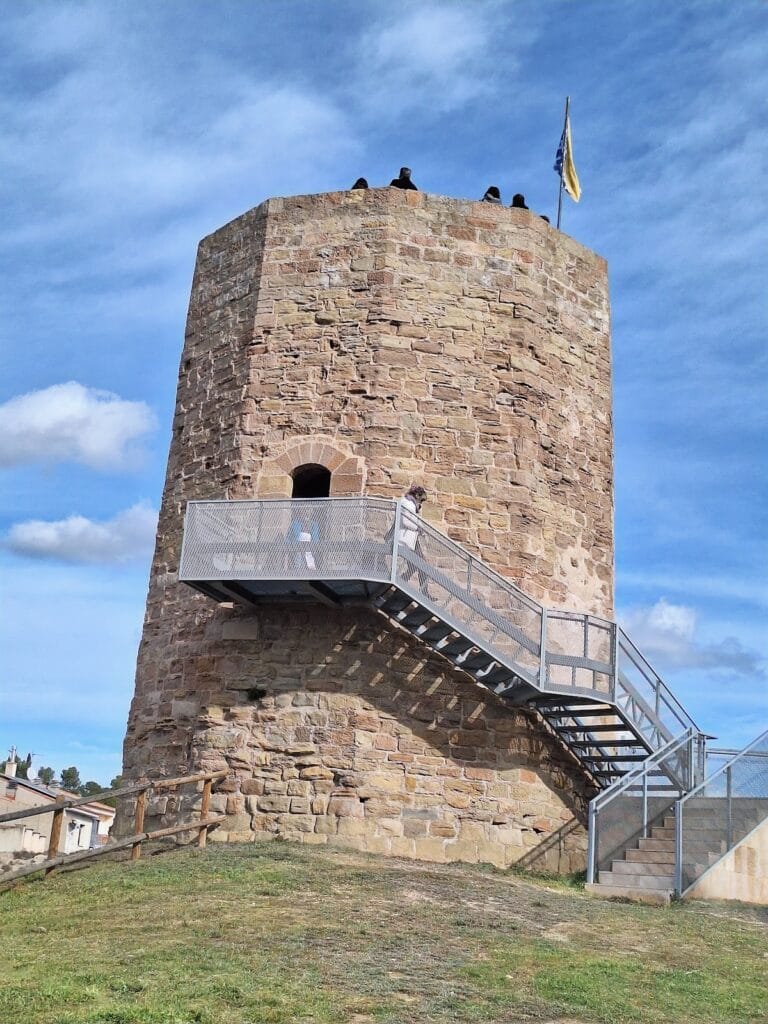
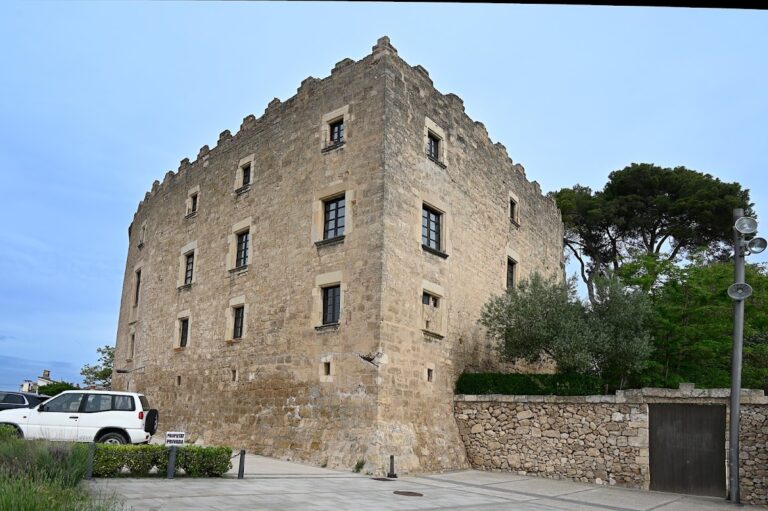
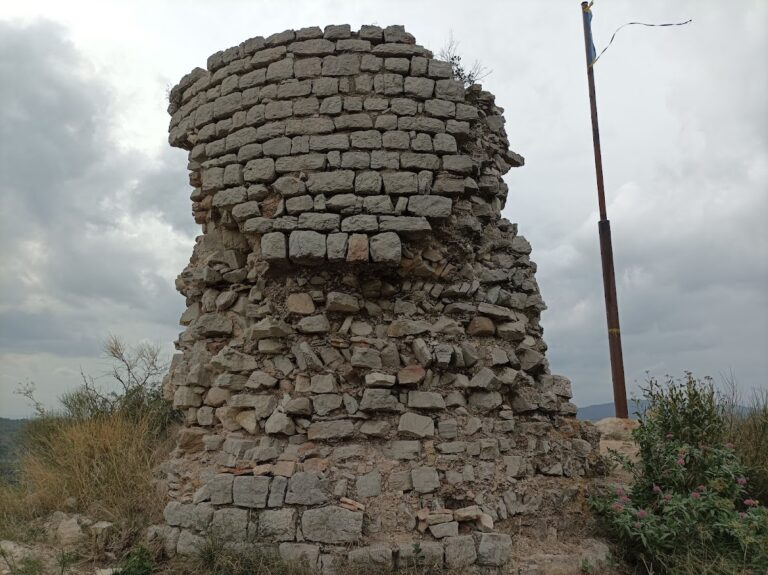
A later quadrangular tower survives among the castle ruins. It contains loopholes, narrow openings in a defensive wall or tower through which weapons could be used, and belonged to an optical-telegraph system. Optical telegraphy transmitted messages over long distances through a chain of elevated stations using visible signals. The tower therefore represents a later military and communications use of the site.
Church of Sant Vicenç
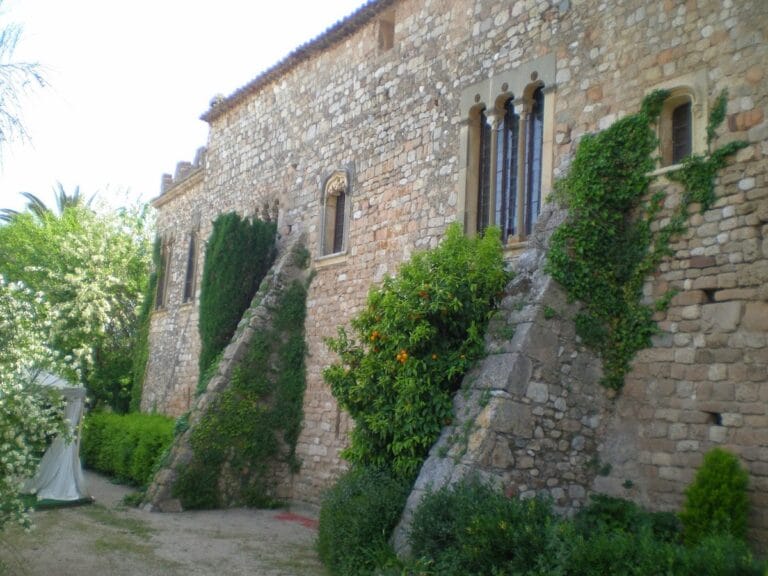
At one end of the castle complex stands the surviving apse of the former church of Sant Feliu, later dedicated to Sant Vicenç. The apse is decorated with Lombard-style bands and lesenes. Lombard bands are narrow strips of exterior masonry often combined with small blind arches, while lesenes are flat vertical strips that organize a wall surface.
Sant Vicenç was a single-nave Romanesque church with a barrel-vaulted roof. Small buttress-like projections appeared at regular intervals along the outer walls of the nave. The building was constructed from small, regular, well-cut stone blocks, and its roof was probably tiled. The surviving apse connects the ecclesiastical building with the castle remains at the edge of the complex.