Brandis Castle: A Medieval Fortress and Administrative Seat in Maienfeld
Site at a Glance
- Rating
- 5
- Popularity
- Very Low
- Country
- Switzerland
- Primary era
- Medieval
- Eras represented
- Medieval, Modern
- Civilizations
- Holy Roman Empire, Swiss
- Site type
- Military
- Remains
- Castle
On this page10 sections
History
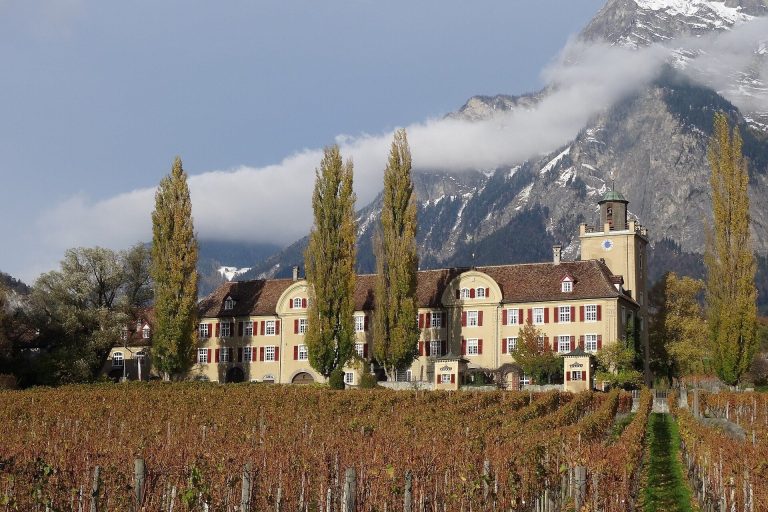
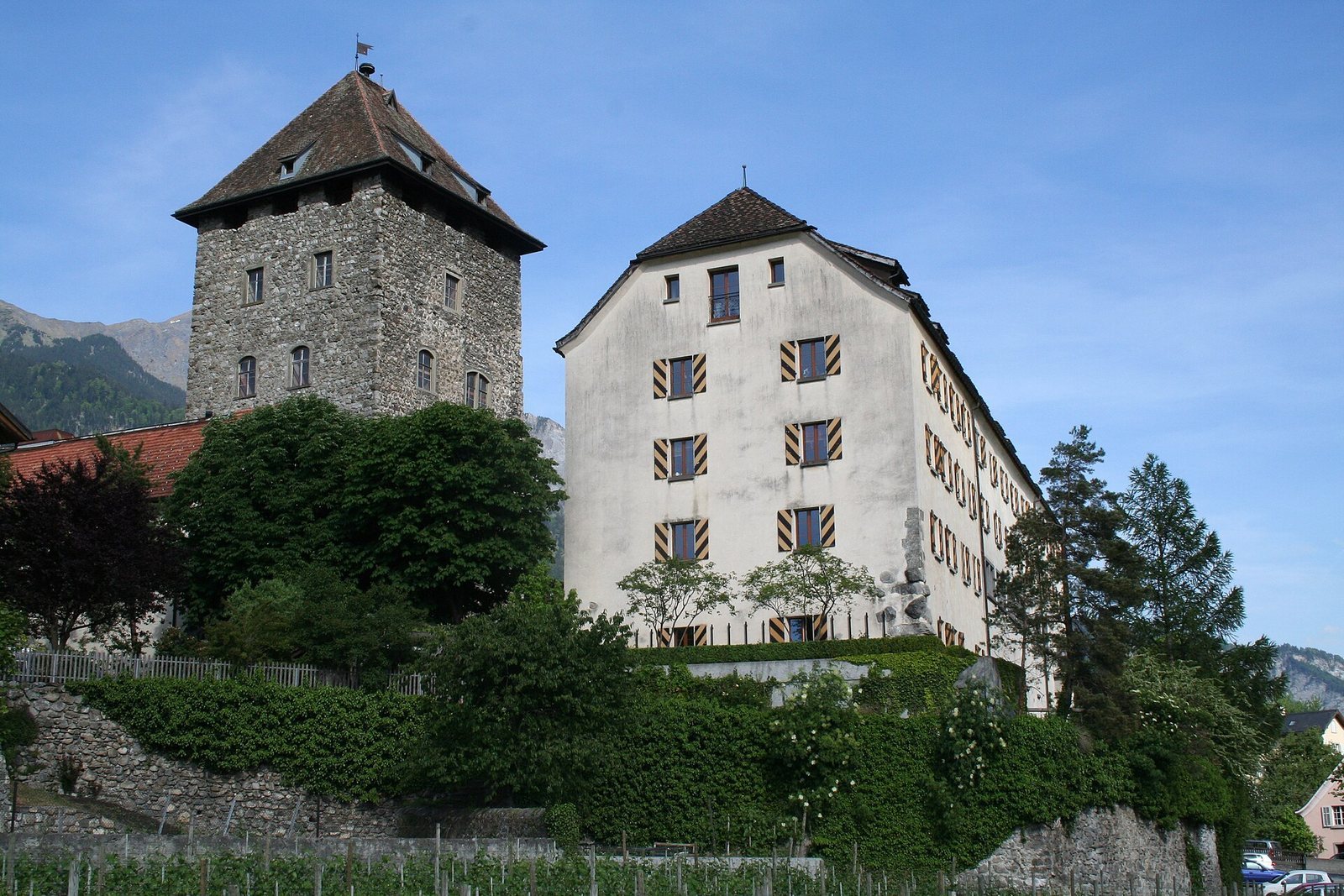
Brandis Castle is a medieval castle on the south side of Maienfeld’s old town in Switzerland, built by the Aspermont family in the thirteenth century. First known as Maienfeld Castle, it later housed regional rulers and became an administrative seat of the Three Leagues.
Early history and foundation
In the Roman period, Maienfeld was a customs station on the road between Zurich and Bregenz. After the Western Roman Empire fell, the area probably remained a local population centre, with some Roman buildings and fortifications still in use. During the High Middle Ages, the central centuries of medieval European history, a royal estate called curtis Lupinis was established there under the Carolingians, a Frankish ruling dynasty. A small fortified tower may also have been built near or on the castle site in the tenth century by the Lords of Bregenz, a noble house associated with the Lake Constance region.
The Aspermont family raised the castle on its own land. A timber from the tower came from a tree felled in 1247. In his will of 1282, Heinrich von Aspermont named his brother Egilolf as heir to the castle and lordship; Egilolf took possession in 1284. In 1295, he hosted a meeting at the castle where the Bishop of Chur and the Barons of Vaz made a treaty on neutral ground.
Toggenburg and Brandis rule
The Aspermonts kept Maienfeld when they sold most of their estates in Graubünden in 1338. By 1342, the castle belonged to the Lords of Windegg. Johann von Bodmann, son-in-law of Hartmann von Windegg, sold it in 1355 to Count Frederick V of Toggenburg for 5,600 gulden. The Toggenburgs paid the Counts of Werdenberg-Sargans the same amount for Maienfeld again in 1359. The reason for this second payment is unknown, though it may have settled rights still held by the Werdenbergs.
The Toggenburg counts expanded and strengthened the castle, lived there at times, and issued documents from it. Frederick VII added a residential wing. After his death in 1436, his widow remained at the castle for several months. Maienfeld joined the League of the Ten Jurisdictions that year. On 14 November 1437, the lordship and castle passed to the Brandis and Aarburg families through the marriage of Verena von Werdenberg-Sargans to Wolfram von Brandis. Thüring von Aarburg claimed a share through his marriage to Margarita von Werdenberg-Heiligenberg, the sister of Wolfram’s wife.
In 1446, Thüring and his daughter Verena sold their half-share to Wolfhart V von Brandis. During the Old Zürich War, a late-medieval conflict that affected the region, Wolfhart first fought alongside Schwyz and Glarus, then changed sides to support Zürich and Habsburg between 1444 and 1446. He later acquired the Aarburg share, bringing the castle under Brandis control. He made treaties with the League of the House of God and the Bishop of Chur in 1475, and with the League of the Ten Jurisdictions in 1477. The Brandis family gave the castle its present name. During their lordship, Maienfeld received several charters of liberties, and townspeople served as castle wardens. Wolfhart died at the castle in 1477.
The Three Leagues and conflict
During the Swabian War of 1499, a conflict involving forces from Graubünden and Habsburg, the Brandis lords opened Maienfeld to Habsburg troops on 7 February. Six days later, Graubünden forces captured the town and castle, plundered the town, and took Sigmund and Thüring von Brandis prisoner to Chur. There they were handed over to their brother Johannes, provost of Chur Cathedral. The Brandis family tried to sell Maienfeld for financial reasons, but negotiations with Emperor Maximilian failed. In 1509, the Three Leagues, a political alliance in Graubünden, bought Maienfeld and the castle for 20,000 gulden and established an administration there.
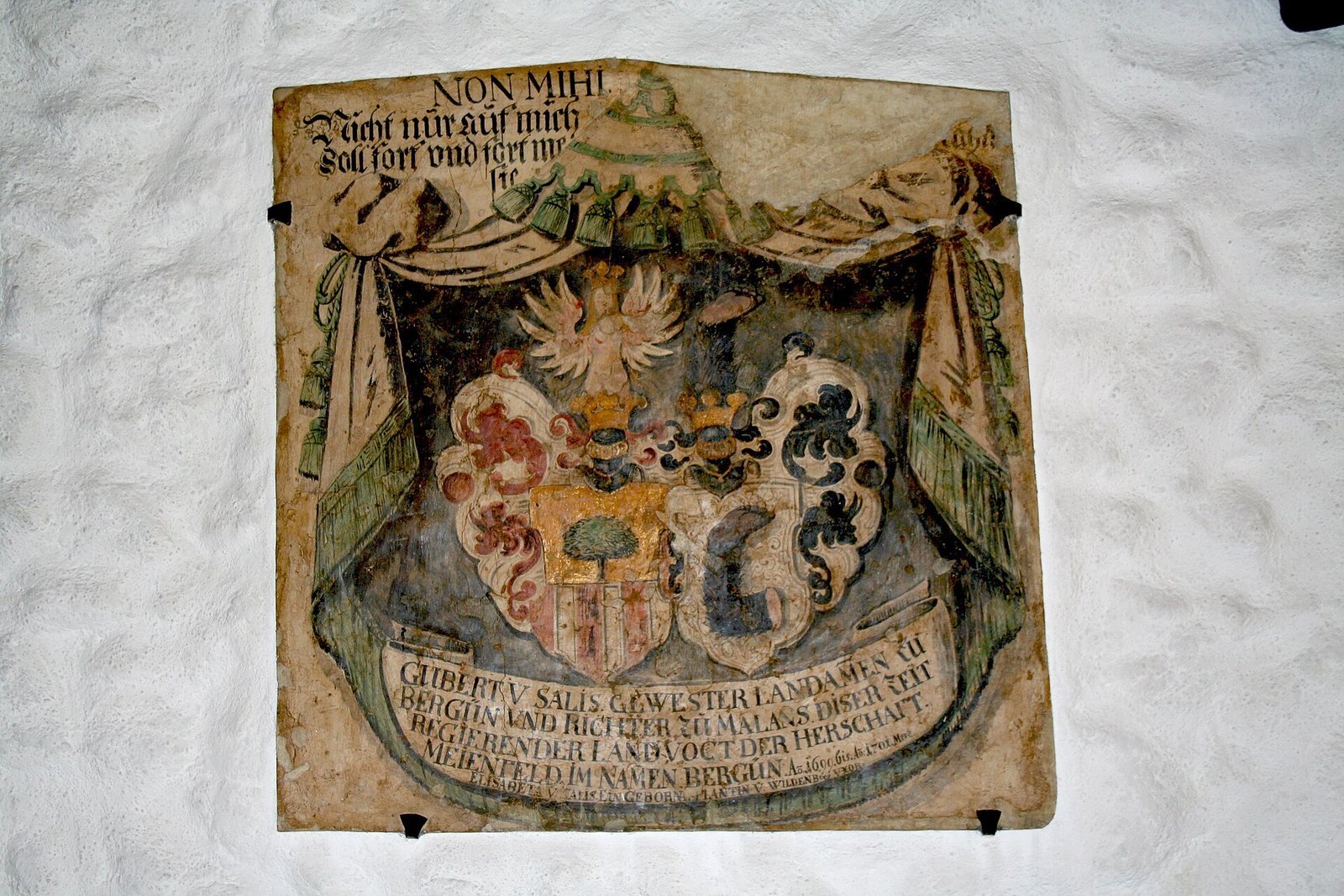
The Three Leagues appointed governors to manage the territory from the castle. Carli von Hohenbalken was the first governor and Jakob Ulrich Sprecher von Bernegg the last; members of the von Salis family also held the office.
Fires, damage, and later use
Austrian troops under General Alois Baldiron were quartered at the castle in 1622. It survived the major town fire and other fighting that year, but Austrian troops set it alight as they withdrew on 1 April 1624. After temporary repairs, governors lived there until about 1700. A town fire in 1720 damaged the castle so severely that it was barely habitable. French troops occupied it in March 1799 and burned most of its woodwork for fuel.
Maienfeld acquired the ruined, uninhabitable complex in 1807 and sold it to private owners in 1837. In 1860, the Frauenturm and sections of the ring wall and gate system were demolished. The main tower was repaired and enlarged in 1868, and its interior was remodelled that year and again in 1975. In the late 1960s, builder Thomas Zindel acquired the complex and undertook renovation and expansion. A restaurant has operated in the castle since 1968, and the New Castle became an apartment building in 1971. Archaeological investigations followed in 1972 and 1973. Brandis Castle is a Swiss heritage site of national significance.
Remains
Layout and defenses
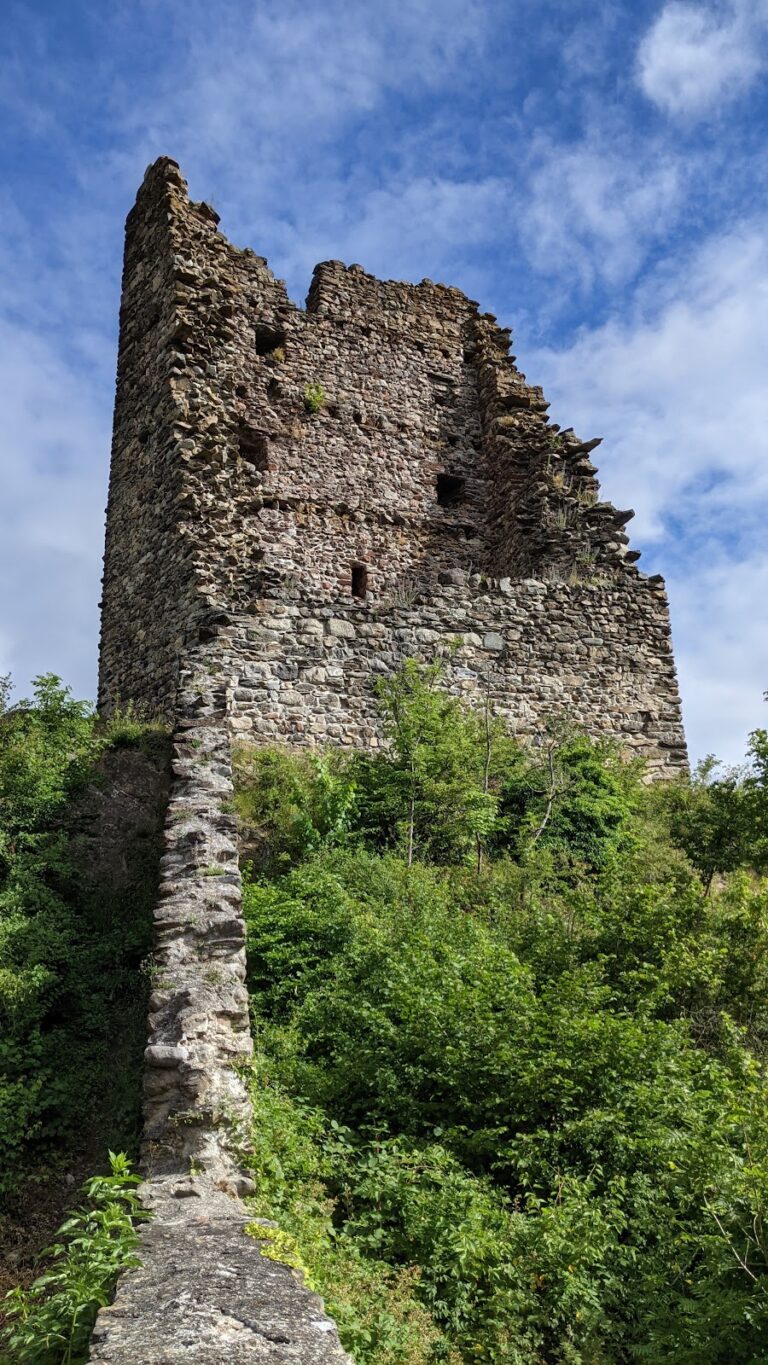
The castle forms an approximately square complex, once separated from the rest of Maienfeld by a moat and a ring wall. Its older northwest wing, which includes the tower, and the newer southwest wing run parallel, with a courtyard between them. Fragments of the ring wall, thought to date from the fourteenth or fifteenth century, survive. One curved section lies north of the tower.
Main tower
The six-storey tower is square, measuring about 12.5 metres on each side, with walls roughly 2.5 metres thick. Its original entrance was high on the southwest side, at the level of the third floor, and was reached by an outside stair. Most windows and the entrance at ground level were added later. Battlements originally crowned the tower; its present roof dates to 1906.
Residential buildings
Remains of the old castle lie southeast of the tower. The building that now contains the restaurant is thought to have been erected over medieval structures. Across the courtyard from the tower, the New Castle, also called the Toggenburg House, preserves medieval fabric. A round, defensive turret once stood at the complex’s southern corner.
Wall paintings
Swiss art historian Johann Rudolf Rahn discovered frescoes, paintings made on freshly applied wet plaster, in the northwest wing in 1898. Tree-ring dating places the third-floor paintings in 1247 and those on the fourth floor after that year. The fifth-floor paintings date from 1310 to 1350, with about 1320 proposed as an approximate date. Their scenes include courtly love, a medieval ideal of romantic devotion associated especially with aristocratic culture, as well as inns and taverns, tournaments and duels, an elephant, a griffin, a grape harvest, the story of Samson, Theoderic the Great, and coats of arms. The fifth-floor works have been tentatively attributed to the Waltensburg Master, an unidentified medieval painter; Berchtold has also been suggested as their painter. They are the only known secular paintings attributed to the Waltensburg Master and are in poor condition. The fifth floor was once divided into several rooms, and paintings on the partition walls were lost when those walls were removed. In a side room, painted decoration imitates marble and finely cut stone blocks.