Pfafers Abbey: A Benedictine Monastery and Baroque Heritage Complex in Switzerland
Site at a Glance
- Rating
- 4.8
- Popularity
- Very Low
- Country
- Switzerland
- Primary era
- Early Modern
- External website
- Open
- Eras represented
- Early Modern
- Civilizations
- Swiss
- Site type
- Religious
- Remains
- Monastery
On this page12 sections
History
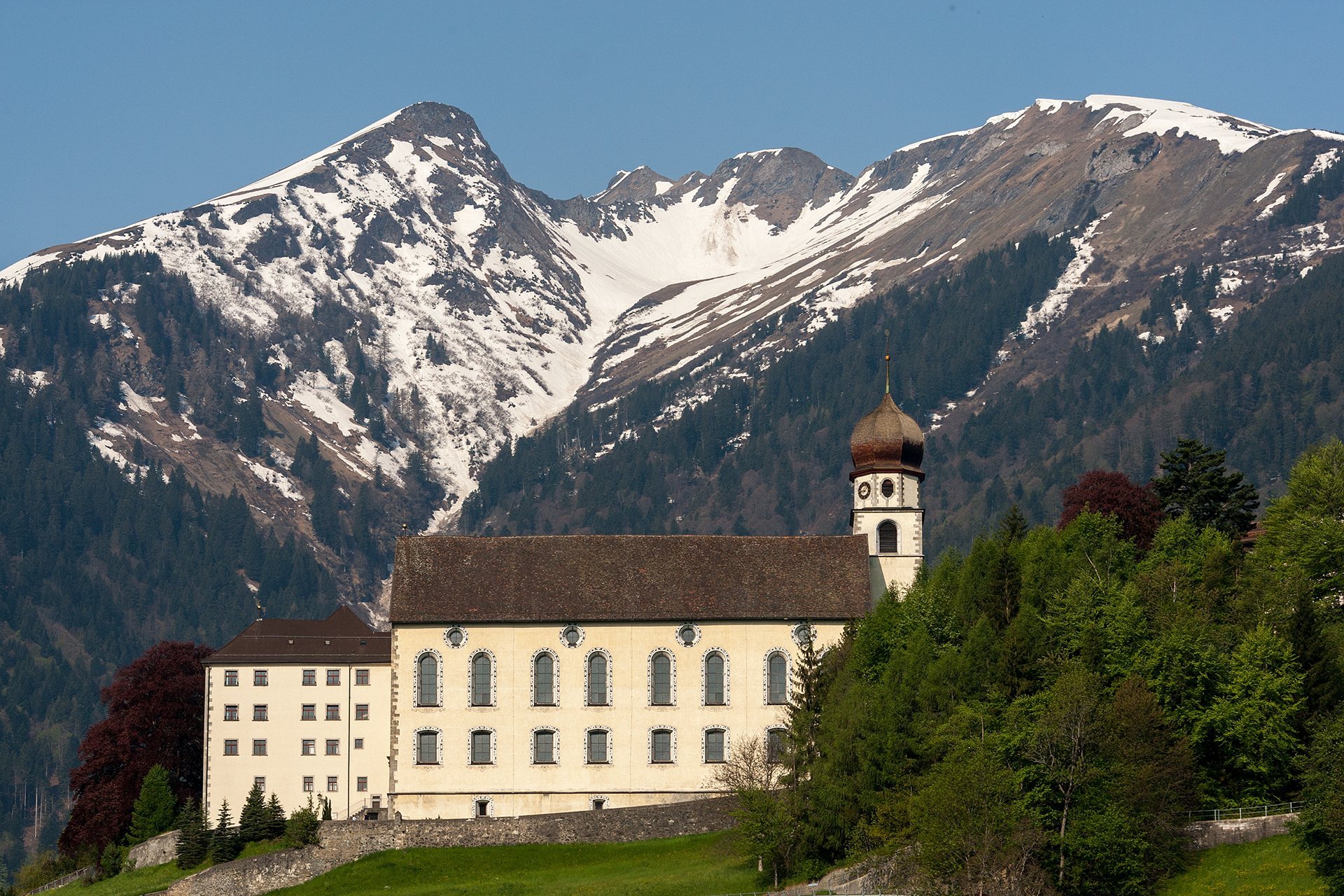
Pfafers Abbey was a Benedictine monastery in Switzerland, founded in 731 by monks from Reichenau Abbey near the junction of the Tamina and Rhine valleys. Its surviving complex is Baroque, rebuilt after a fire in the seventeenth century and completed in 1694. The foundation tradition associates the monastery with Saint Pirmin, an eighth-century itinerant bishop and monastic founder, while its first documentary mention dates to 762.
Foundation and regional power
The abbey was known in Latin as Monasterium Fabariense, meaning “bean field.” Its position gave it control of the important route over Kunkels Pass and toward the Alpine passes leading into Italy. Together with the episcopal city of Chur, Pfäfers became one of the leading ecclesiastical centres of Chur-Raetia, the Alpine region centred on Chur and administered through the Diocese of Chur. During the ninth and tenth centuries, it founded numerous regional parishes.
Pfäfers controlled extensive and widely scattered lands, together with dependent people. Its possessions were concentrated in eastern Switzerland, particularly between Weesen and Maienfeld, but also reached into present-day Baden-Württemberg, the Bregaglia Valley, the Vinschgau, and South Tyrol. In 840 Emperor Lothair I confirmed the monastery’s right to elect its abbot freely. In 861 it received ecclesiastical immunity and royal protection.
Royal grants and ecclesiastical conflicts
In 905 King Louis the Child granted Pfäfers to Solomon III, Bishop of Constance and at the same time Abbot of St. Gall. The arrangement probably placed the abbey under St. Gall while Solomon and his nephew Waldo held a life usufruct, or right to use its revenues and possessions. This caused conflicts between the bishops of Chur and the Abbey of St. Gall. Otto I confirmed Pfäfers’s freedom to elect its abbot again in 949.
During the Investiture Controversy, the medieval struggle between secular rulers and the papacy over the appointment of church officials, Pfäfers once more came under outside control. Henry IV granted it to the Diocese of Basel in 1095. In 1114 Basel exchanged the abbey with Henry V for Rappoltstein Castle in Alsace, but Pope Paschal II restored its independence in 1116.
In the early Middle Ages, Pfäfers remained the leading monastery of the Diocese of Chur and an intellectual centre for the region. Its historical and institutional memory was preserved in the Liber Aureus, its principal historical source, the Liber Viventium, a memorial book, and the Vidimus Heider, a cartulary describing its possessions and rights.
Protectors and political change
Otto IV assigned the monastery’s secular protectorship in 1208 to the Barons of Sax. In 1257 Abbot Rudolf of Bernang bought it back for 300 silver marks, and in 1261 transferred it to the Lords of Wildenberg of Freudenberg Castle. Separate protectorates later covered Freudenberg and Ragaz, as well as the monastery and the upper Tamina Valley. These rights subsequently passed to the counts of Werdenberg-Sargans and Werdenberg-Heiligenberg.
Pfäfers bought back the protectorship in 1397, and King Rupert granted the abbey the right to choose and dismiss its own protector in 1408. After the Old Swiss Confederacy acquired the County of Sargans, the abbey became a protectorate jointly administered by the Confederacy’s cantons. The Swabian War and the Reformation brought serious political and financial difficulties. Abbot Johannes Heider briefly restored the monastery’s position between 1586 and 1600, but the Swiss Benedictine Congregation later assumed its administration.
Rebuilding after the seventeenth-century fire
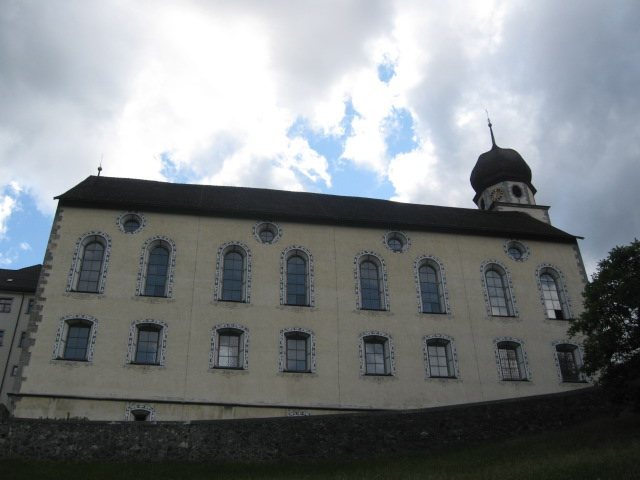
A fire destroyed the medieval monastery and church in 1665. Abbot Justus Zink began rebuilding in the Baroque style in 1672, following plans by Giovanni Serro and Giulio Barbieri. He resigned under pressure in 1676 during a financial crisis. His successor, Abbot Bonifaz I Tschupp, restored the abbey’s finances and completed the new complex in 1694. The rebuilt monastery stood higher and closer to the mountain slope than the medieval buildings, and the new abbey church was dedicated that year.
A dispute over the election of Ambrosius Müller in 1734 led Zürich to refuse confirmation of his appointment. Johannes Scheuchzer was then commissioned to investigate the abbey’s imperial privileges. Several documents presented as evidence of imperial and papal rights were judged probable seventeenth-century forgeries. Federal negotiations in 1738 nevertheless confirmed Pfäfers’s judicial rights over Pfäfers, Vättis, Valens, and Ragaz.
Dissolution and later institutional use
An uprising by the abbey’s subjects in 1794 was suppressed by the federal bailiff of Sargans. When Sargans was released from the Confederacy on 11 November 1798, Abbot Benedikt Bochsler was also required to declare his subjects free. The French invasion then brought the monastery’s abolition and partial destruction. The abbot returned with several monks in 1801, and the monastery was formally restored in 1803 after the foundation of the canton of St. Gallen.
The canton abolished the abbey and confiscated its assets in 1838. The last abbot, Plazidus Pfister, had sought secularization in Rome, but Pope Gregory XVI rejected the request in a letter dated 20 March 1838. Catholic confessional authorities continued unsuccessfully to seek the return of the assets until November 1839.
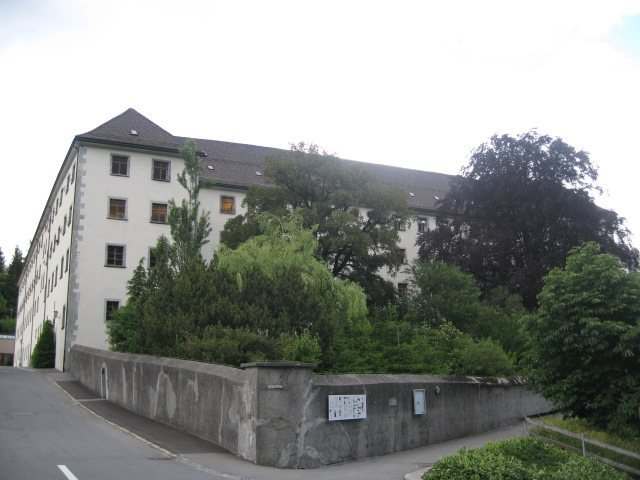
On 14 November 1845, the former abbey buildings became the cantonal psychiatric institution of St. Pirminsberg, now St. Pirminsberg Psychiatric Hospital. The former abbey church of St. Mary serves as the parish church of Pfäfers. The abbey’s valuable cultural property was auctioned and dispersed among museums internationally, while its archives were transferred to the St. Gallen Abbey Archive in 1853. The former abbey is protected as a cultural property of national importance.
The Tamina spring and Bad Pfäfers
The abbey was also closely connected with the mineral spring in the Tamina Gorge. Medieval traditions place its discovery either in 1038, through Karl von Hohenbalken, or in 1242, through two servants of the abbey. The first bathing facilities were established in 1242 under Abbot Hugo of Villingen. Fires and rockfalls repeatedly damaged the spring and its buildings, and the abbey rebuilt the bathing facilities between 1704 and 1718.
The baths became famous during the sixteenth century through the presence of Ulrich von Hutten and a 1535 writing by Paracelsus. Under Abbot Johann Jakob Russinger, a 250-foot wooden staircase was built along the cliff into the gorge in 1543. In the seventeenth century, the spring was promoted as the “queen of all healing springs,” and the baths eventually accommodated as many as 500 guests.
After the abbey’s abolition, the spring passed to the canton of St. Gallen. A pipeline carried its water to Ragaz in 1839 and 1840, helping Ragaz develop into a spa town. The baths continued operating until 1969. Part of the deteriorated complex was demolished in 1971, while the surviving buildings were restored in three stages between 1983 and 1985.
Remains
Baroque abbey complex
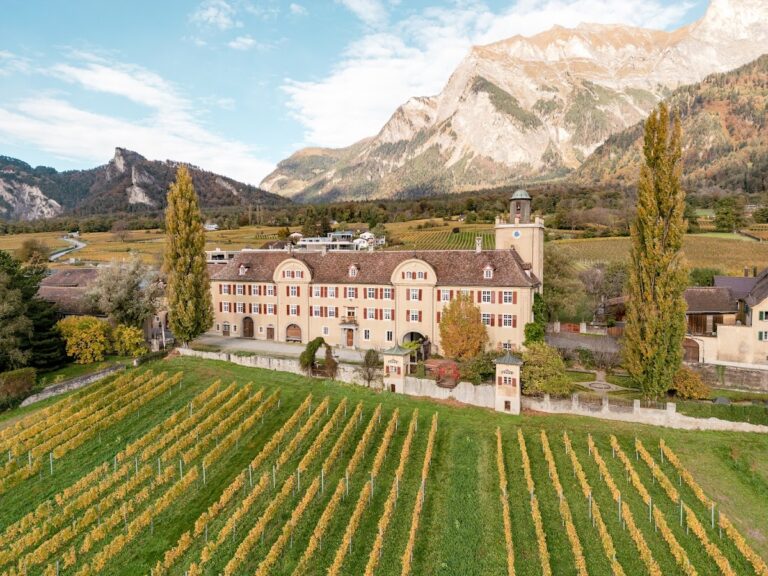
The surviving abbey stands in a higher position and nearer the mountain slope than the medieval monastery destroyed by fire. Its seventeenth-century buildings form a Baroque complex completed in 1694. The former abbey church of St. Mary is now the parish church of the Catholic parish of Pfäfers, while the former monastic buildings are occupied by St. Pirminsberg Psychiatric Hospital.
An organ made by Johann Matthäus Abbrederis was installed in the psallier choir, the part of the church reserved for the monastic choir’s liturgical singing, in 1693 and 1694. The instrument remains preserved.
Manuscripts and cultural possessions
The abbey’s surviving or historically associated manuscripts include the Liber Aureus, the Liber Viventium, and the Vidimus Heider. Together, they preserve evidence of the monastery’s history, memorial practices, and possessions. The abbey archive is now held at the St. Gallen Abbey Archive.
The Wolfurter Cup, a famous thirteenth-century vessel donated by Konrad von Wolfurt, was among the monastery’s cultural treasures. It was part of the body of property dispersed after the abbey was abolished. The bones of the blessed archpriest Nicolò Rusca were kept at Pfäfers from 1619 to 1845 and are now in the Collegiate Church of Sondrio in the Valtellina.
Heraldic tradition
The abbey’s emblem shows a white dove flying to the right with a blood-marked wooden splinter in its beak on a red field. The image refers to the foundation legend in which a dove showed Saint Pirmin the place where the monastery should be built. The municipality of Pfäfers uses the emblem, and the arms of neighbouring Bad Ragaz derive from the same tradition, showing a white dove on a blue field.
Bad Pfäfers in the Tamina Gorge
From the fourteenth century, bathhouses or bathing rooms were built astride the Tamina River in the gorge. The later Bad Pfäfers complex contains buildings restored by the abbey between 1704 and 1718. Portions of the complex survive, and the restored buildings are described as the only surviving Baroque bathing establishment in Switzerland.
The baths were linked to the gorge by the 250-foot wooden staircase built along the rock face in 1543. After the spring was connected to Ragaz by pipeline in 1839 and 1840, Ragaz developed into a spa town at the former site of Bad Pfäfers in the gorge. The remaining bathing buildings were restored between 1983 and 1985 after part of the deteriorated complex had been demolished in 1971.