Liebfrauenkirche: Westerburg’s Marian Pilgrimage Church
Site at a Glance
- Rating
- 4.8
- Popularity
- Medium
- Country
- Germany
- Primary era
- Modern
- External website
- Open
- Eras represented
- Modern
- Civilizations
- German, Kingdom of Prussia
- Site type
- Religious
- Remains
- Church
On this page10 sections
History
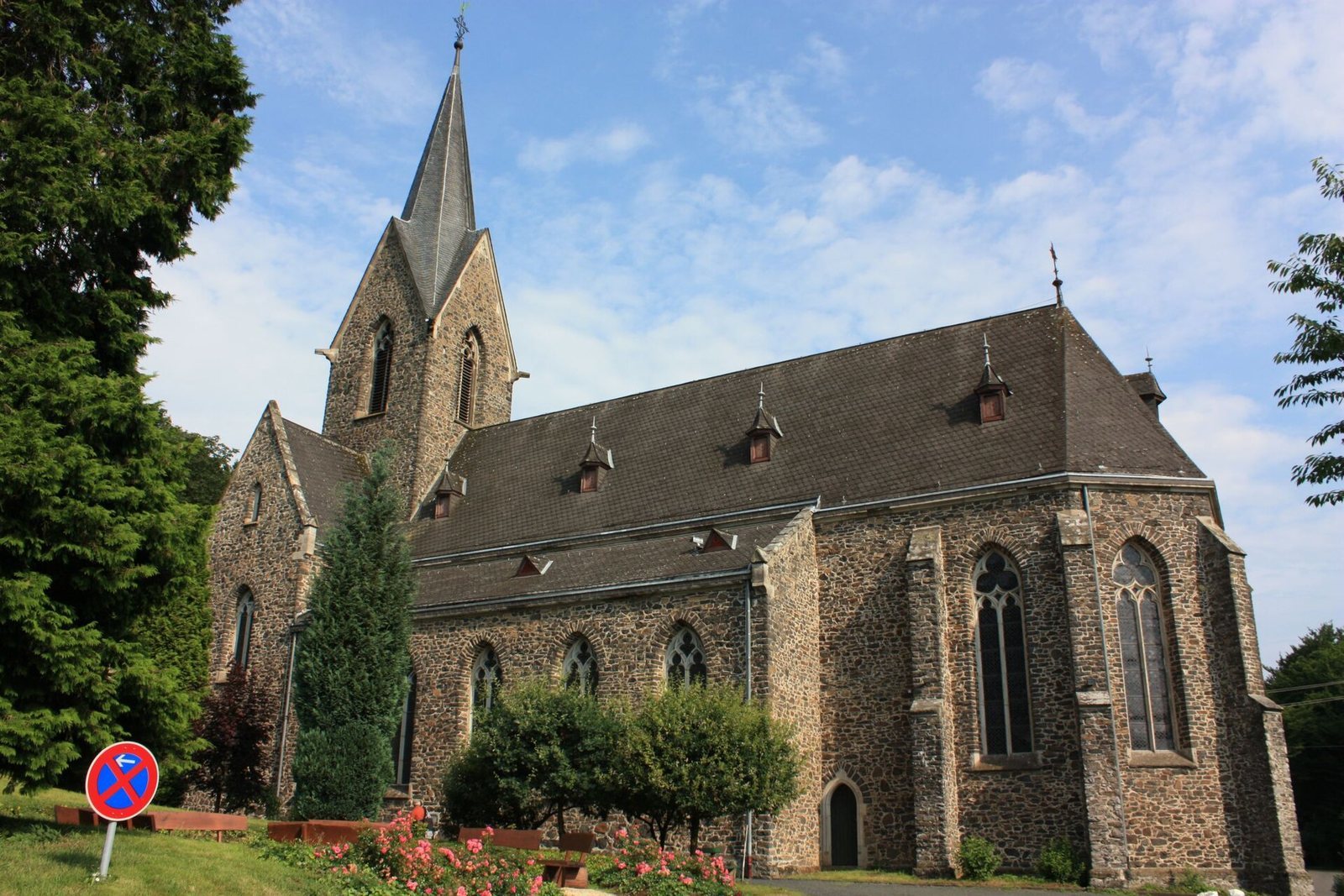
Liebfrauenkirche, also called the Church of Our Lady of Reichenstein, is a Catholic pilgrimage church on Reichenstein near Westerburg, Germany. The present church was consecrated in 1899 in the Neo-Gothic style, a nineteenth-century revival of Gothic forms. Its pilgrimage tradition began in the Middle Ages and has continued through changes to the church and its role in the town.
Medieval pilgrimage
Reinhard I of Westerburg, a nobleman of the Westerburg house, commissioned a Marian chapel on Reichenstein in 1310. Known as Reinhard’s Chapel, it received an enthroned Madonna in 1350. The image became a focus for local pilgrims during the fourteenth century. In 1430, the image of the Sorrowful Mother was installed in the chapel.
Late in the fifteenth century, the chapel was enlarged into a church. Johann II of Baden, archbishop of Trier, consecrated it on 15 February 1498. Five confraternities, devotional associations organized around shared religious practice, were linked to the church: those of Our Lady, the priests, St Anne, St James, and St Sebastian and Mary Magdalene. They arranged pilgrimages to Westerburg from across the Rhineland.
Suppression and nineteenth-century revival
After the Reformation, a sixteenth-century movement that reshaped Western Christianity and led to the formation of Protestant churches, spread through the County of Leiningen-Westerburg, the counts suppressed the pilgrimage church and removed its miraculous image. The building fell into ruin, though pilgrimage to the site continued to some extent.
From 1860, Countess Seraphine von Leiningen promoted the establishment of a Catholic church near Westerburg, and the image removed from the old church was returned. Dominikus Willi, then abbot of Marienstatt and soon to become bishop of Limburg, laid the new church’s foundation stone in 1898. The church was consecrated on 22 September 1899. Two additional confraternities were established, dedicated to the Good Death and the Most Blessed Sacrament.
Parish role and renewed devotion
The Diocese of Limburg made Liebfrauenkirche Westerburg’s parish church in 1925. In 1964, the newly built Christ the King Church assumed that role, and Liebfrauenkirche returned to use solely as a pilgrimage church. The historic enthroned Madonna was transferred to the new parish church.
In 2013, a color copy of the enthroned Madonna was placed in the small chapel on Reichenstein, and Abbot Andreas Range rededicated the Marian spring, a water source associated with devotion to Mary. After Christ the King Church was deconsecrated on 18 January 2026, Liebfrauenkirche again became Westerburg’s parish church.
Remains
Building and interior
Plan and west end
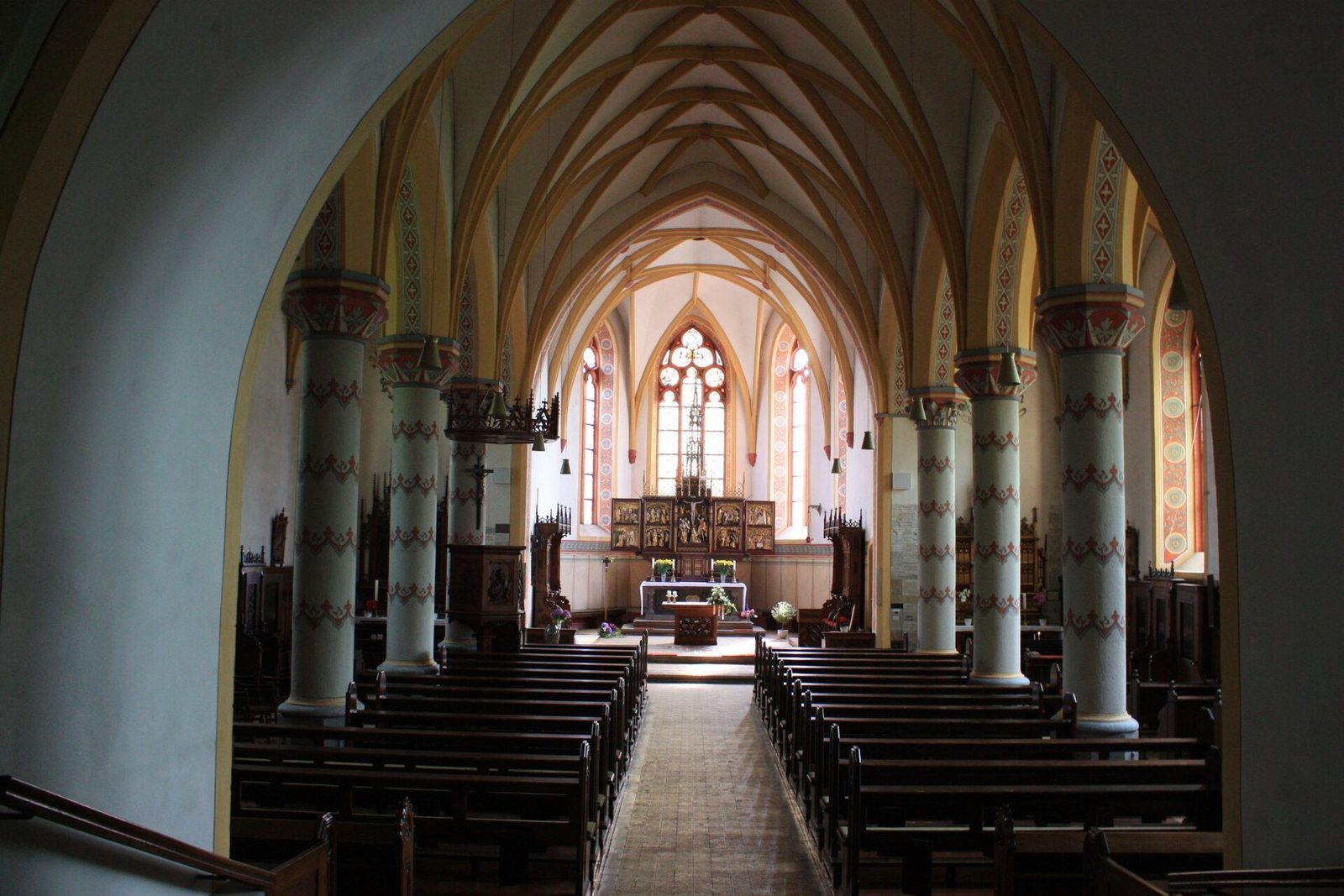
The church is a west-to-east, three-aisled Neo-Gothic basilica, with a central nave higher than the side aisles and a choir extending the nave at the east end. At the west, the portal section is arranged as a transept, the crosswise part of a church that intersects its nave. A tower set back above the transept and nave resembles a crossing tower, a tower rising above such an intersection.
Inside, the transept forms a vestibule five steps above the nave floor, with a gallery running across its full width. The church has about 140 seats and four confessionals.
High altar
The central choir contains a winged altarpiece, an altar with hinged panels that reveal different images when opened or closed. Its open panels show nine scenes from Mary’s life; when shut, they depict the five Sorrowful Mysteries, meditations on episodes from Jesus’ Passion. A central scene of the Crucifixion remains visible in either position.
Side altars
The left side altar is dedicated to St Joseph. The right one displays the image of the Sorrowful Mother, which was installed at the site in 1430 and is now kept again in the church. The image resembles one at Marienstatt Abbey.
Other devotional features
A niche in the transept holds a statue of St Anthony of Padua. On Reichenstein, a small chapel contains the color copy of the enthroned Madonna, while the historic Marian spring remains associated with the site.