Schloss Griesbach: A Medieval Castle and Administrative Seat in Bavaria
Site at a Glance
- Rating
- 4.6
- Popularity
- Low
- Country
- Germany
- Primary era
- Modern
- External website
- Open
- Eras represented
- Medieval, Early Modern, Modern
- Civilizations
- Duchy of Bavaria, German, Holy Roman Empire, Kingdom of Bavaria
- Site type
- Civic
- Remains
- Palace
On this page7 sections
History
Origins and noble ownership
Schloss Griesbach is a castle in Bad Griesbach im Rottal, Germany. First recorded in 1076, it was probably founded by the Counts of Vornbach. In 1078, during the Investiture Controversy, a medieval dispute between secular rulers and the papacy over appointments to church offices, forces of King Henry IV destroyed it because the Vornbachs’ supporters backed the pope. The date of rebuilding is unknown, but it probably followed the counts’ return from exile in Hungary in 1099.
At the start of the 12th century, the Vornbachs granted the castle to their vassals, the Lords of Griesbach-Waxenberg. The lords gradually converted their holdings into allodial property, land held outright rather than as a feudal grant. Their family line ended around 1220. The Counts of Vornbach had already died out in 1158, and their heirs, the Counts of Andechs, lost power in the Rottal and along the Inn after their involvement in a regicide and their outlawry in 1208.
A charter of 1241 names Rapoto II of the Ortenburg family as inheritor of the holdings. Rapoto was a Bavarian count palatine, a high-ranking noble with territorial authority. How he acquired the claim is unclear, though he probably took control of the lands. Meanwhile, the Austrian Babenbergs annexed territories east of the Great Mühl and Wurmbrandbach in the Upper Mühlviertel. Rapoto established Griesbach as a central administrative base for the Rottal and the Inn.
Ducal administration and conflict
In 1256, marriage transferred Griesbach to Hartmann I of Werdenberg, who sold the castle to Duke Henry XIII of Bavaria in 1260. Henry assumed the Ortenburg administration and established a ducal district court. Its first recorded administrator, Wigund, appears in 1262. A separate treasury and storehouse office also operated there; Wernher der Auer, in office from 1382 to 1385, is its first recorded official.
The castle was expanded as a seat of territorial government, particularly from 1460 to 1478. During the War of the Landshut Succession in 1504, a conflict over the inheritance of the Duchy of Bavaria, the town of Griesbach suffered destruction while the castle escaped it. The War of the Austrian Succession, a wider European dynastic conflict, badly damaged the castle in 1743, but repairs followed soon afterward.
Fire, rebuilding, and later use
The district court and fiscal office were dissolved in 1799 and replaced by a provisional district court. A revenue office followed in 1802. A fire on 8 May 1805 destroyed almost the entire castle. The revenue office moved first to St. Salvator Monastery and then, in 1808, to Ortenburg Castle. In 1810, Burghausen court architect Franz Anton Glonner rebuilt the complex on its old foundations.
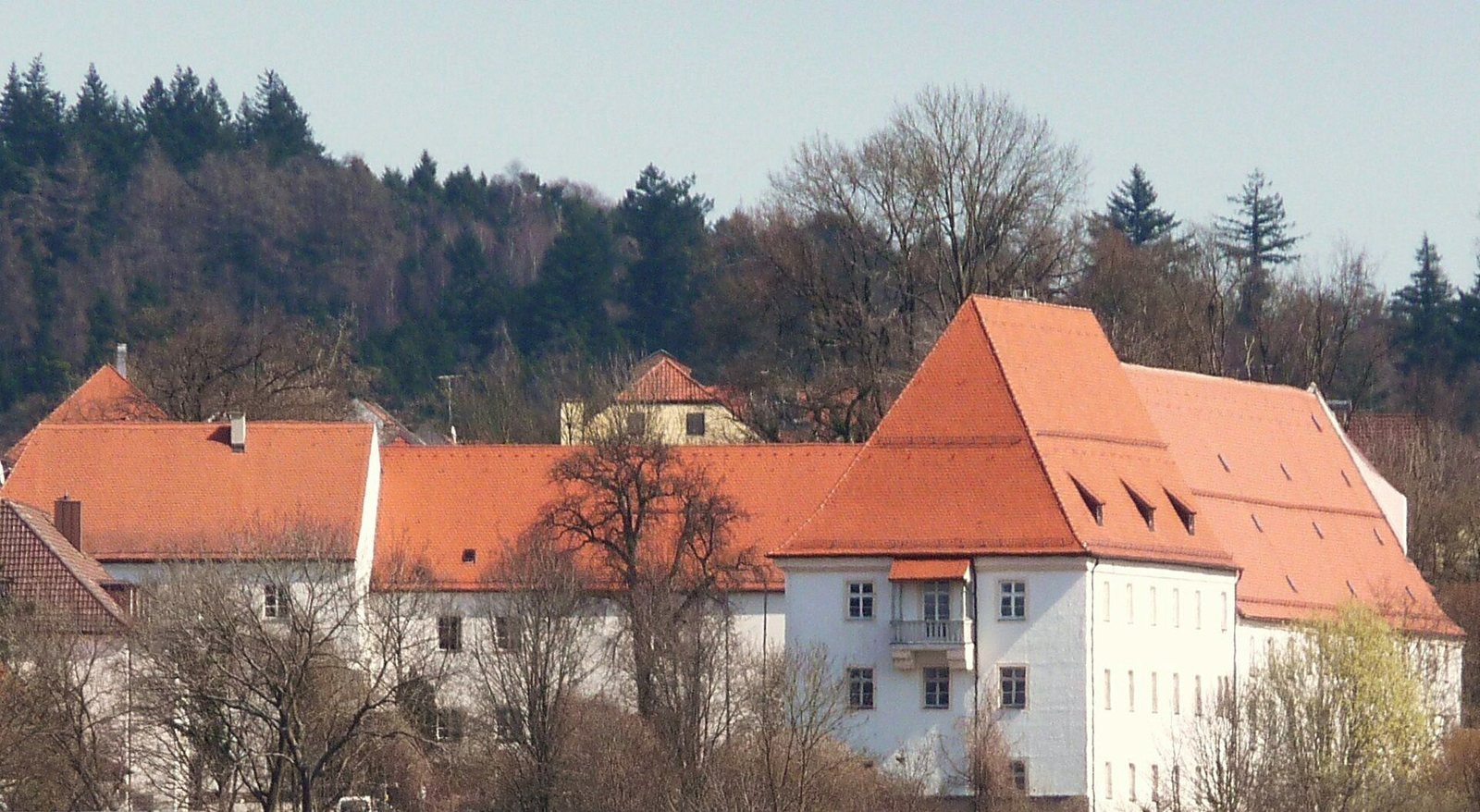
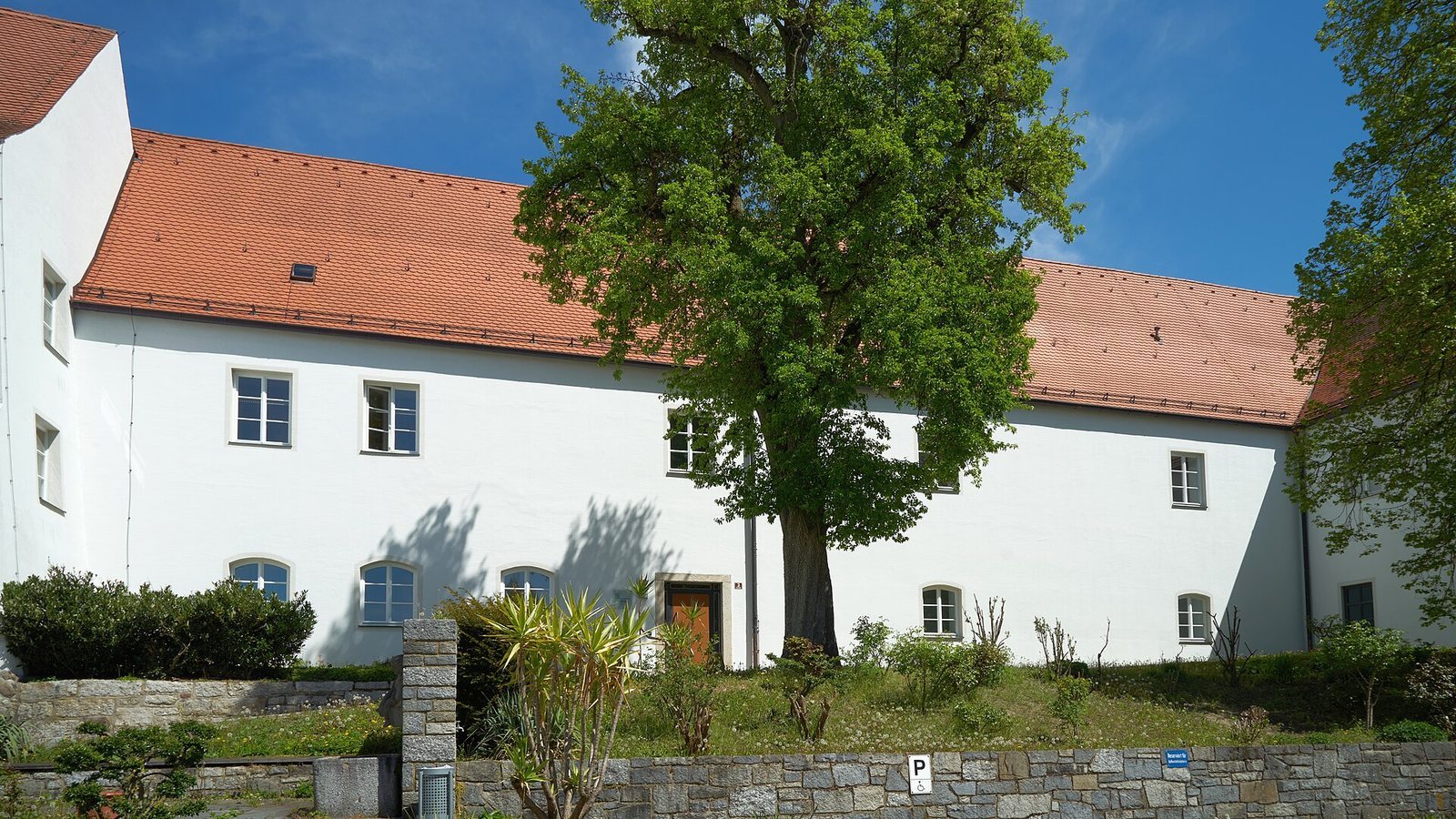
In 1817, a grain storehouse was converted into a revenue office; another became a courthouse with a prison in 1858. Further changes came in 1912, when the courthouse moved to a new building, the revenue-office building gained another storey, and a district office was added. That office later became the district administration for Griesbach im Rottal. Schloss Griesbach now houses a branch of the Passau tax office and is protected as an architectural monument. Its subsurface remains and a medieval predecessor building also have archaeological protection.
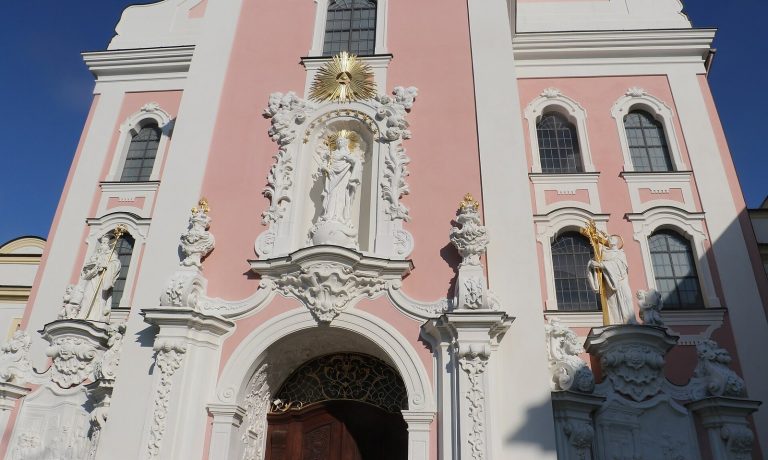
St. Michael served as the parish church until the Church of the Holy Family was built in 1913; it now serves as a cemetery church.
Remains
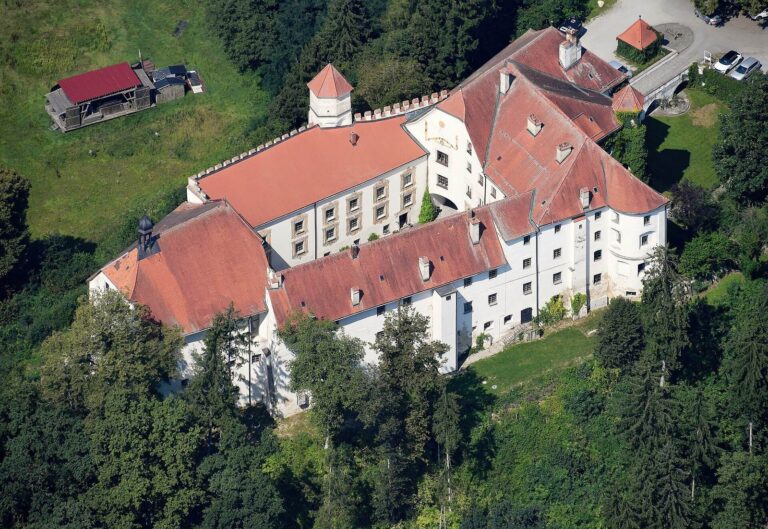
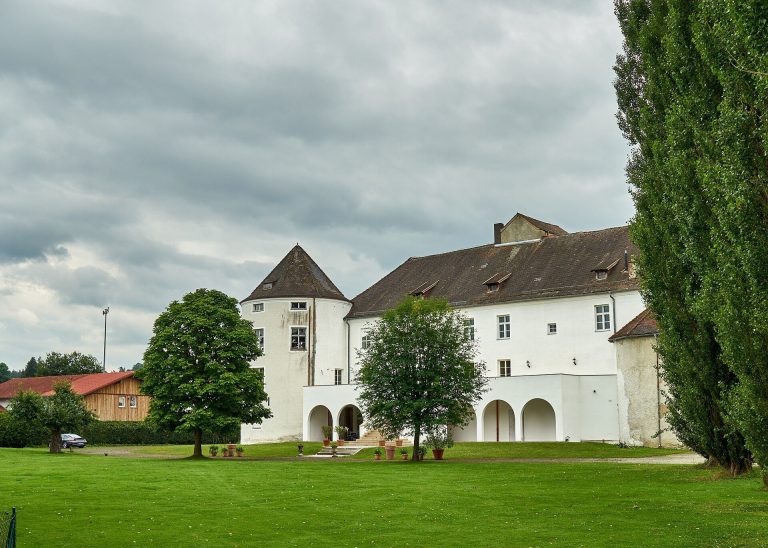
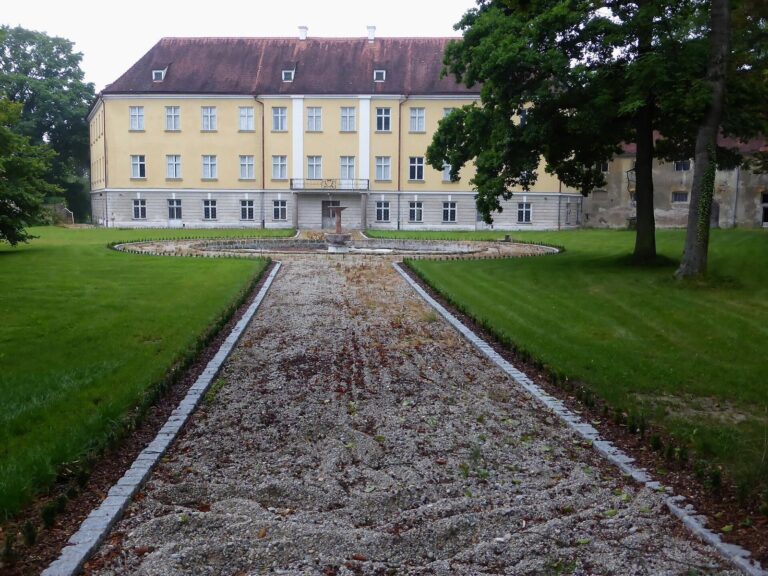
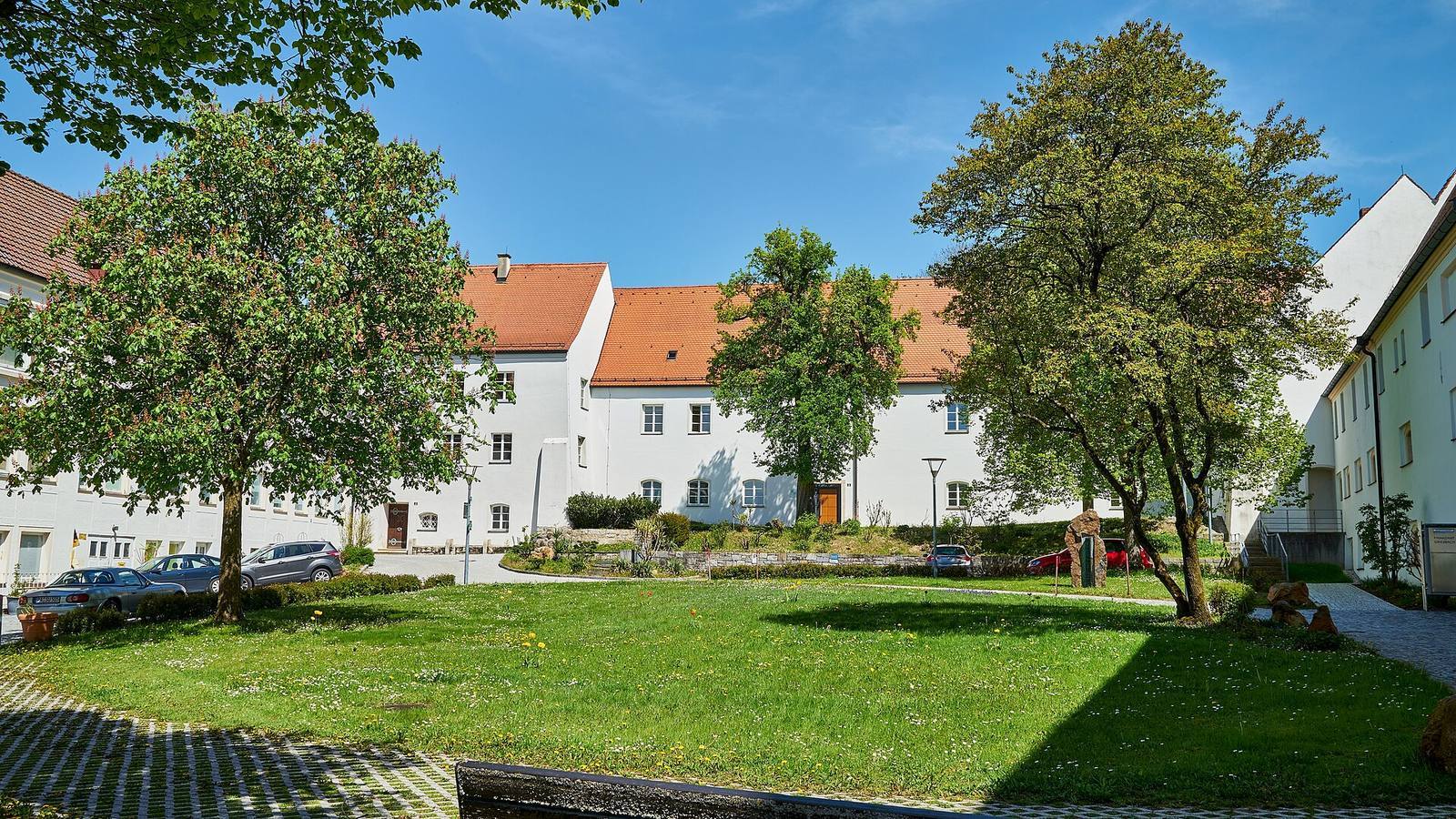
Classified as a hilltop castle, Schloss Griesbach survives as a complex of administrative buildings set on the foundations of the earlier castle. Its present layout includes two large wings. The rebuilt complex did not include the former keep or the fortifications. Subsurface remains include structures from the late medieval and early modern periods, as well as a medieval predecessor building.
Administrative buildings
The complex incorporates former grain storehouses adapted for later government use. One became a revenue office, while another was converted into a courthouse and prison. The revenue-office building was subsequently raised by a storey, and a district-office building was added. Together, these structures reflect the complex’s development into an administrative center.
Church and associated features
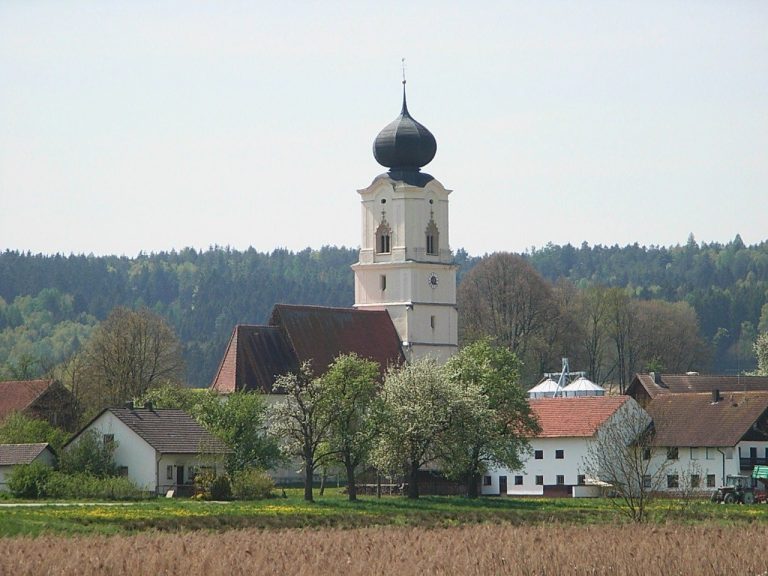
Northeast of the castle stands the late-Gothic church of St. Michael, dating to around 1500 and topped by an onion dome. A drawbridge once connected the church and castle; after it collapsed in 1822, an embankment replaced it. In the castle courtyard, a stone fountain figure known as the Fish Boy dates to 1969. It was one of the last works by Passau sculptor Otto Zirnbauer.
A fresco by Hans Donauer the Elder in the Antiquarium, a historic hall in the Munich Residence, depicts the castle complex around 1590.