Bosc Théroulde Castle: A Seventeenth-Century Estate in Normandy
Site at a Glance
- Rating
- 5
- Popularity
- Very Low
- Country
- France
- Primary era
- Early Modern
- Eras represented
- Early Modern, Modern
- Civilizations
- French
- Site type
- Domestic
- Remains
- Manor House
On this page9 sections
History
Early landholding and the Le Faë château
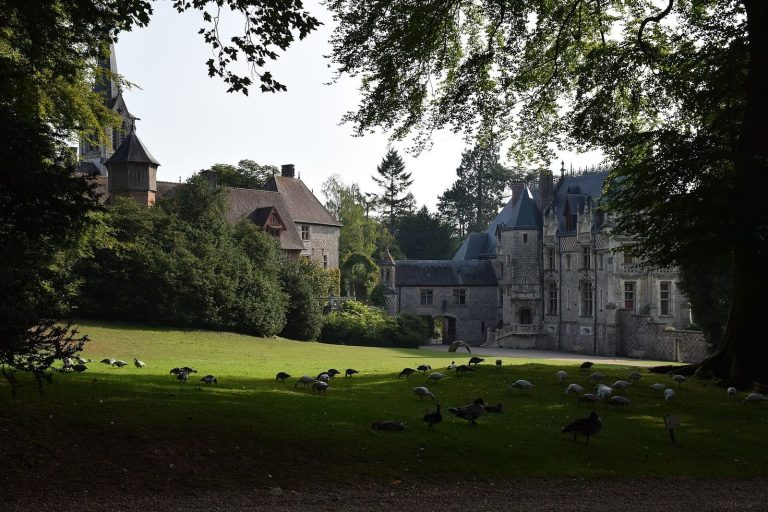
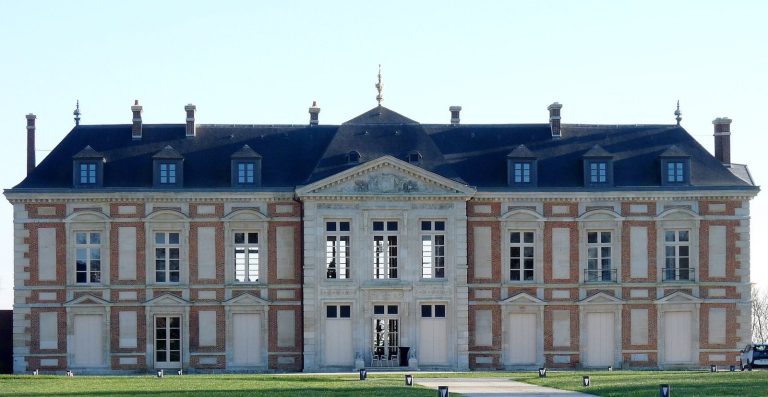
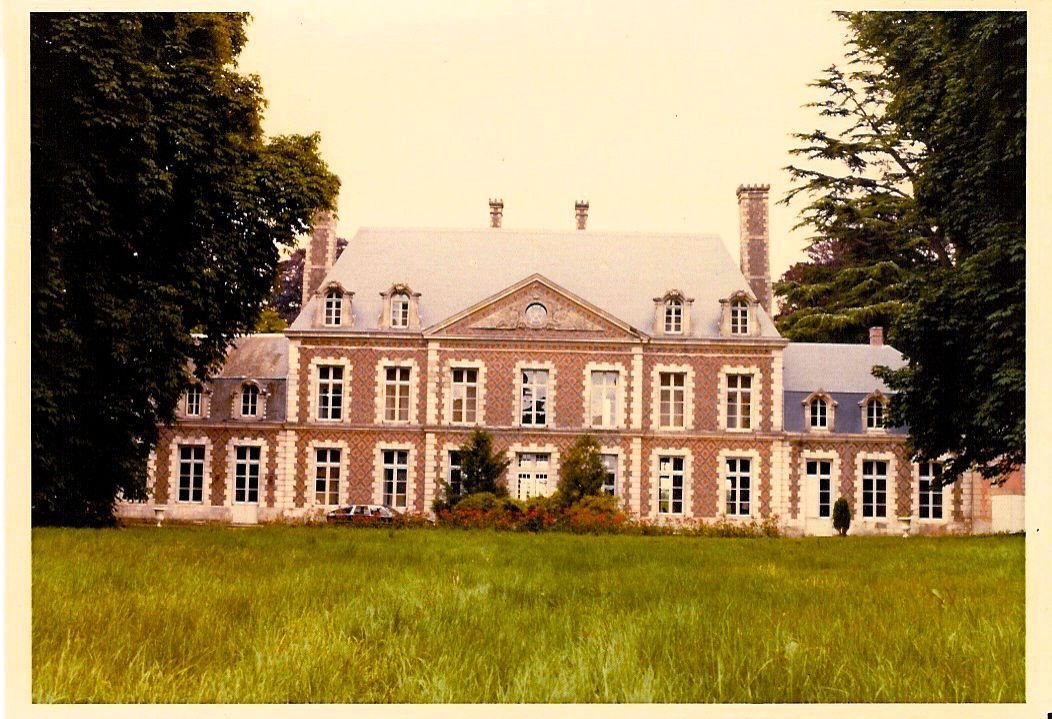
Bosc Théroulde Castle is a brick residence near Bosc-Guérard-Saint-Adrien in Normandy, France, constructed from 1616 to 1632 in the Louis XIII style, French architecture associated with the reign of Louis XIII. Jacques Le Faë, a royal adviser and controller of domain duties and taxes in Normandy, acquired the estate in 1598 and commissioned the château.
Until the 12th century, six to eight houses stood on the land. It formed the Alinette fief, a parcel held under feudal obligations and described as an eighth share of a larger holding, within the barony of Fontaine-le-Bourg, a territorial lordship. The name Bosc derives from an old French word for “wood,” related to the Germanic bosk and Latin boscus. Théroulde comes from the Scandinavian personal names Thorold or Thorald, Latinized as Turoldus and ultimately related to Thorvaldr, meaning “ruled by Thor.” The name came to Normandy with the Vikings and was popular there from the 10th to the 12th century.
The Cormeille family owned the estate from 1512 until Le Faë bought it on 6 April 1598. A building contract followed on 14 May 1607, and work on the château began in 1616. Le Faë died around 1630, before its completion in 1632. His wife, Anne Petit, managed the estate for their children until 1637, when their son Adrien inherited it.
The Le Faë family
Adrien Le Faë served the king as an adviser and master of a royal administrative chamber. He received the French noble title of esquire in 1640. Having survived the plague that struck Rouen in 1637, he built a chapel alongside the château in 1646–1648. The outbreak killed 11,000 people in the city over ten months.
Adrien’s successor, Christophe Charles Le Faë, became an adviser to the Parlement of Rouen on 3 March 1670. The Parlement was a high court under the French monarchy, not a representative legislature. Christophe married Madeleine Le Roux; he died in 1707 and she in 1719. Their son, François Louis, died without an heir in 1716. One daughter entered a Benedictine convent, a community following the Rule of Saint Benedict, while the other, Marie Elisabeth Louise Le Faë de Bosc Théroulde, inherited the estate. Marie Elisabeth married Claude Emmanuel Langlois de Colmoulins, a royal adviser who became president of the Parlement in 1707. They had no children.
Berthost ownership and the Revolution
In 1753, Louis Pierre François René de Berthost inherited the estate through his wife, who was born a Le Faë, and rebuilt the château. He acquired most of the estate’s land on 12 March 1782, with further property coming by inheritance. His son, Louis François René de Berthost du Bosc Théroulde, succeeded him. A royal decree dated 3 November 1788 led to the king’s condemnation of Louis François René, but the king released him from it in 1789. He remained at the château during the French Revolution, the political upheaval that began that year and transformed France’s government and society.
Louis Armand de Berthost later inherited and enlarged the estate through land purchases. He died without an heir and burdened by debts on 30 April 1825; his niece, Miss de Milleville, took over the inheritance. The property is also linked to the 1805 marriage of Aglaé Patronille Huger de Bracquemont to Louis Octave de Milleville, through her dowry, though the sequence of these transfers is uncertain.
Later owners and changing uses
On 13 August 1845, Marie-Adrien de Milleville sold the estate to Charles Sénateur Maze-Sensier. The property then covered more than 491 hectares; Maze-Sensier acquired 246 hectares, including the château, its farm, and five other farms. During the First World War, Belgian official and economist Daniel Serruys was appointed to negotiate economic measures for the peace settlement. Winston Churchill met him at the château to discuss postwar economic conditions.
Augustin Pierre de Fouquière bought the estate in 1936, used its woods for timber, and sold part of the land. Later, a gentleman farmer named Morel used the buildings and land for agriculture.
Remains
The château and chapel
The surviving complex includes the brick main house and a chapel alongside it. The main house combines its original brickwork with changes made during later ownership.
Main house
The date 1616 appears on one of the main chimneys. A stone shield on the west wing combines the family arms of Christophe Charles Le Faë and Madeleine Le Roux. During Charles Sénateur Maze-Sensier’s ownership, triangular decorative pediments were added to both sides of the château. Colored glazed bricks and stone were laid over weathered original Saint-Jean bricks, and “MAZE” was engraved in the stonework around the upper windows.
Chapel
The chapel stands alongside the château and was named for Adrien Le Faë’s patron saint.