Royal Abbey of Saint-Remi: A Benedictine Monastery in Reims
Site at a Glance
- Popularity
- Medium
- Country
- France
- Primary era
- Early Modern
- Eras represented
- Medieval, Early Modern
- Civilizations
- French
- Site type
- Religious
- Remains
- Monastery
On this page17 sections
History
From shrine to Benedictine abbey
The Royal Abbey of Saint-Remi is a former Benedictine abbey in Reims, France, whose history grew around the tomb of Saint Remi. Remi, bishop of Reims and a figure associated with the Franks’ conversion, baptized Clovis I, the first Frankish king, in 496. Remi was buried at the site in 533, and by about 550 a community of clergy served a funerary chapel there. A monastery may have preceded the Benedictine abbey. In the later eighth century, Archbishop Tilpin established or reorganized a Benedictine community, which became a center for pilgrims.
In 852, Archbishop Hincmar called for the rebuilding of the structure protecting Remi’s relics and the Holy Ampulla. The ampulla held oil used to anoint French kings at their coronations. It was carried from the abbey to Reims Cathedral for those ceremonies. Tilpin reserved the title of abbot for himself; later archbishops of Reims held the abbacy, with Hugh of Vermandois the last to do so.
Autonomy and landed influence
In 945, Hugh ordered a reform led by the abbot of Fleury. Saint-Remi then became an autonomous abbey with its own abbot, revenues, and monastic staff. The archbishops of Reims thereafter acted as its protectors. The abbey’s estates had long been closely connected with those of the church of Reims. The two bodies of property were nearly indistinguishable through the early ninth century and appear to have been managed together from the episcopate of Rieul, dated 670–696, until the reform of 945.
A polyptych, an inventory of estates, dependent holdings, and obligations, was an early means of distinguishing the abbey’s property. Tradition dates its beginning to about 634, under Bishop Leudegisile. By the middle of the ninth century, it listed 24 estates across the Reims, Laon, Tardenois, and Porcien districts. Named places included Muizon, Fleury-la-Rivière, Aubilly, Baconnes, Treslon, Gueux, Taissy or Taizy, Louvercy, and Sault-Saint-Remy. The records also referred to the abbey hospice and places near the monastery gate.
Grants and exchanges expanded the abbey’s holdings. Carloman, brother of Charlemagne, gave it land at Neuilly, possibly Novion or Neuvizy, and was buried in the abbey church. In 961, Hugh IV, count of Bassigny and Bolenois, granted the estate at Condes in return for burial there; Condes later became a priory founded by Abbot Hugh. Queen Gerberge of Saxony gave the abbey her allodial property at Meerssen in 968. The abbey’s provostry there was later exchanged for two priories belonging to Notre-Dame d’Eaucourt.
During Abbot Hérimar’s tenure, from 1048 to 1076, Manassès de Châtillon granted land at Viré for a farm in return for annual rent, a gift Archbishop Gui of Châtillon confirmed in 1053. A 1064 charter gave the abbot the right to appoint prebendaries, whose positions carried income, at the collegiate church of Saint-Timothée. Pope Eugène III confirmed abbey possessions, including Alland’Huy, in 1145; a papal act of 1154 named Vrizy as abbey property.
The abbey’s network included priories at Rethel, Chagny, Senuc, Condes, Le Chesne, Marcoul, and Haschbach, which supplied revenues and received monks. Its provostries, administrative estate units, included Écharson, Braux-Saint-Remy, Dhuizel, Courtisols, Louvemont, Grandpré, and Saint-Thomas. Courtisols passed to the seminary of Châlons in 1702. The abbey chapter also held the right to present priests for appointment in numerous parishes, including Bazancourt, Rilly-la-Montagne, Sacy, and Ville-en-Selve. It received five-twelfths of the tithes at Minaucourt and Wargemoulin.
Saint-Remi flourished economically and spiritually during the Middle Ages, though monastic life declined during the Hundred Years’ War. Its jurisdiction extended over parishes under its authority and collegiate churches served by communities of canons rather than monks. These included Saint-Timothée and Saint-Côme-et-Saint-Damien; Saint-Julien was a parish church associated with the abbey.
The abbey negotiated local rights with communities and other landholders. In 1207, Abbot Guy and Hugh II, count of Rethel, granted liberties to the people of Le Chesne. An agreement with Amagne in 1234 relieved the abbey of responsibility for its church roof. At Hermonville, where it had held a lordship since the Middle Ages, the abbey limited its rights in a charter of 1230. A dispute with Gui de Cheppes, another lord there, followed in 1353. Under an agreement reached in 1374, Hermonville’s jurors and inhabitants could declare a local ban before each harvest and set the date when harvesting could begin. In 1749, the abbey’s lordship comprised nearly 80 houses scattered among properties belonging to other lords. The monks also claimed jurisdiction over freehold land, a claim their fellow lords disputed.
The abbey cultivated a vineyard at Murigny known as the Clos. Pope Honorius III confirmed it in 1218, and in 1226 Abbot Pierre the Lame granted the community wine from the abbey’s vineyards. In the fourteenth century, the abbey and the archbishop of Reims each directly cultivated nearly 40 hectares of vines in Champagne.
Rebuilding and medieval life
Abbot Airard began a rebuilding campaign in 1010, and Abbot Thierry later altered the church. Pope Leo IX consecrated the church on 2 October 1049. After a fire in 1098, Abbot Odo directed further rebuilding and decoration; the Benedictine monk Gossuin d’Anchin was also sought to help reconstitute the abbey.
Reform and the fire of 1774
During the reign of Louis XI, the abbey entered commendam, an arrangement in which an appointed commendatory abbot administered its revenues and affairs without necessarily belonging to the resident community. Robert de Lenoncourt began the succession of commendatory abbots in 1482. In 1627, the Benedictine reformer Athanase de Mongin introduced a reform, and the abbey joined the Maurist Congregation, a Benedictine reform movement. Tsar Peter I of Russia visited on 22 June 1717 and was shown the Holy Ampulla in the chapter house.
A fire on the night of 15–16 January 1774 almost completely destroyed the abbey church and cloisters. The library contained 20,000 volumes and at least 600 manuscripts, many of which were lost. Among the works saved were a copy of Isidore’s Etymologies made around 750, a pontifical attributed to Hincmar, a sacramentary dated 799, and the Hours of Queen Emma, wife of Louis IV. The pontifical was a book of rites performed by a bishop, and the sacramentary contained prayers and texts for Mass. The abbey buildings were rebuilt after the fire.
Revolution, hospitals, and museum
The Constituent Assembly abolished monastic vows and religious congregations in 1790. The monks were expelled by 1793, and the former abbey became a military barracks. It served as a military hospital from 1796 to 1816. During the Russian campaign of 1813–14, Alexander I’s forces occupied Reims and a Russian military hospital was established in the abbey. In 1814, Prince Sergey Alexandrovich Volkonsky was appointed military governor of Reims.
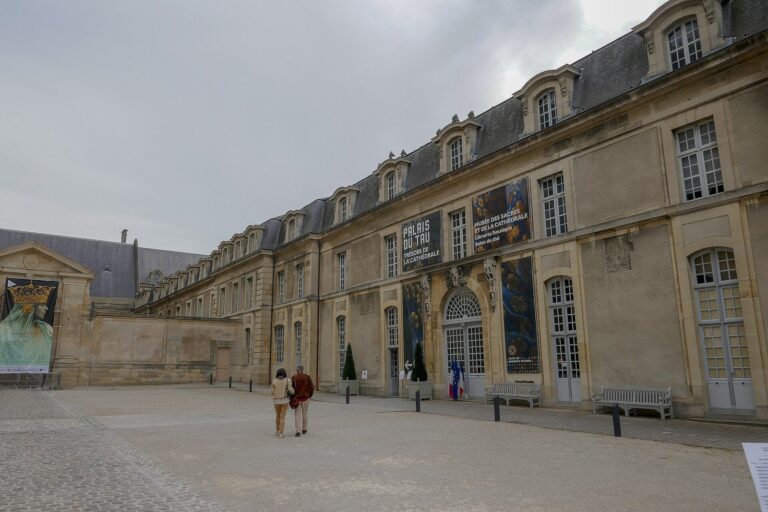
The former abbey became a municipal hospital in 1827 and a civil hospital in the early twentieth century. In July 1916, while it was serving as a civil hospital, wounded soldiers of the Russian Expeditionary Corps fighting in France during the First World War were treated there. The former monastic buildings now house the Saint-Remi Museum of Reims history and archaeology. Restoration work on the abbey buildings began in 1968. The abbey church became a parish church and retained its status as a basilica. The abbey is included in a UNESCO World Heritage listing made in 1991; the cloister received historic-monument protection in 1889, with further features protected in 1920 and 1933.
Remains
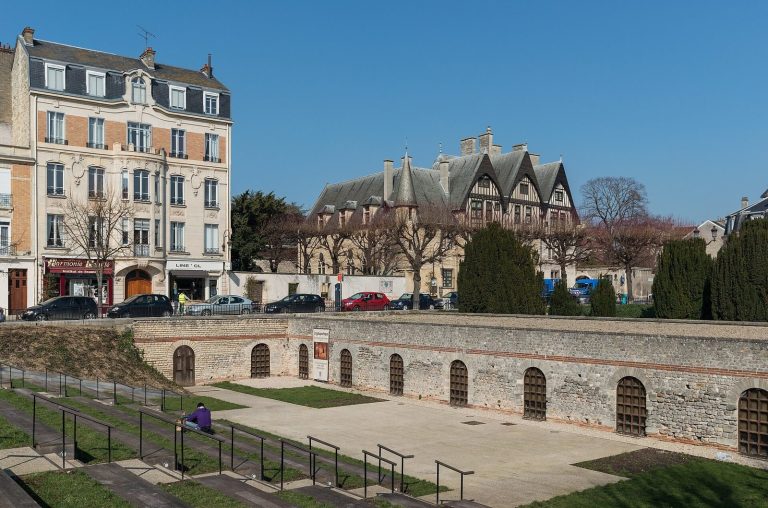
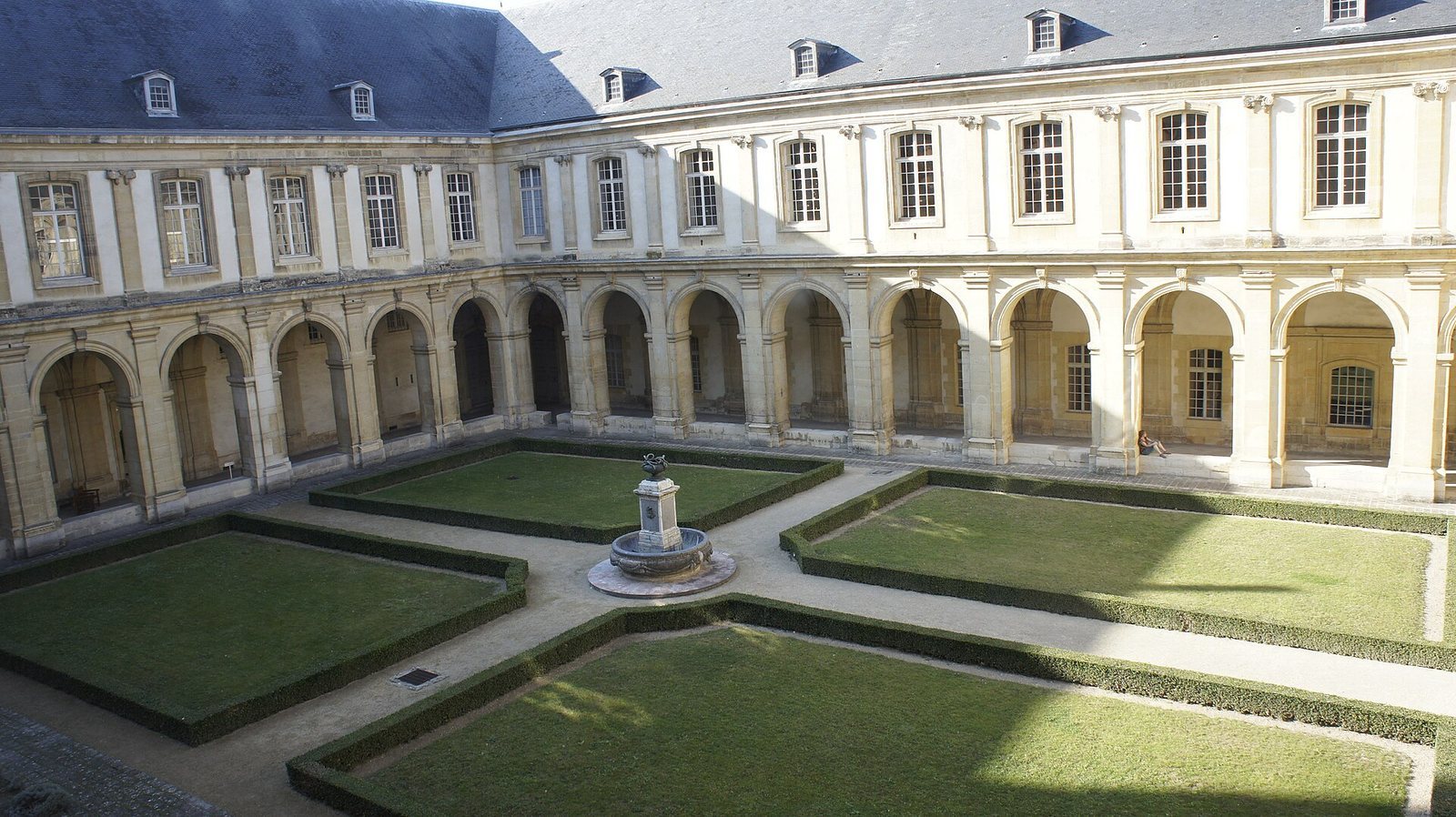
The complex combines the abbey church’s Romanesque and Gothic architecture with cloisters and monastic ranges. The church stood at the center of a group that included two cloisters, a hospice and chapel to the south, and monastic buildings to the north. The abbot’s residence lay north of the large cloister. East of the chapter house, the small cloister contained the infirmary and its chapel of Saint-Christophe.
Church and medieval remains
Abbey church
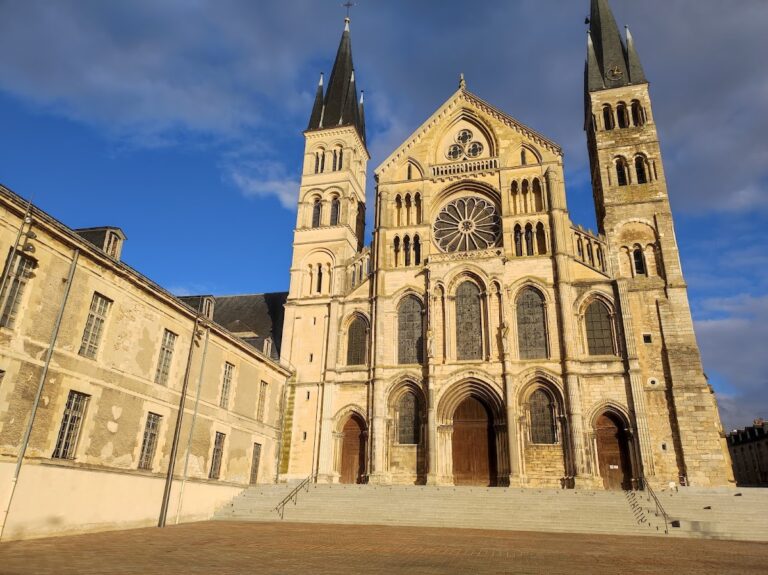
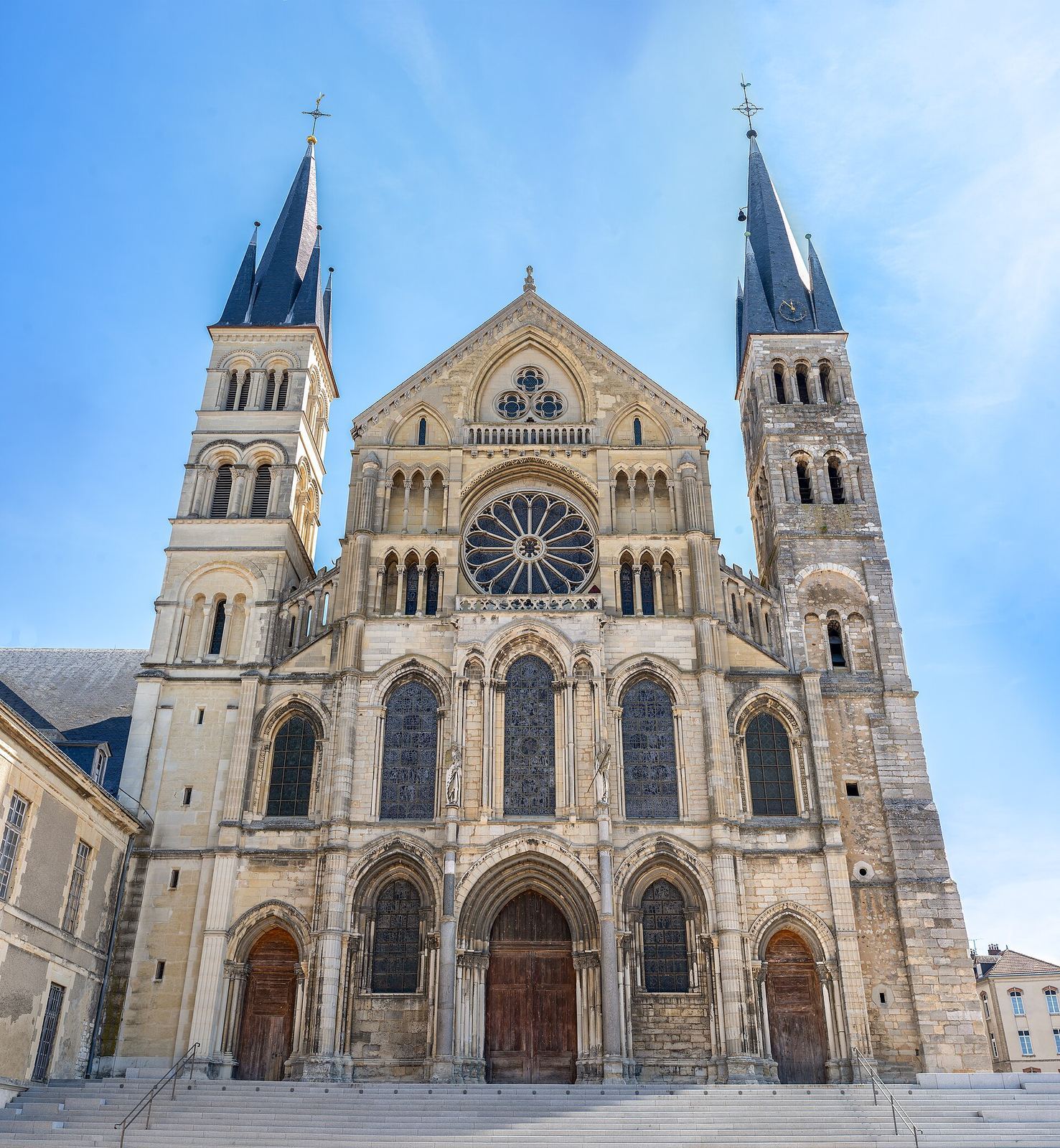
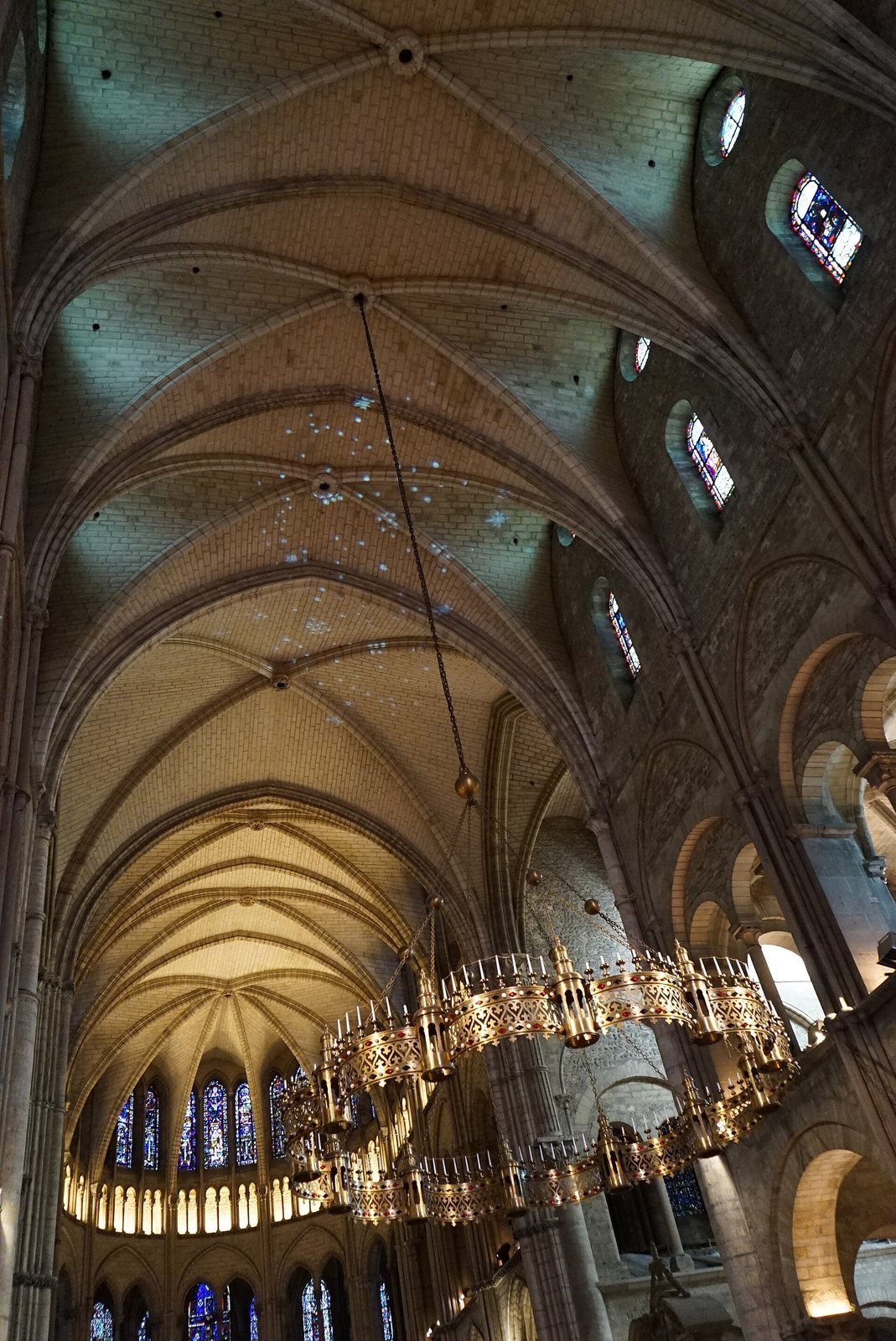
The church was built over an extended period, given as 1005–1170. Begun in the Romanesque style, it was altered and later additions brought Gothic architecture into the building. It remains a basilica and contains Saint Remi’s tomb. The church consecrated in 1049 was larger than its predecessor.
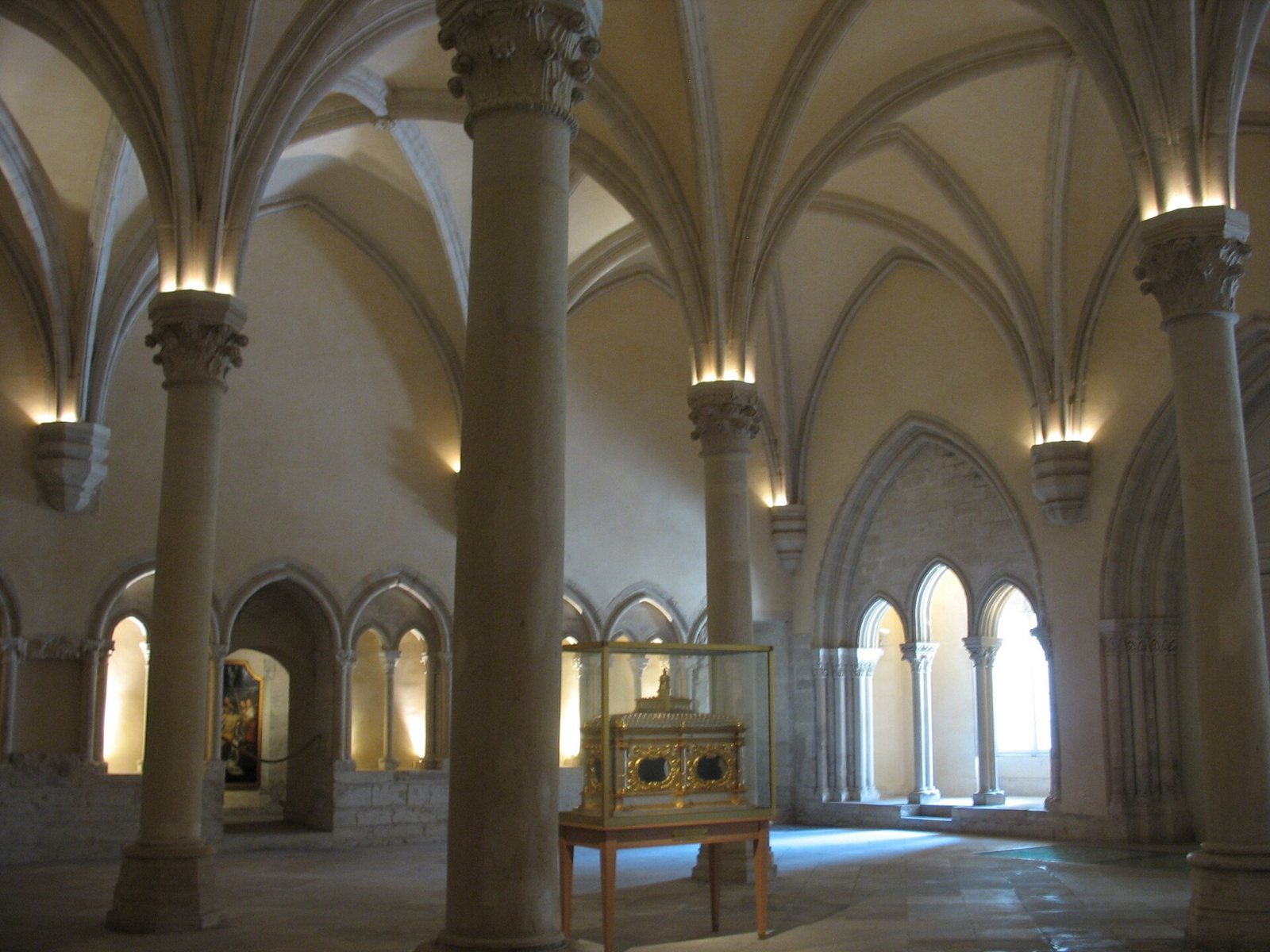
Chapter-house capitals
Capitals from the chapter house survive from the rebuilding and decoration that followed the 1098 fire. They are described as the last surviving remains of the abbey’s earlier medieval structure.
Rebuilt monastic buildings
Façade and staircase
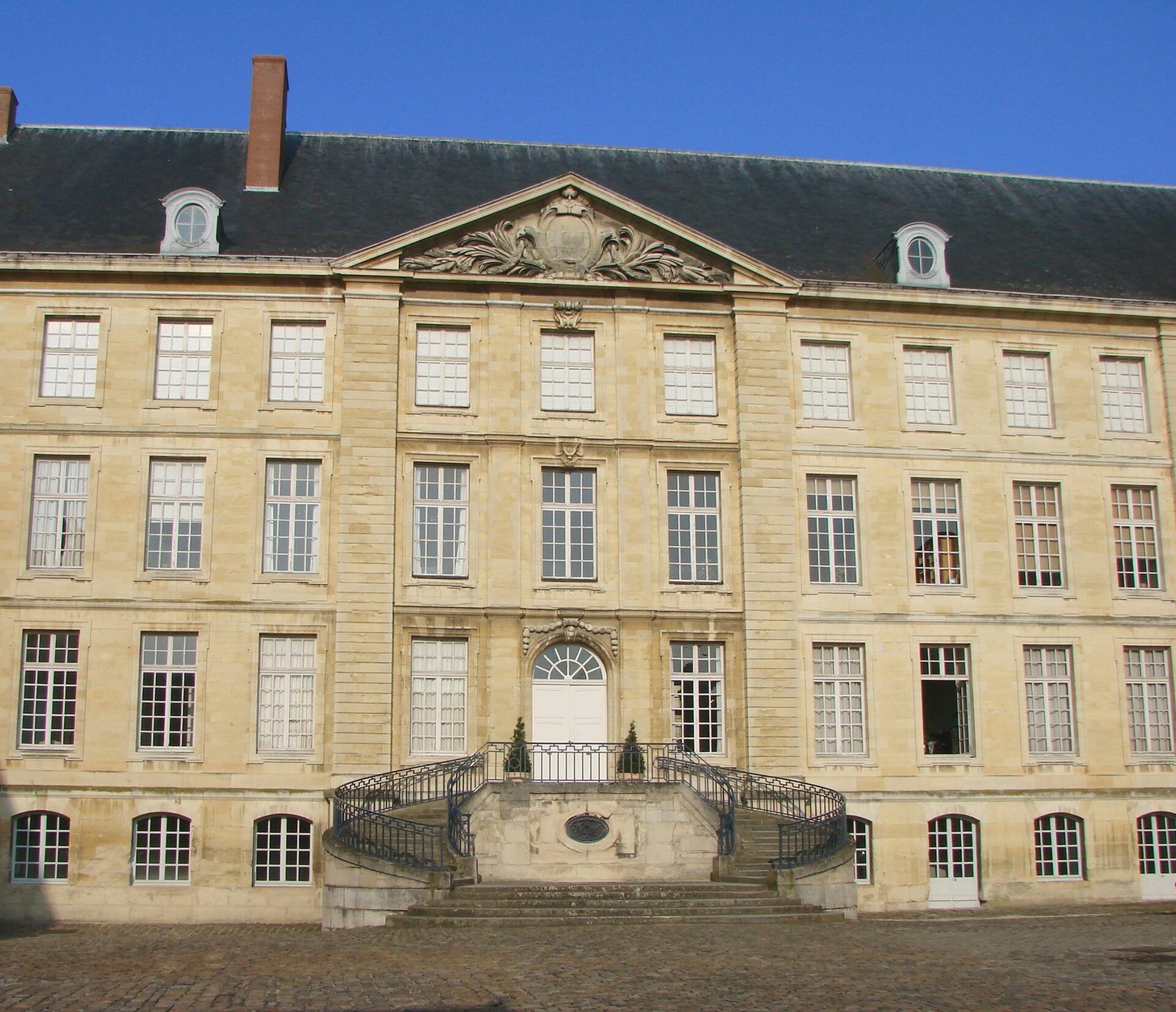
The 1774 fire left the church and cloisters almost entirely destroyed, and the reconstructed abbey buildings were described as entirely modern. Royal architect Louis Duroché restored the courtyard and staircase and created the present façade, including a monumental pediment. The grand staircase, first made by Jean Bonhomme in 1700, was reconstructed in 1778.
Chapter house, kitchen, and refectory
The complex includes a chapter house, the monastery’s meeting room, an old kitchen, and a large seventeenth-century refectory, the communal dining hall. The kitchen and refectory display the museum’s Gallo-Roman collection. Rooms beside the tapestry gallery present the history of the basilica and abbey through finds from excavations on the grounds.
Museum collections
Tapestries of Saint Remi
The museum displays ten tapestries showing episodes from Saint Remi’s life and miracles. Made between 1523 and 1531 on the commission of Robert de Lenoncourt, archbishop of Reims, they were donated to the abbey.
Archaeological collections
The museum’s displays cover prehistory through the Renaissance, approximately 1530. Regional collections relate to prehistoric society, the Gallic and Gallo-Roman periods, the Merovingian period, and the Middle Ages; Greek and Etruscan archaeology is also represented. Finds from excavations on the abbey grounds form part of the displays.
Sarcophagus and other objects
The collection includes the marble sarcophagus of Flavius Iovinus, commander-in-chief of Roman forces in Gaul, and a portrait of Sergey Alexandrovich Volkonsky painted in 1814. Other displayed items include remains of a cenotaph dated to AD 4, a reconstructed second storey from the thirteenth-century House of the Musicians, and a seventeenth-century painting showing the church of Saint-Nicaise in ruins. The museum also holds weapons, mechanisms, armor, and uniforms dating from the sixteenth to nineteenth centuries.